
Some gardeners wonder why their onions have turned white, even though this vegetable rarely gets sick. It's worth noting that white spot is one of the most common problems in this regard. The cause may be improper cultivation or soil problems. Soil composition should be especially considered, as it directly affects the quality of the harvest.
The reason for the appearance of white spots on onions
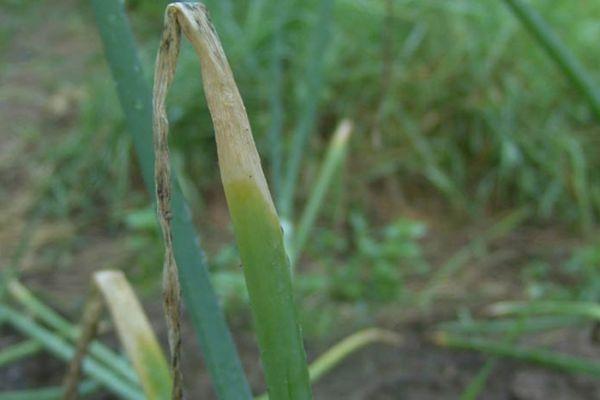
Whitened onions indicate certain problems. The soil composition determines the color of the green onions. Therefore, one of the most common causes of white spots is high acidity. If the pH level is unsuitable for growing onions, you shouldn't expect a good harvest. This applies not only to the green part of the onion but also to the bulbs.
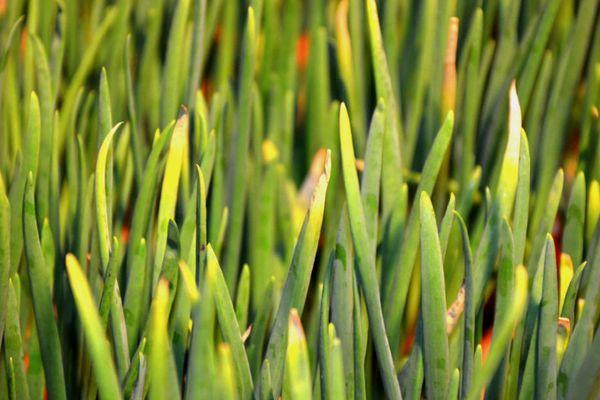
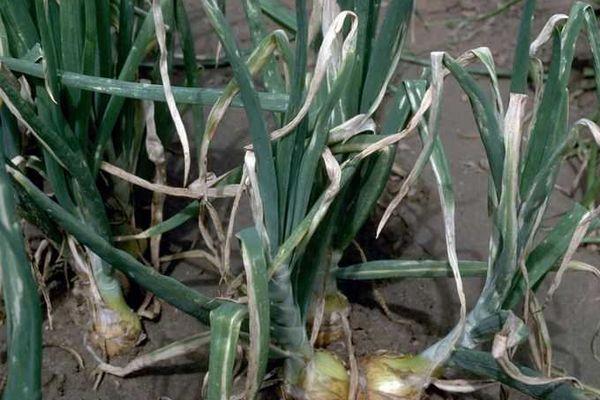
High acidity causes the bulbs to remain very small even at the end of the season. Furthermore, the foliage will be wilted, lacking in juice, and lacking in color. In extreme cases, the tops may even turn white.
Moreover, it's important to remember that onions thrive on nutrients. This applies not only to the elements obtained from fertilizers but also to oxygen. Providing adequate air for the roots is crucial, so gardeners should remember to loosen the soil. Onions will thrive in loose, well-drained soil.
As for what to do if onion leaves have indeed turned white due to a lack of nutrients, it's essential to take preventative measures to avoid a similar problem in the future. To do this, after harvesting the onion in the fall, add slaked lime, plant ash, and dolomite flour to the soil. All of this will positively impact the soil composition and make it less acidic.
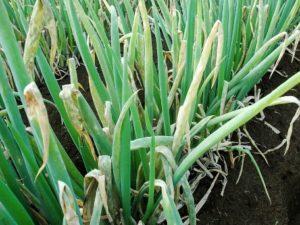
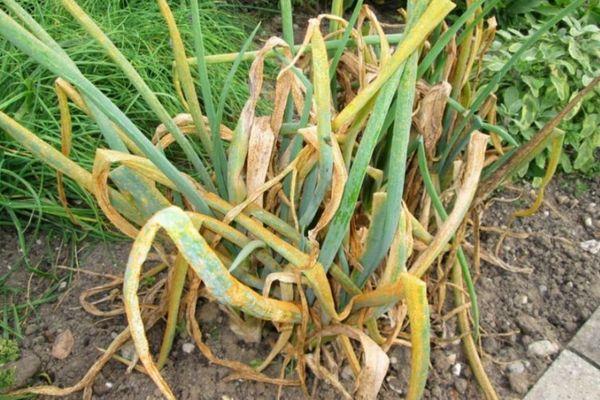
Some gardeners use a different method, which can be used even while the greens are growing. To quickly alkalize the soil, pour one cup of a special mixture onto each bulb. It's made with calcium nitrate, diluted in a ten-liter bucket of water.
You can also use ash, diluted in boiling water, and then used to water the plants. Approximately 10 liters of liquid should be used per 1 m².
Many experts speak highly of the beneficial properties of wood ash. It not only removes excess acidity from the soil but also enriches it with a host of beneficial nutrients, particularly sodium, phosphorus, magnesium, and calcium. A single application of ash to the soil will ensure that your plants don't suffer from nutrient deficiencies. Organic compounds help balance the water supply, resulting in beautiful, green, and lush leaves.
What micronutrients are lacking?
Often, onion leaves turn white not because of acidity, but because of a deficiency of certain components in the soil. For example, if the soil lacks nitrogen, this will immediately affect the quality of the leaves. They become wilted, may turn yellow, and develop white spots.
If the problem lies in a potassium deficiency, expect the foliage to be too light and curled. The bulbs themselves will also stunt and appear underdeveloped.
Sometimes, problems arise from over-attention on the part of gardeners. For example, when growing onions, some people over-focus on fertilizing. Adding large amounts of peat to onions is not recommended. This can lead to a copper deficiency. The greens will react to this by wilting white tips.
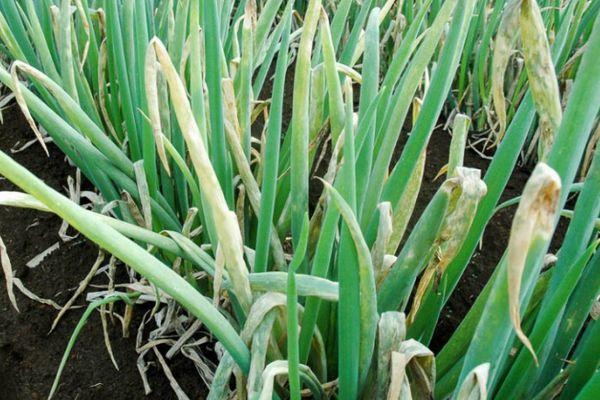
There are realistic solutions to every problem. For example, when it comes to nitrogen, you should use calcium nitrate, diluting it in a bucket of water and then using it for watering. You can also spray the greens with an ammonia solution. Onions often suffer from nitrogen deficiency when grown in a bed covered with straw. This approach protects the roots from frost and drying out. However, the plant may simply not receive sufficient nutrients.
The solution is to water the beds with urea. Use 1/2 cup of granules per bucket of water.
Copper deficiency is replenished by treating the beds with a 1% copper oxychloride solution. Use 10 g of the solution per bucket of water. Onions can also be fertilized with Bordeaux mixture or copper sulfate.
 It is very important to monitor the amount of potassium in the soil. This component is very important when growing onions. Potassium is essential for the proper formation of greens and bulbs.
If a deficiency of this component is ignored, feathers will become limp, curled, and white. Correcting a potassium deficiency is very simple. To do this, take a bucket of water and dissolve 2 cups of wood ash and 3 tablespoons of potassium chloride in it.
Weather conditions
External factors can also affect the color of onions. For example, leaves turn white suddenly during frost. Frozen onions turn white quite quickly. If onions begin to sprout green leaves before the weather improves, mulching the soil is essential. Also, in the spring, before the soil thaws completely, apply ammonium nitrate. This will ensure a good onion harvest even in unfavorable weather conditions.
Many gardeners notice their onions turning pale and white in the heat. This can be corrected with proper watering. During the summer, onion beds need to be watered daily. One bucket of water should be used per square meter. As soon as the weather starts to cool, watering should be reduced by half.
What to do if your onion is sick?
Every gardener should know what to do if their onion leaves turn white. First, rule out disease. Powdery mildew is a serious threat to onions. This disease causes a white coating, wilting of the leaves, and a significant reduction in yield. Powdery mildew is treated by spraying with copper sulfate.
If downy mildew appears in your garden, you should immediately treat the plantings with fungicides. Failure to do so could result in the loss of your entire onion and other crops.
To ensure a good harvest, remember that onions shouldn't be grown in the same place for more than four years. The plant appreciates fertilizer and watering, but over-nurturing it can lead to the development of unpleasant diseases. If signs of disease appear on the onion, you should immediately remove the diseased leaves and burn them.
Related posts:
 Description of the best varieties of onions, planting and care in open ground
 Control of onion pests using chemical and folk remedies
 50 types and varieties of perennial onions with descriptions, cultivation, and care
 How and when to plant onions to get large bulbs
 The beneficial properties of white onions, description of varieties, cultivation and care
 Description of Welsh onion varieties, planting, growing, and care in open ground
 Description of varieties and cultivars of wild onions, the subtleties of cultivation
 Description of the Exhibition onion variety, growing from seedlings, planting and care
If your soil has enough micronutrients, you'll never encounter this problem. Try using a bioactivator.BioGrow", it will contribute to recovery.