
- Insufficient nitrogen content in the soil
- Influence of pests
- Why is onion moth dangerous?
- Onion thrips
- Onion fly and how to destroy it
- Stem nematode
- Weevil and its control
- What diseases does onion have?
- Rust
- Bulb rot caused by bacteria
- Fusarium (bottom rot)
- Alternaria
- Failure to follow the rules for onion care leads to yellowing of the feathers
- Insufficient or incorrect watering
- Lack of fertilizer
- What to do?
- Folk remedies for yellowing feathers
- Chemical plant protection products
- Simple tips for caring for onions
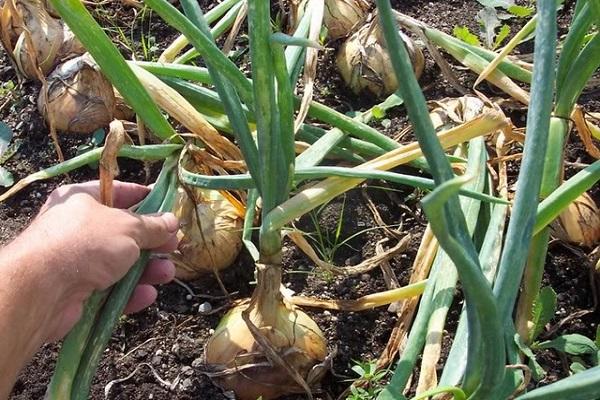
When growing onions, gardeners often encounter yellowing of seedlings. The plants become covered in spots, then dry up and die. Once the disease is detected, it's important to determine the cause of the yellowing onion leaves and take steps to protect the crop. Proper agricultural practices and favorable weather conditions have a beneficial effect on the crops.
Insufficient nitrogen content in the soil
One of the factors that causes onions to turn yellow is low nitrogen levels in the soil. During the hot season, plants experience a lack of nutrients, as the root system obtains nitrogen exclusively in dissolved form. A lack of nitrogen in the onion base results in reduced yields, so if a problem is detected, the soil should be fertilized with nitrogen-rich fertilizers.
Influence of pests
Insect infestations on onions are the result of improper care, excess moisture, or external influences. Insect infestations cause onions to turn yellow quickly, after which the plants wither. Different pests must be controlled taking into account the specifics of their impact.
Why is onion moth dangerous?
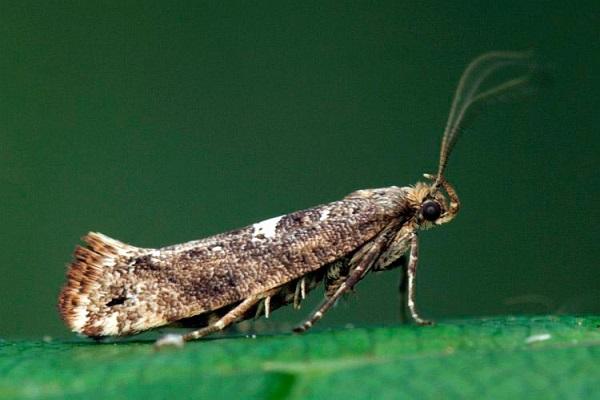
Onion moths resemble small, dark-brown butterflies. These insects can be found in garden beds in late spring. These pests lay eggs on seedlings, which then develop into caterpillars that gnaw at the plants. The following measures can help prevent onion moth infestations:
- Plant onion sets early to harvest before moth activity peaks.
- Fertilizing the soil with insecticidal fertilizers for preventive purposes.
- Choosing carrots as a companion crop for onions.
Onion thrips
Despite their small size, onion thrips can cause significant damage to plants. Like onion moths, thrips gnaw through the green parts of seedlings, then suck out nutrients essential for their development. During the winter, the pest can remain in the soil or within the bulbs themselves.
To protect onion feathers from the effects of thrips, the sets should be soaked in warm liquid before planting.
Onion fly and how to destroy it
Female onion flies are a pest of onions that lay translucent eggs on the tops of the plants. The hatching larvae gnaw at the fruit, causing the above-ground parts to turn yellow and dry out. These flies are active from mid-spring until fall. To eliminate the pest, it is necessary to treat the beds with chemicals.
Stem nematode
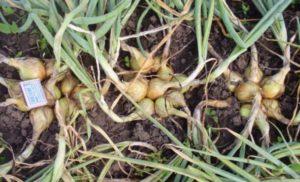
Small worms called stem nematodes primarily inhabit the soil. These nematodes cause the bases of onions to crack and rot, and the surface of the bulbs to turn yellow. Nematodes, onion flies, and other insects are found in different parts of the garden, so a comprehensive approach is required to eliminate them. If onions turn yellow, treat the entire surface of the beds with a mixture of salt and warm water or a marigold infusion.
Weevil and its control
Weevils are active in the spring, attacking new seedlings. To protect onion greens from the negative effects of this insect, follow crop rotation rules, loosen the soil to a depth of about 5 cm, and carry out preventative measures. Beetle larvae can be removed manually during regular inspection of the seedlings.
What diseases does onion have?
Besides pest attacks, onions turn yellow due to disease. Each disease has its own unique symptoms that must be considered when treating it.
Rust
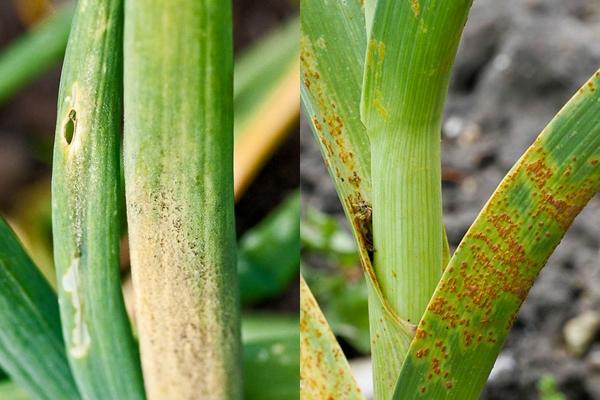
This fungal disease is characterized by the formation of pinpoint yellow spots on the leaves with a distinct, raised bloom. If left untreated, rust will cause the leaves to turn black and fall off. To combat the disease, we recommend:
- warm up the planting material;
- spray the seedlings with a solution of copper oxychloride;
- observe crop rotation rules.
Bulb rot caused by bacteria
Bulb rot can only be detected by cutting the fruit. Distinct darkened layers of softened tissue are visible between the normal scales. The infection is transmitted by insects, and when infected bulbs are planted, the seedlings begin to yellow and rot. To prevent the onion disease from spreading, it is necessary to sort the planting material and discard infected specimens.
Fusarium (bottom rot)
All crop varieties are susceptible to this disease. The infection that causes fusarium wilt lives in the soil and affects fruits during the growing season. Prevention involves properly selecting the planting site, maintaining crop rotation, and disinfecting the seed.
Alternaria
Alternaria leaf spot causes spotty yellowing of the above-ground portion of the plant. As the disease progresses, it damages the green foliage, after which the infection spreads to the fruit. To prevent leaf yellowing, treat the soil with fungicides and clear the soil of plant debris.
Failure to follow the rules for onion care leads to yellowing of the feathers
Proper crop care is key to a healthy harvest. Failure to follow basic care guidelines is a common cause of yellowing and subsequent plant death. To ensure crop growth with minimal losses, it is necessary to:
- Clear the soil of plant remains grown in the previous season.
- In case of prolonged dry weather, water and feed the seedlings.
- Do not replant the crop in the same place for several years.
- Select an area for the beds with constant natural light and no through winds.
- Before storing the harvest, disinfect the room to ensure there is no mold on the walls and the bulbs do not begin to rot.

Insufficient or incorrect watering
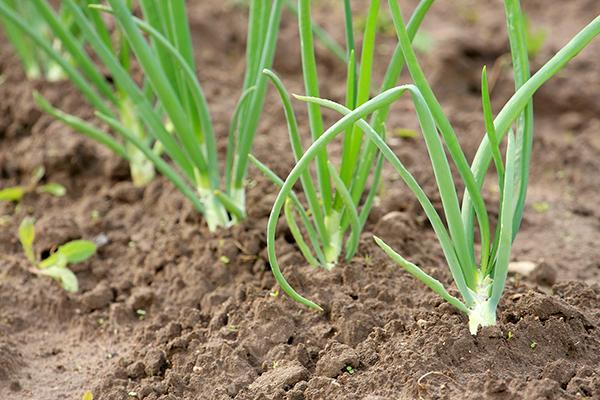
Failure to properly water can significantly reduce the yield and lead to premature yellowing of the onion leaves. To avoid seedlings from wilting, it is necessary to know the appropriate watering time, the amount of liquid, and other nuances.
When the stage of active root system development begins, it is necessary to water the beds with water warmed to a temperature of 18 to 25 degrees.
Proper watering involves applying water to plants early in the morning, before the heat sets in. If mulch is used, the frequency of watering can be reduced. If you're wondering why plants are turning yellow even under favorable conditions, check your water hardness. Once the water is softened, water the soil weekly. In July, when temperatures reach their peak, avoid overwatering, as this can cause rot. The optimal watering schedule in July is once every 1.5 weeks.
Lack of fertilizer
Insufficient fertilization prevents the root system from developing vigorously. To prevent onion leaves from yellowing and wilting, it is recommended to mix 50 g of ammonium nitrate, 20 g each of superphosphate and potassium salt in 10 liters of water. Fertilization should be combined with watering. The initial fertilization is carried out when the green shoots reach 3 cm. Subsequent fertilizations are required every week. Fertilization should be stopped 5-6 days before harvest.
What to do?
Regardless of the reason why onions are turning yellow and drying out, it's important to follow a few tips. To protect the harvest, we recommend:
- Provide proper care and make adjustments throughout the entire period, taking into account atmospheric conditions and the specifics of plant maturation.
- When early frosts occur, cover the seedlings with plastic film or initially grow the onions in greenhouse conditions.
- Before planting, disinfect and soak the seed material in warm water to kill bacteria.
- Visually inspect the beds periodically to detect signs of infectious diseases or the presence of pests in a timely manner.
Folk remedies for yellowing feathers
In addition to traditional methods for combating yellow spots, folk remedies can achieve positive results. Gardeners often sprinkle pepper, tobacco dust, or ash on their beds at a rate of 0.5 liters per square meter of soil. It is recommended to dissolve the ash in liquid and let it sit for a couple of days before use.
Herbal infusions with added plant scraps are also suitable for saturating the onion root system with nutrients. To prepare the fertilizer, you can use dried or fresh herbs, food scraps, or any sweet foods (jam, honey, preserves). Mix the ingredients and leave in a warm place until fermentation is complete. Then, dilute the mixture with 1 liter of water and water the pre-moistened soil. If you're treating only the affected plants, the solution will last for several applications.
Chemical plant protection products
When growing onions, it may be necessary to treat the beds with chemicals. Plant protection products are harmless to humans and effectively combat pests and diseases.
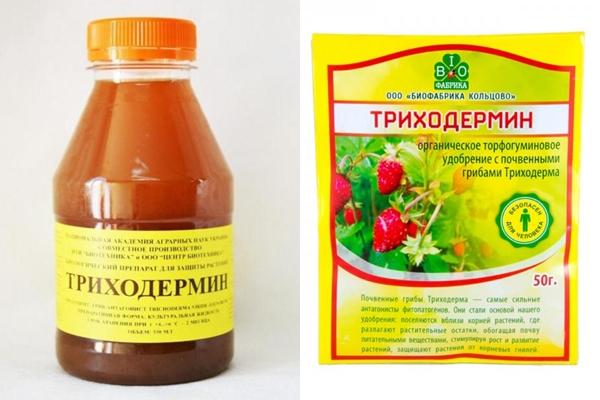
One of the crop protection products is Trichodermin, a fungicide. Seedlings are soaked in a solution of 30 grams of the product and 3 liters of water before planting. During the growing season, seedlings are additionally sprayed with bio-substances.
The antibacterial drug Metronidazole, available at any pharmacy, is also considered effective against yellowing feathers. It is used to kill harmful insects. To treat seedlings, mix four tablets in 10 liters of water and water the soil at a rate of 5 liters per square meter.
When preparing the soil for planting onion sets, add 30 grams of ammonium nitrate per square meter. This fertilizer is applied into shallow furrows dug between the rows, then covered with 2-3 cm of soil.
Simple tips for caring for onions
Gardeners share many simple recommendations to keep in mind when planting onions. Besides feeding the plants with micronutrients and following standard growing practices, gardeners can also increase yields by:
- During the ripening process, you need to carefully loosen the soil to allow the root system to develop freely;
- If you discover weeds while inspecting the beds, you should remove the excess vegetation;
- If the onion sets have started to bolt, the bolts must be broken off at the very base so that they do not deplete the plant;
- When asking what to water onions with to combat yellowing, it is necessary to take into account the variety of the crop and the soil composition.
By following these recommendations, you can prevent negative factors and protect your crop from damage. Preventative measures, along with careful care during the growing season, are effective in combating yellowing of onion leaves.
Related posts:
 50 types and varieties of perennial onions with descriptions, cultivation, and care
 When to harvest leeks from the garden for storage, ripening times
 Description of the best varieties of onions, planting and care in open ground
 Description of the Exhibition onion variety, growing from seedlings, planting and care
 How and when to plant onions to get large bulbs
 The beneficial properties of white onions, description of varieties, cultivation and care
 Description of varieties and cultivars of wild onions, the subtleties of cultivation
 Description of Welsh onion varieties, planting, growing, and care in open ground
Before planting onions, thoroughly clear the soil of the previous harvest. Also, regularly inspect the seedlings for any pests, as these are often the cause of yellow leaves.