
Many vegetable growers prefer to grow heirloom onions in their gardens. This vegetable has many advantages over other onion varieties. These include rapid root ripening, high yields, pleasant flavor, and shelf-stable harvesting. Before you begin growing onions, you should familiarize yourself with its detailed description and landing features.
Features of family onions
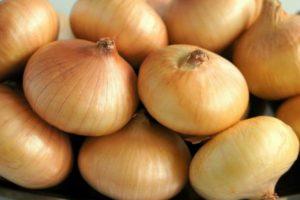
Before growing large onions, you need to understand their key characteristics. Gardeners have been growing the Semeika onion for many years, as it's quite old. It belongs to the group of perennial vegetables that can be grown for several years. The onion gets its name from the fact that a so-called nest forms within a single bulb, from which other small bulblets will emerge over time. A single root vegetable produces at least ten daughter bulblets, each weighing up to 45-50 grams.
Large bulbs may exhibit slight variations in shape. For example, bulbs can be cuboid, oval, egg-shaped, or elongated. Their surface is covered with thin scales, which are colored bronze, orange, or yellow.
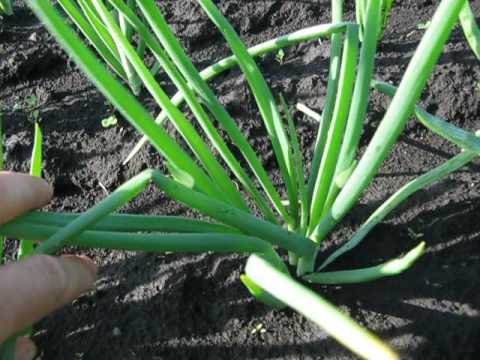
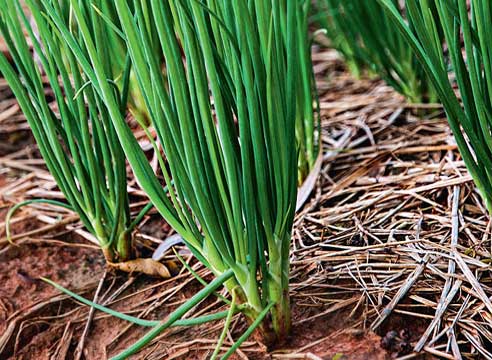
The vegetable crop's distinctive features include its lush and tall greenery, which grows up to 55 cm.
Onion greens are distinguished by a light waxy coating and a delicate aroma. Many housewives add them to vegetable salads.
Varieties of family onions
There are various varieties of heirloom onions, which are worth familiarizing yourself with in detail. This will help you choose the most suitable variety for planting and further cultivation.
Emerald
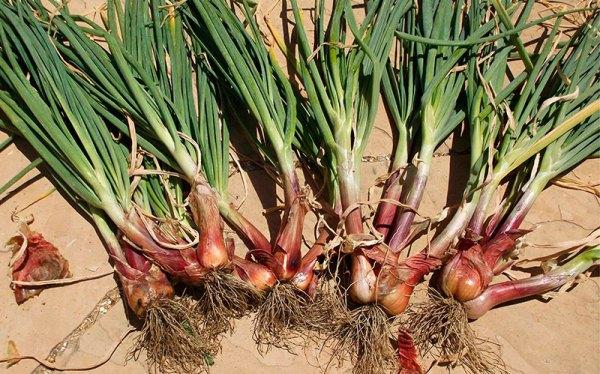
The variety description will help you understand its key characteristics and how it differs from other onions. Emerald is distinguished by tall, succulent crowns, reaching 60 cm in height. The upper part of the bush remains green until late autumn, until temperatures begin to drop below freezing. Mature bulbs are round and weigh 25-35 grams. They are covered with a pink husk, which protects the root from damage.
Snowball
An early-ripening variety of onion, distinguished by its sharp flavor and pleasant aroma. The shape of the fruit resembles chicken eggs. Their surface is covered with orange scales with a faint golden hue. Snezhok is considered a variety with good shelf life, as the harvested crop can be stored for more than six months.
Sprint
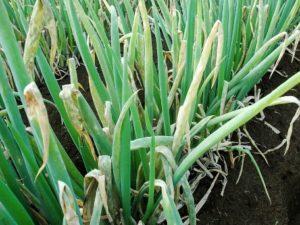
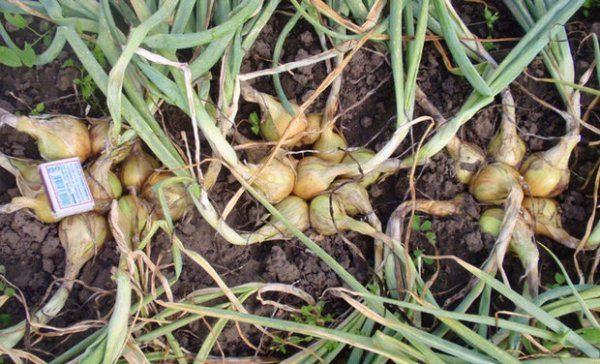
Among the early-ripening varieties, Sprint is considered the most delicious. The roots of this variety are round and flat, their surface protected by purple scales. They are large in size and weigh a considerable 55 grams.
Kainarsky
This is a relatively new variety, developed by Kazakh breeders in the early 1980s. Kainarsky onion was bred for cultivation in northern regions because it tolerates low temperatures well. The fruits are brown with a slight pink tint. They are not very large, weighing on average 20-30 grams.
Strongman
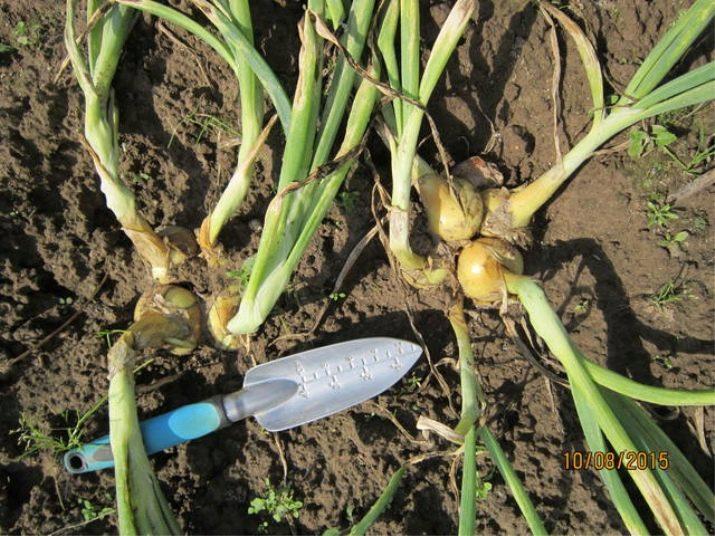
The Krepysh variety's growing season lasts 50-60 days, making it an early-ripening vegetable. Each bush produces approximately 5-6 bulbs weighing at least 20 grams. Another advantage of the Krepysh variety is its good shelf life. Harvested onions will remain fresh for seven months.
Growing and care
Growing and caring for planted onion bushes must be done correctly. Only proper care of your family's onions will help you achieve a good harvest.
Preparation of planting material
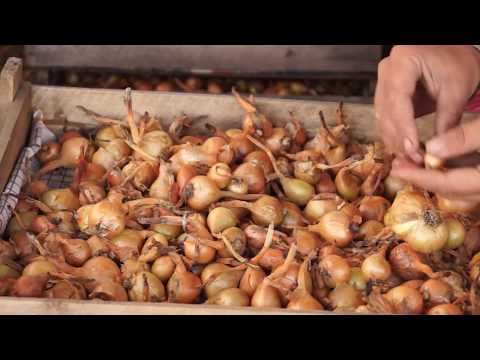
It's recommended to familiarize yourself with the nuances of preparing seed for planting in advance. There are several rules to follow when preparing bulbs:
- Before planting, be sure to cut off the heel of the root vegetable, as it slows germination. This pruning also improves yield.
- All bulbs are cut into several pieces in advance, so that each piece contains no more than one rudiment. Before cutting, carefully examine the seed material, as the rudiments are not evenly distributed.
- To make the above-ground part of the bush more lush and tall, the top part of all the bulbs is cut off to the shoulders.
The day before planting, soak all the onions in a solution of copper sulfate or manganese. This process lasts 25-40 minutes, after which the onions are dried.
This vegetable crop is highly disease-resistant, but it grows slowly. To speed up germination, you'll need to use growth promoters.
Soil preparation
Soil and planting material preparation affect yield. Therefore, after planting the bulbs, you should begin preparing the soil. This vegetable crop should not be grown in acidic or heavy soils, as they slow its growth. Therefore, if your garden has rocky, clayey deposits, you will need to add mineral fertilizers containing sand and flour to the soil 8-10 months before planting.

If this is not done and the plant is planted in clay soil, the roots will not be able to grow to normal size and you will have to harvest an unripe crop, which will quickly spoil after harvesting.
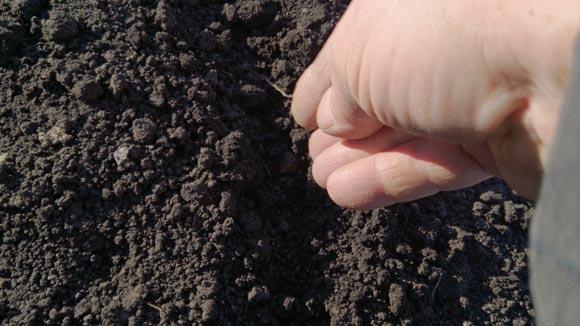
To avoid the need for soil preparation before planting heirloom onions outdoors, plant them in areas with loose soil. They will grow and ripen normally in such soil.
Planting diagram
Many gardeners don't know how to properly plant onions. To figure this out, you'll need to study the vegetable planting pattern in more detail. Before planting large heirloom onions, mark out rows in the garden. They should be spaced 30-35 cm apart. Avoid planting onions too close together, as this will interfere with each other.
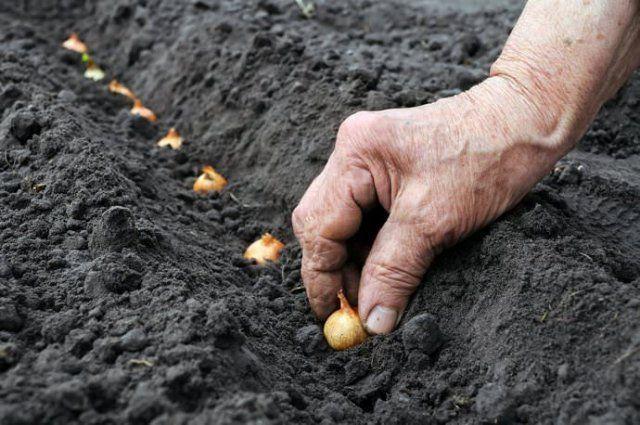
Onions should be planted in special furrows. They are dug 30 cm apart and 8-10 cm deep.
Planting family onions
Once the preliminary preparation of the plot is complete, you can plant the onion seeds. Carefully place each bulb, one at a time, into the furrows. Then cover them completely with soil and water.
Planting dates
It's crucial to correctly determine the most suitable period and time for planting vegetables. It's no secret that onions are considered frost-resistant vegetables. Even at low temperatures, the plant's root system develops without any problems.
This is why vegetables can be planted early, when the air temperature is slightly above zero.
Planting when temperatures are too high is not recommended, as these conditions trigger leaf growth. This will slow root growth and negatively impact the health of the plants. Therefore, experienced gardeners recommend planting in late March, when there are no severe frosts and temperatures rarely exceed 10-15 degrees Celsius.
Plant care
Large onion harvests attract many vegetable growers. To maximize yields, proper care of the onion plants will be essential.
Soil moistening
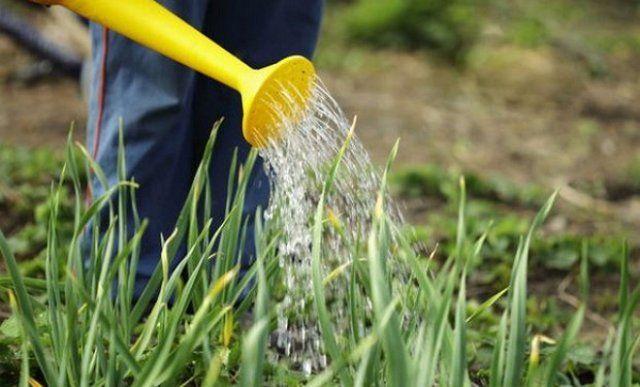
All vegetables require periodic watering, and onions are no exception. Avoid watering immediately after planting to prevent root rot. Experienced gardeners recommend starting to moisten the soil when the plants reach 10-12 cm. These plants have stronger root systems that are less susceptible to rot. Watering should be done no more than once a week, even on hot summer days. In early June, watering should be stopped completely.
Fertilizer
Fertilizing the soil and feeding onions enriches the soil with the nutrients needed by onion seedlings. Nutrient mixtures are first added to the soil when the first two or three leaves appear on the bushes. In this case, fertilizer mixtures made from potassium, urea, and carbamide are used. To create the fertilizer, mix 100-200 grams of fertilizer with ten liters of water.
The next time the soil is fertilized is when the seedlings have more than five leaves. At this stage of development, onions require mineral fertilizers.
Insect protection
Sometimes onion yields are reduced by insect attacks. Therefore, it's recommended to protect the seedlings from pests. To protect the vegetable from pests, you'll need to regularly water it with a manure mixture. Table salt should also be sprinkled along each row to repel midges.
Harvesting
Some people think harvesting heirloom onions is easy, but that's not true. To do it right, you need to know the nuances of harvesting ripe onions.
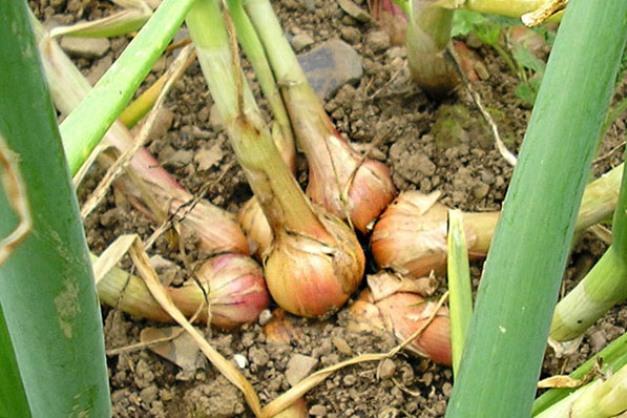
First, you need to determine when to harvest the onions. This is most often done in the second half of August, when the tops of the onions begin to dry out and turn yellow. Leaving the onions in the garden for too long is undesirable, as this reduces the shelf life of the harvest. By late summer, most of the onions are above ground, so you don't need a shovel to remove them. Simply gently tug the leaves, and the onions will emerge from the soil on their own.
Once the entire harvest is collected, it is cleaned of dirt and laid out in the sun to dry. The bulbs are then transferred to the cellar for further storage. It is best to use harvested root vegetables within 5-8 months, before they begin to spoil and rot.
Conclusion
Gardeners in many countries grow heirloom onions. Before planting, it's important to familiarize yourself with the main varieties and the nuances of growing onions.
Related posts:
 Description of the best varieties of onions, planting and care in open ground
 50 types and varieties of perennial onions with descriptions, cultivation, and care
 Description of Welsh onion varieties, planting, growing, and care in open ground
 Description of varieties and cultivars of wild onions, the subtleties of cultivation
 Control of onion pests using chemical and folk remedies
 The beneficial properties of white onions, description of varieties, cultivation and care
 How and when to plant onions to get large bulbs
 When to harvest onions planted in autumn and spring from the garden for storage, how to determine the timing
I think the most stable and reliable onion is the family variety! It tolerates frosts well, even if it gets overwatered, and is generally unfussy, perfect for our northern climate.