
Vegetable growers in many countries grow onions. Sometimes, when growing them, they have to treat dangerous onion diseases, which often lead to plant death. To preserve your harvest, it's important to familiarize yourself with the diseases and their treatments in advance.
Neck rot of onions
Many consider neck rot of onions to be a dangerous disease, as it affects young seedlings. Signs of the disease appear on bushes during warm and rainy weather, when humidity levels rise. Onion rot pathogens overwinter in plant debris, and after the arrival of spring, they gradually migrate to the onion plants.
Sometimes, the necks of onions rot after harvest. In this case, signs of the disease appear six weeks after harvest. Infected bulbs become lighter in color, and their skin turns yellowish. Their surface then turns black and becomes covered with dark spots. If no treatment is taken, the rot will spread to the rest of the bulb.
In the final stage of neck rot, the bulbs become completely covered with a black crust with a textured, rough surface. The crust first appears on the lower part of the bulb, gradually spreading to the sides and top. When the first signs of rot appear, it's important to quickly remove infected vegetables to prevent the disease from spreading to healthy plants.
Fighting neck rot is quite difficult, so it's best to think about prevention in advance. To protect the harvest from rot, warm and dry all fruit at about 45 degrees Celsius before storage. Also, to preserve the fruit, treat all heads with a chalk solution.
Downy mildew
Gardeners often have to contend with downy mildew, or peronospora, which can completely destroy crops. This dangerous disease is caused by conidia, which become active during flowering. Anyone can recognize the presence of conidia on their plants. Infected plants develop yellow spots and a purple coating.
The main reasons for the development of powdery mildew on onion bushes include:
- the presence of weeds, which often contain pathogens;
- high soil moisture;
- high temperature.
- Onion pests can also spread infectious diseases.
Signs of the disease appear only a month after the bushes are infected. In the first few days, the bulb is affected, after which the infection spreads to the leaves. Their surface turns pale and becomes mottled. In high humidity, a grayish coating accumulates on the infected leaves. In the final stages, all the leaves wilt and fall off, resulting in reduced yield.
To stop the spread of infection, use Polycarbacin. Its main advantage is that it is harmless to plants and leaves no burns. Making a working solution is simple: add 50 grams of the substance to a ten-liter container of water and mix thoroughly. Infected plants should be sprayed at least once every 10-15 days.
A weak Bordeaux mixture made from lime, water, and copper sulfate is also used to treat onions. Spray the plants with this solution in mid-May, when the conidia spores begin to germinate.
Some gardeners combat powdery mildew with folk remedies. They pick weeds from the garden, soak them in hot water, and let them steep for 3-4 days. Then, strain the liquid and use it to treat seedlings.
Onion rust
Onion rust is a dangerous disease that negatively impacts plant growth. Therefore, experienced vegetable growers recommend combating the disease immediately after signs of damage appear.
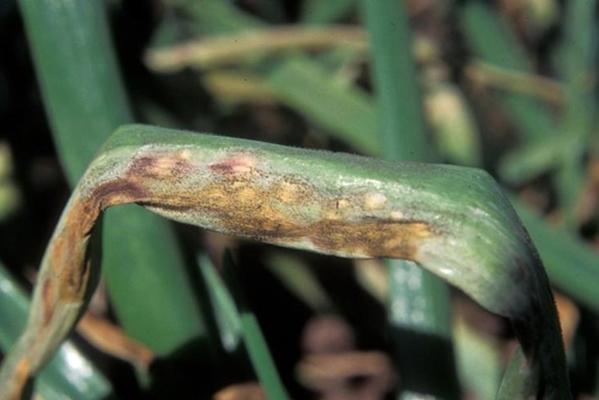
Rust has obvious symptoms, making it easy to spot. Affected plants develop bumpy, rounded spots, which will cause the leaves to die within a few days. The main causes of onion rust include untimely watering, weeds, planting plants too close together, and not planting within the proper timeframe.
The disease often manifests itself in rainy weather, as only wet leaves can become infected. The pathogen cannot penetrate dry plants.
Inexperienced gardeners don't know what to do if their plants are covered with rusty spots.
There are several preventative measures that can help protect seedlings from disease:
- plant plants at a distance of 50-60 cm;
- promptly pick off and burn infected leaves;
- plant onion varieties that are resistant to rust;
- All seedlings should be regularly treated with bactericidal solutions.
To protect seedlings from disease, they are periodically treated with a copper solution. To prepare it, add 50 grams of soap and 30 grams of the solution to a bucket of liquid. The solution is then stirred and used to spray the onions once a week. It's best to apply the solution during the day so the leaves are completely dry by evening.
Fusarium
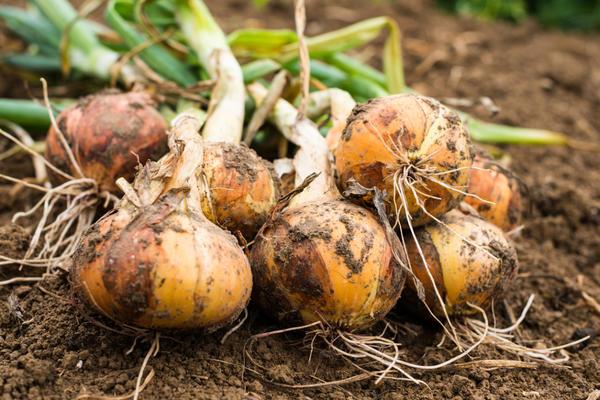
One of the most dangerous onion diseases is fusarium wilt, which causes bulb rot and leaf dieback. The pathogen is found in the soil and becomes active in the spring after the ground warms. Fusarium wilt first causes the leaves to darken, and then spots appear on the fruit. The bulbs become softer, and a grayish coating with an unpleasant rotten odor appears on their surface.

The reasons for the appearance of the first signs of pathology include:
- too frequent watering of the area where onions are grown;
- late harvesting of ripe fruits;
- use of spoiled seed material;
- high air temperature.
To avoid future problems with fusarium-infected plants, it's important to take preventative measures in advance. Preventative measures are taken during the soil preparation stage before planting onions. Before planting, the entire area is treated with a solution of Iprodione, which completely disinfects the soil and cleanses it of bacteria. When growing onion seedlings, the following preventative measures should also be followed:
- regular loosening of the area;
- planting only early ripening varieties;
- pre-sowing disinfection of planting material with a manganese solution;
- compliance with harvesting deadlines.
To prevent fusarium wilt from appearing after harvesting the bulbs, all fruits are stored in rooms with a temperature no higher than five degrees Celsius and humidity of about 50%.
Bacterial rot of onions
Onion plants become infected with bacterial bottom rot during the ripening period. The infection appears on the leaves as small, round, dark gray wounds. The bulbs appear healthy even after harvest. However, after 1-2 months of storage, their interiors begin to deteriorate and rot. To see if the bulbs are spoiling, you'll have to cut them lengthwise. The cut will reveal darkened and softened onion scales.
Gradually, all parts of the bulb will turn black and the fruit will spoil completely.
There are several reasons for the appearance of bacterial rot on onion seedlings:
- improper watering, due to which the onion feathers got sunburned;
- damage to crops during digging;
- sudden temperature changes that weakened the plants;
- infectious diseases;
- unsuitable conditions for storing bulbs.
It is recommended to prevent and combat bacterial rot to prevent it from spreading to nearby healthy seedlings. Preventative measures include the following:
- purchasing planting material from trusted sellers who sell only healthy bulbs;
- careful harvesting;
- regular removal of weeds from the area;
- drying all fruits before further storage in the cellar;
- creating optimal conditions for preserving ripe bulbs.
Green mold
These are the main pests of onions and garlic. Mold rot appears after ripe onions are harvested and during storage. Initially, brown spots appear on the underside of infected onions. Then, the bulbs lose their firmness and become limp. The entire surface of the fruit becomes covered with green moldy spots with an unpleasant odor. Such onions should be discarded immediately, as they harbor spores that can infect healthy specimens. There are two main causes of mold rot on onions:
- high humidity levels in the room where the harvested crop is stored;
- multiple mechanical damage to the surface of the bulbs during harvesting.
To prevent onion bulbs from spoiling due to mold rot, follow preventative measures. Carefully remove all ripe bulbs and seed material to avoid accidental damage. Treat the storage area with mice and other pest control products beforehand. Suitable storage conditions should also be created. They should be stored in a room with moderate humidity and a temperature of approximately 12-15 degrees Celsius.
Black mold
The appearance of mold Onion pests contribute to rot and dangerous bacteria that attack already harvested fruit. It's only possible to determine if the bushes are infected with this disease after harvesting the crop. The disease's progression is indicated by the darkening of the onion's surface. Infected bulbs also become soft and gradually rot. Black mold with a musty and unpleasant odor forms on their surface. The main causes of this disease include:
- storing crops in unsuitable premises;
- severe damage to onion heads;
- presence of bacteria in the soil;
- the soil is too wet.
To preserve the harvest and protect it from black rot, trample all rows before harvesting. This will protect the plant from excess moisture and inhibit bacterial growth in the soil. Trampling should be done very carefully to avoid accidentally damaging the bushes. For prevention, it is also necessary to:
- get rid of onion flies in a timely manner, as they can cause the bushes to become infected with rot;
- harvest onions only on sunny days;
- dry fruits before storing;
- pre-disinfect the seed material;
- create suitable conditions for storing fruits.
Conclusion
Onions are a common vegetable grown in almost every garden. When growing this plant, one often encounters diseases that can ruin the yield. To protect onions from these diseases, it's important to understand the specifics of their prevention.
Related posts:
 Description of the best varieties of onions, planting and care in open ground
 Description of shallot varieties, cultivation and care, when to harvest
 Control of onion pests using chemical and folk remedies
 50 types and varieties of perennial onions with descriptions, cultivation, and care
 Description of the Exhibition onion variety, growing from seedlings, planting and care
 Types of onion varieties with names and descriptions, their differences and cultivation
 How and when to plant onions to get large bulbs
 The beneficial properties of white onions, description of varieties, cultivation and care