
Gardeners are interested, How to grow onions Candy. Gardeners regularly grow onions in their gardens because they have excellent flavor, are not bitter, ripen early, and produce a high yield. Of all the onion varieties, the Candy variety deserves special attention; it's very easy to grow, allowing you to reap a high-quality harvest in the very first season.
Characteristics of the variety
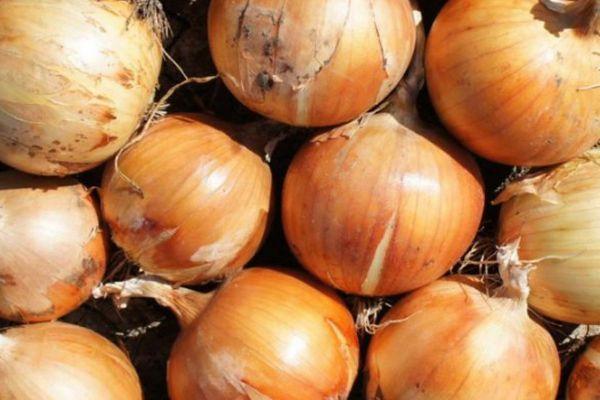
The Candy onion is a hybrid variety distinguished by its golden-bronze skin and juicy, sweet flesh. Therefore, the bulbs are used in salads and as an addition to first and second courses. The variety was developed by the Dutch company Seminis Vegetable Seeds.
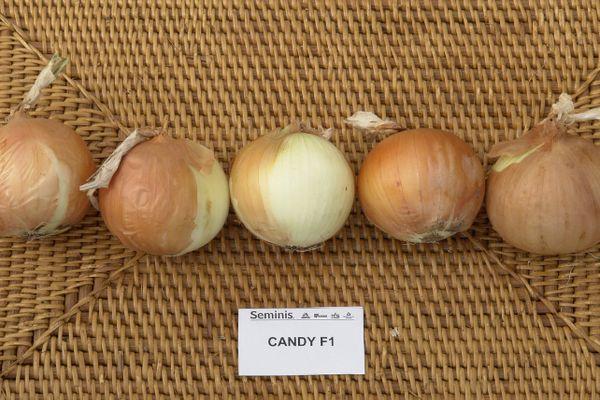
The main characteristics of Candy are:
- An extremely early onion variety. The average time to harvest ranges from 85 to 90 days after sowing the seeds or planting the seedlings.
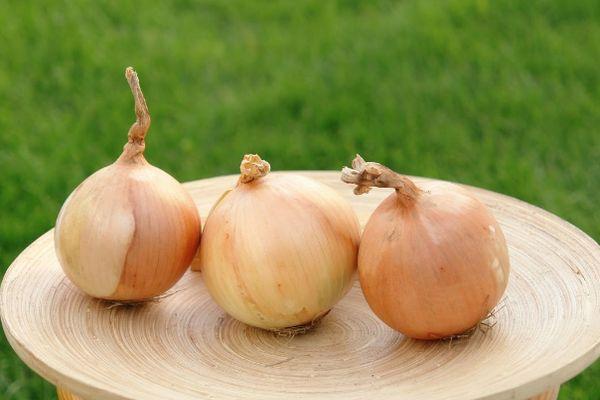
- The bulb is round in shape, with smooth sides and a thin neck.
- The weight of 1 turnip is 500-800 g.
- The husk is golden and dry.
- Cultivation occurs through seedlings or seeds, which are placed in open ground.
- Onions are unpretentious in care and cultivation.
- The variety is distinguished by simple agricultural technology.
- Versatility in use.
- Average shelf life is 4-6 months.
Turnips can be grown in various regions of Russia, but the highest yields are achieved in the southern regions. If gardeners in the central, northern, and northwestern regions devote more attention to cultivating the hybrid variety, creating favorable growing conditions, they can reap a high-quality harvest of bulbs.
Advantages and disadvantages of the variety
The main advantages of Candy include:
- Rapid ripening of bulbs, which should be harvested as soon as the crop is ripe.
- High yield.
- Unpretentiousness.
- Resistance to most diseases that affect onion varieties.
- The variety can be grown on an industrial scale, for individual use, and for commercial purposes.
The variety does have some minor drawbacks. Firstly, gardeners believe it doesn't keep or store long enough. Secondly, you can't grow your own nigella, as it's a first-generation hybrid. Therefore, onion sets are not used for growing harvest, and only seedlings or seeds planted directly in the ground are used.
How to grow onions?
Careful consideration must be given to choosing a site for planting seedlings or sowing seeds. The Candy variety should be planted in a location with maximum sun exposure, protected from wind, and located away from trees. Sandy loam soil is ideal for this variety's bulbs, as it allows for an excellent harvest of Candy turnips.
If the soil is acidic, the variety will not yield as much. To reduce acidity, it is recommended to add lime or dolomite powder to the soil.
The soil for spring sowing is prepared in advance:
- The soil on the site needs to be dug up.
- Remove all weeds and roots of previous plants and bushes.
- Add humus or compost, and wood ash. For every 1 m² of area, add 1.5-2 buckets of compost or humus, or 2 liters of a solution of wood ash and water (2 liters/1 m² of area).
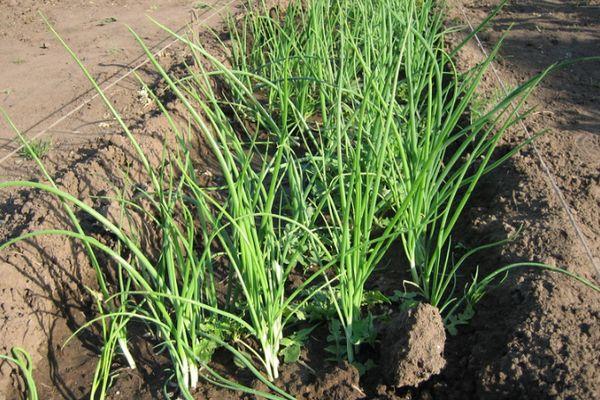
Avoid adding fresh manure to the soil that will be used for sowing onions. This is not recommended in either spring or fall. Instead, use a plot of land previously used for growing cucumbers, legumes, and cabbage. Make furrows in the plot, spaced 25-30 cm apart and 3-4 cm deep.
The seedling method, like sowing seeds, requires consideration of the region's climate. Specific aspects of growing seedlings include:
- Seedlings should be almost 60 days old before being planted in a greenhouse or open ground. This is enough time for the seedlings to become strong and healthy.
- Seeds are purchased only at specialized retail outlets.
- Before sowing for seedlings, the seeds should be treated with a weak solution of potassium permanganate. Next, the nigella seeds are treated with a growth stimulant.

After treatment, the seeds need to be germinated by placing them in a damp cloth for several days.
Once the nigella sprouts, the seeds are sown in containers—boxes, special seedling trays, or containers—filled with prepared soil. The soil should be loose, nutritious, and light.
Make furrows in the soil and place the seeds in them. Cover them with soil and spray with warm water. Cover the containers with plastic wrap and place them in a warm place with a stable temperature of 22 to 25ºC.
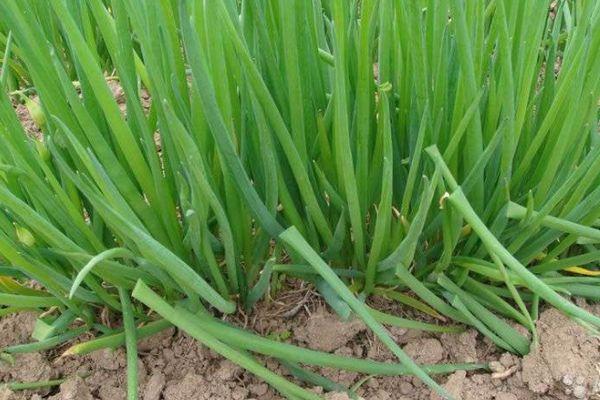
The seedlings begin to sprout rapidly and evenly, and once this happens, the room temperature should be lowered to 18ºC. They should be watered regularly, loosened, and fertilized. Water at the roots, but avoid getting any liquid on the green onion leaves. When the leaves have grown sufficiently, they are trimmed back to promote root growth. Additionally, the seedlings should be provided with supplemental lighting and thinned.
Before planting in the garden, the seedlings of the Candy onion variety should have 3 or 4 true feathers, developed roots, which should be healthy and strong. The seedlings need to be planted in the ground, and then the soil should be carefully compacted, mulched with peat (the next day), and watered.
Germinated nigella seeds are planted in the soil when the air temperature allows. Sowing is usually done in mid-April. Planting should be done in a 25x25 cm pattern. Avoid planting the seeds too densely, as this will result in a low-quality and small harvest.
Onion bushes need to be thinned a second time when the seedlings sprout and form several true leaves.
Care and harvesting
Seedlings in the garden bed are sometimes covered with cloth if the air temperature drops. The soil in the beds should be moistened when the top layer of soil becomes dry. Regular mulching is essential, which helps prevent excessive soil moisture and promotes aeration to the roots.
Watering is stopped when rain begins or harvest is scheduled. Drip irrigation has proven highly effective.
Regular weeding of the soil between the beds is also necessary to remove weeds.
Once every 3 weeks, top dressing with complex fertilizers is carried out.
The bulbs ripen by early July. Signs of ripening include yellowing leaves and the bulbs turning golden. Harvesting is done on a dry, sunny day so the harvested crop can be laid out directly on the beds to dry. Once the bulbs are dry, the plants are gathered into bunches, placed in baskets, and stored in a dark place.
Related posts:
 Description of the best varieties of onions, planting and care in open ground
 50 types and varieties of perennial onions with descriptions, cultivation, and care
 Control of onion pests using chemical and folk remedies
 Description of Welsh onion varieties, planting, growing, and care in open ground
 Types of onion varieties with names and descriptions, their differences and cultivation
 How and when to plant onions to get large bulbs
 The beneficial properties of white onions, description of varieties, cultivation and care
 Description of the Exhibition onion variety, growing from seedlings, planting and care
This onion requires almost no care and produces a large yield. If you want to speed up its growth, use the product "BioGrow"It doesn't harm the soil. You'll see its effects quite quickly.