
- Watering times
- Start
- Termination
- Using salt water
- General rules
- At the beginning of growth
- When ripe
- Before harvesting
- What are the dangers of overflow?
- Features of watering in a greenhouse
- How to water seed onions correctly
- Using sprinkler irrigation systems
- Combining watering with fertilizing
- How often should I water the feathers?
- Adviсe
- Conclusion
To ensure optimal fruit production, planted onions require regular watering. Some people think that watering vegetable crops is fairly simple, but this isn't true. It's recommended to familiarize yourself with how to water onions in open ground beforehand.
Watering times
Summer is the time to water your vegetable garden. As July ends and August begins, increased irrigation begins.
Start
You should begin watering onions immediately after planting them in open ground. If you don't moisten the soil immediately, the vegetable will stop growing and developing foliage. Water regularly to prevent the soil from drying out. Most water is used during the period when the rhizomes and above-ground portions of the seedlings are developing.
Termination
Many novice vegetable gardeners wonder how long to water their onion beds. Experienced gardeners stop watering their onion seedlings 5-10 days before the bulbs ripen. Therefore, the last time to water the beds is in the second half of August. If you don't stop watering the soil in time, the bulbs will quickly rot after harvest.
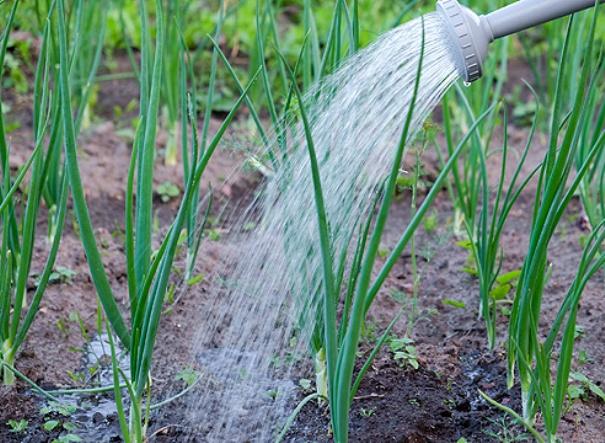
Using salt water
Some gardeners use salt water to irrigate their beds. This salty solution is commonly used to protect seedlings from dangerous pests that can attack the plant.
The advantages of using saline liquid include ease of use and environmental friendliness.
Before using the solution, it's important to familiarize yourself with its basic usage. Salt water should be used at least three times per season:
- The first time. You can use the salt solution for the first time when the young seedlings reach 7-8 centimeters in height. In this case, use a solution prepared from 8-9 liters of water and 350 grams of table salt. Pour the salt water very carefully, avoiding any drips on the green foliage.
- Second time. The next time, use salted water in 2-3 weeks. This time, the bushes are watered with a more concentrated solution, adding 450 grams of salt instead of 350.
- Third time. The last time the beds are irrigated with a salt solution is in midsummer. To prepare the solution, dissolve 550-650 grams of salt in ten liters of warm water.
General rules
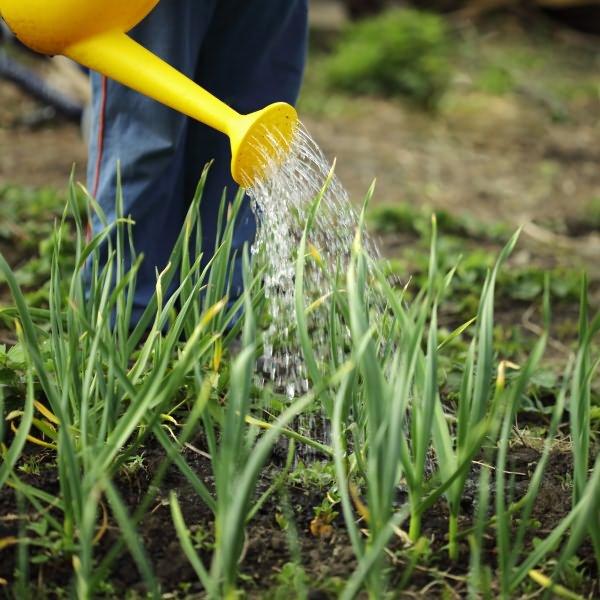
To properly moisten the soil, you will need to familiarize yourself with the general rules of watering.
At the beginning of growth
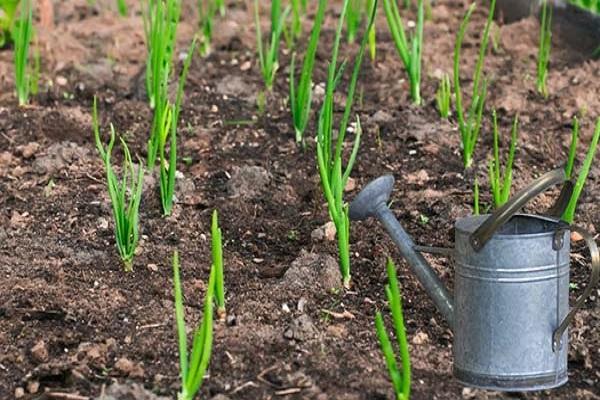
Onions need the most moisture during the initial growth stage, as the plant begins to establish roots. Avoid using water that's too cold, as it can trigger root rot. Experienced gardeners recommend using settled, room-temperature water for irrigation.
The frequency of watering depends directly on the weather. For example, if there's frequent rainfall, watering should be done once a week. If there's no rain, watering should be done at least three times every ten days. Ten liters of water is used per square meter of garden space.
When ripe
As the bulbs begin to ripen, watering should be gradually reduced. This ensures the harvested crop is tastier and lasts longer after harvesting. Therefore, experts recommend reducing the intensity of irrigation 2-3 months after planting.
It's fairly easy to tell when the onions are starting to ripen. To do this, carefully inspect the onion tips. As the fruit ripens, they begin to thicken and bend toward the ground.
Before harvesting
Stop watering the beds 10-15 days before digging up the ripe bulbs. Harvesting should begin when the soil in the beds is completely dry. If the soil is wet, the dug-up bulbs will not store well and will rot prematurely.

What are the dangers of overflow?
Gardeners who have been growing vegetables for a long time advise avoiding overwatering their onion beds. Excessive humidity negatively impacts seedling growth and promotes the following diseases:
- Mold rot. If you don't stop irrigating onions before harvesting, signs of rot will appear on the fruit. At first, they won't be noticeable, but gradually the surface of the scales will darken and turn black.
- Neck rot. This is a common disease that appears during storage. Neck rot causes the bulbs and leaves to soften. The affected fruits gradually darken and begin to emit an unpleasant odor.
- Downy mildew. This condition develops due to rainy weather or improper watering. Affected seedlings become covered with yellow spots and gradually dry out.
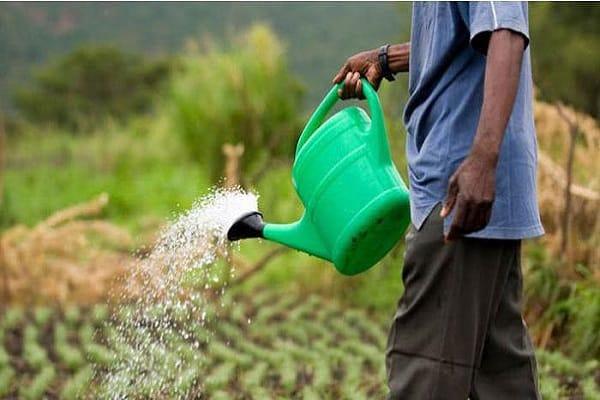
Features of watering in a greenhouse
Some people believe that onions in a greenhouse are watered the same way as outdoors, but this is not true. If the vegetable is grown indoors, a different irrigation system will be required.
To figure out how often to water onions, you need to take into account the temperature inside the greenhouse and the level of lighting.
Experts recommend growing onion seedlings at temperatures between 20-23 degrees Celsius. In this case, watering is done 1-2 times a week. If the greenhouse is warmer, the soil will dry out faster, so it will need to be watered three times a week. Each onion seedling requires 4-5 liters of water.
How to water seed onions correctly
Sometimes gardeners grow seed onions, which will later be used as planting material. Beds containing these onions also require regular watering. When growing seed onions, care must be taken to ensure the soil does not dry out too often. To maintain optimal soil moisture, water the beds 1-2 times every ten days.

During the flowering period, water the seedlings twice as often. This will help produce higher-quality seedlings. After each watering, loosen the beds to prevent a crust from forming on the soil surface.
Using sprinkler irrigation systems
Some gardeners prefer not to water their onions manually and instead use special sprinkler systems. The main advantage of these irrigation systems is that they continuously moisten the soil and prevent it from drying out. The pipes should be laid between the rows, under the soil. A sprinkler head, responsible for watering, should be brought to the soil surface. It should be positioned 5-25 centimeters above the ground.
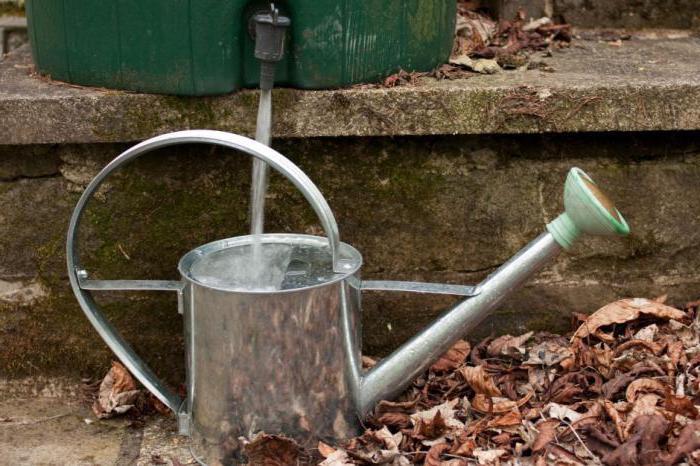
Combining watering with fertilizing
It's no secret that onions, like most other vegetable crops, require regular fertilization. For more effective fertilization, it's combined with irrigation. Fertilization and irrigation are combined using the following fertilizing mixtures:
- Copper sulfate. To improve yields, water the soil with a copper sulfate solution. To prepare it, add 50 grams of the solution to a bucket of water. Water the resulting mixture under the onions 2-3 times a month.
- Potassium permanganate. This mixture is used to protect seedlings from diseases and pests. Mix the potassium permanganate with water until the mixture turns a deep crimson.
- Boric acid. Boric acid is used to stimulate the development of green onion foliage. Add a teaspoon to 25-27 liters of warm water. Irrigation of bushes with boric acid is carried out once a month.
How often should I water the feathers?
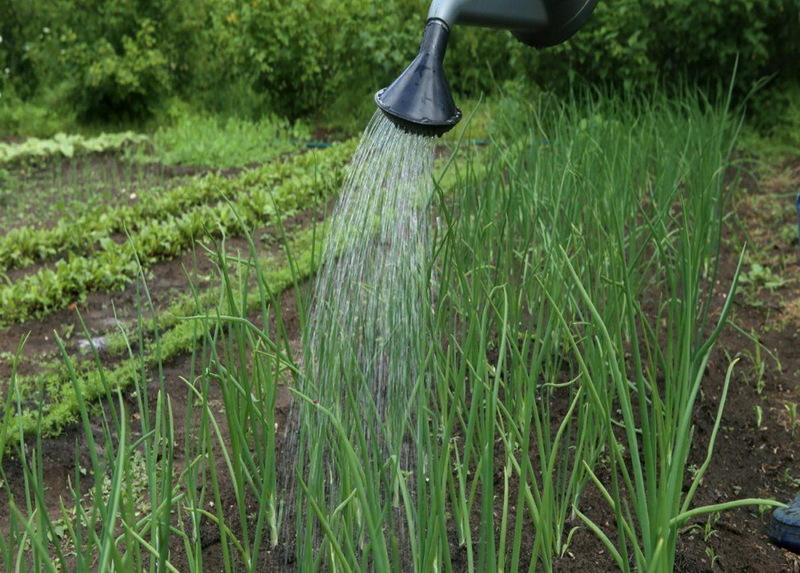
When growing onions for their green shoots, watering will require more frequent application. During dry springs, onion seedlings should be watered four times a week, with 11-12 liters of water applied per seedling. Water the roots of the plants until the green shoots reach 7-10 centimeters. After that, any irrigation method can be used. Watering should be stopped 5-8 days before harvesting the green shoots to prevent the plants from becoming too waterlogged and brittle.
Adviсe
To prevent your onions from wilting and dying from drought, you should familiarize yourself with the recommendations that will help you organize proper watering:
- Irrigation should not be done in sunny weather. Watering in the scorching sun can cause foliage burns. Therefore, it is recommended to water in the evening or early morning.
- Avoid daily soil moistening. Daily watering impairs seedling development and promotes fruit rot.
- Avoid fluctuations in soil moisture, as this negatively impacts vegetable growth.
- During a drought, each bush should be supplied with about 8-10 liters of liquid.
- Seed onions need to be watered more often, as they require a lot of moisture for development.
- Do not allow the soil to dry out, as this will slow down the ripening of the bulbs.
Conclusion
Many gardeners grow onions in open ground. Before planting this vegetable, it's important to understand the irrigation requirements for the beds where you're growing it. This will help increase yields and produce larger bulbs.
Related posts:
 How to water cucumbers in a greenhouse and open ground, timing and water consumption rates
 Rules for growing tomatoes in open ground, choosing a variety, planting and care
 How to prune grapes step by step for beginners
 Planting and caring for arugula in open ground, description of the best varieties and their cultivation
 How to treat grapes for mildew, the best control measures and treatment rules
 How often should you water pumpkins in open ground in August during hot weather?
 How to properly plant cucumber seedlings at home and what to feed them with
 The benefits and contraindications of lentils for the human body