
- General information about the variety
- The main advantages and disadvantages of culture
- Growing Sugar Baby Watermelon
- Seed treatment
- Soil for seedlings
- Site selection and preparation
- Planting in open ground
- Recommendations for caring for the variety
- Watering rules
- Loosening the soil
- Bush formation
- Fertilizers and feeding
- Mineral fertilizers
- Organic fertilizers
- Feeding scheme
- Diseases and pests of watermelon
- Cleaning and storage
- Reviews from experienced gardeners
The Sugar Baby's low maintenance and short ripening period make it ideal for growing the crop not only in southern and central Russia, but also in Siberia with its long winters and short summers.
General information about the variety
The table watermelon variety Sugar Baby, or Sugar Baby in English, was added to the State Register of Breeding Achievements of the Russian Federation in 2025, where it is registered under number 9463665 and is intended for cultivation in the Central Black Earth Region.
The plant is grown commercially, in summer cottages, and in backyards. It is a medium-sized climbing variety with large green leaves on long petioles. The roots are long and branched. The yellow flowers are funnel-shaped. Insect pollination requires clear, sunny days. Male flowers remain viable for 7 hours.
If it is cloudy and rainy outside during the flowering period, the plant is pollinated artificially.
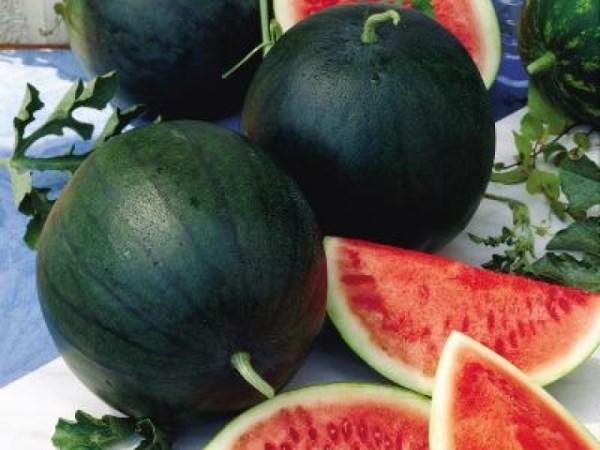
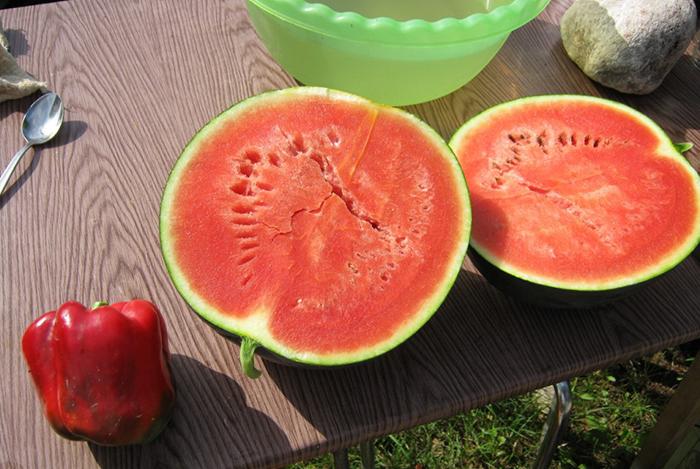
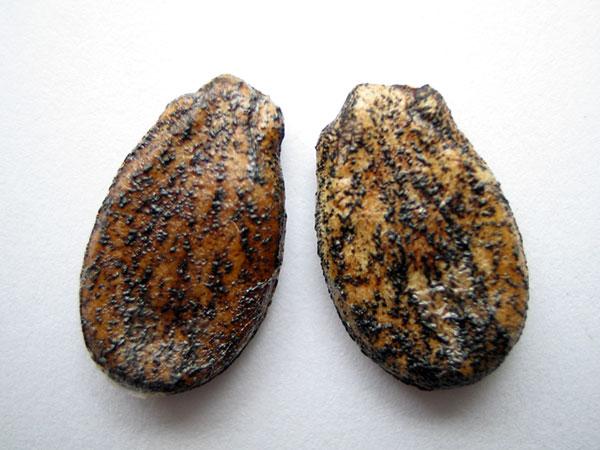
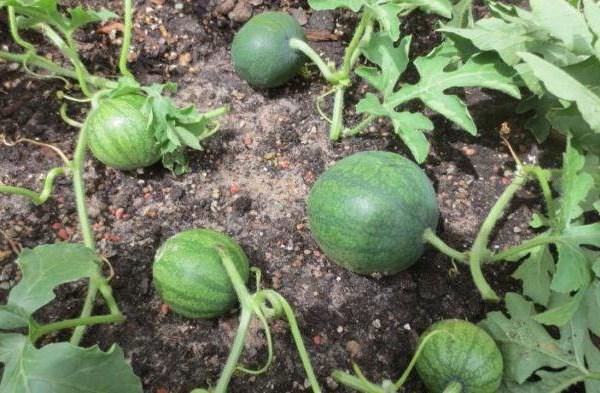
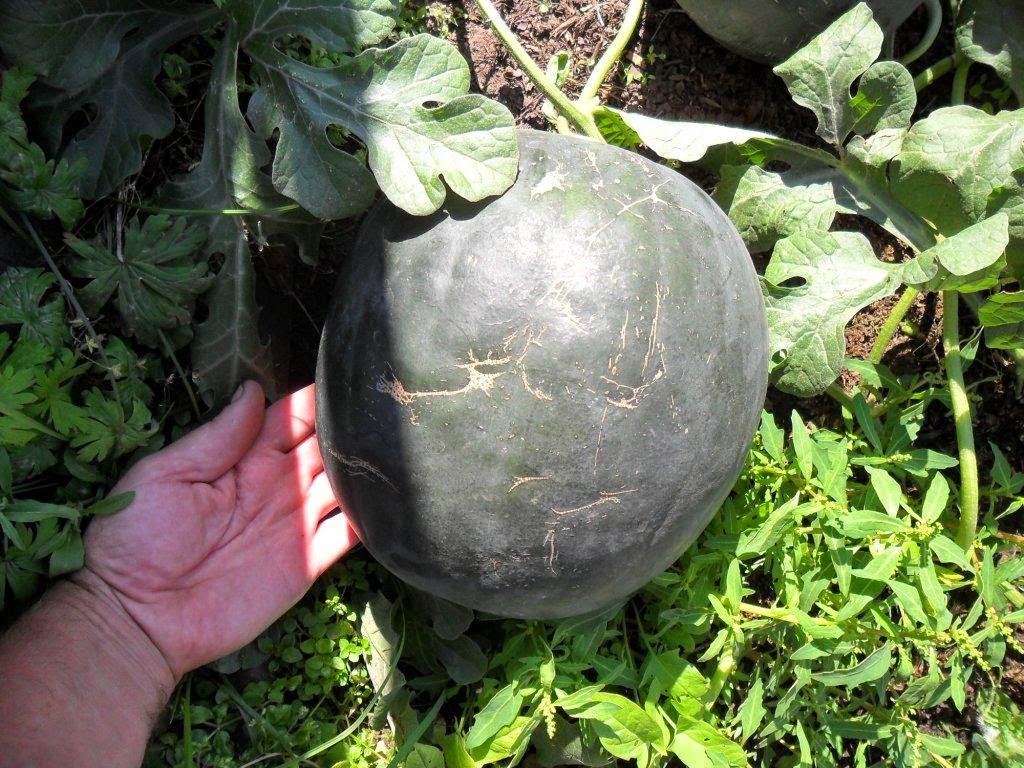
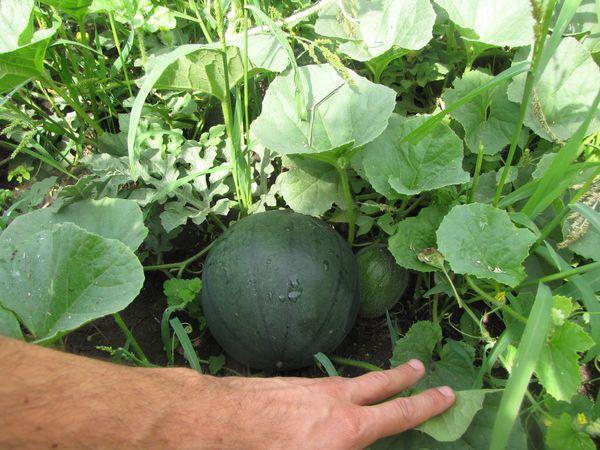
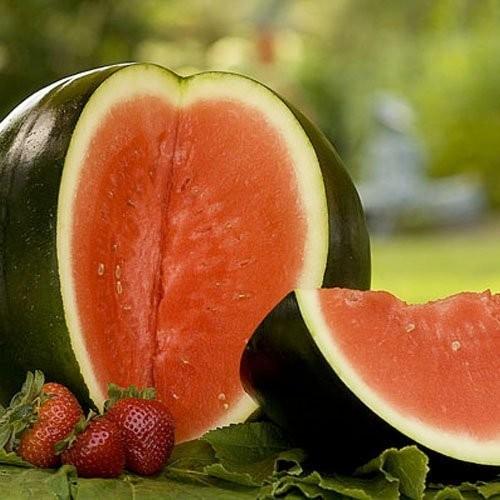
When describing the fruit, its diminutive size is undeniable. The average berry weight is 2–3 kg, with a maximum of 6 kg. Ripening takes 2.5–3 months. The thin rind of a ripe watermelon takes on a rich dark green color, with darker stripes visible upon closer inspection. The flesh is red and crumbly, with a sweet and delicate flavor. There are few dark, almost black seeds. One square meter of melon plot yields up to 10 kg of fruit with a sugar content of 10%.
The main advantages and disadvantages of culture
The advantages of the Sugar Baby watermelon variety include the following qualities:
- dessert taste with a floral aroma that lasts for a long time;
- thin skin;
- short ripening period;
- ease of care;
- fruits are not susceptible to mechanical damage during transportation;
- the plant is resistant to melon diseases due to built-in genetic immunity;
- shelf life.
Experienced gardeners do not note any drawbacks to the fruits of the Sugar Baby variety, other than their small size, but this is a matter of taste.
Growing Sugar Baby Watermelon
To grow an excellent harvest of Sugar Baby watermelons in a melon patch, follow proper planting techniques. Before planting the seedlings, preparatory work is carried out, including seed treatment and selecting a site with suitable soil.
Seed treatment
If Sugar Baby watermelon seeds are purchased without pre-treatment, the following steps should be taken before planting:
- calibrate, which leads to friendly shoots;
- immerse for half an hour in hot water at a temperature of up to +50˚C, starting biochemical processes;
- To prevent attacks by insect pests and the appearance of diseases, disinfect for a quarter of an hour in a weak solution of potassium permanganate;
- washed and dried.
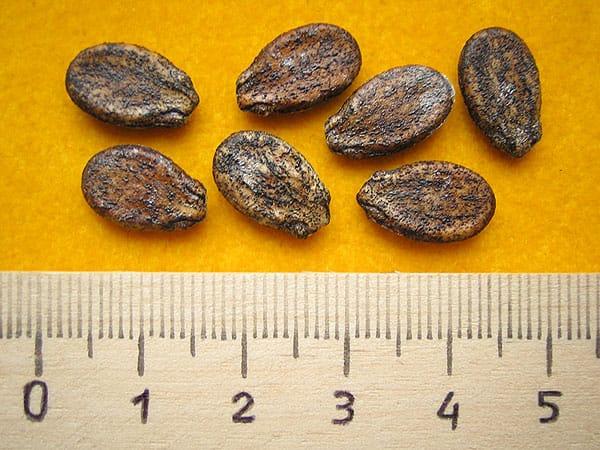
Before germination, Sweet Baby watermelon seeds are soaked in a Kornevin solution for 8 hours, which accelerates germination and rooting. Next, several layers of moistened gauze are placed on a saucer.
Place the planting material on top of one half of the napkin, cover with the other half, and place in a warm place.
To reduce moisture evaporation, stretch plastic wrap over the saucer. Once the first sprouts appear, which happens within a week, the watermelon seeds are ready for planting. If weather conditions are unpredictable, seedlings are planted in the ground.
Soil for seedlings
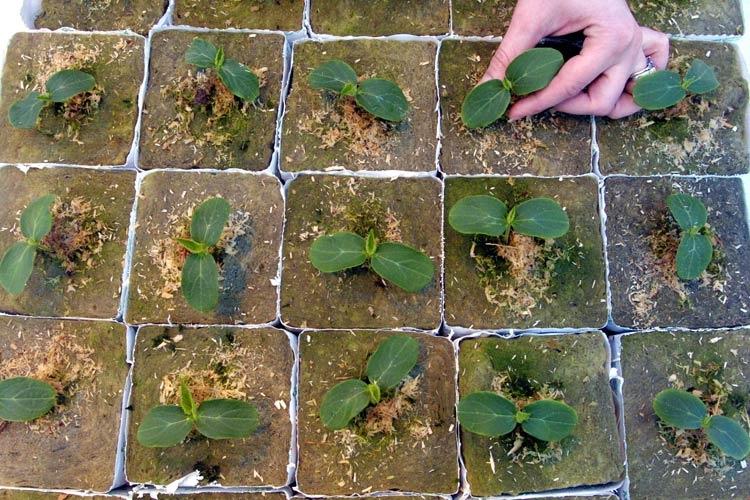
The substrate for Sakharny Malysh watermelon seedlings is prepared from 3 parts sawdust and 1 part humus, or turf soil combined with sand and humus in a 1:1:3 ratio. This 10 kg soil mixture is fertilized with 20 g of nitrogen and 15 g of potassium, and 35 g of superphosphate is added. The seeds are planted 2 cm deep, 1–2 seeds per 10 cm diameter cup. After 1.5 months, the seedlings are planted in their permanent location in open ground.

Site selection and preparation
Choose a sunny, warm, ventilated, but draft-free bed for the Sugar Baby watermelon. The best predecessors are garlic, tomatoes, beans, onions, and potatoes. If the crop is grown after radishes, spider mites are unlikely to appear. Due to the similarities It is not recommended to plant watermelons due to diseases. Sugar Baby varieties in areas where pumpkins, squash, and melons were grown the previous year.
The plant prefers loose, air- and moisture-permeable soil (sandy loam or sandy) with a pH of 6.5–7. Ash, sulfur powder, slaked lime, and dolomite flour help make the soil less acidic. To prevent sunburn on the leaves, corn or sunflowers are planted around the perimeter of the melon patch. To increase the fertility of the substrate, compost and humus are added during tillage in the fall at a rate of 2 buckets per square meter.
Planting in open ground
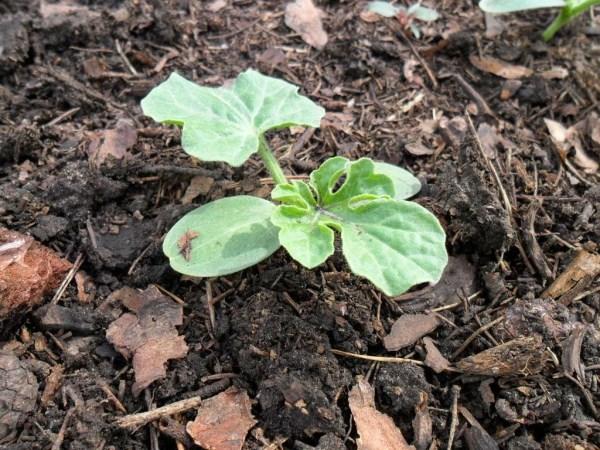
The timing and selection of planting material for obtaining Sugar Baby watermelon fruits depend on the climate zone.In southern regions, mid-April is the ideal time. In central Russia, the target is for average daily temperatures to reach at least 15°C.The seeds of the crop are planted to a depth of 2–3 cm. It is recommended to cover the melon patch with film until the seedlings appear.
Given the spreading nature of the lateral shoots, the plant requires sufficient space to fully develop. Maintain a distance of 0.7 meters between holes and 1.4 meters between rows. Place up to five seeds per hole, after watering the hole with warm water. Lightly compact the soil above the seedlings. After seedlings emerge, remove weak, non-viable plants, leaving the strongest ones.
In Siberia and central Russia, the harvest is obtained by planting seedlings under plastic cover. The same spacing is maintained as for seeding. The harvesting period is late May to early June. The seedlings are hardened off for a week, then transferred to open ground at temperatures no lower than 20°C.
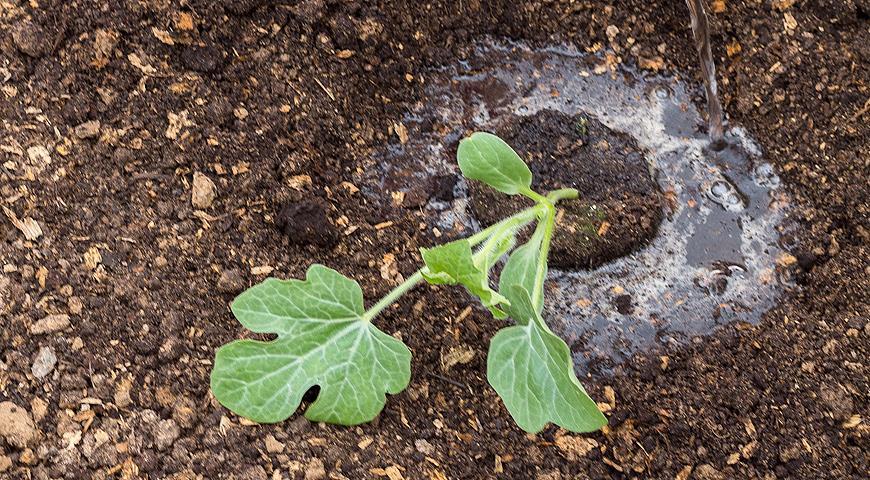
The seedlings are carefully removed from the plastic cups, placed in moistened holes, and covered with soil, but not buried deep. If peat pots were used for the watermelon seedlings, they are planted in them. To save space, vertical growing with supports is used.
Recommendations for caring for the variety
Timely watering, regular soil loosening, and adherence to a schedule of mineral and organic fertilizers lead to a quarter increase in crop yield, while maintaining the varietal characteristics of the Sugar Baby watermelon.
Watering rules
The extensive root system of the Sakharny Malysh watermelon reaches deep into the soil and is capable of providing its own moisture. For safety, water the plant moderately twice a week. During flowering, increase the amount of water to a bucket per plant.
Use warm, settled water. The optimal time for watering is morning or evening. Avoid overhead irrigation, as it's important to avoid dripping onto the leaves. Once the watermelon fruits ripen, stop watering.
Loosening the soil
The soil crust on the surface is broken up the day after rain or artificial watering. The soil is loosened during weeding. These aerating and drainage practices improve soil aeration and permeability.
Bush formation
When cultivating the Sugar Baby watermelon, care is taken to ensure that the plant uses nutrients to develop fruit, not green mass.On the main stem of the crop, 3-6 ovaries are left, the lateral shoots that provide nutrition are pinched above the third leaf.Another option for shaping a watermelon bush is to remove all side shoots, leaving up to five fruits with five leaves between them on the main vine.
Fertilizers and feeding
To ensure the plant receives complete, balanced nutrition, Sakharny Malysh watermelons are fed with organic and mineral fertilizers. A lack of chemical elements reduces yield and deteriorates the taste of the fruit.

Mineral fertilizers
Ammonium nitrate, urea, Ammonium sulfate is the most popular nitrogen fertilizerThe last complex on the list is preferred due to its sulfur content, safety for human health, and affordable price. Among phosphorus fertilizers, gardeners and farmers choose superphosphate, which includes boron, molybdenum, magnesium, and ammophos.
Potassium nitrate and potassium chloride strengthen roots, increase crop resistance to unfavorable growing conditions, and stimulate the formation of female flowers.To ensure better absorption of mineral fertilizers by the Sugar Baby watermelon, it is recommended to apply the complexes after rain or artificial soil moisture.
Organic fertilizers
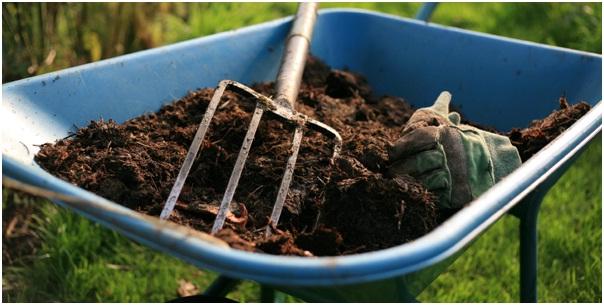
Organic fertilizers come in both plant and animal origins. The former includes humus, herbal infusions, and wood ash, which contain boron, zinc, magnesium, potassium, sodium, and sulfur. Animal-based fertilizers include cow dung, manure, and bird droppings. The greater the degree of decomposition, the more readily available the manure is for watermelon. Fresh fertilizer should not be used, as the large amount of heat generated can cause burns and even death.
Due to its high uric acid concentration, chicken manure is most often used in aqueous solutions. In its pure form, it is applied in small quantities to the soil during fall tillage. Cow manure is a fermented mixture of manure and water. This fertilizer is harmless to humans and contains a range of essential nutrients.
Feeding scheme
The seedlings are fed twice. The first time, when the Sakharny Malysh watermelon has two leaves, it is watered with mullein or an infusion of bird droppings, prepared from 1 part dry matter to 10 parts water. The second time, two weeks before planting, urea, ammonium sulfate, or an ash solution (200 g per bucket of water) are applied.
Ten days after planting, watermelons are fed again with nitrogen fertilizers or 2 liters of a mixture of mullein (10 liters), potassium chloride (1 tablespoon), and double superphosphate (1.5 tablespoons) are added to each plant. To promote uniform flowering and fruit set, watermelons are fed with potassium and magnesium at the beginning of flowering. Popular ready-made fertilizers include magnesium nitrate, Kaltsinit, and Nutrivant Plus.
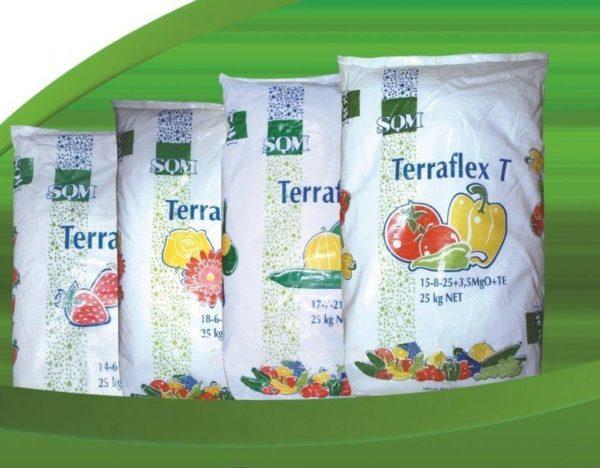
During the formation of ovaries, the Sugar Baby watermelon requires feeding with boric acid. Boron deficiency is indicated by the appearance of yellow stripes on the fruit.Spraying the crop every two weeks with Plantafol, Boroplus, and Chisty List is effective. The next stage of feeding is fruit development. During this period, at 10-14 day intervals, watermelons are fertilized with a mineral complex consisting of ammonium sulfate (1 tablespoon), potassium salt (1 teaspoon), and superphosphate (1 tablespoon). To increase the sugar content of the fruit, use a Terraflex Universal solution. Fertilizing continues until the berries reach the desired size.
Diseases and pests of watermelon
Common diseases of the Sweet Baby watermelon variety and control measures:
- White rot
A white coating appears on the underside of the leaves, turning black over time. The stems rot, and the tops droop. Disease prevention timely feeding of watermelon Copper sulfate or zinc sulfate. At the first sign of disease, the damaged parts of the plant are cut out. The cuts are sprinkled with crushed activated charcoal.
The plants are treated with Rovral and Topaz. If most of the vine is affected, the watermelon is discarded.
- Bacteriosis
The fruits soften, ulcers and rot appear, and the Sugar Baby leaves become covered with oily, whitish spots, which then develop holes. The plant's organs die. After removing the plant, the soil is treated with fenituram.
- Powdery mildew
A white, flour-like coating appears on the leaves, ovaries, and stems of the plant. Later, the affected areas darken, and a cloudy liquid oozes from the spots. In the early stages of the disease, the plant is treated with infusions of nettle, soda ash, and mullein. Later, Jet, Bayleton, and Topaz are used.
- Black rot
Watermelon leaves develop gray spots with black dots that expand, rot, and die. Affected areas are removed, and the plants are treated with copper-containing agents. Fungal spores are introduced to the crop through insects, rain, and equipment.
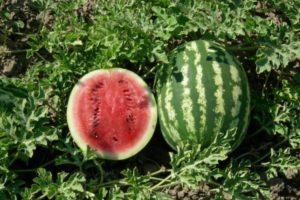
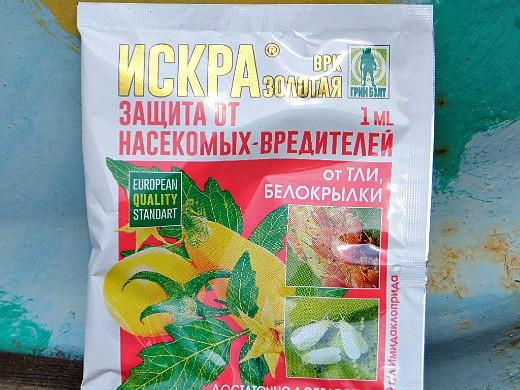
Among the insects that harm the Sugar Baby watermelon, spider mites, melon aphids, and wireworms are distinguished.To control aphids, plants are dusted with mustard or tobacco powder twice a week, and sprayed with onion or garlic infusion. Ready-to-use insecticides such as Iskra, Kamondor, and Karate are also available.
To get rid of spider mites, use the effective product BI-58 twice a season. Wireworm traps are set out using small containers filled with pieces of fresh carrot or potato. Mustard planted between rows repels the larvae. If the insects are numerous, use Provotox, Metarizin, or Prestige.
Cleaning and storage
Early-ripening varieties, including the Sladkiy Malysh watermelon, do not ripen uniformly, so the fruits are harvested in 2-3 stages. Only ripe berries are picked from the vine, as the sugar content is acquired only on the mother plant. The fruits do not ripen fully during storage or transportation. The ripeness of the first Sugar Baby berries is determined no earlier than mid-August by the following characteristics:
- the "barrels" of fruits that were in contact with the soil turn yellow;
- the bark becomes shiny and elastic, and a characteristic pattern appears;
- the stalk dries out;
- When you hit the crust, you hear a dull sound.
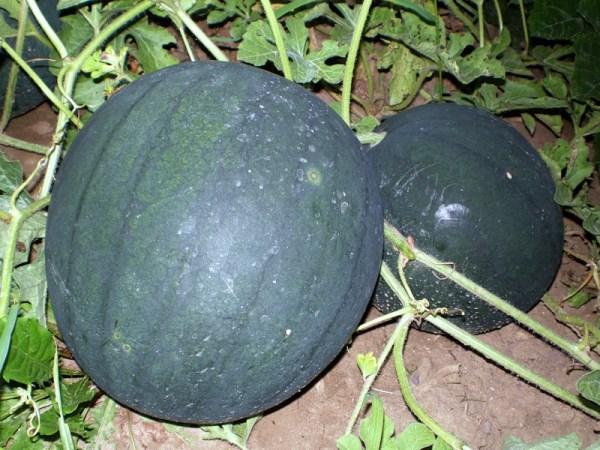
Sugar Baby watermelons are cut from the shoots, stem included, to prevent rot. The last unripe berries are picked before frost and used for pickling.
Selected whole ripe fruits are stored in dry, dark and ventilated rooms at a temperature of 2–6 °C and a humidity of 75–85% for four months.
Turn the watermelons over periodically to check for rot. Avoid storing vegetables with strong odors near them. At room temperature, Sweet Baby watermelons will keep for no more than two months.
Reviews from experienced gardeners
Practical growing tips and genuine emotions about the varietal characteristics of the Sugar Baby watermelon can be gleaned from reviews from gardeners.
Irina Vladimirovna, 43 years old
I've been planting the Sakharny Malych watermelon for the third year in a row. I like it because the fruit ripens well in the challenging climate of Western Siberia. Despite its light weight, the taste is just as good as that of larger varieties.
Maria Petrovna, 60 years old
I live in the Moscow region. I plant Sugar Baby watermelons from seeds under plastic in April. I follow standard care—weeding, watering, and fertilizing. I only use organic fertilizers. I consider manure, cow dung, and compost to be environmentally friendly, unlike the "chemicals" sold in stores. My grandchildren eagerly await the ripening of the sugary, sweet fruits every August.
Sergei Ilyich, 65 years old
I've been growing the Sweet Baby watermelon variety for two years. I first planted seedlings in an abandoned garden plot that used to grow corn. I reaped a bountiful harvest. The fruits ripened in 70 days. One watermelon weighed 5 kg, while others were 1-2 kg lighter. The second time, I sowed the seeds near the house on the south side of the plot. The weather was disappointing: due to a rainy, cloudy summer, the watermelons took longer to ripen, and they tasted watery and not very sweet.
Related posts:
 The health benefits and harms of watermelon for the human body, how to consume it correctly
 TOP 5 recipes for watermelon and rind compote for the winter at home, storage
 Description and characteristics of the Karistan F1 watermelon variety, planting and care
 Description and technology of growing the Crimson Sweet watermelon variety
 Description and characteristics of the watermelon variety Kholodok, cultivation rules
 Simple step-by-step recipes for making watermelon jam for the winter at home, with and without gelatin
 Characteristics and description of the Ogonyok watermelon variety, cultivation in open ground
 Is it possible to grow a square watermelon at home?