
- Are there any square watermelons?
- Genetic mutations or gardener's skill
- Advantages and disadvantages
- Why and who needs it?
- Making a square shape yourself
- Necessary materials and tools
- Manufacturing process
- Features of growing square berries
- Climate conditions
- Soil requirements
- Space and lighting for culture
- Planting a watermelon
- Seedling method
- Planting in open ground
- Tips for caring for berries
- The intricacies of watermelon care
- Fertilizing berries
- Irrigation scheme
- Diseases and pests
- Specifics of harvesting
- Where to buy and how much does it cost?
- Feedback from our readers
Watermelon is a juicy delicacy that experienced gardeners dream of growing at home. A striking feature of growing this sweet berry is its unusual shape. Many strive to grow a truly square watermelon that will amaze family and neighbors with its unusual shape. But this requires some effort.
Are there any square watermelons?
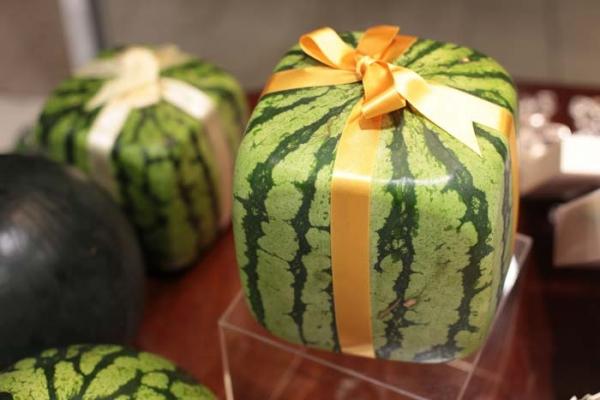
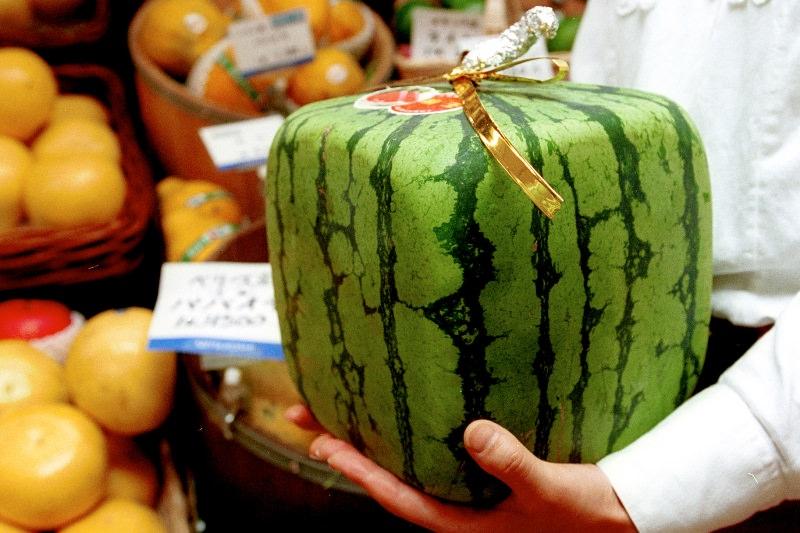
Square-shaped watermelons do exist, and they're not a myth. The first such berries appeared in Japan. Watermelons with a regular geometric shape were easier to transport, so they were cultivated by producers who subsequently sold the fruit.
But later, others became interested in this watermelon, as it was not only easier to stack and transport, but also easier to store. As a result, demand for this berry increased.
Genetic mutations or gardener's skill
When confronted with a berry like a cubed watermelon, many wonder how this effect is achieved. Some begin to suspect genetic experiments and the use of modified plants. And it's worth noting that genetic engineers are capable of creating unusual fruits.
However, there's no trick to creating a square watermelon. The secret lies in a special device, which can be made from plastic, plastic, or glass. This growing technique makes it possible to produce unusually shaped berries.
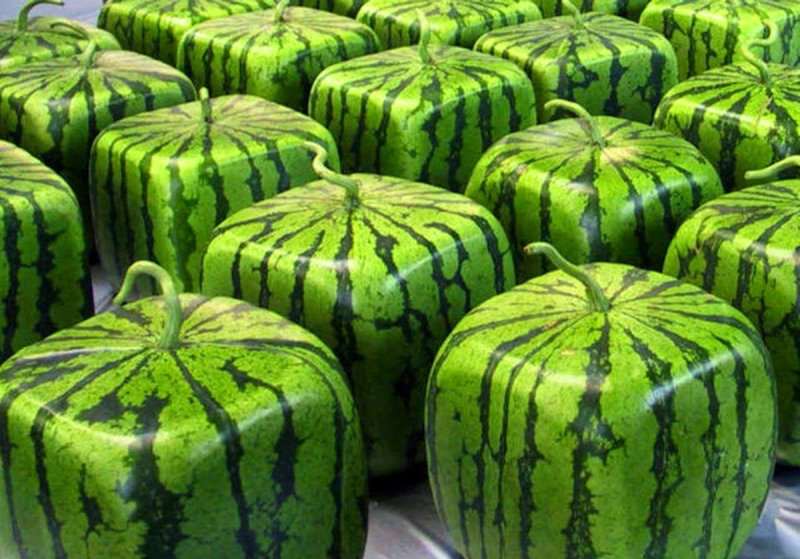
Advantages and disadvantages
The flesh of a square watermelon tastes no different from that of a round watermelon. However, it has distinct advantages. These include:
- convenient transportation and storage;
- minimizing transportation costs;
- fits easily in the refrigerator;
- neat slicing of the fruit.
A square watermelon boasts these advantages. However, its disadvantages include its high cost. Also, some farmers fail to ripen this berry evenly, which negatively impacts its flavor and sweetness.
Why and who needs it?
The benefits and value of this type of crop for farmers and industrialists are obvious. A square watermelon is easy and extremely economical to transport. It also makes for convenient storage.
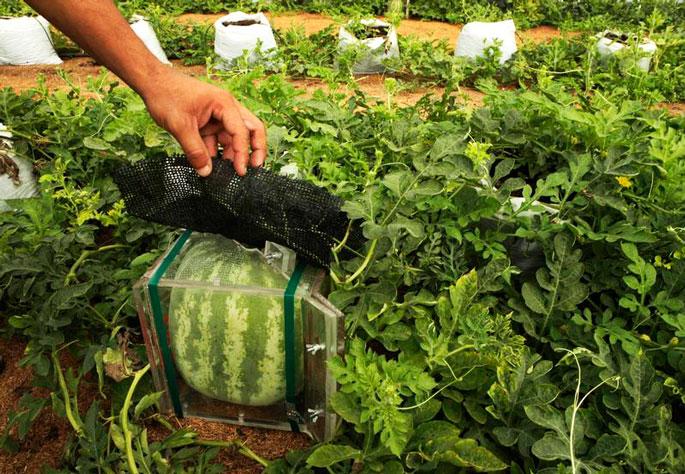
For consumers, this fruit is easier to slice and serve than its round counterpart. Those who grow these watermelons see this as an advantage. The price of square watermelons is higher, meaning greater profits. Therefore, square watermelons are grown in various parts of the world.
Making a square shape yourself
Growing a square watermelon at home requires some effort. You'll also need special tools and materials to help you achieve a precise geometric shape.
Necessary materials and tools
To create a special structure to help grow a square-shaped striped berry, you'll need a set of specialized tools and equipment. These include:
- several plastic, glass or polycarbonate sheets, the thickness of which is 0.8 millimeters;
- corners, screws and nuts that allow you to fasten the necessary walls;
- furniture hinges that ensure the lid can move;
- jigsaw, screwdriver, marker, drill and ruler.
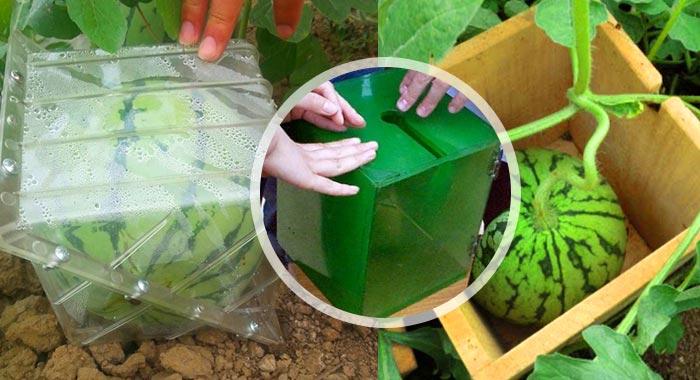
It's best to prepare all these tools in advance so you can immediately begin the process of making a special watermelon mold.
Manufacturing process
The process of making a special device that allows you to obtain a square-shaped fruit can be replicated independently. It will consist of the following steps:
- from the prepared thick sheets you should cut squares, the sides of which should be twenty centimeters;
- all the walls are fastened together with screws, which allows you to get a square;
- on one side a hole is made through which the vine will grow;
- The top part of the square, which will act as a lid, should be secured with furniture hinges.
The resulting device must be durable. It must withstand the pressure exerted on the walls by the growing berries.
Features of growing square berries
Although the essence of a watermelon doesn't change regardless of its shape, certain conditions are required to grow it. Successful results can be achieved by choosing the right watermelon variety from the start. In this case, hybrids with a short growing season are preferable.
Climate conditions
As for climate conditions, watermelon harvests are best in the southern regions. These regions enjoy a warm and stable climate, without sudden temperature fluctuations.
If watermelons are to be grown in a climate with frequent temperature fluctuations, then it is better to use a greenhouse for these purposes.
Soil requirements
To ensure watermelon seeds germinate, you need to select the right soil. Moist soil or moist sand is best. The soil should be well-aerated and fertile.
Space and lighting for culture
The location itself should be well-lit by sunlight and out of shadow. This berry thrives in warmth and light and is drought-resistant. These are the factors to consider when choosing a location for growing watermelon.
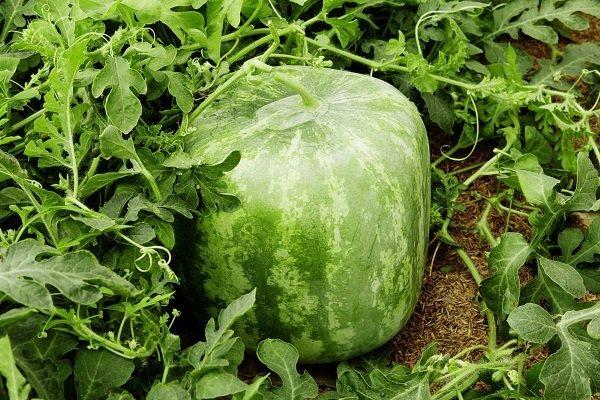
The plot must be well-warmed and receive adequate light throughout the day. These are the key factors for a bountiful harvest.
Planting a watermelon
Watermelon seeds are best planted in late spring. If you plant them later, the fruit simply won't have time to ripen in time, much less acquire the necessary sweetness. There are two planting methods:
- using seedlings;
- planting in open ground.

Each of these methods has its own specific features and nuances that must be followed.
Seedling method
You can try planting watermelon seeds in soil and leaving them indoors until they sprout. The room should be comfortable, with no drafts. To increase the germination rate, you can soak the seeds in water at 50 degrees Celsius for ten minutes beforehand.
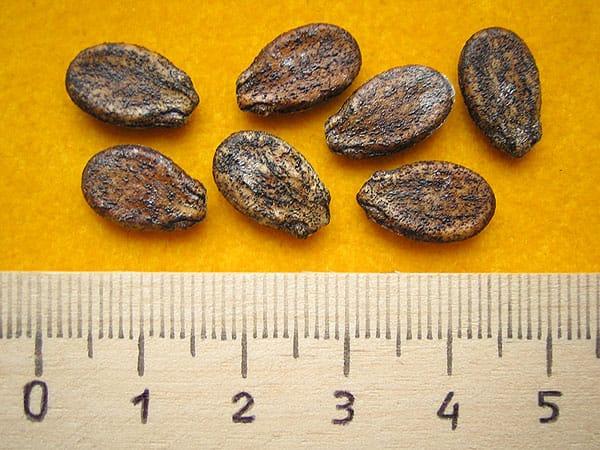
The seedling containers are kept in a room with a comfortable temperature until the first shoots appear. Then, they should be moved to a room where the temperature won't rise above 17 degrees Celsius.
Planting in open ground
Planting berries outdoors is only possible once the period of night frosts has completely ended. It's not recommended to do this any earlier, as otherwise, a good harvest will be unattainable. By this time, the soil should have warmed up to fifteen degrees Celsius. Subsequently, regular watering and constant loosening of the soil are essential.
Tips for caring for berries
Proper care of watermelons will help ensure a good harvest. Once the first leaves appear, the soil should be loosened regularly. It's also important to keep the fruit dry and warm.
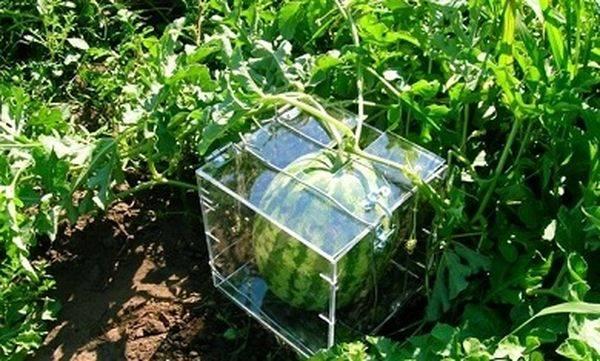
The shape itself is also of great importance. If it's too large for the ripening fruit, it won't be possible to achieve a square shape.
But if, on the contrary, it is small, then the watermelon may crack before it ripens.
The intricacies of watermelon care
If rainy days occur, the berries must be covered. When the fruits reach about ten centimeters in diameter, pinch off the main stem loop, and it's best to remove the side portions.
This will allow the fruit to conserve energy, which will be used to form the main ovary. It's at this point that the fruit should be placed in a specially prepared mold. Subsequently, weeds and weak ovaries around it should be removed promptly. The molds should be aired every few days and covered when the sun is strong.
Fertilizing berries
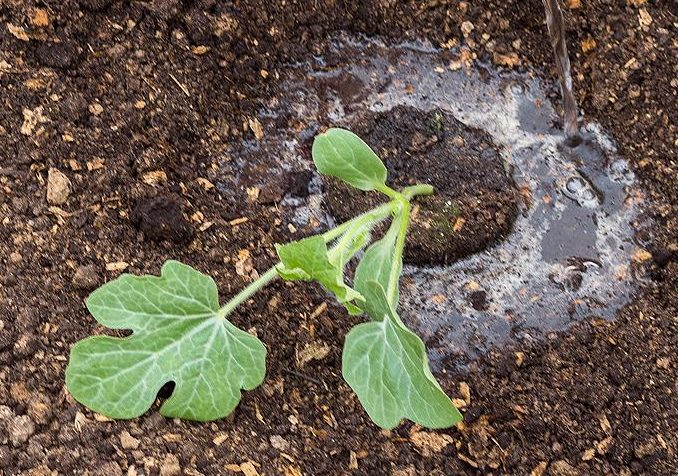
During the ripening stages, watermelons need to be fed. For this purpose, mineral fertilizers should be used, which should contain the following components:
- nitrogen;
- phosphorus;
- potassium and calcium;
- magnesium.
The soil around the hole, which is pre-moistened and loosened, is treated with fertilizer.
Irrigation scheme
This berry requires moderate watering. This is the most important point to follow. It thrives in dry conditions and doesn't tolerate overwatering, so overwatering will negatively impact the harvest. Don't pour water directly into the hole; water the area around it.
Diseases and pests
Square watermelons are susceptible to fungal and bacterial diseases, as well as pest attacks. It's important to inspect the fruit regularly.


Regular ventilation can be a preventative measure. Disinfection is also used. The molds can be fumigated with a sulfur candle, and the soil around the hole should be watered with hot water containing a potassium permanganate solution.
Specifics of harvesting
Harvesting square watermelons should begin in the first stage of ripeness, when they easily pull away from the vine. Avoid over-exposing the harvest, as it doesn't store well once ripe.
You can determine the ripeness of a square watermelon by the following signs:
- the skin of the fruit becomes shiny and glossy;
- the surface of the watermelon is hard and does not bend under the pressure of a finger;
- the stalk dries up;
- the part of the berry that lies on the ground takes on a yellow tint;
- the sound when tapping should be muffled.
If late-ripening fruits are being harvested, they are cut from the vine using a knife or pruning shears. It's important to leave a stalk no shorter than five centimeters long.
These fruits are stored on a straw mat. They can also be stored in dug earthen trenches, the bottom of which is covered with wood shavings.
Where to buy and how much does it cost?
Square-shaped watermelons are grown by agricultural producers in Japan. Each year, up to four hundred of these unusual fruits are harvested and sold, depending on the harvest.
Considering the rarity of a square-shaped watermelon, its price is much higher than if we were talking about a round watermelon.
However, to purchase a square watermelon, you'll have to pre-order it. The solution is to build your own device for growing square watermelons.
Feedback from our readers
Irina, 55 years old.
"Good afternoon! I learned about the square-shaped watermelon on a TV show. Since my dacha is in the southern region, I decided to try growing one myself. My husband built a special device. It worked. But the watermelon was only average in sweetness."
Margarita, 40 years old.
"Hello! I'm a keen gardener who's always trying new things and isn't afraid to experiment. So, I decided to grow a square watermelon. I made the mold out of thick plastic and placed the plant in a greenhouse. The results were positive, and my neighbors were amazed."
Related posts:
 Description and characteristics of the Sugar Baby watermelon variety, cultivation
 The health benefits and harms of watermelon for the human body, how to consume it correctly
 Simple, step-by-step recipes for preparing salted watermelons for the winter in jars
 Is it possible to freeze watermelon in the freezer for the winter and how to do it correctly?
 TOP 5 recipes for watermelon and rind compote for the winter at home, storage
 Description and characteristics of the Karistan F1 watermelon variety, planting and care
 Description and characteristics of the watermelon variety Kholodok, cultivation rules
 How to determine the ripeness of a watermelon in the garden and the main signs of ripening