
- Description of the watermelon Kholodok
- Characteristics of the culture
- Pros and cons of the variety
- Features of growing the variety
- Seed preparation
- Sowing seeds
- Caring for seedlings
- When and where is the best time to plant watermelons?
- Transplantation to a permanent location
- Subtleties of caring for the variety
- Watering
- Loosening
- Top dressing
- Trimming
- Garter
- Seed collection
- Protection from diseases and pests
- Reproduction of the variety
- Gardeners' reviews
The Kholodok watermelon is one of the most sought-after varieties due to its excellent taste and long shelf life. It received its name because it can withstand significant temperature drops and be stored until frost sets in. This watermelon variety is popular not only on large farms. Gardeners put in considerable effort to grow this berry in their plots. After all, the harvest rewards are always worth the effort.
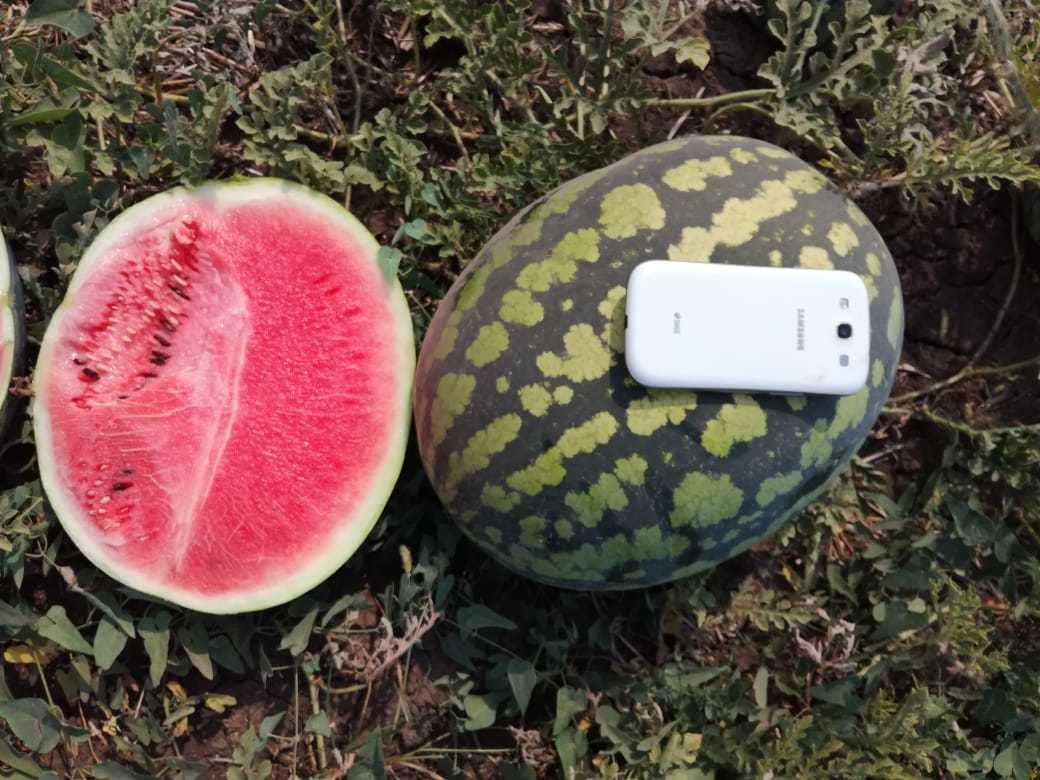
Description of the watermelon Kholodok
This watermelon variety was developed by Russian scientists in the Volgograd region through selective breeding of three varieties. The result is a low-maintenance, high-yielding, and transportable plant.
Characteristics of the culture
Watermelon can be characterized as follows:
- This variety takes 85 to 97 days to ripen after planting the seeds, so it is considered a mid-late variety;
- a powerful, strongly climbing plant (shoots reach 5 meters in length) with large bright green leaves;
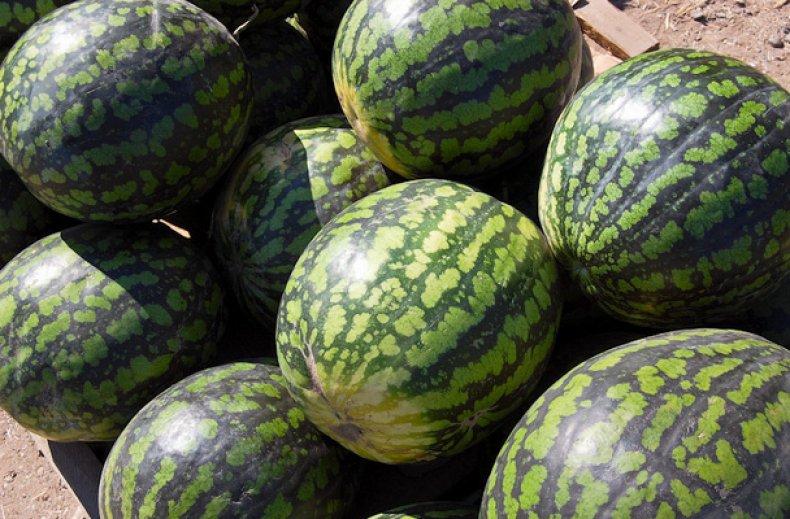
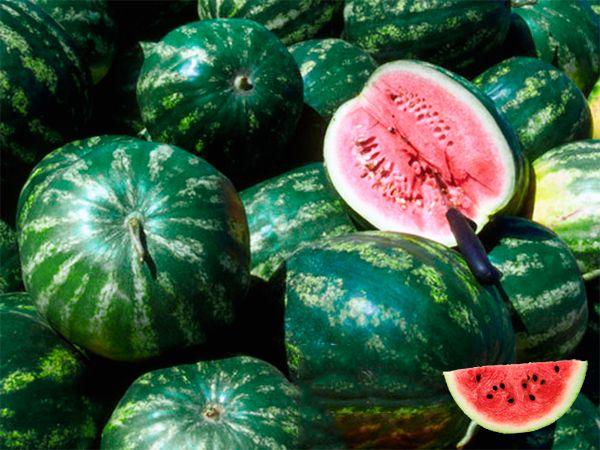
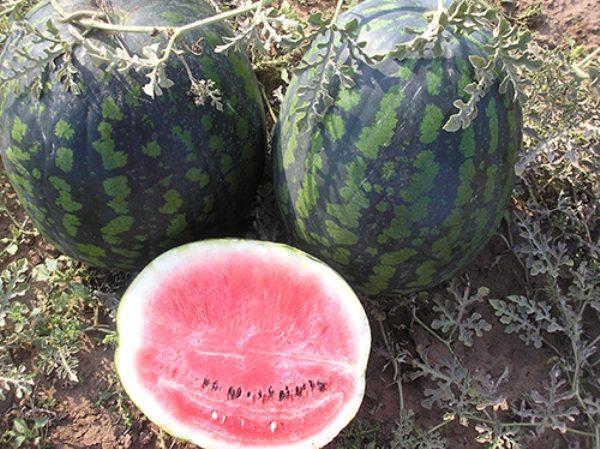
- Its berries are elongated and can weigh up to 5 kg. The flesh of the ripe fruit is juicy, sweet, slightly grainy, and a rich red color;
- the thickness of the skin is moderate, as is the number of seeds contained in the berry;
- Under good weather conditions and with high-quality care, the Kholodok variety produces high yields – more than 35 tons of watermelons from 1 hectare of land;
- Watermelon contains many essential microelements and at the same time is low in calories;
- The plant does not require any special conditions and grows well both indoors and outdoors.
Pros and cons of the variety
Like any other plant, the watermelon Kholodok has positive and negative qualities.
| Advantages | Flaws |
| Watermelon ripens in a short period of time. | Growing watermelons requires a large area. |
| The pulp of the fruit is juicy and sweet. | It is necessary to constantly remove emerging lateral shoots. |
| The chill has an attractive appearance | The plant is very light-loving and needs constant warmth. |
| The yield of this variety is at a high level | |
| Can be stored for a long period of time | |
| Can be transported easily | |
| Resistant to temperature drops |

Features of growing the variety
Seed preparation
Planting watermelons requires high-quality seeds, as their yield directly depends on them. You can stock up on them yourself or purchase them from a specialty store.
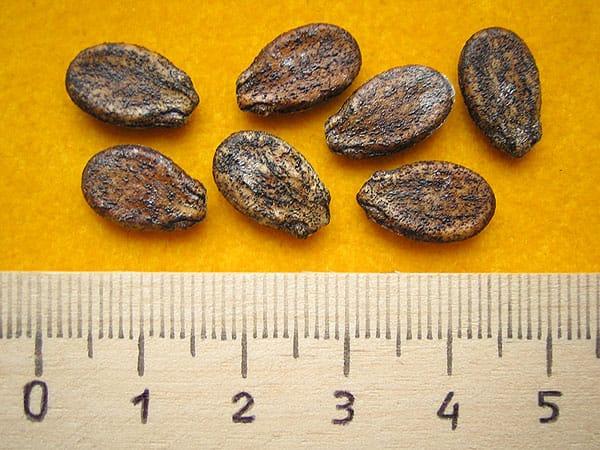
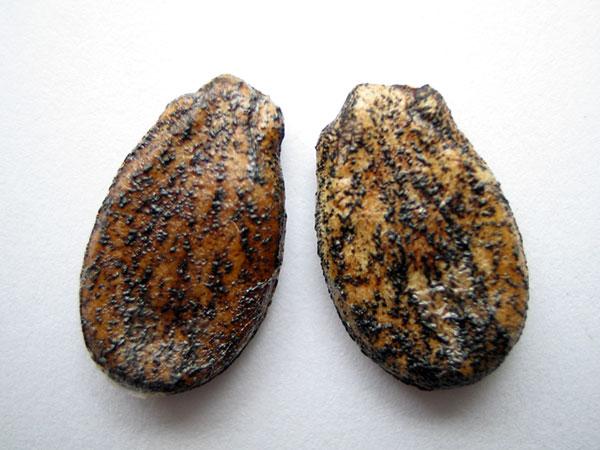
The characteristics of good seeds can be considered:
- size not less than 1.5 cm;
- rough surface of the bone.
Interesting fact! Experts test the quality of seeds by immersing them in warm water; only those that sink to the bottom are selected for planting.
An important step in preparing seeds for planting is warming them up: expose the seeds to sunlight for a week. This can also be done at home. It's recommended to force-dry the seeds (in a dehydrator) for about 3-4 hours per day.
Immediately before planting, the seeds should be soaked in a strong solution of manganese and then rinsed in running water.
Sowing seeds
The best time to plant the Kholodok watermelon is considered mid-spring. Agronomists use two seeding methods, depending on the region's climate.
| · Seeds for seedlings are planted in April. The seeds are placed in pre-prepared containers. After sowing, they are covered with plastic wrap until the first shoots emerge. After this time, the seedlings do not require greenhouse conditions; simply maintain a proper watering regimen. Seedlings are ready for transplanting into open ground when they have at least four fully developed leaves.
|
Planting seeds in open ground should be done after fertilizing the soil. If planting in a greenhouse, a 70x70 cm planting pattern should be followed. In open ground, stick to a 140x110 cm pattern. This planting method is less productive than using seedlings, as many seeds may fail to germinate.
|
Caring for seedlings
If the right conditions are met, watermelon seedlings will thrive. Of particular importance are:
- adherence to the watering regime (seedlings require frequent watering with settled water at room temperature);
- compliance with the daylight regime (seedlings require at least 12 hours a day in the light);
- Regular fertilization. After the first leaves appear, fertilize with manure or a complex fertilizer;
- Hardening off grown seedlings in the fresh air before planting them in open ground.
When and where is the best time to plant watermelons?
Watermelons can be planted after the fourth permanent leaf has formed. A well-drained area is considered ideal for planting melons. However, it's important to remember that strong sunlight can damage immature seedlings, so they should be shaded for the first few days after planting.
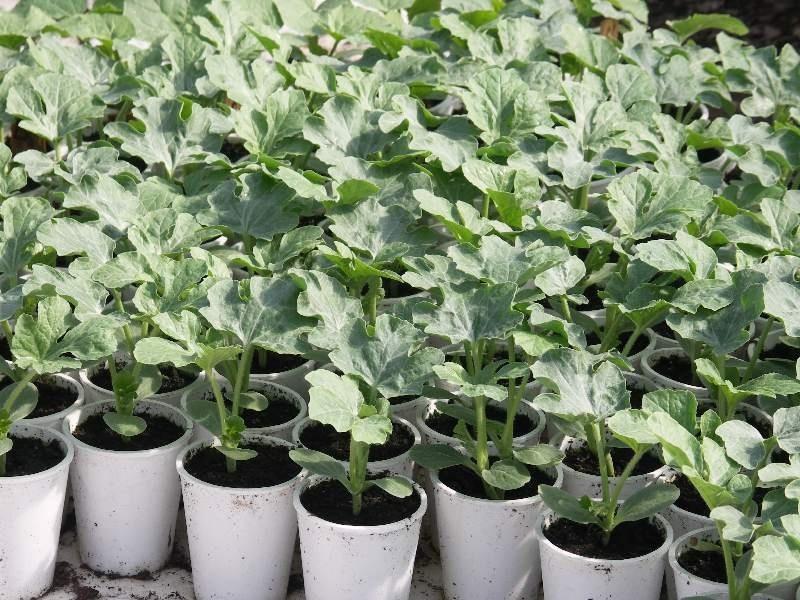
The seedlings also need to be protected from strong winds. The eastern or southern part of the plot is suitable for planting. It's important to follow the rules for planting melons: it's not recommended to plant watermelons in areas previously occupied by tomatoes, zucchini, eggplant, and melons for six years. The cold spell will thrive in areas previously occupied by grain crops or cabbage.
Transplantation to a permanent location
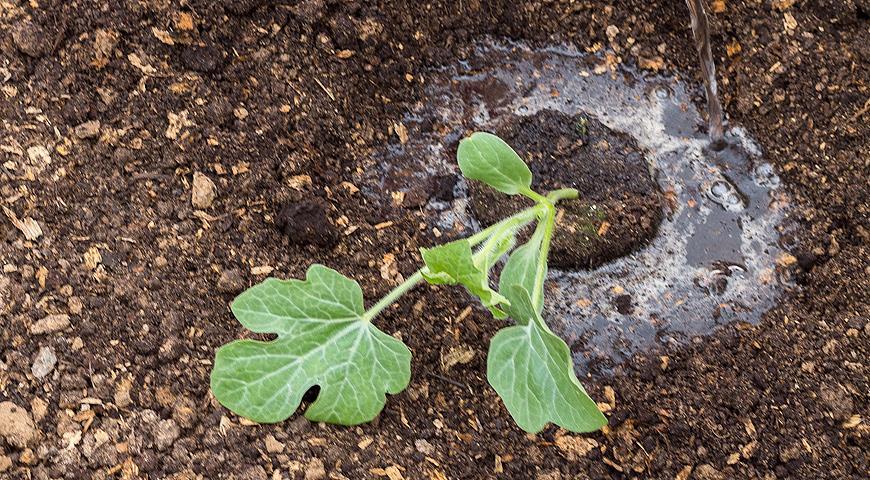
If planting seedlings isn't possible, watermelons can be planted directly into warm soil in a permanent location. It's important to consider the soil quality—it should be loose and allow moisture and air to pass through easily.
How to achieve a good harvest of Kholodok when growing it in a greenhouse:
- young plants should be planted in rows with intervals of 70 cm;
- To create conditions for the full growth of bushes, it is important to leave at least 150 cm between rows;
- When watermelon vines grow more than half a meter, it is necessary to remove lateral shoots.
Subtleties of caring for the variety
Watering
Watering frequency depends on weather conditions. On average, watering watermelons once a week is sufficient, at a rate of 3 buckets of water per square meter of planting. During extreme heat and during flowering, increase watering to twice a week.
Loosening
It's best to loosen the soil before the watermelon vines become too spread out. This is because gardening tools can easily damage the roots and fruit. It's best to loosen the soil while it's slightly damp, removing any weeds along the way.
Top dressing
It's recommended to fertilize the watermelon twice: after replanting and before flowering. Fertilizer is applied to the plant's roots. Nitrogen or chicken manure can be used as the first fertilizer. Keep in mind that nitrogen causes foliage to expand, so it should be used sparingly. Ammonium nitrate (10 g per bucket of water) is also widely used as a fertilizer for watermelons.
Trimming
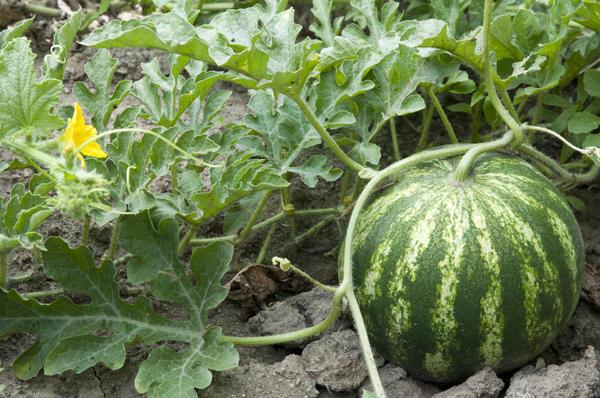
Pruning is done to shape the plant and remove unwanted shoots. Pinching the main shoot is crucial, preserving 3-4 fruits. Otherwise, the watermelon berries will be small and tasteless.
Garter
How can you ensure each young plant receives enough warmth and sunlight? Experienced gardeners recommend tying the vines to a trellis. This must be done carefully to avoid damaging the young shoots.
Seed collection
To obtain high-quality seeds you need to:
- leave a few good fruits on the vines to ripen;
- After this, the seeds are collected and undergo external selection, it is important to leave only dark seeds that meet the correct characteristics;
- It is recommended to store dried seeds wrapped in cloth.
Protection from diseases and pests
When proper care is taken, problems with growing watermelons are rare, but no one is immune. The Kholodok variety is susceptible to powdery mildew and fusarium wilt. These are caused by a fungus that causes fruit rot. These diseases appear as spots on the leaves. In such cases, treating the soil with lime or potassium permanganate to disinfect the soil can help.
Watermelons kept in greenhouse conditions are often affected by aphids and spider mites.
It is important to treat infected plants with herbicides in a timely manner to prevent the widespread spread of pests.
Reproduction of the variety
The Kholodok watermelon variety is not a hybrid, so collecting seeds for planting is easy. Watermelons require careful attention and proper care, but ultimately yield a bountiful harvest.
Gardeners' reviews
Elena Stepanova, 56 years old, Marx
I'd been searching for a variety that would produce a harvest in the mid-Volga region's climate for a long time. After trying Kholodok, I was delighted. The first shoots appeared within a few days. All the seeds sprouted! After planting in the garden, the seedlings quickly adapted and began growing vigorously. While the first harvest wasn't large, Kholodok was a delight in both its taste and size.
Andrey Kulikov, 48 years old, Omsk
The weather conditions in our city aren't particularly conducive to growing melons. However, I decided to experiment by planting watermelons of the Kholodok variety. I planted the seeds directly in the greenhouse, followed the necessary care, and was pleased with the results. From 10 plants, I got 34 large fruits with thin skin and juicy flesh. I highly recommend giving them a try!
Related posts:
 Description and characteristics of the Sugar Baby watermelon variety, cultivation
 The health benefits and harms of watermelon for the human body, how to consume it correctly
 TOP 5 recipes for watermelon and rind compote for the winter at home, storage
 Description and characteristics of the Karistan F1 watermelon variety, planting and care
 Simple step-by-step recipes for making watermelon jam for the winter at home, with and without gelatin
 Description and technology of growing the Crimson Sweet watermelon variety
 Is it possible to grow a square watermelon at home?
 Characteristics and description of the Ogonyok watermelon variety, cultivation in open ground