
- Is it possible to grow watermelons all year round in a greenhouse?
- Choosing a variety suitable for indoor cultivation
- Siberian
- Crimson
- Siberian Lights
- Pink champagne
- A gift to the North
- Ogonyok
- Sugar
- Specifics of greenhouse cultivation
- Planting dates
- Preparing the greenhouse
- Soil preparation
- Planting seedlings
- The intricacies of caring for watermelons in a greenhouse
- Humidity and watering
- Light and heat conditions
- Top dressing
- Formation
- Pollination
- Garter
- Hanging
- Protection from diseases and pests
- Diseases
- Anthracnose
- Fusarium wilt
- White rot
- Gray rot
- Bacterial spot
- Pests
- Melon aphid
- Larva of the sprout fly
- Spider mite
- Cleaning and storage
- Potential problems when growing
- Conclusion
Many gardeners grow watermelons to enjoy the ripe berries in the summer. However, some varieties cannot be grown outdoors, so sometimes they have to be grown in a greenhouse.
Is it possible to grow watermelons all year round in a greenhouse?
Before planting a pumpkin, you need to determine whether it can be grown year-round in a polycarbonate greenhouse. Gardeners living in the central part of Russia or the Urals won't be able to grow watermelon bushes year-round. This crop must be planted at specific times to ensure proper growth and fruit production.
Choosing a variety suitable for indoor cultivation
There are seven varieties that are recommended for growing only in greenhouses.
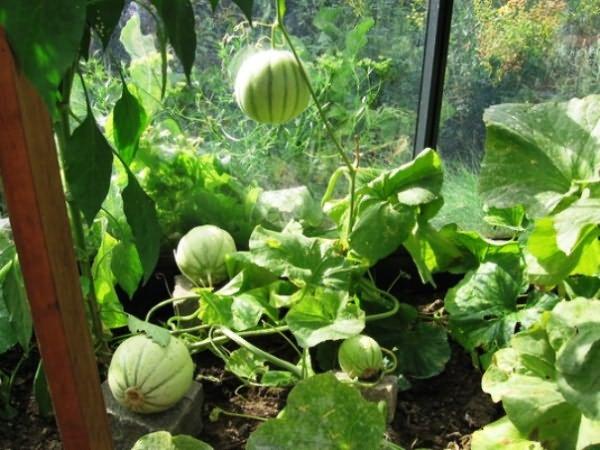
Siberian
An early-ripening plant, its fruits ripen 65-75 days after planting. Among the harvest's distinguishing features are its thin skin, fruit weighing approximately five kilograms, and aromatic flavor. Siberian is resistant to most diseases and pests.
Crimson
An early-maturing pumpkin, the crop ripens within sixty days. Crimson's key features include the following:
- resistance to such dangerous pathologies as powdery mildew and anthracnose;
- rich taste;
- juicy pulp;
- drought resistance.
Siberian Lights
An ultra-early plant that, with proper care, will ripen in 55-65 days. Siberian Lights produces round fruits weighing 5-7 kilograms. They have juicy, sweet flesh with a pleasant aroma. The main characteristic of this watermelon is its small number of seeds.

Pink champagne
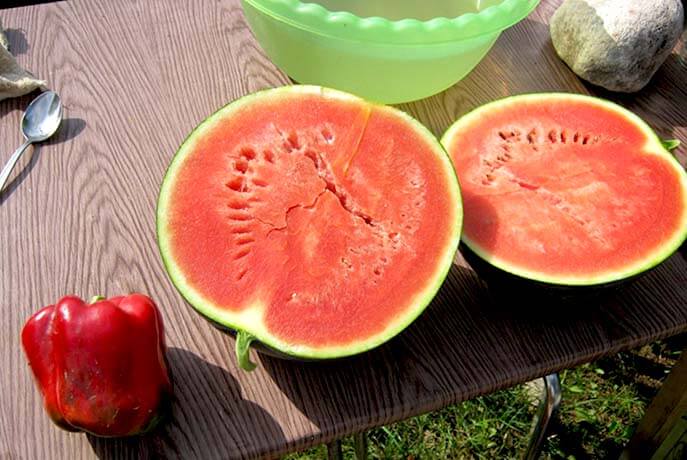
This is a popular hybrid grown by many gardeners. It doesn't handle frost well, so experienced gardeners recommend planting it in a greenhouse. A distinctive feature of the variety is the pink flesh of ripe fruits.
Take a look Also

A gift to the North
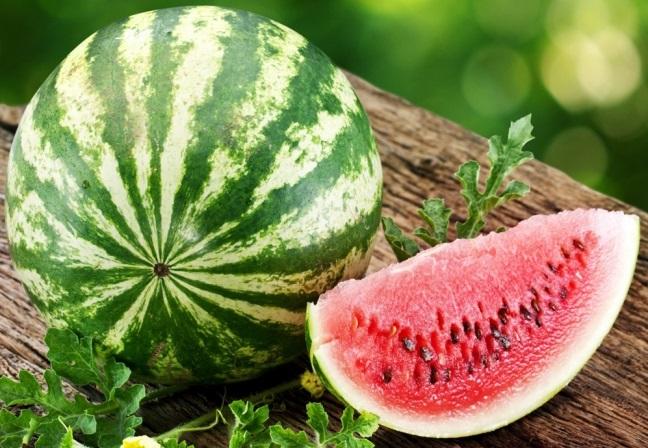
A hybrid plant distinguished by its early ripening harvest. Gift of the North should be planted in a greenhouse, as the bushes do not tolerate frost well. In greenhouse conditions, the fruits are large, growing up to ten kilograms. The flesh is juicy and sweet.
Ogonyok
Those who prefer compact watermelons can plant Ogonyok in a greenhouse. Its fruits don't grow more than three kilograms. They have a thin, light green rind. The flesh is reddish, with a slight orange tint. Among its drawbacks, poor resistance to powdery mildew is noted.
Sugar
An early-ripening plant characterized by vigorous bush growth, the Sugar Watermelon ripens within 70 days of planting in a greenhouse. The fruits are medium-sized and weigh 4-7 kilograms. Once ripe, the flesh turns red and becomes very sweet.
Specifics of greenhouse cultivation
The technology for growing watermelons in greenhouses will help you grow the plant properly, so it's important to familiarize yourself with it in advance.
Planting dates
First, you need to decide when the best time to plant is. Experts recommend planting watermelon seeds in late May to ensure a ripe harvest in the second half of summer. However, if the greenhouse is heated, planting can be done at any time.
Preparing the greenhouse
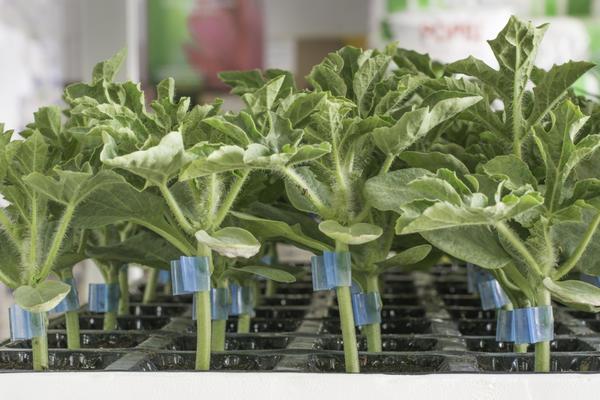
Before planting, prepare the greenhouse structure in advance. First, carefully inspect the greenhouse for any damage. Then, clean and disinfect the structure. If necessary, install grow lights to extend daylight hours.
Soil preparation
Once the greenhouse is complete, they begin preparing the soil. Watermelons are very demanding when it comes to soil composition, so it must be rich in nutrients. Before planting, the soil is fertilized with manure, sawdust, and peat.
Planting seedlings
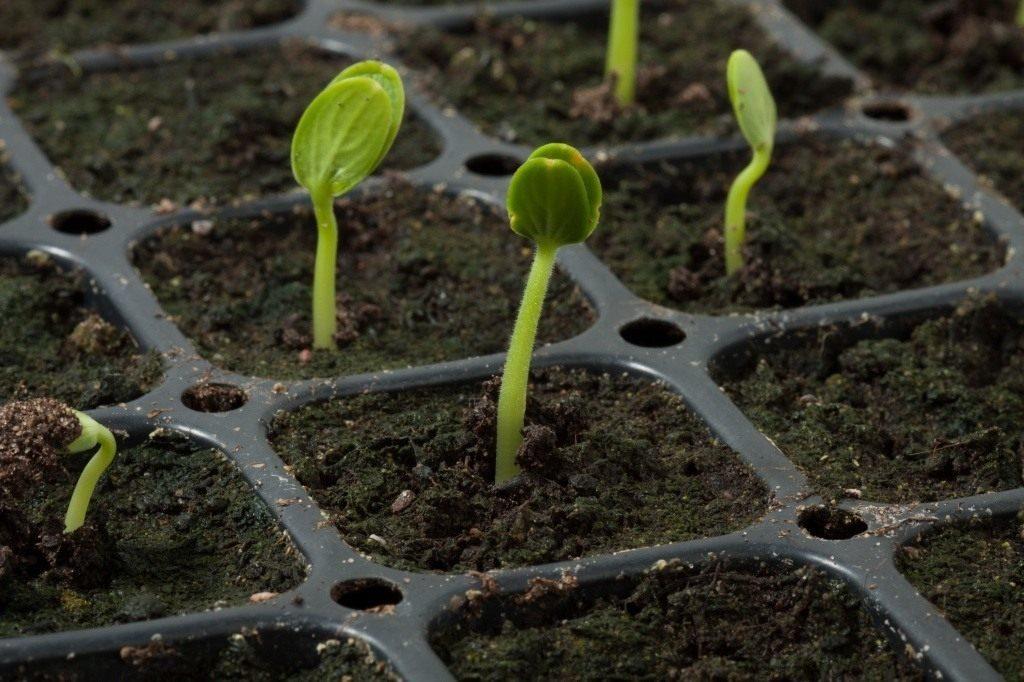
When planting watermelons, follow a specific planting pattern. Holes are dug 30-40 centimeters apart and 5-8 centimeters deep. After digging the holes, plant the seeds, cover them with soil, and water.
The intricacies of caring for watermelons in a greenhouse
To get a good harvest, proper pumpkin cultivation techniques must be followed. Growing watermelons is quite easy if you know how to care for them properly.
When caring for a plant, you not only need to water it, but also remove side shoots and tie it up.
Humidity and watering
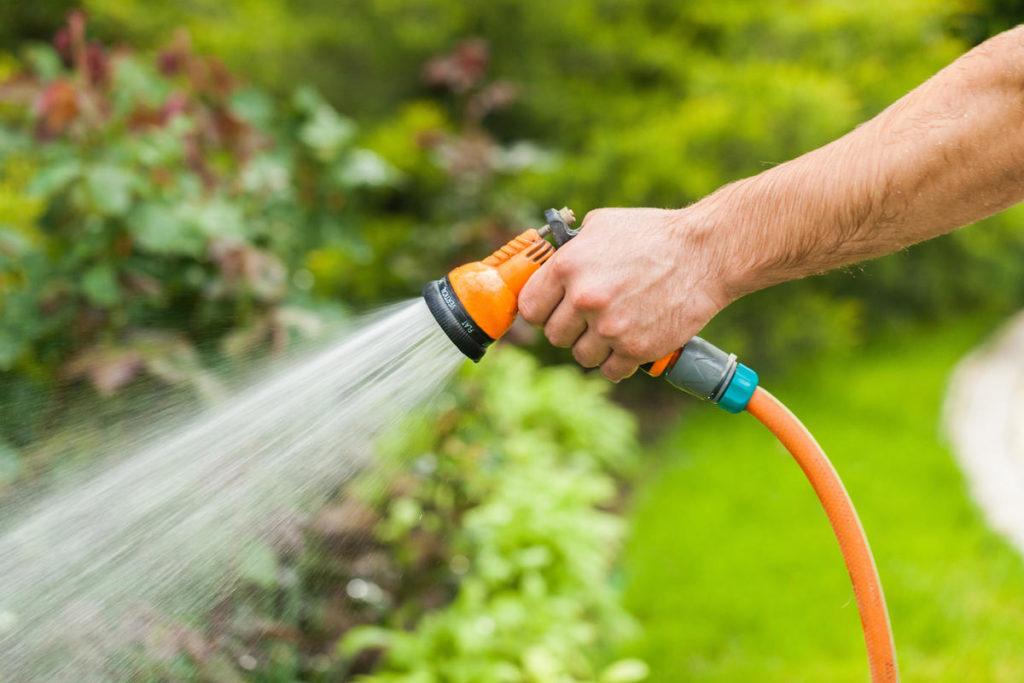
Watermelons don't need to be watered too frequently, as they are drought-resistant. However, after the fruit appears, watering should be done more frequently to speed up ripening.
Light and heat conditions
When the temperature inside the greenhouse exceeds 30 degrees Celsius, ventilation is essential. Lighting should also be provided and additional lamps installed near the plants.
Top dressing
The first feeding is done when the seedlings reach 35 centimeters. Chicken manure, ammonium nitrate, and nitrogen-containing fertilizers are used as fertilizer.
Formation
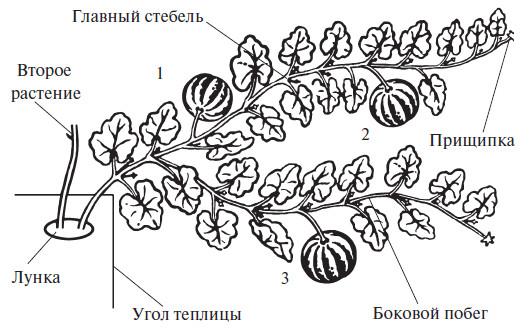
To promote fruiting, the plant's bushes are trained. Experienced gardeners recommend shaping the bushes into a single stem. When pruning, all side shoots and fruitless shoots are removed.
Pollination
Sometimes, newly planted watermelons need to be pollinated by hand. During pollination, the male flowers are picked and applied to the female flowers with the stamen. This process is repeated 5-6 times.
Garter
It's recommended to figure out how to properly tie up watermelon bushes in advance. To do this, stretch a wire along each row, and tie the stems of the seedlings to it with rope. This procedure is performed when the vines reach 35 centimeters.
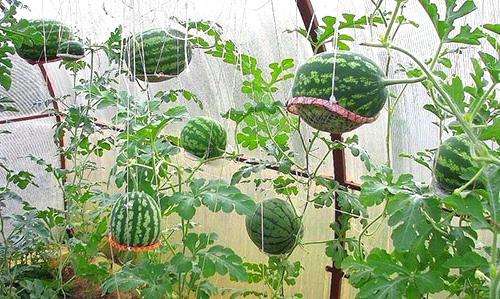
Hanging
To keep the plants' fruit from lying on the ground, you'll need to hang it. To do this, install a support near each plant and tie a mesh string bag to it. Each fruit can be hung from this support.
Protection from diseases and pests
Watermelons, like many other plants, suffer from diseases and are attacked by pests.
Diseases
There are five common diseases that affect watermelon seedlings.
Anthracnose
A dangerous fungal disease that causes fruit to turn yellow. To treat the disease, all infected seedlings are sprayed with Bordeaux mixture and fungicide mixtures for a week and a half. If the treatment fails, the bush
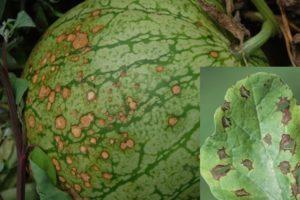
they dig out.
Fusarium wilt
Young seedlings and mature plants are often susceptible to Fusarium wilt. It's difficult to spot the condition early, as symptoms begin at the roots. Boric acid and potassium solutions are used to treat the disease.
White rot
The disease affects the lower leaves, which become covered with white spots. A solution made from kefir and yogurt will help get rid of the rot. Spray once a week.
Gray rot
High humidity conditions can lead to the development of gray mold, which causes flowers and leaves to become covered in gray spots. Regular treatment with Bordeaux mixture will prevent the appearance and development of gray mold.

Bacterial spot
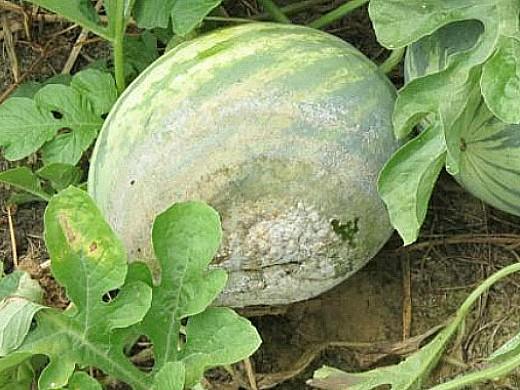
This disease causes yellowish spots to appear on the foliage. These spots gradually increase in size, after which the leaves darken and dry out. Infected plants should be treated with Fitosporin and Fitolavin.
Pests
Sometimes seedlings are attacked by dangerous pests.
Melon aphid
The most common pest of watermelons is melon aphids, which eat the foliage and flowers. Plants attacked by aphids become covered with dark spots. To get rid of the pest, spray the bush with a solution of pepper and mustard.
Larva of the sprout fly
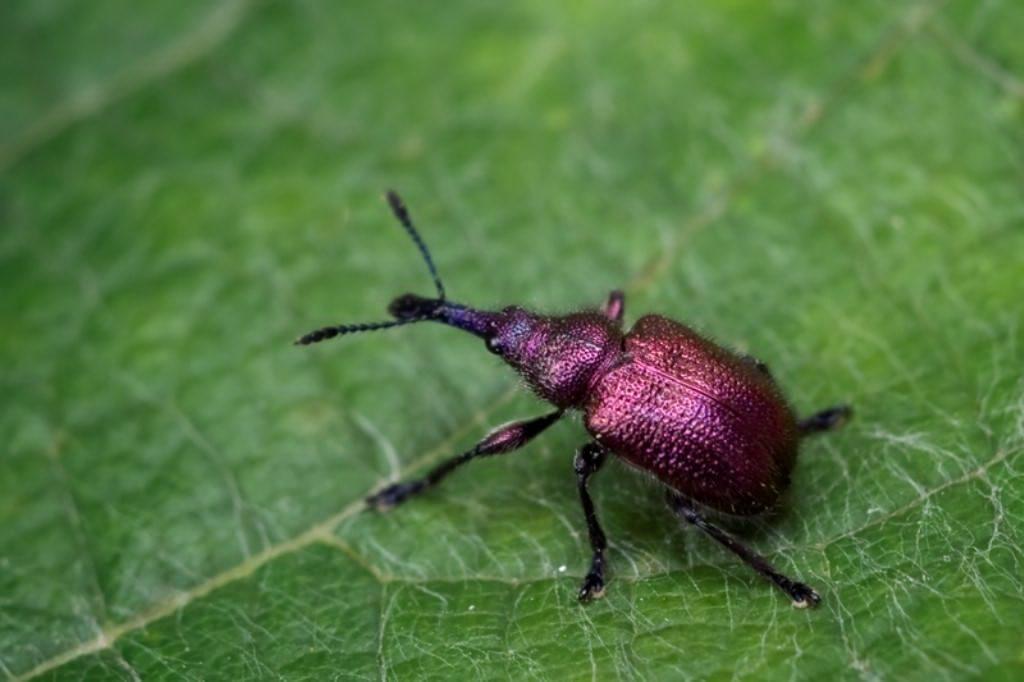
The sprout fly is very dangerous for watermelons, as it chews the stems and rhizomes from the inside. To eradicate the pest, you'll need to treat the seedlings with Fentiuram and Iskra.
Spider mite
When spider mites appear, brown coating and webbing appear on the leaves. If the pest is not eliminated immediately, the bushes will gradually dry out and die. Garlic or onion infusions can help get rid of the mites.
Cleaning and storage
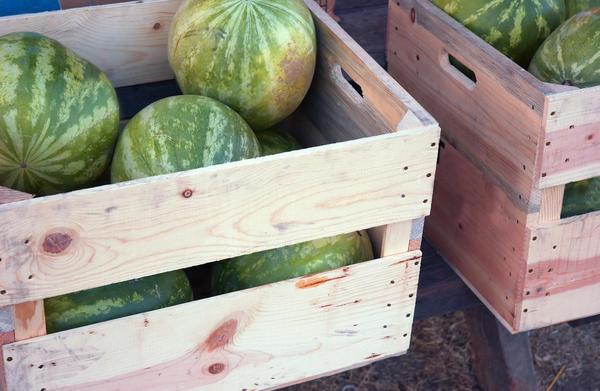
Watermelons are harvested at the dacha in midsummer and the first half of August. To preserve the harvested watermelons, proper storage procedures must be followed. They should be kept in cool, dark places. They should not be kept in the sun as they will spoil quickly.
Potential problems when growing
Sometimes people encounter problems where their bushes barely grow and produce fruit. This can be due to the following issues:
- unsuitable soil;
- waterlogging of the soil;
- low temperature in the greenhouse;
- lack of fertilizers;
- diseases and pests.
Conclusion
Many people decide to grow watermelons indoors. Before doing so, it's important to understand the varieties and how to plant and grow them.
Related posts:
 The best eggplant varieties for growing in a polycarbonate greenhouse: planting and care
 Rules for growing tomatoes in open ground, choosing a variety, planting and care
 How to properly plant peas in a greenhouse and open ground
 The benefits and contraindications of lentils for the human body
 Description and characteristics of the best seeds of pea varieties and types
 Planting and caring for arugula in open ground, description of the best varieties and their cultivation
 What fertilizers and when to use for feeding tomatoes in a greenhouse
 How to prune grapes step by step for beginners