
- Origin of the variety and regions of cultivation
- Necessary climatic conditions
- Advantages and disadvantages of the First-Grader strawberry
- Features and characteristics
- Bush size and appearance of the leaf blade
- Flowering and pollination
- Ripening time and yield
- Taste qualities of the fruit and its further sale
- Frost and drought resistance
- Susceptibility to diseases and parasites
- Specifics of planting strawberries
- Site selection and preparation
- Selecting seedlings
- Timing and technology of planting seedlings
- Planting technology
- How to care for the Pervoklassnitsa variety
- Watering mode
- Top dressing
- Weeding and loosening the soil
- Mulching
- Shelter for the winter
- Preventive treatments against diseases and pests
- Methods of reproduction
- Seeds
- By dividing the bush
- Sockets
- Gardeners' reviews of the variety
Pervoklassnitsa is a strawberry variety bred in the late 20th century. Its stems bear both male and female flowers, indicating that the bush is self-pollinating. Berries reach a weight of up to 40 grams at first harvest. This variety blooms once per season, allowing for up to seven harvests during the ripening period. Pervoklassnitsa strawberries are cold-hardy and can grow in Siberian conditions.
Origin of the variety and regions of cultivation
The variety was developed in the Altai Krai by crossing the Fairy and Torpedo varieties in the late 20th century. In 2002, it was accepted into the State Register and zoned for the West Siberian region.
Necessary climatic conditions
The Pervoklassnitsa strawberry is best grown in moderate to cool climates. In persistently hot weather, its berries become smaller and lose flavor. It also tolerates drought and cold well, but is more susceptible to gray mold and powdery mildew in damp weather.
Advantages and disadvantages of the First-Grader strawberry
The advantages of this variety include:
- resistance to cold and drought;
- stable and high yield;
- resistance to transportation;
- Resistant to spotting and strawberry mites.
Its disadvantages include:
- susceptibility to gray mold;
- extended fruiting;
- the need for winter shelter in regions with unstable snow cover;
- intolerance to hot climate.
Features and characteristics
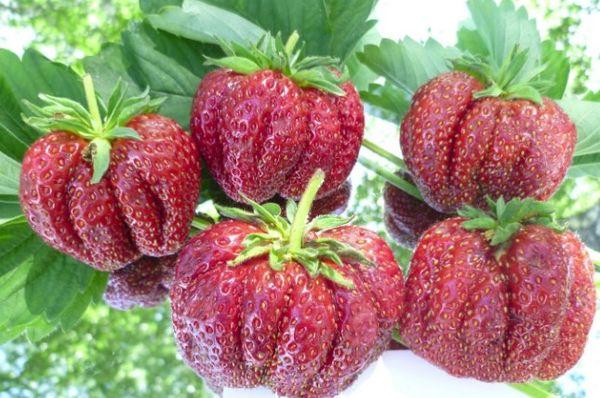
Since the Pervoklassnitsa strawberry is not remontant, it blooms only once per season, but bears fruit up to 6-7 times during the ripening season.
Bush size and appearance of the leaf blade
The plant has an upright, squat habit. The bush of this variety reaches 35 centimeters in height and up to 45 centimeters in width. Its stems bear numerous small, ribbed, dark green leaves. Their upper surfaces are covered with a waxy coating.
Flowering and pollination
The bush bears bisexual flowers on its stems, making it self-pollinating. The flowers are round and beige-pink in color. A dark vein is located in the center of the petal. Flowering occurs over 10 days in early June.
Ripening time and yield
This variety is classified as mid-late in terms of ripening period.

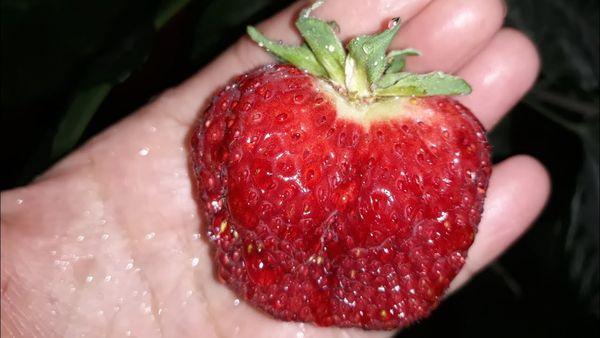
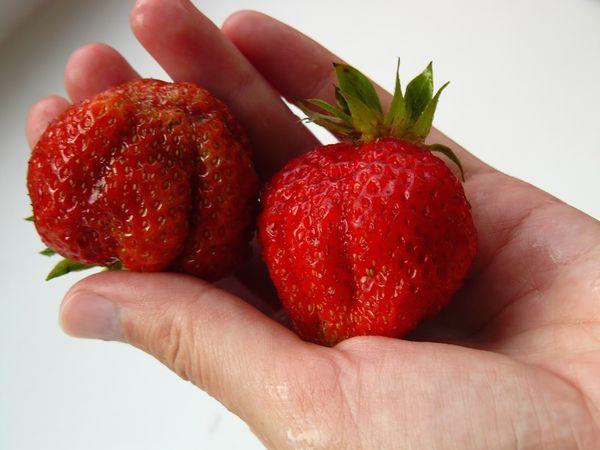
The first harvest can be obtained 10-15 days after flowering begins. The maximum berry weight reaches 40 grams, with an average of 11-18 grams.
From one hectare per season you can get up to 8-10 tons of fruit.
Taste qualities of the fruit and its further sale
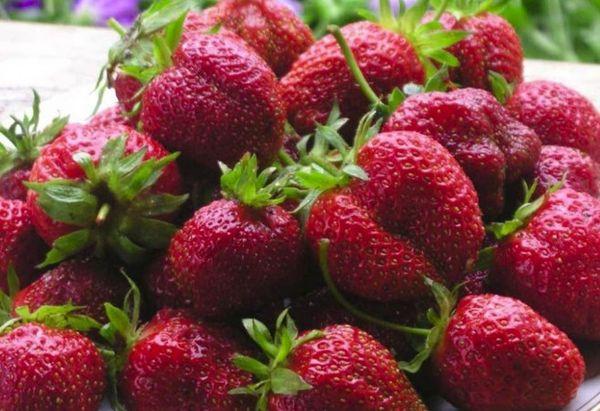
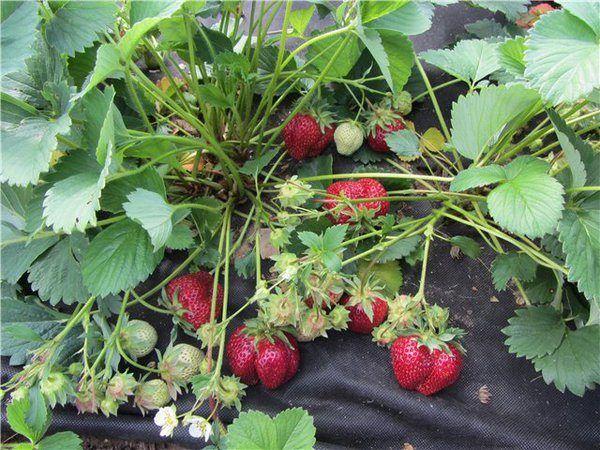
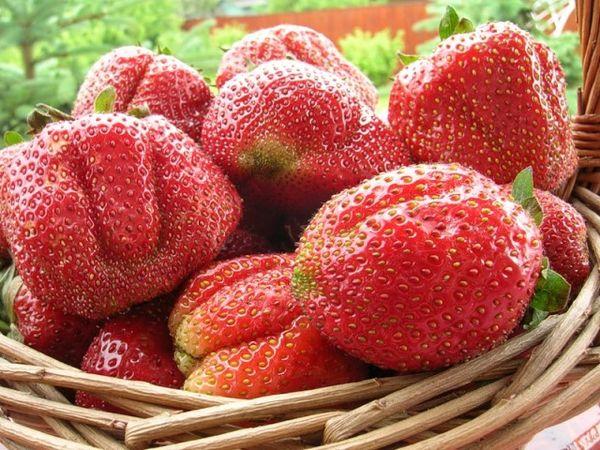
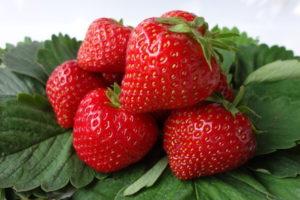
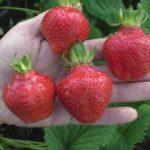
Pervoklassnitsa berries are conical, neckless, and blunt-tipped. Their skin is red with dark burgundy grooves. The skin also contains numerous yellow seeds. The flesh is red and has a strong aroma.
The berries have a sweet and sour taste, as they contain 6.5% sugar and 1.5% ascorbic acid. This variety is not suitable for commercial cultivation, as it can only be stored for up to two days in the refrigerator. If stored longer than this, the fruits lose flavor and spoil.
Frost and drought resistance
This variety can withstand temperatures down to -32°C under up to 6 centimeters of snow. During periods of greater precipitation, the bushes require covering. This strawberry is also drought-resistant.
Susceptibility to diseases and parasites
The Pervoklassnitsa strawberry is resistant to spotting disease and strawberry mites.
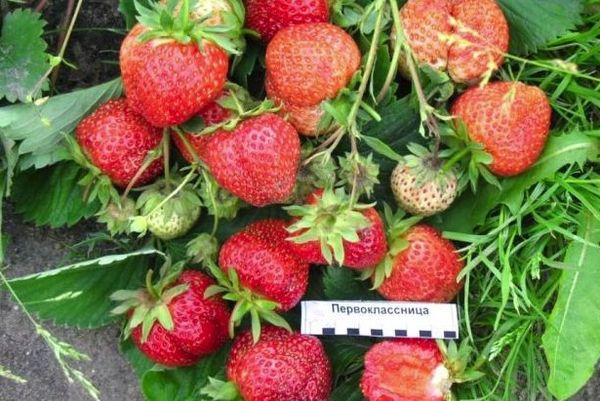 In rainy and damp weather, the likelihood of the bush becoming infected with various types of rot and powdery mildew increases.
Specifics of planting strawberries
This variety requires careful planting. It also does not tolerate high air and soil humidity.
Site selection and preparation
Strawberries require a well-lit location for proper growth. If they're grown in the shade, the berries will become smaller and more tart. It's also important to choose a location that won't allow moisture to stagnate. Excessive moisture increases susceptibility to diseases and insects. The strawberry planting site should be well-ventilated. It's also important to choose a location that hasn't previously been used for raspberries or nightshade crops.
Selecting seedlings
Select seedlings appropriate for your region. This variety is zoned for Western Siberia. Young shoots up to two years old are used for planting. Seedlings should have small, well-developed, light-colored roots. They should also have 3-5 leaves on the stems and a formed central bud.
Timing and technology of planting seedlings
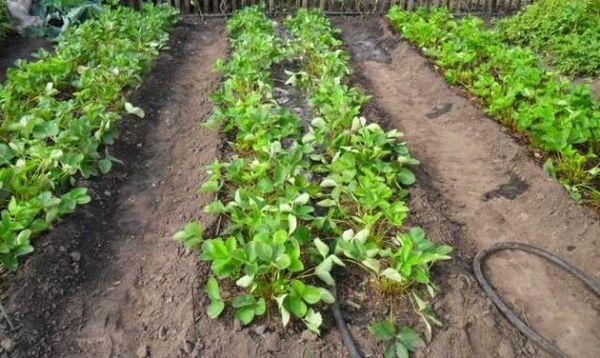
Plants should be spaced 30 centimeters apart within a row and 50 centimeters between rows. Planting can be done in summer or fall. Fall planting should begin in mid-September and be completed no later than one month before the first frost. Strawberries planted in spring may not survive spring frosts and will not produce a harvest until the following year.
Planting technology
Before planting, water dry soil or allow damp soil to dry. Soil preparation should begin two months before planting. Mix one bucket of compost and 55-75 grams of complex fertilizer per square meter of soil. If the groundwater level is close to the surface, create raised beds.
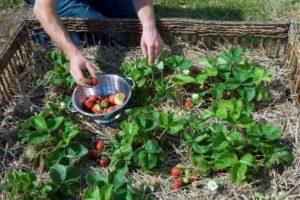
In dry soil and infrequent rainfall, strawberries should not be raised above ground level, and the area around them should be mulched. The soil around the base of the bush should be compacted to prevent soil settling.
If the plant roots are on the surface or too deep, the strawberries may be killed by frost.
How to care for the Pervoklassnitsa variety
To properly care for the Pervoklassnitsa strawberry, you need to carefully follow the watering and fertilizing schedule due to the plant's extended fruiting period. You should also monitor for any diseases or pests.
Watering mode
When watering strawberries, consider soil moisture. Stagnant water around the plant causes root rot and increases susceptibility to various types of rot. The first watering should begin in late April. The soil should be moistened to a depth of 25 centimeters. When watering, avoid getting water on the stems and berries.
Top dressing
To feed the plant with organic fertilizer, use a fermented infusion of mullein or bird droppings. To prepare this mixture, you will need:
- Fill the container with fresh manure.
- Dilute it with water in a ratio of 1:10.
- Let the mixture sit for 1-2 weeks.
- Stir the substance every 3 days.
This mixture can be replaced with a nitroammophoska solution. To do this, mix 10 liters of water with 1 tablespoon of the solution. To balance the mullein infusion, add the following to 25 liters of the mixture:
- 0.5 liters of ash;
- 150 grams of superphosphate.
When feeding, the mixture should be diluted with water in a ratio of 1:7. When preparing a mixture from liquid chicken manure, mix 1 liter of the infusion with 10 liters of water. If the infusion is made from dry manure, dilute the mixture in a ratio of 1:20.
If the concentration of the solution increases, the root system of the plant may be damaged.
Top dressing should be carried out:
- at the beginning of the growing season;
- before the buds appear;
- after picking the berries.
Weeding and loosening the soil
Weeding should be used to loosen the soil and kill weeds. During flowering and berry ripening, hoeing or weeding should be avoided. These activities can damage the flowers or contaminate the berries with soil.
Loosening is done between bushes to a depth of up to 2 centimeters, and between rows to a depth of up to 8 centimeters. This procedure improves plant nutrition and prevents crust formation on the soil surface.
Mulching
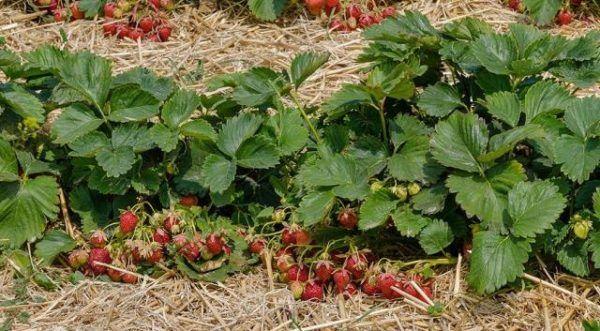
Mulching is used to make strawberry care easier. Mulch conserves water, prevents crusting, and keeps the berries off the ground. A layer of straw, sawdust, or peat also discourages insects.
Shelter for the winter
This variety can withstand temperatures down to -32°C. However, if temperatures drop below 25°C and snowfall is uneven, the bushes should be covered with straw or other suitable material.
Preventive treatments against diseases and pests
Since the Pervoklassnitsa strawberry is susceptible to various types of rot, it requires timely treatment with fungicides or insectofungicides.
Before flowering, apply Bordeaux mixture. It will protect the plant from spotting and fungus.
Methods of reproduction
Three planting methods are used to propagate this variety. Each is used under specific conditions and for different purposes.
Seeds
Strawberries with large berries are propagated by seeds only during selection work.
When sown, the resulting plants will not have the properties of the parent. Reproduction seeds are used when planting small-fruited strawberriesThis plant variety will replicate the properties of the previous bush.
By dividing the bush
Propagation by division is used due to its simplicity and accessibility. This method allows inexperienced gardeners to increase the number of plantings without propagating by seeds or rosettes. The advantage of this method is that the survival rate of the bushes is 85-90%. Dividing only vigorous and healthy rosettes can increase yields.
This procedure should be performed in early spring. All flowers should be plucked from the transplanted plants. This will help strengthen the root system and increase foliage. Select seedlings that are no more than four years old. After this period, their yield decreases. A single bush can produce up to 17 buds.
Sockets
During the fruiting period, select and mark bushes with large berries. After harvesting, the rosettes from the marked plants should be potted. Remove all small runners from the rosettes, leaving only the large ones. After 3-5 leaves appear on the stems, trim off the remaining runners and transplant the plant to its permanent location. Do not shake the soil off the roots. Water the seedling with warm water after planting.
Gardeners' reviews of the variety
Camilla, Tomsk:
"We planted strawberries in our garden. By the second year, the harvest was so abundant that we had to can them. The berries are large and sweet. We carefully tend the bushes, so we haven't seen any diseases yet. We pick the berries 5-6 times a summer. The family is pleased with the variety."
Maxim, Tyumen:
"We planted the bushes six years ago. During this time, we propagated and replanted the strawberries three times every two years. The variety produces a stable and large harvest. We cover the bushes in winter to prevent frost damage. The berries are large and juicy. They have a good flavor, but they only last two to three days. Because of this, we make jam or preserves from them."
Related posts:
 How to grow strawberries at home
 Description of the Florence strawberry variety, planting and care features
 Description of the everbearing strawberry variety Selva and cultivation technology
 Description and characteristics of the Vima Zanta strawberry variety, planting and care scheme
 Description of the Holiday strawberry variety, cultivation and propagation methods
 Description of the everbearing strawberry variety Mara de Bois and growing rules
 The best varieties and cultivation of everbearing strawberries, fertilizing and propagation
 Description and how to plant the Garland strawberry variety