
- Description and characteristics of the pest
- Varieties
- Comma-like
- Californian
- Acacia false scale
- Plum scale insect
- Life cycle
- Preventive measures
- Quarantine
- Mechanical cleaning
- Natural enemies
- Removing unnecessary trees
- How to fight
- Traditional methods
- Laundry soap
- Green soap
- Soda ash
- Onion infusion
- Freshly chopped pepper
- Wood ash
- Treatment with horticultural oil
- Chemical methods of control
- Medicines
- Rules of application
- Precautionary measures
- Tips and advice from experienced gardeners
- Result
Scale insects on plum trees appear as small insects that are very difficult to spot. Gardeners most often detect scale insects in the mid-stage of infestation. Immediate measures are necessary to eliminate the pest, otherwise the plant may die.
Description and characteristics of the pest
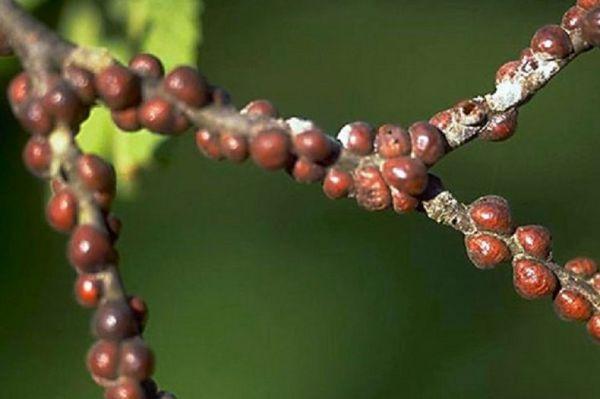
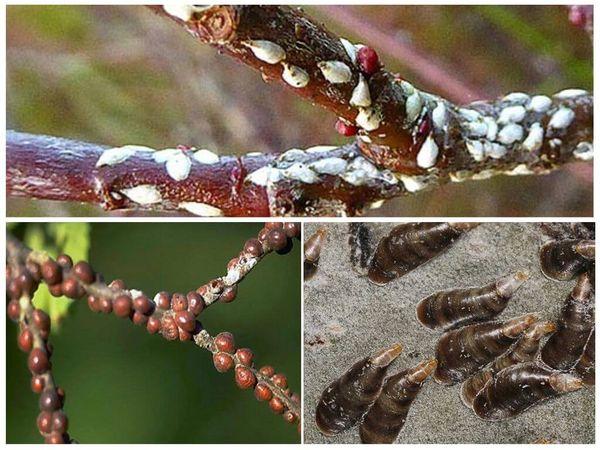
The insect is small and light brown in color. It attacks tree shoots. It clings tightly to the bark and appears as small lumps. It feeds on sap and can quickly cause complete plant death. Females are wingless, while males are smaller and mobile. The larvae are located under the bark and may hibernate during the winter.
Varieties
There are different types of scale insects, which differ in their external characteristics.
Comma-like
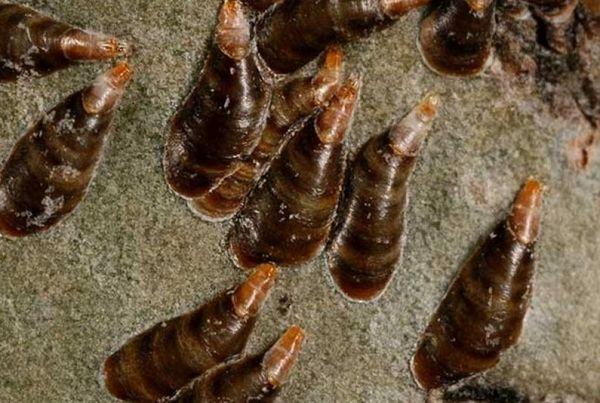
A small insect with a light-colored body. Its carapace is curved, resembling a comma. It attaches itself to the trunk and forms small growths. It moves slowly through the crop, sucking the sap. After laying eggs, the female dies; a single clutch can produce up to 100 larvae. The larvae overwinter in the growth on the shoot and reemerge as adults the following season.
Californian
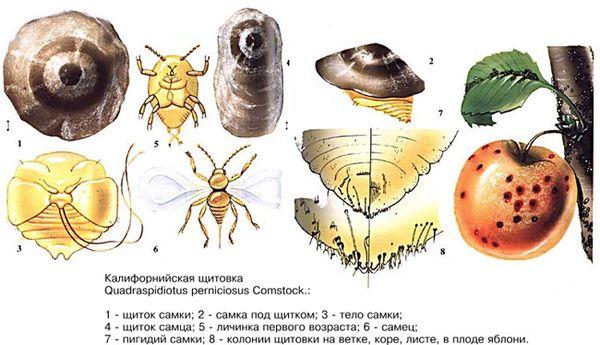
These are small pests that attack plum trees. They look like a small spot. They are usually detected at a late stage. Chemicals are required for removal.
Acacia false scale
It occurs on all fruit crops. It is small in size, up to 6 mm. By attaching itself to a shoot, it forms a protective shell in which it lays its eggs. The insect is brown.
The larvae quickly spread to healthy parts of the tree, which can lead to its death within a few years.
Plum scale insect
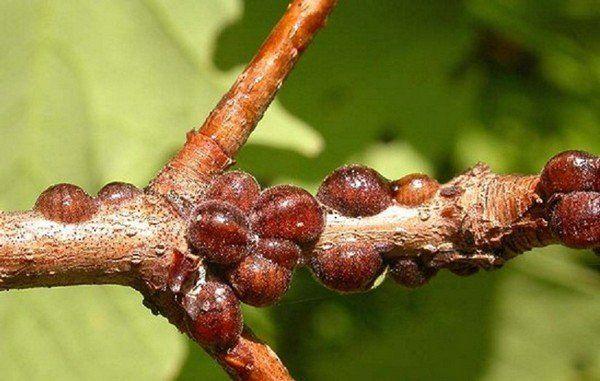
The pest is hemispherical in shape. Its brown shell clings to the trunk and attacks young shoots. It can tolerate low temperatures, so if left untreated, it overwinters in the tree bark.
Life cycle
Most insect pests are female. After fertilization, the female lays eggs and dies. The eggs remain in the female's shell throughout the winter. In the spring, the eggs hatch into larvae, which mature and crawl throughout the tree. A month after hatching, the larvae develop into adult females.
Preventive measures
To prevent infection, it is necessary to take certain preventive measures.
Quarantine
Only healthy seedlings are used; infected specimens must be removed.
Mechanical cleaning
At the first signs of infestation, the affected shoot is pruned. Mechanical cleaning with sharp objects can also be used. The bark containing the pest is removed. This procedure is labor-intensive, but does not require the use of chemicals.
Important: Mechanical cleaning is not recommended for young seedlings.
Natural enemies
For small infestations, natural enemies can be used. Ladybugs, which feed on the pest, are a good example.
Removing unnecessary trees
The pest often appears on old trees that produce virtually no fruit. Such trees must be removed and replaced with healthy young saplings.
How to fight
The method of pest control is determined by the gardener depending on the degree of infestation.
Traditional methods
Folk remedies allow for the removal of small numbers of pests. The advantage of these methods is that they cause no harm.
Laundry soap
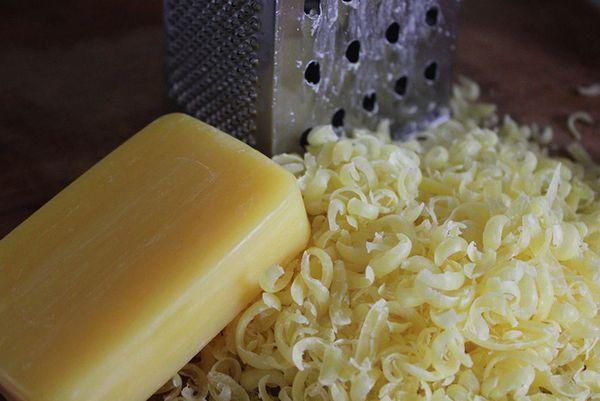
You can get rid of the pest using laundry soap. To do this, dissolve a bar of soap in 5 liters of water and spray the tree. The soapy solution forms a film that kills the insect.
Green soap
To treat the wood, grate 50 grams of soap and dissolve it in 10 liters of water. Apply the resulting solution to the wood. Repeat the procedure after 10 days.
Soda ash
Washing soda destroys the pest's shell and kills not only the adult insect but also its eggs. Dissolve 10 grams of the powder in a bucket of water. Spray the resulting mixture onto the tree.
Onion infusion
To prepare the infusion, pour 2 liters of water over a kilogram of husks. Let it sit for several days. Then strain and dilute with 5 liters of water. The resulting infusion is used to spray the plant.
Freshly chopped pepper
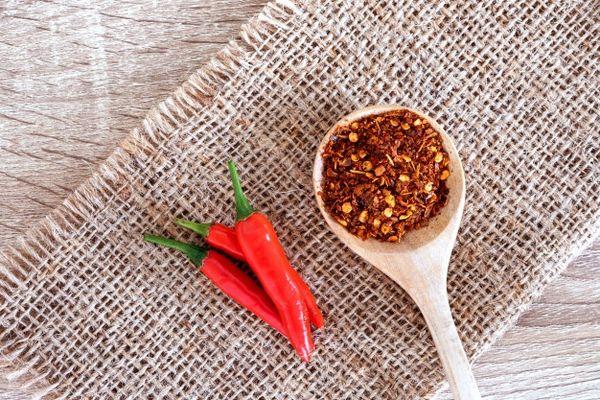
Hot peppers are used. Chop 100 grams of pepper, add a liter of water, and bring to a boil. Cool, dilute in 5 liters of water, and spray the tree.
Wood ash
Add a kilogram of ash to a bucket of water and apply the mixture. The same result can be achieved by using dry ash dusting.
Take a look Also
Treatment with horticultural oil
Neem oil helps get rid of the pest. Sprayed on the plant, the oil forms a film that prevents air from passing through, killing the insect.
Chemical methods of control
The use of chemicals allows you to eliminate scale insects from plums in a short time.
Medicines
Among the large number of drugs, it is necessary to highlight frequently used substances.
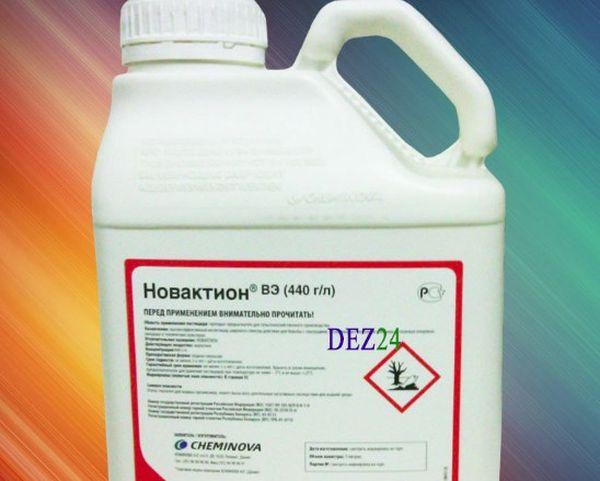
Novaktion
A broad-spectrum product designed to control chewing and sucking insects. Results are visible immediately after application. It is available as an aqueous emulsion, which can be used to prepare a working solution.
Sumition
The product is used to control harmful insects. Once it contacts the scale insect's shell, it breaks down and infects the insect.
Di-68
Used to prepare solutions against sucking pests. Several treatments are required to achieve results.
"New B-58"
An improved formulation of the product that quickly acts on pests. When the solution contacts the shell, it blocks their ability to move, resulting in the death of the pest.
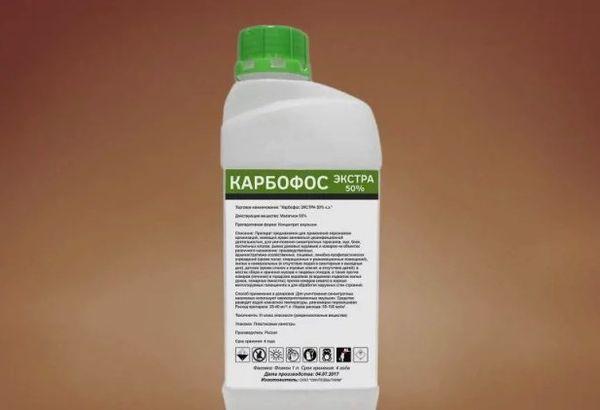
Karbofos-500
A contact and intestinal drug that destroys soft tissue when ingested. It must be applied multiple times, as it has no effect on eggs.
Rogor-S
Eliminates pests from the first application. After spraying, protection lasts for several months. It can penetrate the bark and remove scale insect larvae.
Chlorpyrifos
This product is used to control all types of insects. Upon contact with the insect, it paralyzes the pest. It can be used twice per season.
Pirinex
A contact agent used to eliminate scale insects. Several sprays are required to achieve visible results. Does not harm crops.
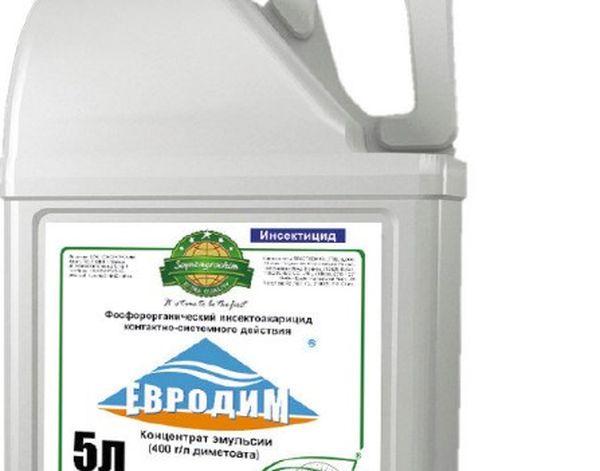
Eurodime
Once applied to the tree, the substance quickly penetrates the bark and has a negative effect on pests. The product is water-resistant and can be used regardless of weather conditions.
30 Plus
The substance has a rapid effect on the pest. It can be used at all stages of infestation. A working solution must be prepared before use.
Important: Follow the instructions carefully, otherwise burns may occur on the shoots and leaves.
Prophylactin
The substance is used early in the season to prevent pests. Plums are treated before bud break.
Rules of application
To achieve results, it is necessary to follow the instructions for using chemical preparations:
- The chemical is mixed with water according to the instructions.
- The resulting solution is poured into a spray bottle.
- The plant is sprayed in several stages. The first treatment is carried out when signs of insect infestation are detected. A second treatment is carried out 10 days later.
After processing, the fruits are not recommended for consumption for 5 days.
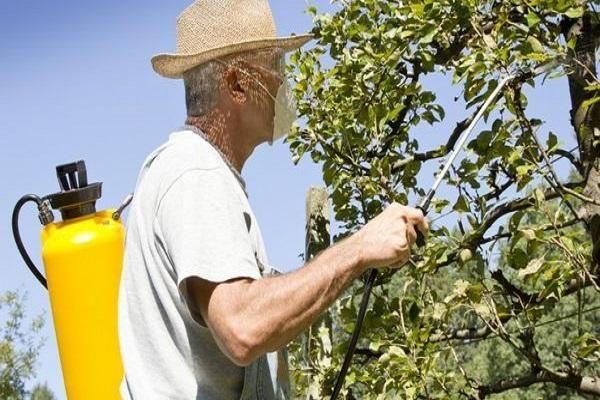
Precautionary measures
When treating plums for scale insects, the following safety precautions must be observed:
- carry out treatment in protective clothing;
- protective glasses and a respirator are used;
- After treatment, it is necessary to wash the body with soap;
- Do not use the drug in the presence of children and pets;
- During the period of full maturation, the use of chemical preparations is not recommended.
Following safety methods helps prevent harm to human health.
Tips and advice from experienced gardeners
When fighting scale insects, it is important to consider the advice of gardeners who have encountered this problem:
- If the tree is more than 50% infected, saving the plant is problematic; pruning of the damaged areas is recommended.
- For frequent infestations, one product should be used for no more than 2 years. After this period, the pest may develop a tolerance.
- While removing scale insects, it's important to water and fertilize the tree thoroughly. This will boost the tree's immunity and speed up the action of the treatments.
When planting seedlings, it's important to purchase planting material from trusted sources. This will reduce the risk of infection.
Result
Controlling plum scale insects is straightforward with timely treatment. However, in advanced cases, insecticides are ineffective. In this case, the plant must be removed. The insect can migrate to healthy plants, so if one tree is infested, carefully inspect the rest of the garden.
Related posts:
 How to control onion flies using natural and chemical methods
 Causes of phylloxera in grapes, control measures with drugs and folk remedies
 How to propagate and grow peas, cultivation technology, and care in open ground
 How to properly plant peas in a greenhouse and open ground
 How to plant grapes step by step, with a description of the process and care
 Diseases and pests of home lemons, treatment options, and solutions
 Description of varieties of sowing peas and cultivation, to which family they belong
 The best eggplant varieties for growing in a polycarbonate greenhouse: planting and care