
- Description and characteristics of the pest
- Origin
- Types
- Wingless
- Winged
- Sexual
- Gallic
- Life cycle
- Underground
- Ground
- Winged
- What harm can it cause?
- Reasons for occurrence
- Climate
- Violation of agricultural cultivation techniques
- Incorrect choice of planting material
- Infected inventory
- Basic methods of struggle
- Wet
- Fumigation
- Chemical treatment
- Fastak
- Fozalon
- Actellic
- Kinmix
- Confidor
- BI-58
- Marshal
- Zolon
- Kinmixon
- Agrotechnical measures
- Traditional methods
- Solutions
- Soapy
- From the ashes
- From the peel of citrus fruits
- From the tops of nightshade plants
- Tobacco
- Planting parsley
- Phylloxera-resistant varieties
- Bessarabian Muscat
- Luminica
- Cabernet AZOS
- Kubanets
- In memory of Zotkina
- Chocolate
- Aurora Magarach
- Antaeus
- Crane Anniversary
- Nugget
- Moldova
- Common mistakes
- Preventive measures
- Tips and advice from experienced gardeners
- Result
The phylloxera pest is very common in grapes. The insect is small, and this can lead to further infestation and reduced yields. Prompt preventative measures are also crucial, reducing the risk of infection and keeping the crop healthy.
Description and characteristics of the pest
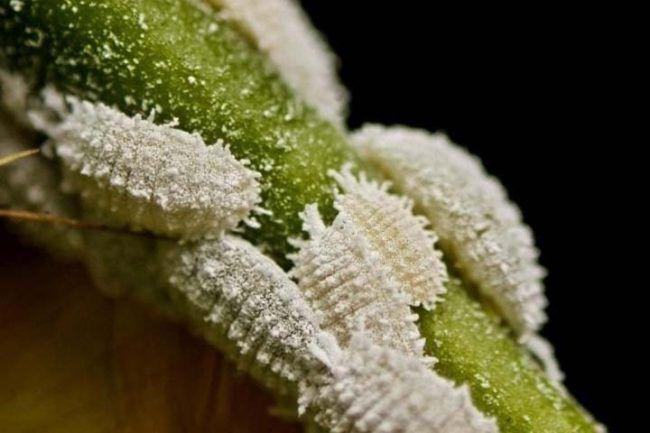
Grape aphids are small and can feed not only on root sap but also on foliage. They can cause complete death of grapevines in a short time. These pests range in color from yellow, green, to burgundy. They are small and unnoticeable on the plant. Characteristics of the pest:
- tolerates low temperatures;
- can live on the crop for up to 4-5 years;
- eggs can remain dormant, after which offspring appear, which can then reproduce;
- the insect overwinters in the soil and bark of the vine, with its proboscis deeply retracted;
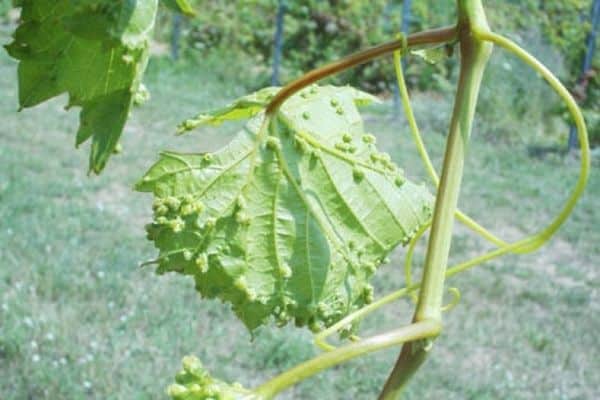
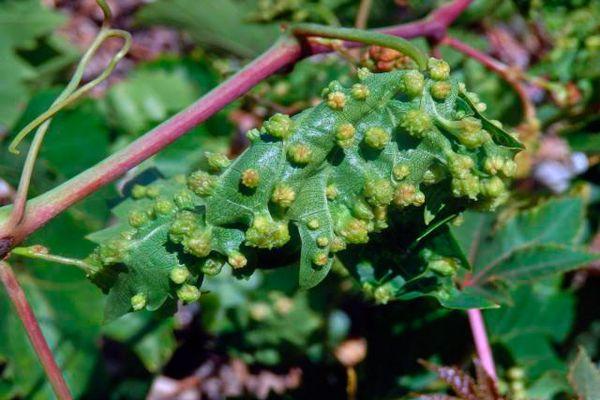
- appears in the form of small compactions on the leaves;
- can lay up to 120 eggs at a time.
The insect quickly penetrates the crop and causes complete infection. After aphid infestation, the crop becomes weak and is often susceptible to other diseases.
Origin
This disease was first discovered in Crimea in 1880. It originated in the United States and caused a problem among gardeners when it first appeared. Without treatment, the virus quickly spread and now affects grapevines in many countries. This problem arose as a result of the import of infected seedlings from other countries to help spread the variety.
Types
Insects can be of different types depending on the area that is affected on the grapes.
Wingless
The pest hides in the plant's roots. It most often appears on mature plants. It is small in size and easily tolerates low temperatures. It reproduces quickly and feeds on root sap. It can quickly infect the entire plant and spread to neighboring plants.
Winged
The insect is small and flits from one bush to another. Its yellow color makes it difficult for gardeners to recognize. It feeds on the sap of young leaves and shoots of grapevines.
Important: You can identify the pest by closely examining the vine. Infected shoots have small bumps.
Sexual
This type of pest has winged males and wingless females. The insects are small in size. After mating, they lay eggs, which hatch into larvae the following year.
Gallic
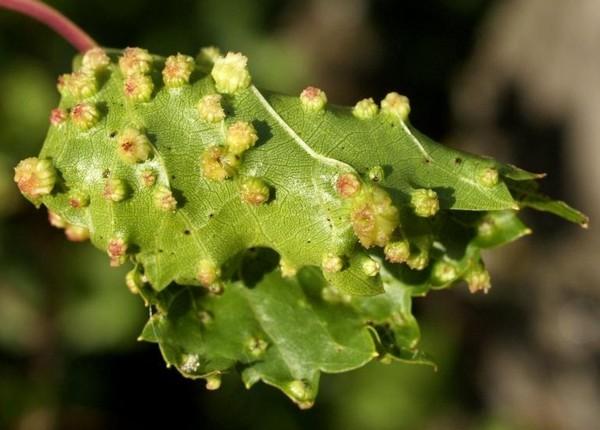
The insect prefers grape varieties native to the United States. It attacks the leaves, forming small nodules in which it hides from view. Once the leaf is completely damaged, the pest moves on to neighboring ones.
Life cycle
Each pest species may have distinctive life cycle characteristics. These characteristics must be taken into account when controlling insects on grapes.
Underground
The insect penetrates the root through a puncture made with its proboscis. A growth appears on the back of the puncture and gradually grows. After two weeks, the growth cracks, infecting the root, causing it to die. The female lays eggs, and within 10 days, larvae emerge, which spread throughout the roots and cause their death. Once some of the roots are infected, the larvae move on to a new crop.
In one season, the underground pest can produce up to 6 generations that feed on the sap of the crop.
Ground
The pest emerges from eggs laid last season. The hatched larva attaches itself to the leaves and forms lumps. After a month, the larva develops into a female, which, after fertilization, lays eggs. Five days later, the eggs hatch into new pests that attack the grapevine.
Take a look Also
Winged
Some of the underground larvae develop into nymphs (winged individuals). After fertilization, the winged larvae lay eggs on the bark of the vines. The eggs hatch into females and males, which spread to uninfected areas of the vineyard.
What harm can it cause?
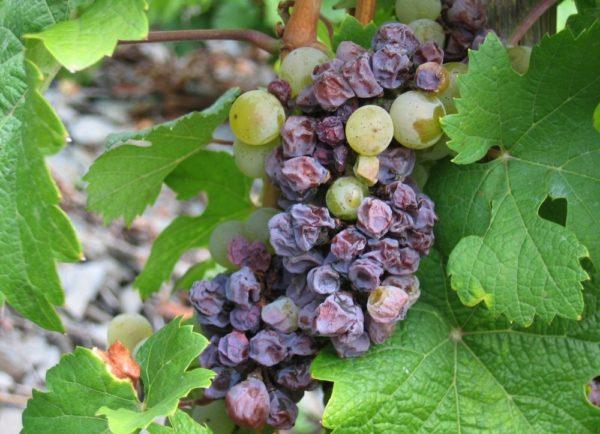
When grapevines are attacked by this type of aphid, the plant most often dies. This is because the pest appears in large numbers and depletes the plant's vitality. The insects reduce the number of ovaries, which negatively impacts future harvests. Infected vines also often begin to wilt and develop thickened lesions.
Reasons for occurrence
Various factors can provoke the formation of pests.
Climate
The pest can develop during dry weather. The insect can also be carried into the garden by the wind.
Violation of agricultural cultivation techniques
Before planting grapes, it's important to disinfect the planting site to reduce the risk of grape aphid infestation. Infestation can also occur due to a lack of adequate nutrients. Infected crops lack the ability to fight the pest and die.
Incorrect choice of planting material
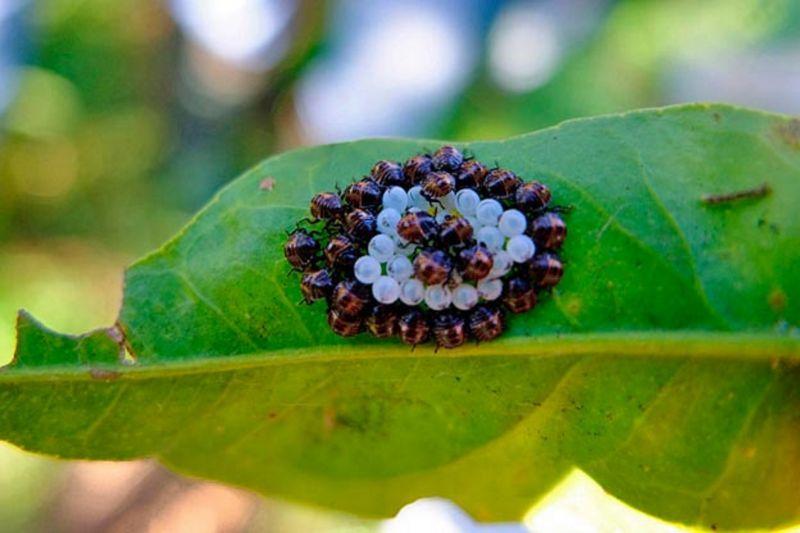
The cause of crop infestation is improperly selected planting material. Pest eggs can remain dormant for several years, hiding on seedlings.
It's important to carefully inspect the root and cutting. There shouldn't be any lumps or growths that could harbor larvae.
The insect also causes a rotting process, which leads to the complete death of the roots.
Important: Do not use infected grapevines as mother plants. Larvae can travel with the cuttings and attack the seedlings.
Infected inventory
Before each crop treatment, it's necessary to sanitize the equipment used. Pest eggs often hide in the soil and can settle on the shovel.
Basic methods of struggle
Gardeners choose the most suitable one themselves.
Wet
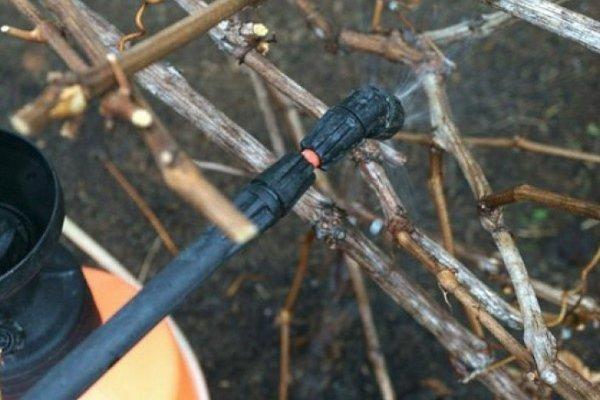
This method is used for young plants. It involves flooding the roots during the cold period. Excessive moisture kills both adults and larvae. However, this method does not protect against insect eggs. To increase the effectiveness of this type of treatment, special emulsions are used.
Fumigation
This involves calling a sanitary service, which uses special spraying agents. This treatment kills the insects and their larvae. This type of treatment also has a negative impact on the pest eggs.
Chemical treatment
It can eliminate even the most complex types of grapevine damage. To eliminate the problem, special chemicals must be used.
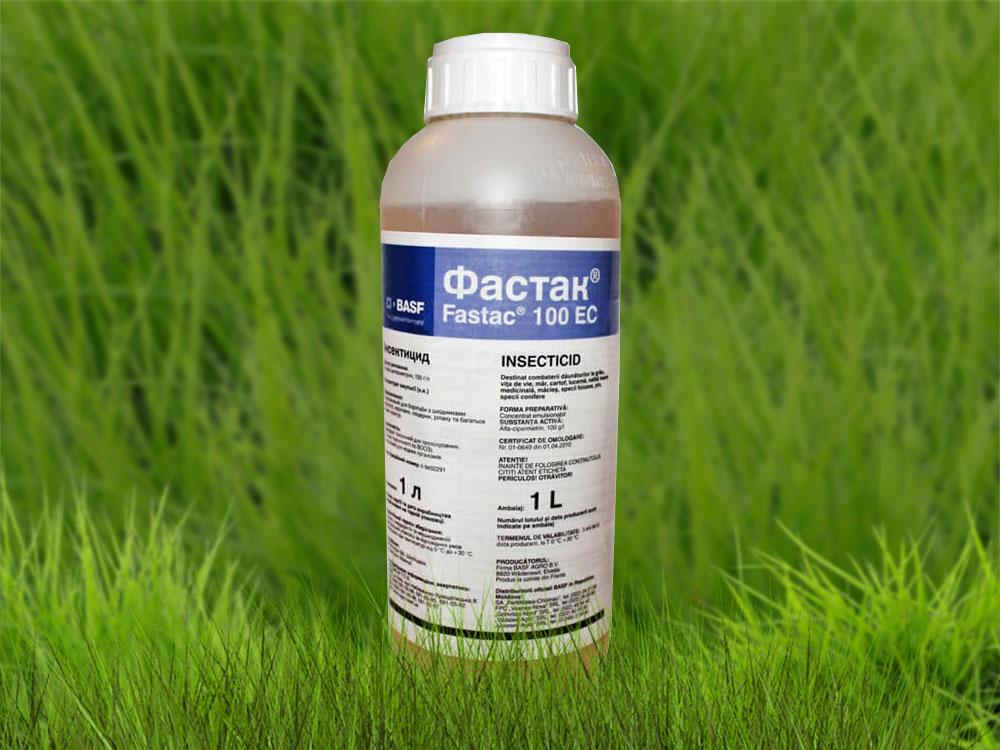
Fastak
This emulsion is suitable for treating gardens and vegetable plots. It is used against pests, including grape aphids. It has a contact and stomach effect and allows for the rapid elimination of most pests.
Fozalon
A chemical product produced in emulsion form. It is used to control insect pests and rodents. It can be used to control both root-type pests and leaf phylloxera.
Actellic
The product is widely used against all types of aphids. It has no negative impact on crops and can be used every 10-15 days without harming plants.
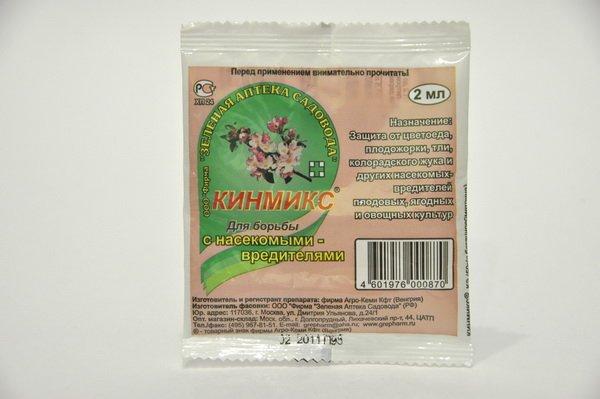
Kinmix
This product is designed to control leaf-eating pests. It eliminates aphids without harming crops. It can be used frequently and is harmless to insects and pets.
Confidor
The product is not destroyed by direct sunlight. It kills both adult insects and their larvae. Spraying should be repeated every 15 days. After precipitation, repeat the spraying.
BI-58
This product is not recommended for use near beneficial insects. It is easily washed away with water. It is effective against larvae and adults. It prevents hatching of larvae from eggs. It eliminates up to 90% of grape aphids.
Marshal
Effective against phylloxera, eliminating the pest at the egg-laying stage. Positive results are achieved within 2 hours of application. It can penetrate deep into the leaves, preventing reinfestation.
Zolon
The product paralyzes the sucking pest. It reduces its ability to move, resulting in its death. It can be used against all types of aphids on grapes. After spraying, a repeat treatment should be performed 10 days later.
Kinmixon
This product is designed to combat foliar pests. It kills insects within 2-3 hours of application. The positive effect lasts up to 3 weeks. If precipitation occurs after application, it tends to wash off, requiring reapplication.
Agrotechnical measures
To reduce the likelihood of pest infestation, ensure the soil is well-drained. River sand is added to achieve this. Timely watering is also crucial.
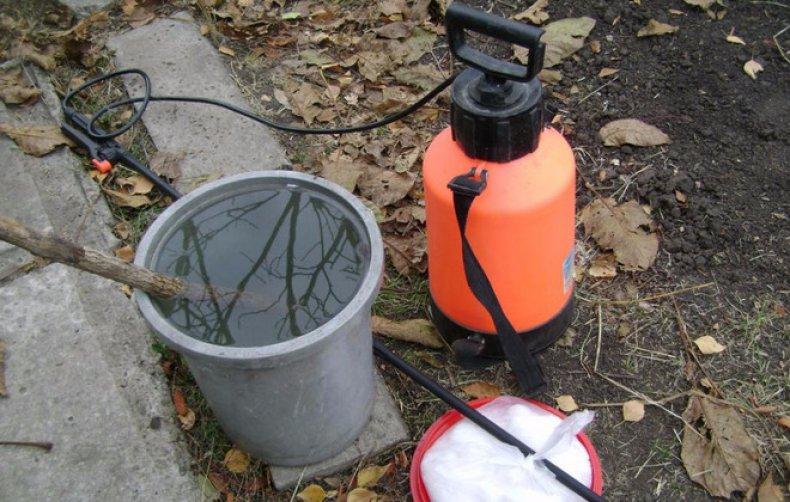
Phylloxera does not tolerate excessive moisture, so it is necessary to water the grapes with plenty of water. Using urea as a fertilizer It also helps eliminate insects. You can water the bushes with a urea solution every 10-15 days. In the evening, you can spray the bushes with water with a small amount of urea added.
Traditional methods
If the pest appears in small numbers, you can use proven folk methods.
Solutions
Solutions are used for spraying vines. The prepared solution should be used within the same day.
Soapy
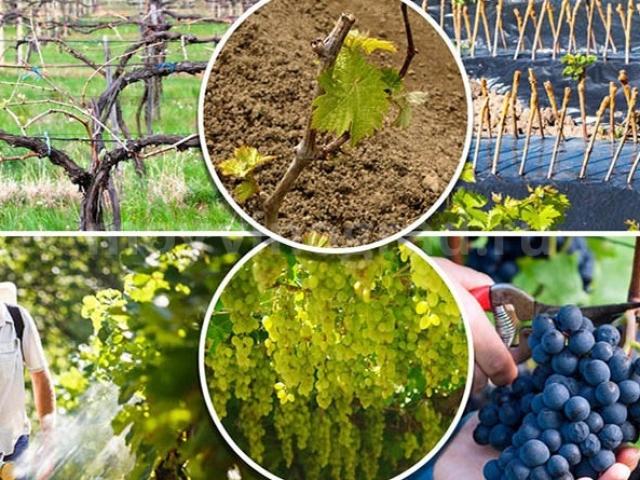
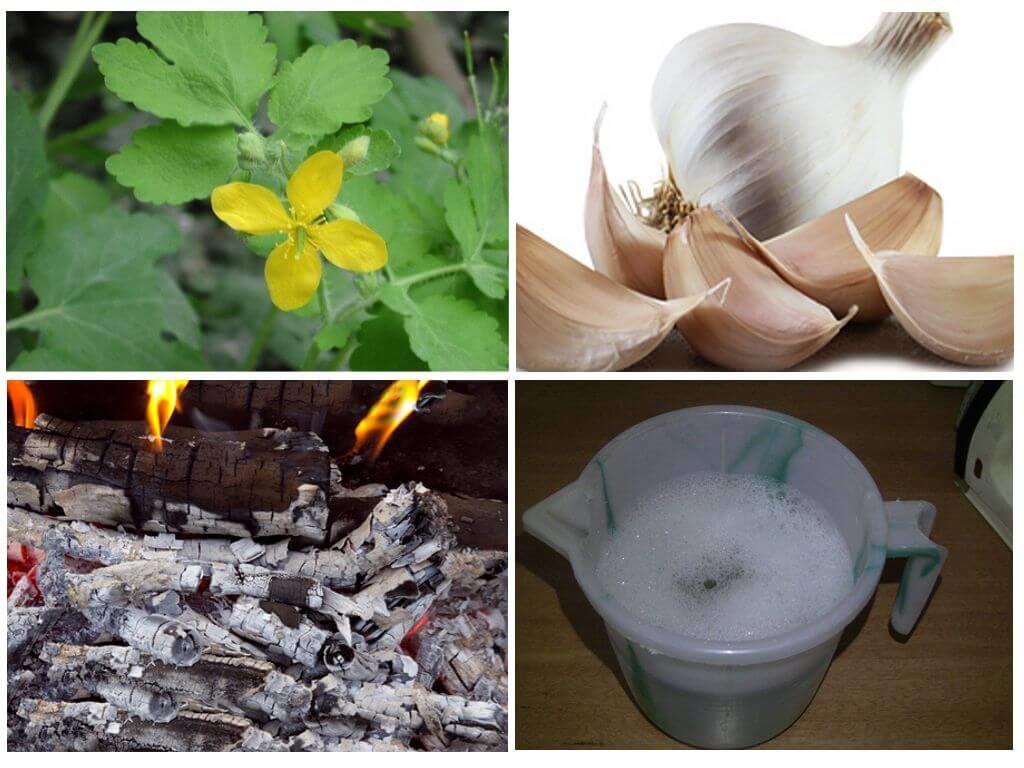
To apply the solution, use a solution of laundry soap. Dissolve a bar of laundry soap in a bucket of warm water and apply it to the bush. Pay particular attention to the undersides of the leaves. Repeat the treatment after 14 days.
From the ashes
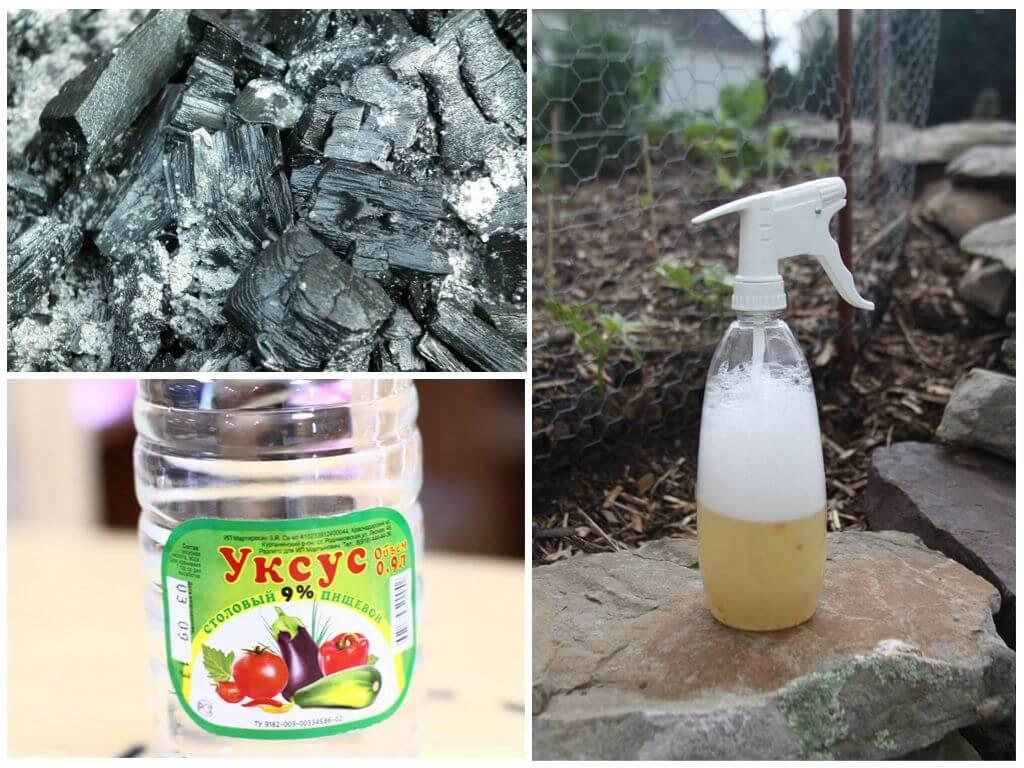
Using wood ash can repel aphids and prevent their reappearance. This method can be used for both above-ground and root applications.
To spray the vines, 1 kilogram of the substance is dissolved in a bucket of water and the treatment is carried out using a large-spray hand sprayer.
To eliminate pests from the roots, water the soil with the resulting solution. Birch wood ash is suitable for all grape varieties and eliminates insects quickly.
From the peel of citrus fruits
Citrus fruits help repel phylloxera. Orange or lemon peels can be used for this purpose. 500 grams of peel are soaked in 1 liter of water and left for 24 hours. The resulting solution is mixed with clean water at a ratio of 1:3, and then applied.
From the tops of nightshade plants
Some plants have an insect repellent effect. These include tomatoes and potatoes. Prepare a solution as follows: chop 1 kilogram of the herb and add a bucket of water. Let it sit for 24 hours and strain. Spray the resulting solution on the bush. Repeat the treatment every 10 days until the desired effect is achieved.
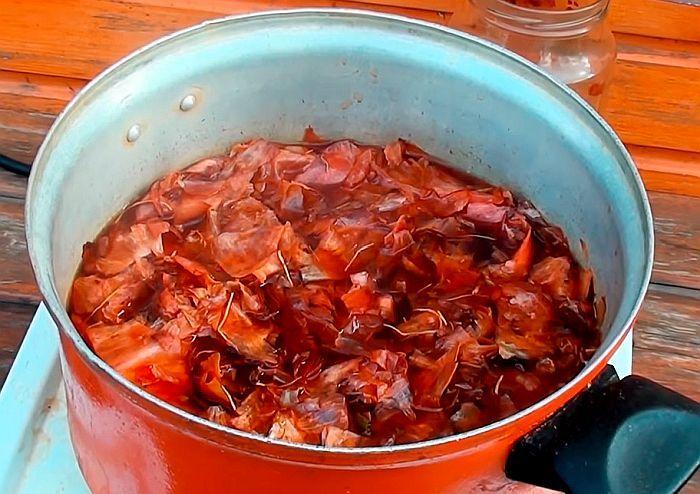 Important: The same result can be achieved using a garlic water solution. Prepare it according to the following recipe: Chop 100 grams of garlic and add a liter of water. Let the resulting solution steep for 24 hours, then mix it with water in a 1:3 ratio and apply it to the bushes.
Tobacco
To prepare the solution, use special tobacco dust, which can be purchased at any store that sells insecticides. Mix a cup of tobacco dust with a liter of water and let it dissolve completely. Then, dissolve the resulting infusion in 5 liters of water and spray the vines.
Planting parsley
Parsley has a repellent effect on harmful insects. To combat aphids, plant it under grape vines. During flowering, parsley produces a distinct aroma.
You can also achieve the same result by planting dill or marigolds with a strong scent.
Important: If the plant is severely damaged, the bush must be removed. Roots, which could further transmit the disease, must also be uprooted. The removed vines must be burned.
Phylloxera-resistant varieties
Some grape varieties are resistant to the disease. However, this resistance does not eliminate the risk of aphids. Phylloxera does appear, but to a lesser extent.
Bessarabian Muscat
The crop is resistant to diseases and pests and requires little maintenance. The berries are white and juicy. The flesh is tender, and the skin is thin.
Luminica
This variety is a late-ripening variety. The berries are medium-sized and light green. The flavor is sweet and tart. They are resistant to low temperatures and pests.
Cabernet AZOS
A late-ripening wine grape variety. The blue berries are resistant to fungal diseases, pests, and phylloxera.
Kubanets
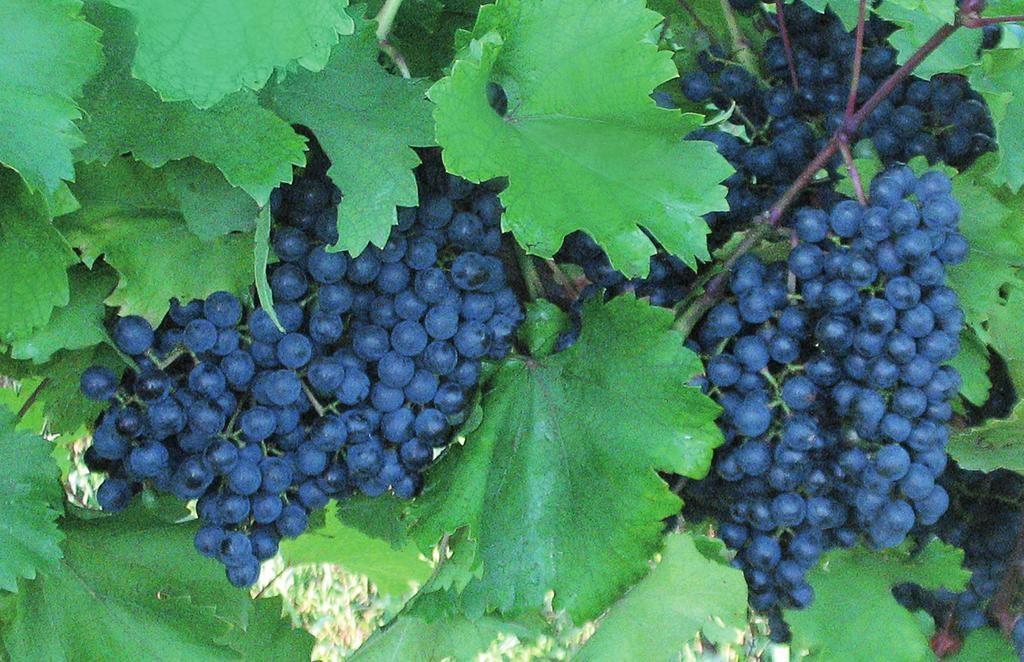
The grapes are small in size and have blue skins. They are productive and often used to make wine. They require little maintenance and are resistant to pests.
Take a look Also
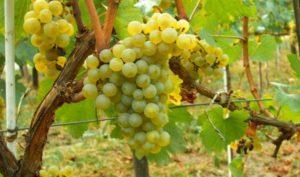
In memory of Zotkina
A late-ripening variety. The clusters are large, and the fruits have red skin. The flavor is sweet, and the bushes are large and spreading. They are rarely susceptible to disease.
Chocolate
This variety ripens in August and early September. The berries have brown skin. They have a sweet flavor and are resistant to fungal diseases and aphids. They are suitable for growing in a garden plot, as the bush is large and has a strong vine.
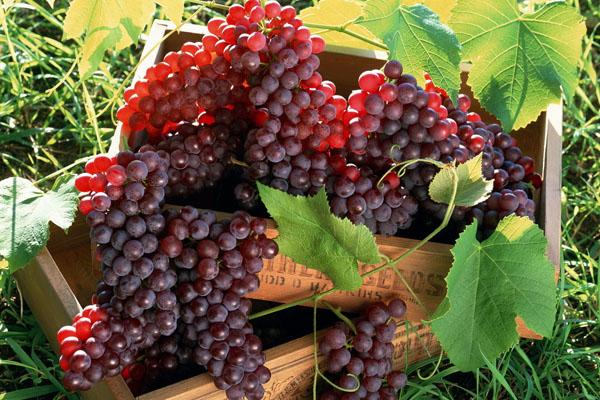
Aurora Magarach
A mid-season wine grape variety. The vines are large, producing large, light pink berries.
Antaeus
This variety features dense clusters and sweet-and-tart berries. The skin is dark. It can be grown in a variety of conditions and is resistant to diseases and pests.
Crane Anniversary
The crop ripens late. It boasts excellent flavor, with elongated berries and large, dense cysts. Fruiting begins in the second year after planting, with well-developed bushes that easily withstand pest attacks.
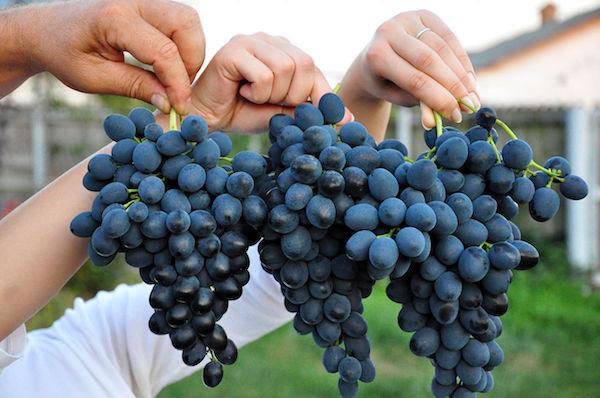
Nugget
This early-ripening grape produces green, oblong-shaped berries. The flesh is juicy and tender. The skin is firm. These grapes are suitable for storage and long-distance transport.
Moldova
Can be grown in hot regions and requires little care. It is a table variety. The berries are sweet, with a dark skin.
Common mistakes
Errors in crop cultivation often lead to grapevine death. Common mistakes include:
- Burying damaged leaves or storing them in a nearby area. Pest larvae tend to crawl, so after removing the infected parts, the problem often returns.
- Only the above-ground portion of the bushes is sprayed. To eliminate the pest, it is necessary to water the root zone with special preparations. This is essential for eliminating all types of grape aphids.
- Avoid using chemicals. Eliminating the pest using folk remedies alone is impossible.
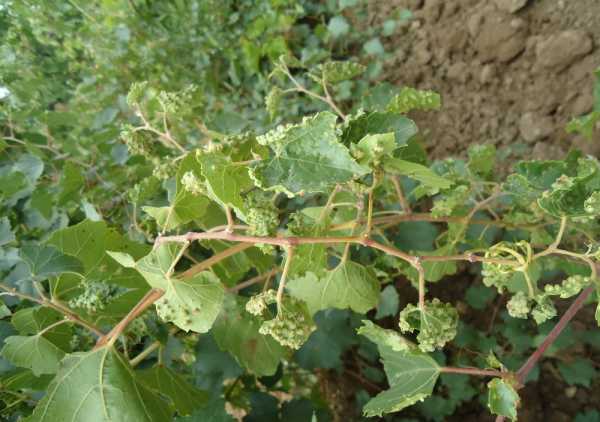
In order to avoid making mistakes, it is necessary to carefully inspect the bushes and use preventative methods.
Preventive measures
To reduce the risk of phylloxera infection, the following procedures must be followed:
- When planting cuttings, disinfect the hole beforehand. Cuttings should be planted deep, as pest eggs often reside at the top.
- Regularly inspect the leaves for any hardening. At the first sign of symptoms, remove any damaged areas.
- Seedlings should be purchased from reputable sellers. As a preventative measure, cuttings should be soaked in a potassium permanganate solution before planting.
- Remove soil from garden tools and disinfect them.
- Use grape varieties designed for this problem.
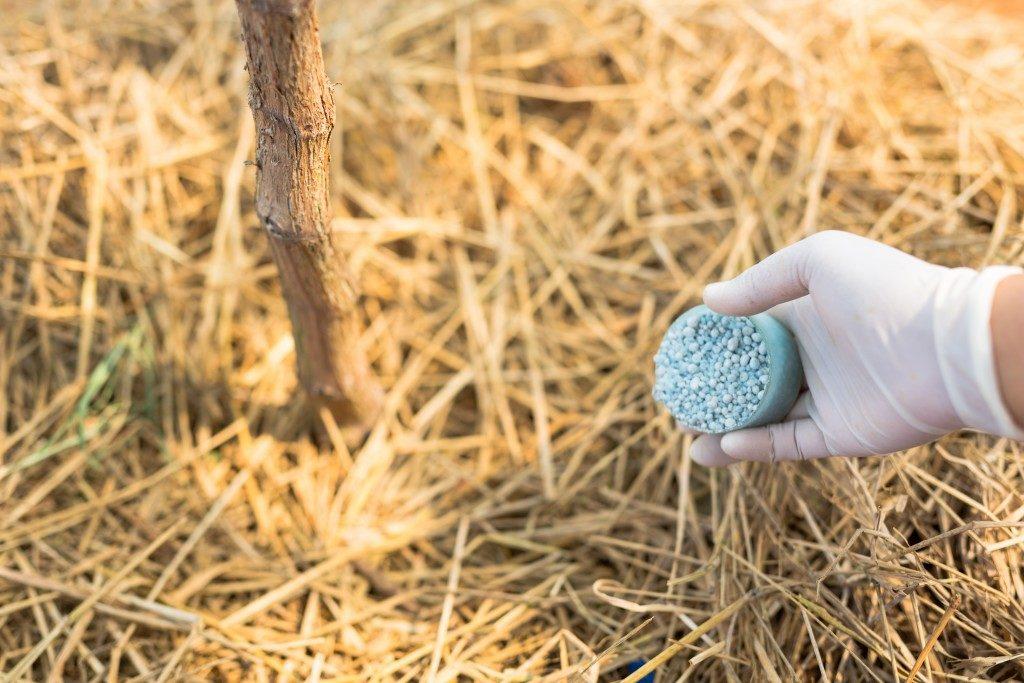
Plants such as parsley or dill can be used as a preventative measure. The plants' strong scent repels pests.
Tips and advice from experienced gardeners
When fighting grape pests, you need to follow these tips:
- treatment with special chemicals must be carried out at intervals of at least 10 days;
- In the spring, before the spraying procedure, it is necessary to tie up the branches;
- carry out treatment with copper sulfate in spring;
- mulch the soil using sawdust or pine needles, this mulch repels insects;
- use resistant varieties that are not susceptible to aphid attack;
- affected areas must be removed and burned;
- For prevention, it is necessary to spray in the spring.
Following these tips will reduce infestation and increase crop yields.
Result
Grapes are a popular crop among gardeners. A phylloxera attack can lead to the complete death of a mature grapevine. Gardeners often don't immediately notice the symptoms of the disease and begin treatment only when most of the grapevine is infected. Timely treatment will yield a harvest with excellent flavor, which can be stored and used for canning.
Related posts:
 How to grow grapes in the Moscow region in open ground without a greenhouse
 How to control onion flies using natural and chemical methods
 Description of the Julian grape variety, planting and care instructions
 Description of the Krasotka grape variety, planting and care technology
 How to get rid of scale insects on plum trees and the best methods of control
 The ripening time of grape vines by variety, how to speed up the process, and what to treat the plant with
 How to plant grapes step by step, with a description of the process and care
 Description and characteristics of the Laura grape variety, planting and care