
- Appearance, physical properties and composition of urea
- Pros and cons
- Methods of fertilizing plants with urea
- Root feeding
- Foliar feeding
- Against pests and fungi
- How to use urea for vegetable crops
- How to dilute urea for fruit trees
- Application for berry bushes
- Mixing rules
- Interaction with other fertilizers
- Storage Features
- Signs of nitrogen deficiency in plants
- What can be used as a replacement?
- Reviews
Urea is the most commonly used mineral fertilizer in vegetable gardens. It contains nitrogen, an essential chemical element for plant growth and development. It is available in dry granular form and as part of liquid solutions. However, it should be remembered that applying urea in excess to vegetable crops leads to the accumulation of nitrates, which is harmful to the human body.
Appearance, physical properties and composition of urea
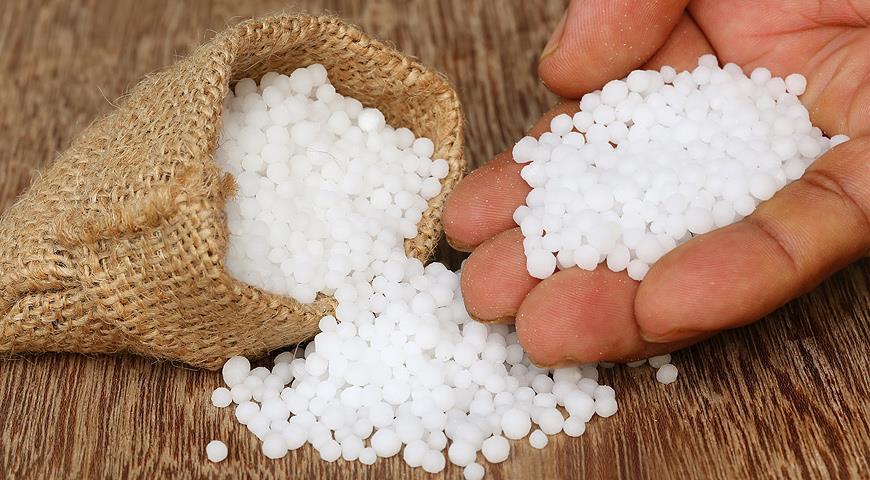
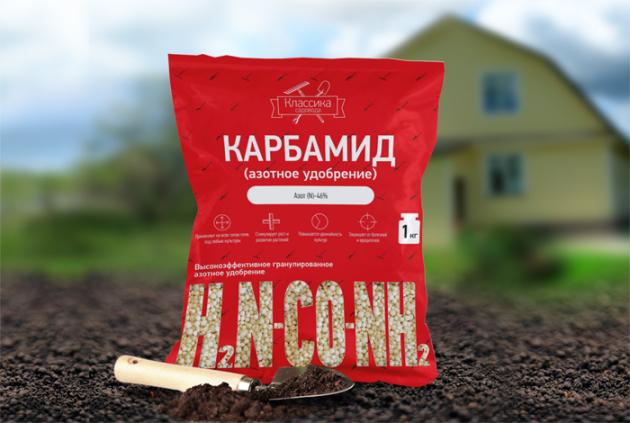
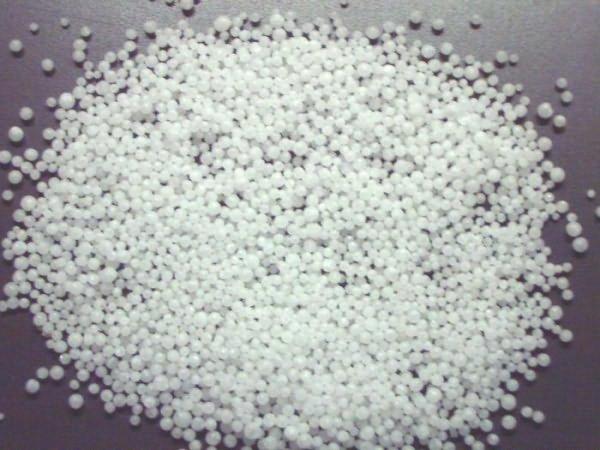
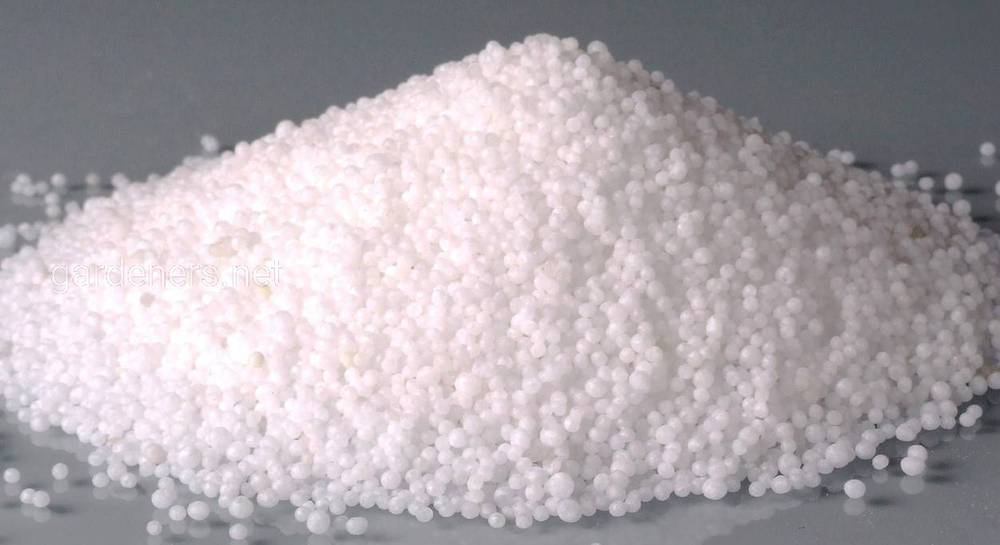
In its normal form, urea or carbamide has a white granular composition, with a granule size of one and a half to 4 millimeters, or a crystalline powder, odorless and highly soluble in water.
Urea grade B is used in agriculture. It contains the following elements:
- Nitrogen – 46%.
- Biuret – 1.4%.
- Water – 0.5%.
Refers to mineral fertilizers. It is used to prepare liquid solutions that are more quickly absorbed by plants, making it easier to maintain proportions and avoid exceeding application rates.
Scientists' research has led to the creation of humated urea, which contains humates, nitrogen compounds that improve plant absorption of chemical elements. The nitrogen content is 44%, and humic salts are 1%. The granules are brown.
Pros and cons
The application of fertilizers, in particular urea, has its advantages and disadvantages.
The advantages are the following properties:
- It dissolves well in water and is quickly absorbed by plant roots.
- If the correct proportions are observed, it is used for spraying on the leaves, while also performing foliar feeding.
- Fertilizer can be applied to any type of soil.
- In moist soil and at positive temperatures the effectiveness of the preparation increases.
The disadvantages include the following:
- Leads to increased soil acidity, requiring additional application of dolomite flour and other deoxidizers.
- Exceeding the application dose inhibits the seeds and reduces their germination.
- Requires storage in a dry place in a closed container.
- Mixing with organic fertilizers containing nitrogen may exceed the permissible dose of this element.
If you follow the instructions when adding urea to the soil, you will get more advantages than disadvantages.
Methods of fertilizing plants with urea
Urea has a wide range of uses in agriculture. Various methods of application include incorporating it directly into the soil beneath the roots, scattering it over the surface during tillage, and preparing liquid solutions for spraying on shrubs.
Nitrogen fertilizers are necessary in the spring, when the green parts of the plant are forming; in the summer, the nitrogen content of fertilizers is reduced. Various folk remedies are used to create nitrogen-containing mixtures. The most popular is "green fertilizer." This is an infusion of green grass in a barrel of water. It's important to remember: nitrogen fertilizers are not applied to perennials in the fall—this stimulates the growth of young shoots, which will not have time to mature before frost.

Root feeding
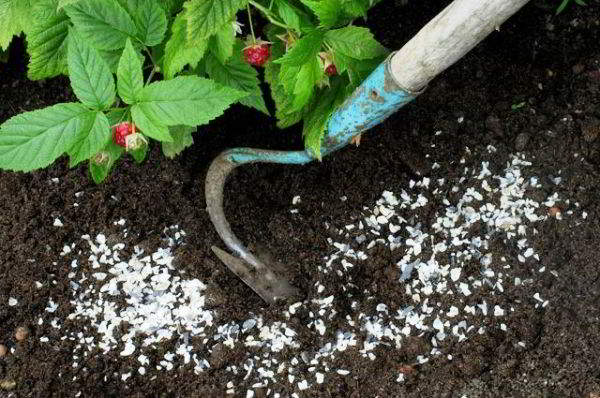
Root feeding is accomplished by adding granules or liquid fertilizer solutions to the soil. Dry granules are incorporated into the soil to a depth of 10 centimeters. The required dosage is 50 to 100 grams per 10 square meters. The soil is watered to quickly dissolve the urea.
A liquid urea solution is prepared strictly according to the recommended dosage. Dissolve 50 grams of the solution in 10 liters of water. Make a furrow around the bush, and pour 25-30 milliliters of the resulting fertilizer into it.
Foliar feeding
When fertilizing the foliage, spray the plant with a liquid solution at the same concentration as the root fertilizer, but the amount of solution should not exceed 10-15 milliliters per plant. Foliar feeding is very beneficial and is quickly absorbed.

Against pests and fungi
Urea solution is used as a fungicide, making it more concentrated than for irrigation. To protect against pests, the garden is sprayed with a urea solution: up to 500 grams of urea per 10 liters of water. This treatment is carried out before bud break in early spring, at temperatures of 6 degrees Celsius.
This treatment kills beetle larvae that overwinter on trees and in fallen leaves, and eliminates scab fungus on pear and apple trees. To combat nematode larvae in the soil, urea is applied during autumn tillage.
How to use urea for vegetable crops
When fertilizing potatoes, urea is applied to the soil before planting. The recommended application rate of dry granules is no more than 2.5 kilograms per 100 square meters of area. Potatoes can also be sprayed on green bushes. The solution concentration is 50 grams per 10 liters of water.

For tomatoes, urea is added to the hole when planting. This will last for the entire growing season. Garlic is watered in spring and early summer, dissolving 10 grams of urea and potassium chloride in 10 liters of water.
Cucumbers, eggplants, and zucchini are sprayed and given root feeding. A liquid solution is prepared from 10 liters of water, 20 grams of potassium chloride, and 10 grams of urea. This is used for root feeding or spraying. The first feeding is done when the seedlings emerge, and the second when the fruit ripens.
How to dilute urea for fruit trees
Urea is used to fertilize fruit trees. The fertilizer is incorporated into the soil around the tree trunk. Watering is mandatory. The application rate is up to 20 grams per square meter. A liquid solution can be made: 15 grams per 10 liters of water. This is poured into a trench or wells dug around the perimeter of the tree canopy.
FYI: Urea is used to spray trees on the crowns in the spring. This is done when the temperature is above freezing, before the buds swell. This treatment kills pests and fungal diseases.

Application for berry bushes
Urea is applied to berry bushes up to three times per season. The first application is in the spring, when the leaves emerge, and then repeated as the buds open and the berries ripen. The fertilizer is scattered around the bush, the soil is loosened, and watered. The application rate in the spring is 120 grams, increasing to 160 grams as the harvest matures.
Mixing rules
Urea dissolves well in water, so preparing a liquid solution is easy. The key is to follow the dosage; too high a concentration can kill the plant. For home use, a good rule of thumb is: a tablespoon contains 12-15 grams of fertilizer, the same amount as a matchbox.
The instructions for use indicate the amount of urea needed to feed each garden and vegetable crop. Typically, 20-30 grams should be diluted in 10 liters of water. For this, use two tablespoons or two matchboxes.
Interaction with other fertilizers
Urea, as a chemical element, reacts with other substances. This determines its compatibility with other mineral and organic fertilizers. A good combination is achieved by applying it simultaneously with:
- potassium chloride;
- potassium sulfate;
- sodium nitrate;
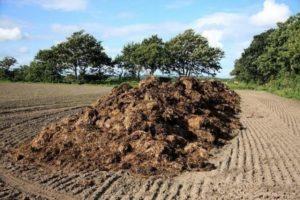
- manure.
The following substances should not be used together:
- gypsum;
- chalk;
- dolomite;
- calcium nitrate;
- superphosphate;
- wood ash.
Take a look Also
Important: Do not apply fertilizers that react chemically and inhibit each other's beneficial effects simultaneously. Such fertilizers will be ineffective.
Storage Features
Urea is a chemical compound that dissolves readily in water. Therefore, it should be stored in a dry place, with freezing temperatures permitted. The fertilizer should be kept in a sealed plastic bag. Opened, unused packages should be tightly sealed. Be sure to check the expiration date, which is usually specified in the instructions. Liquid fertilizers should not be allowed to freeze.
Signs of nitrogen deficiency in plants
When there is a lack of nitrogen in plant nutrition, the following signs are observed:
- Plant growth slows down.
- The foliage loses its color intensity.
- Fruit bushes and trees may bloom ahead of schedule, but the harvest will be meager.
- The lower leaves turn yellow and fall off.
Such plants need to be fed, while observing the fertilizer application rate.
What can be used as a replacement?
Urea can be replaced with another nitrogen-containing fertilizer. Suitable mineral fertilizers include:
- azophoska;
- ammophos;
- potassium, calcium or ammonium nitrate.
Sources of nitrogen include manure, bird droppings, green grass infusion, and ammonia solution.
Reviews
Anna Petrovna, Voronezh.
"I've been using urea since I started gardening. There wasn't such a wide variety of fertilizers before, but urea is always available. I scatter the granules throughout the garden as soon as the snow melts, on the damp soil. I always sprinkle it under the berry bushes."
Nikolay Fomich, Bryansk.
"Urea is an inexpensive and readily available fertilizer. I always use the granular formulation in the spring. I feed everything I grow. In the summer, I choose complex formulations containing phosphorus and potassium. In March, I spray trees and shrubs with a urea solution. It helps kill pest larvae and many diseases."
Related posts:
 The best eggplant varieties for growing in a polycarbonate greenhouse: planting and care
 Nitrophoska composition and instructions for use of fertilizer, errors
 50 Best Carrot Varieties with Descriptions and Characteristics
 The best eggplant lecho recipes for the winter, with and without sterilization.
 Description of shallot varieties, cultivation and care, when to harvest
 What fertilizers to apply to the garden and vegetable garden in the fall: instructions
 How to control carrot flies with medications and folk remedies
 40 Best Sweet Pepper Varieties with Descriptions and Characteristics