
- Characteristics of the region
- Climate conditions
- Variety selection criteria
- The best apricot varieties for the Moscow region
- Self-fertile
- Sweet
- Frost-resistant
- Methods of planting a tree
- Seeds
- Cuttings
- Root shoots
- Preparing planting material for planting in open ground
- How to plant apricot trees correctly
- Optimal timing
- Preparing the site and planting hole
- Technology and schemes for planting seedlings
- What care does an apricot need?
- How often to water
- Tree fertilizing
- Caring for the tree trunk circle
- Protection from diseases and insects
- Formative pruning
- Do I need to cover it for the winter?
- What difficulties do gardeners face?
Growing apricots in the Moscow region requires gardeners to strictly adhere to agricultural practices. To achieve good results, it's important to choose the right variety and planting location. Comprehensive plant care is also crucial. To ensure a full harvest, it's important to water the tree regularly, fertilize, and prune.
Characteristics of the region
The Moscow region has certain characteristics that should be taken into account when growing apricots.
Climate conditions
The Moscow region is characterized by unstable weather conditions. This region experiences warm spells followed by cold spells, a fairly long winter, and an unstable spring with recurring frosts. Therefore, special attention should be paid to choosing a crop variety that can withstand temperature fluctuations.
Variety selection criteria
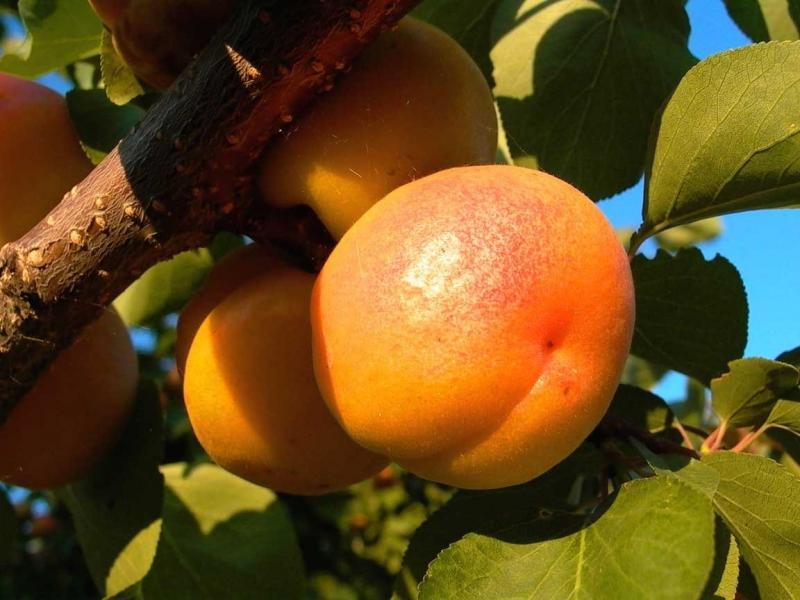
Before purchasing a seedling, you need to decide on the variety. In the Moscow region, winter-hardy varieties grow well; they can withstand cold winters and remain unharmed by spring frosts. To grow apricots, it's best to choose varieties that are self-pollinating. If the apricot isn't self-fertile, you'll need to consider providing pollinators.
The best apricot varieties for the Moscow region
There are quite a few apricot varieties that can be grown in the Moscow region, allowing you to choose the best option.
Self-fertile
These varieties don't require pollinators, making them very popular with gardeners. These include the following:
- Krasnoshchyok. This is a fairly large tree. The fruits weigh up to 50 grams. They are light orange in color and have a sweet, slightly tart flavor.
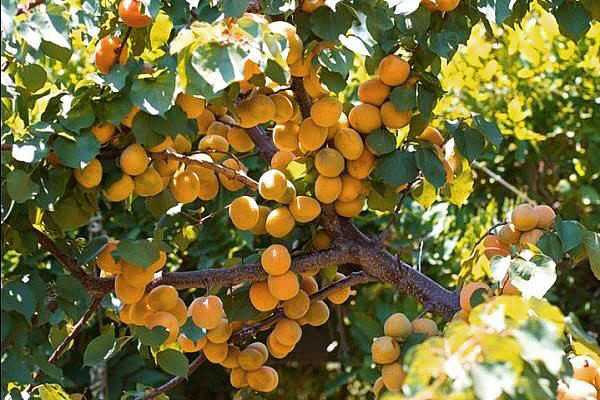
- Honey. The trees reach 4 meters in height and are frost-resistant. Each tree produces up to 20 kilograms of fruit. They have dense, fibrous flesh and a yellow hue.
Sweet
These varieties are very popular because they have excellent taste qualities:
- Bryansky ranniy (Bryansky early). It is characterized by early ripening fruits, weighing 33 grams. The apricots have a sweet and harmonious flavor. They are resistant to pests. Frost resistance is considered a definite advantage.
- Northern Triumph. The tree is tall and spreading. It produces large fruits, weighing up to 55 grams. The fruits are covered in fuzz, have orange flesh, and a small stone. Its advantages include excellent taste, high yields, and disease resistance.
Frost-resistant
Frost-resistant varieties are ideal for the Moscow region. These include the following:
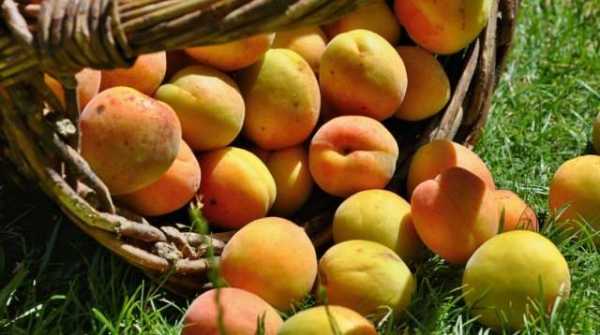
- Hardy. This frost-resistant variety easily survives even long winters. The trees grow quite large and have thick bark. The fruits are medium-sized and coral-colored. They have sweet, juicy flesh. The skin is covered with fuzz.
- Russian. This crop is characterized by high yields. It has aromatic and tender flesh. The apricots have a harmonious flavor. The tree easily tolerates frosts down to -30 degrees Celsius and is disease-resistant.
Methods of planting a tree
There are several methods of propagating apricots, each of which has its own characteristics.
Seeds
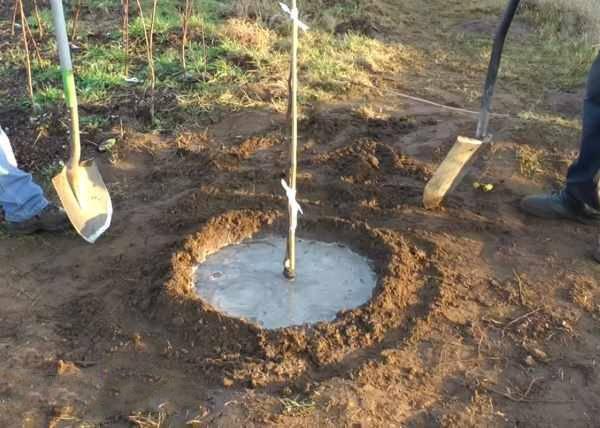
Apricot pits can be planted in the fall. To do this, soak them in water for 24 hours beforehand. Then, it's recommended to dig a 6-centimeter-deep trench and place the pits at 10-centimeter intervals. Cover with soil, compost, and grass.
Expect sprouts to appear in the spring. It's important to protect them from rodents and birds.
For this purpose, plastic bottles with the bottoms cut off are used. The seedlings will grow over the summer, after which they can be transplanted to their permanent location. These trees begin to bear fruit in the fifth year. Apricots grown from pits are disease-free and are perfectly adapted to the region's climate.
Cuttings
Cuttings can be taken from fall to spring, before the buds begin to swell. Branches that are cut immediately after the leaves fall root best. They should be 25-30 centimeters long and 6-8 millimeters thick. The top cut should be made above a bud.
Prepared cuttings can be transplanted directly into the soil. However, there is a risk of their death due to climatic conditions. Therefore, it is recommended to store the planting material until spring or begin rooting it indoors. To improve fruit quality and winter hardiness, the tree is grafted.
Root shoots
This method is rarely used for propagating apricots. Saplings only appear on trees grown from seeds. Their formation is caused by frost or rodent damage to the roots.
When shoots appear, you should carefully dig up the soil around them to get to the root from which they emerged.
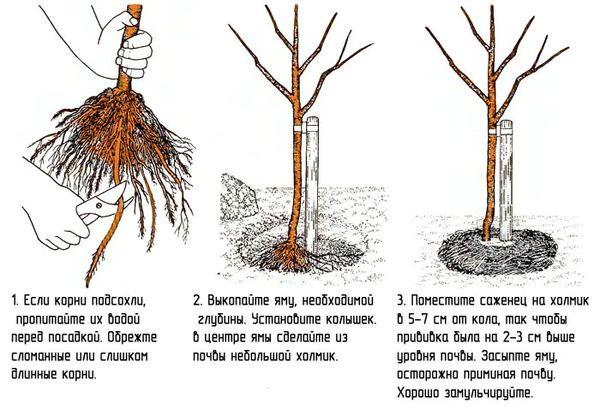
After this, you need to cut off the shoot along with part of the root and immediately transplant it to its permanent location. This is recommended in the spring, before the buds appear. Over the summer, the tree will have time to root. Treat the cut area with garden pitch. This will help prevent rot.
Preparing planting material for planting in open ground
When choosing planting material, examine the seedling's condition to identify damaged areas on the bark and signs of rot. Plants 1-2 years old take root best. Trees 1-1.5 meters tall should be used for planting. Plants that are too short are a result of improper cultivation, while tall ones are a result of excess nitrogen in the soil.
A healthy seedling has one main root and several lateral roots. It's important that the lateral roots are evenly spaced. Avoid planting a tree with branches that have sharp angles. If the tree produces a large crop, these branches will break, leading to the death of the plant.
Take a look Also

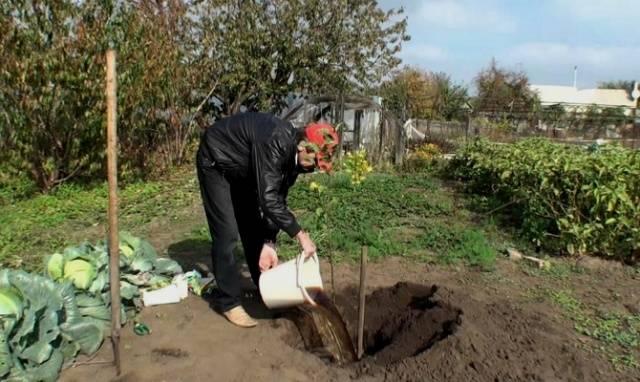
To ensure better establishment of the apricot tree, soak its roots 24 hours before planting. This will saturate the tree with moisture and initiate biological processes in the root system. It's also recommended to create a slurry of manure and clay. Dip the roots in this and allow them to dry thoroughly.
How to plant apricot trees correctly
To grow an apricot tree in the Moscow region, you need to plant it correctly. Failure to do so correctly can result in poor tree development.
Optimal timing
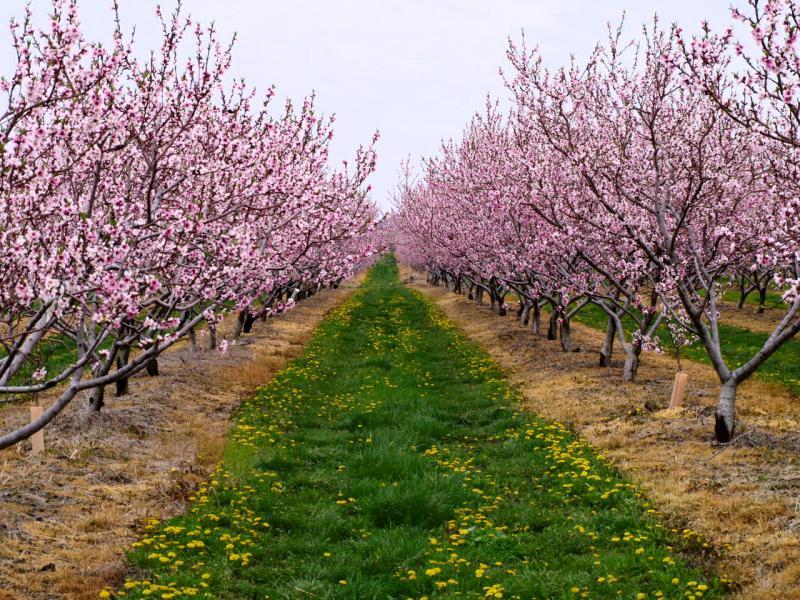
It's recommended to plant apricots in the spring, not earlier than March. In the Moscow region, planting in late April is preferable. This will allow the soil to warm up well, reducing the risk of recurrent frosts. Planting apricots in this region in the fall is not recommended, as the tree won't have time to establish itself before the cold weather sets in.
Preparing the site and planting hole
This is a fairly heat-loving plant. Therefore, it's best to choose a sunny site sheltered from northerly winds. It's best to plant the seedling near a fence or dense trees. South- or southwest-facing slopes are ideal for apricots.
The planting site should be prepared in advance, 3-4 weeks in advance. To do this, dig a hole measuring 70 x 70 x 70 centimeters. Add the following fertilizers:
- 2 buckets of manure;
- 0.6 kilograms of superphosphate in the form of granules;
- 0.5 kilograms of potassium sulfate.
Technology and schemes for planting seedlings
The plant requires plenty of space. A distance of 4 meters should be maintained between rows. A distance of 6 meters between seedlings in a row is recommended.
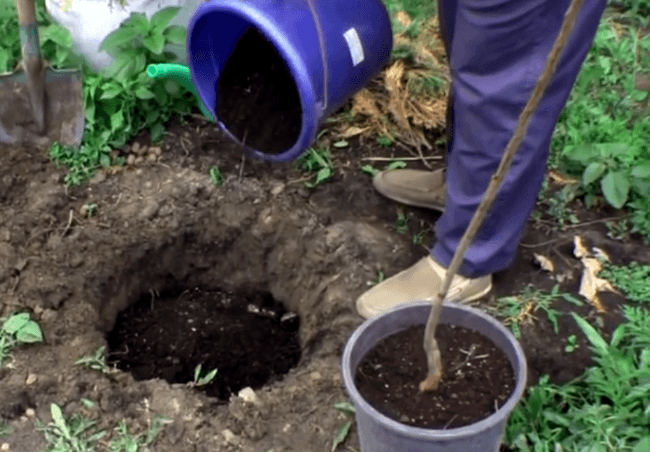
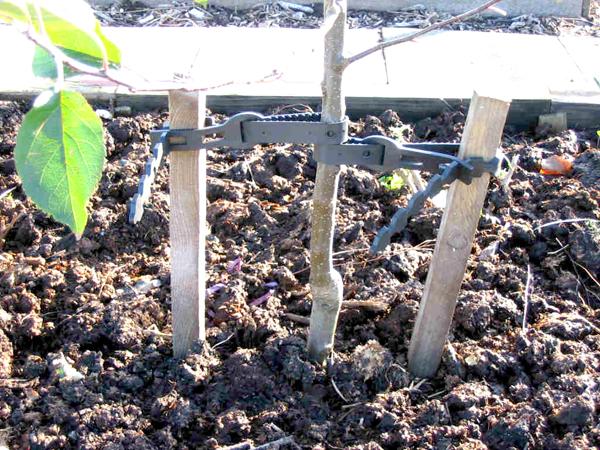
The roots should be shallow. Planting the root collar deep is not recommended. The soil should be compacted. A stake should be installed to support the trunk. During the first year, water the plant a maximum of 5-6 times per season. It is recommended to pour 2-3 buckets of water into the hole.
What care does an apricot need?
To ensure a strong tree, it is recommended to provide it with complete and high-quality care.
How often to water
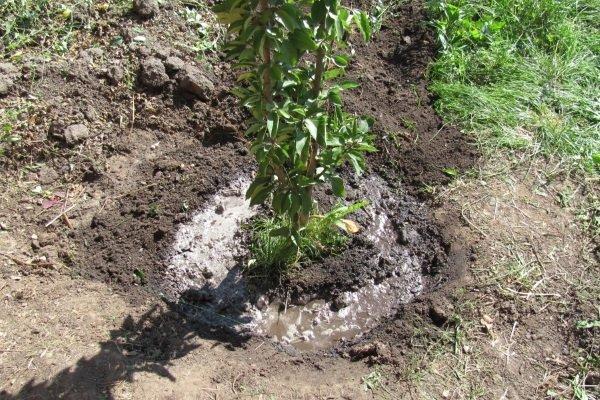
Immediately after planting, seedlings need to be watered. During the first few years of a plant's life, it requires plenty of moisture. During the season, a seedling should be watered up to six times. A mature tree should be watered three times. If the apricot is grown from a seed, watering should be more generous. In spring, the soil should be kept moist at all times. However, it's important not to overwater, as this will lead to root rot.
Tree fertilizing
Fertilizing is recommended starting in the second year of life. Follow this schedule:
- in early spring, nitrogen preparations are used;
- in summer the tree needs phosphorus;
- In autumn, rotted manure is used.
Caring for the tree trunk circle
Maintaining the tree's trunk area will help ensure normal tree development. This includes removing weeds and loosening the soil. Mulching is essential during the first year after planting. This influences yield and improves the apricots' flavor. Mulching is essential before the winter season begins. It protects against frost.
Protection from diseases and insects
Apricots most often face the following problems:
- Monilial blight. High humidity promotes the disease. This causes the fruit to dry out and the leaves to turn brown. Bordeaux mixture helps combat this problem.
- Cytosporosis. This disease causes the bark to become covered in fungi. Damaged branches should be immediately cut off and burned. At the initial stage, treatment with Bordeaux mixture is sufficient.
- Aphids. This insect is most active in the summer. Fungicides can help control the problem.
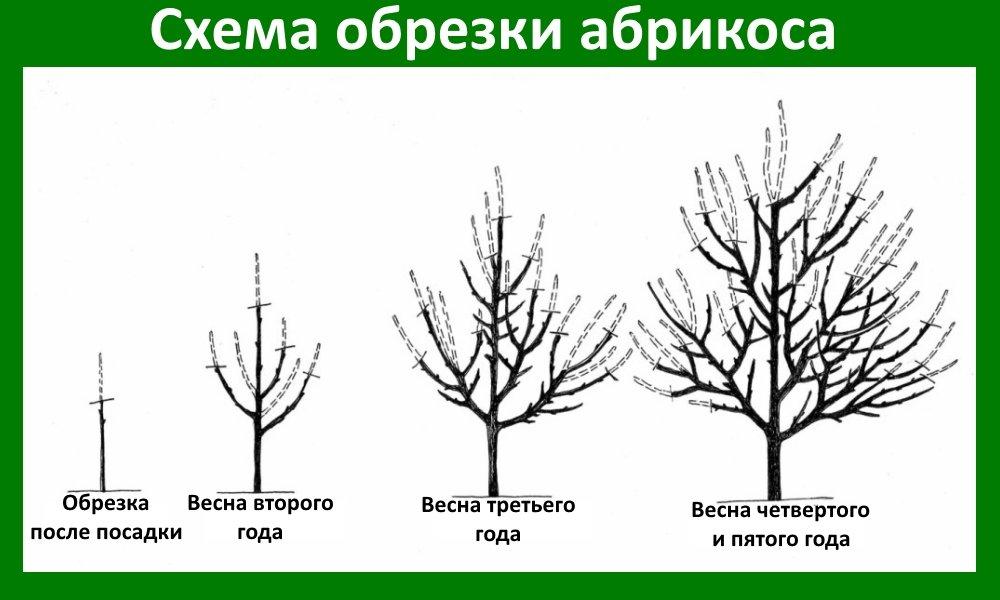
Formative pruning
Pruning helps shape the crown, produce larger fruits, and combat diseases. The procedure stimulates growth, improves metabolism, and strengthens the immune system.
Apricots should be pruned in early spring. In warm weather, the procedure can be carried out as late as late February. It's important to complete the work by the first half of April.
Do I need to cover it for the winter?
To ensure the tree survives the winter, it's recommended to remove fallen leaves and till the soil. Young plants should definitely be covered for the winter. To do this, build a shelter out of sticks and wrap it in agrofibre. Cover the bottom of the tree with soil.
Mature plants can be wrapped in burlap. When winter arrives, it's recommended to sprinkle snow around the trunks. This will improve root retention and replenish moisture reserves.
What difficulties do gardeners face?
When growing a tree, there is a risk of various difficulties:
- The apricot tree isn't blooming. This may be due to damage to the flower buds due to temperature fluctuations.
- Fruit ovaries are not forming. This is because the tree is not self-fertile and there are no pollinators nearby. Moniliosis can also be a cause.
- The fruits don't have time to ripen. This is due to the cultivation of late-ripening varieties.
- Roots and trunks are rotting. This is due to poor planting site selection. To solve this problem, remove snow promptly and create special trenches.
Growing apricots in the Moscow region is quite a challenging task, requiring gardeners to strictly follow all recommendations. To achieve good results, it's important to choose the right planting location and provide the crop with comprehensive care.
Related posts:
 Methods for planting and propagating cherries at home
 Description and cultivation of the 15 best cherry plum varieties for the Moscow region, planting and care rules
 Descriptions of the 20 best cherry varieties for the Moscow region, their planting and care
 Description and characteristics of the 27 best plum varieties for the Urals, planting and care
 Peach tree care and agricultural secrets, pest control
 Conditions for growing mandarin at home and rules for caring for the tree
 How to plant walnuts, care for them, and grow them at home
 Rules for growing and caring for cherry plum in open ground, planting and fertilizing