
- What factors contribute to insect infestations?
- Cherry Pests: Symptoms of Parasitism
- Cherry weevil
- Types of sawflies
- Cherry fly
- Leaf aphid
- Hawthorn butterfly
- Goldtail
- Caterpillars
- shoot moth
- Fruit bark beetle
- Plum codling moth
- Antiparasitic drugs
- Chemicals and insecticides
- Biological agents
- Traditional methods
- Mechanical method of control
- Timing and technology of treatments
- In spring, during the flowering period
- In summer, during fruiting
- In the fall, after the harvest
- Preventive measures
Today, there are numerous cherry tree pests that cause serious damage to the tree. This can result in significant yield reductions and even death. To combat this problem, chemicals and insecticides are recommended. Biological treatments and folk remedies are also recommended. Proper care of the plant is also crucial, as it helps strengthen its immune system.
What factors contribute to insect infestations?
Tree health directly depends on the quality of care. Adherence to proper agronomic practices strengthens the plant's immunity and reduces the risk of insect attack.
It also depends on many factors:
- climatic features of the region;
- weather conditions – high humidity, drought, frost, temperature fluctuations;
- damage to branches or bark;
- damage to nearby plants.
Cherry Pests: Symptoms of Parasitism
There are quite a few pests that attack cherry trees. When a tree is infected, characteristic symptoms may be observed.
Cherry weevil
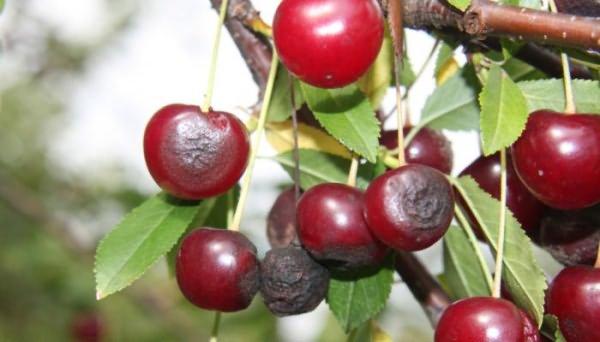
The insect has a distinctive appearance, which is why it is often called the "elephant beetle." The pest is a golden-green beetle, reaching 9 millimeters in length. It burrows into the soil during the winter and emerges to the surface in the spring. The pest feeds on the flowers and young leaves of the plant.
When the fruit ripens, the female penetrates down to the pit, chews through it, and lays eggs. Then the caterpillar emerges. It eats the flesh, and after the fruit falls, it descends into the soil and pupates.
Over the winter, the insect transforms into a beetle, and the cycle repeats. Therefore, digging and loosening the soil around the tree will help combat the pest.
Types of sawflies
These insects are characterized by a shiny coloration. They nest on tree trunks. The pests lay greenish, comma-shaped larvae covered in black mucus. The insects overwinter in the nest, at a depth of 5-15 centimeters, depending on weather conditions.
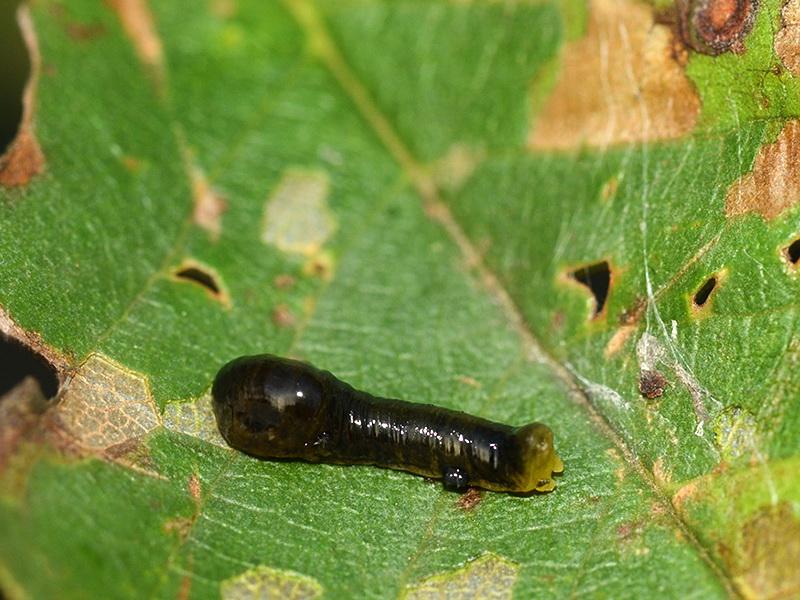
In the spring, the pests pupate and emerge as adults. They lay eggs on the leaves. Larvae then hatch and consume the foliage. In early September, they descend and burrow into the soil.
Cherry fly
This pest is a small, shiny insect. It is dark brown and covered with yellow stripes on its back. The pest has transparent wings with four dark transverse stripes. The cherry fly has green eyes. The back of its head is yellow. The rest of its body is black.
For the winter, the insect wraps itself in a dirty yellow, barrel-shaped cocoon. The pest survives the cold in the top layer of soil, at a depth of 13 centimeters. In the spring, the fly emerges and feeds on the secretions of the cherry aphid. After the berries ripen, the pest absorbs their juice.
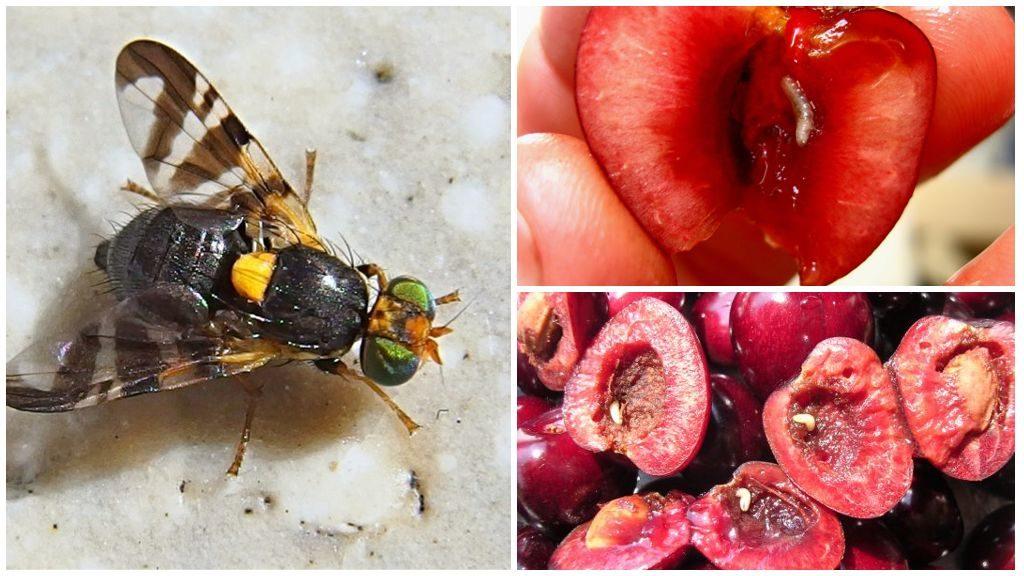
The fly lays eggs in unripe fruit, piercing them. After 20 days, larvae emerge and feed on the pulp around the pit. When the time is right, the insects emerge and fall to the ground. They burrow and curl into cocoons. Fruit damaged by the cherry fly rots and falls off.
Leaf aphid
This pest typically attacks tree seedlings. This occurs in early spring. Small larvae congregate on leaves and shoots, forming large colonies. Females have wings, enabling them to fly around the garden and spread the aphids.
Hawthorn butterfly
This is a fairly large white butterfly. It attacks not only cherry trees but also other fruit trees. During the day, the insect can be seen near water and flowers. The caterpillar reaches 45 millimeters in length and is covered with gray hairs on its sides and abdomen. Yellow and black stripes can be seen on its back.
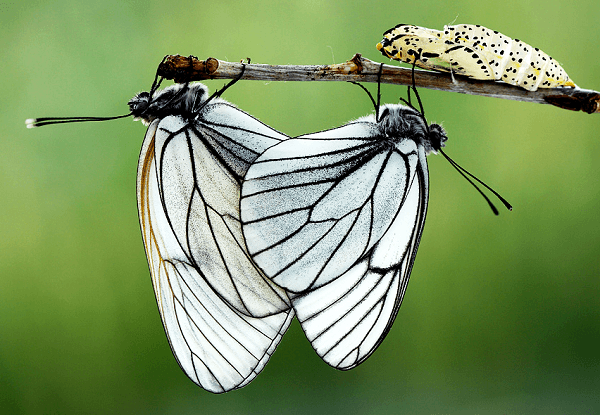
The pupa reaches 2 centimeters in length. It is gray in color and covered with black spots. The caterpillars overwinter in dry tree leaves. In the spring, they climb the trunk and feed on the buds. The pests then pupate on fences and branches. In June, adult moths can be seen laying eggs on the leaves. This causes damage.
Goldtail
This is a white moth. A golden tuft of dense hairs can be seen at the end of its abdomen. The caterpillar is grayish-black. Against this background, chains of red pimples can be seen, with brown hairs protruding from them. Large orange spots are visible at the end of its body. The caterpillars overwinter in a cluster of leaves.
Caterpillars
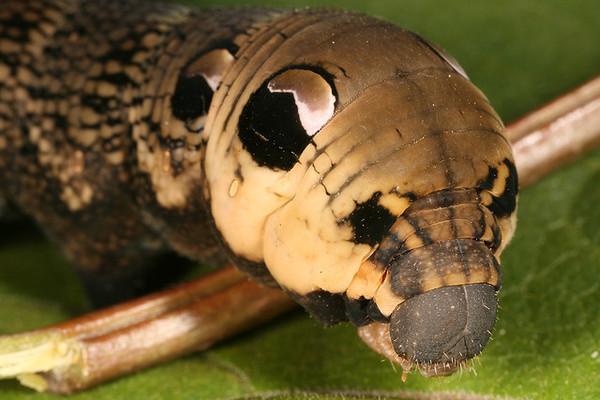
These insects pose a threat to green parts of the tree. They feed on buds and leaves. The pests reduce the plant's ability to photosynthesize. Mechanical control is sufficient. Simply collect the caterpillars and destroy them.
shoot moth
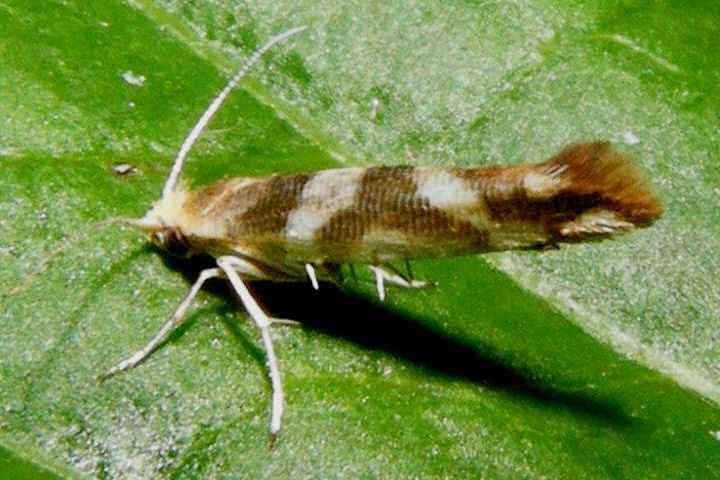
This moth infects cherry trees. It is a small butterfly with a wingspan of 10-12 millimeters. The forewings are a distinctive reddish-brown hue, covered with a dark stripe and white spots. The hindwings are light gray and have long fringes.
The caterpillar is greenish-yellow in color and has a black head. The insect reaches 6 millimeters in length. The pest lays eggs during the winter. The caterpillars awaken when the buds swell.
They chew holes in the buds and penetrate them. As a result, the buds stop developing and dry up. The caterpillar then enters the buds or attacks the unfolding leaves. A single insect can damage up to five flowers. On early varieties, the caterpillars even attack young ovaries.
Fruit bark beetle
During winter, the larvae reside in the sapwood. With the arrival of warmer weather, they transform into pupae and consume the active layers of wood located beneath the bark. The pests attack the bark of young branches and feed on the bases of buds. This results in the cessation of nutrient transport. Branches above the affected areas die.
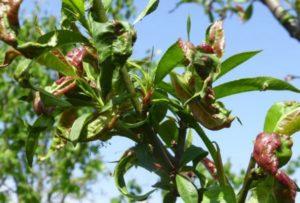
After the pupae metamorphose into beetles, they chew holes in the bark and emerge. These openings are the key to identifying the fruit bark beetle. Gum often oozes from these openings. Two generations of adult beetles emerge during the season. It's crucial to promptly treat weakened plants and prune away affected areas. It's recommended to immediately seal the cut areas with garden pitch.
Plum codling moth
Almost all cherry varieties are susceptible to damage from plum codling moths. The moth has a leaden hue. The pupa is yellow-brown and reaches 7 millimeters in length.
 Cherry tree caterpillars are the most damaging to cherry trees. Young ones are white, while adults are pink. They have a brown head and reach 10 millimeters in length. In winter, the pests nest under tree bark or fallen leaves. Sometimes they accumulate in the soil.
It's quite difficult to immediately identify plum codling moths, as the berries lack any characteristic signs. The exception is a dark spot that's barely visible through the skin. It's recommended to treat cherries against the insects at the first sign of infestation.
Antiparasitic drugs
To deal with harmful insects, it is very important to choose the right products to eliminate them.

Chemicals and insecticides
In severe cases, it is recommended to spray the plants with chemicals or insecticides. The most effective substances include the following:
- Karbofos – usually a 10% solution is used;
- Benzophosphate - it is worth using 10% liquid;
- Antilin - to prepare the product, take 25 grams of the preparation per 5 liters of water.
Biological agents
At the initial stage of tree infestation by harmful insects, it can be sprayed with biological agents. These are less harmful than chemicals.

To eliminate sawflies, you can treat the cherry tree with products such as Agravertin and Bitoxibacillin. If aphids have infested the tree, Fitoverm will work. Lepidocide is often used as a preventative measure.
Traditional methods
In addition to chemical treatments, effective folk remedies can be used. A chamomile solution is suitable for eliminating weevils. Mix 150 grams of chamomile with 15 liters of warm water and let it steep for 24 hours. Strain the resulting solution and mix with 50 grams of laundry soap.
To eliminate larvae and caterpillars, it is recommended to use the following recipes:
- Tomato decoction. This remedy is effective in eliminating caterpillars. To make it, take 3-4 kilograms of tomato stems and leaves, add a bucket of water, and simmer for half an hour. Cool and strain. Mix the decoction with water in a 1:3 ratio. Add laundry soap. Apply to the cherry trees periodically.
- Burdock decoction. Mix water with the plant leaves in a 2:1 ratio. Let it steep for 3 days.
- Potato infusion. This remedy helps control caterpillars and aphids. To prepare it, mix 1 kilogram of potato tops with 10 liters of water and let it sit for 5 hours. Add 50 grams of laundry soap to the mixture.

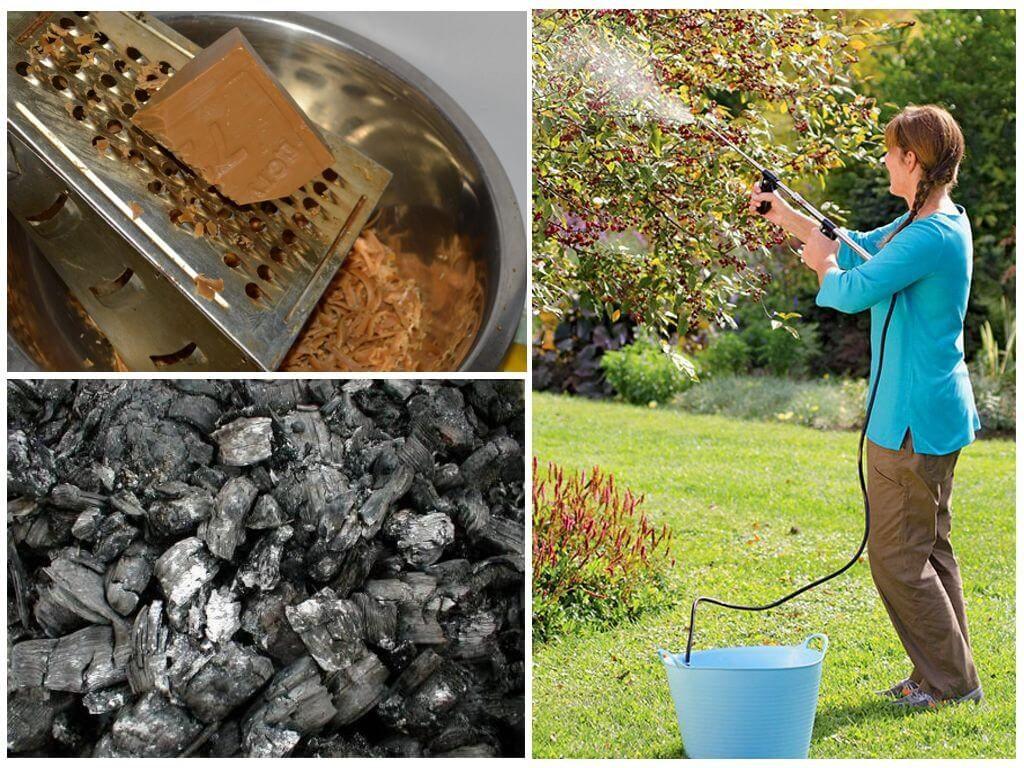
To minimize the risk of larvae and caterpillars spreading, insecticides and folk remedies should be used promptly. To eliminate pests, deep-dig the soil every fall.
Mechanical method of control
This method involves the direct destruction of eggs, larvae, and adult insects. This involves removing pests from branches and leaves, destroying winter nests and webs, and using trapping belts. Light traps and pheromone lures are also widely used.
Timing and technology of treatments
To control pests, it is recommended to strictly adhere to the timing of preventive and curative treatments.
In spring, during the flowering period
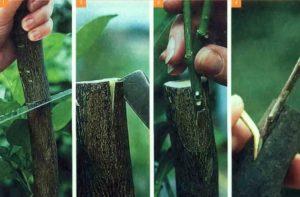
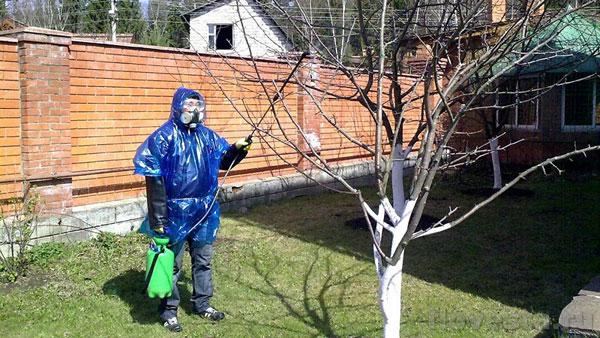
To combat pests, perform sanitary pruning in early spring, before the weather warms up. Branches without buds should be trimmed with sharp pruning shears. Afterward, it's recommended to treat the damaged areas with a disinfectant. A lime solution or potassium permanganate can be used for this. It's also recommended to till the soil in the spring.
In summer, during fruiting
During the summer, regularly inspect berries, branches, and leaves for pests. It's also a good idea to loosen the soil and remove weeds from the area periodically. If any affected leaves or branches appear on the plant, they should be immediately trimmed and burned away from the area.
In the fall, after the harvest
After harvesting, the soil is dug to a depth of 20 centimeters. Pests overwinter and lay their larvae in the soil. Digging will expose the insects to the surface, resulting in their death during the winter.
Preventive measures
To avoid problems when growing cherries, it's recommended to provide the tree with adequate protection. For preventative measures, consider the following steps in the fall:
- cut off dry and damaged branches;
- treat cuts and cracks in the bark with garden pitch;
- collect and burn fallen leaves;
- loosen and carefully dig up the soil under the trees;
- When cold weather arrives, spray the garden with a 5% concentration urea solution.
In the spring, the trees should be checked again. Afterward, a comprehensive pest control treatment is performed. Systemic treatments are usually used for this. It's important to irrigate not only the trees but also the soil beneath them. A second treatment is performed after flowering. Additionally, the trees can be sprayed in the summer.
Cherry tree pests can cause serious damage to the tree. To combat these dangerous insects, it is recommended to promptly treat the tree with chemicals or biological agents.
Related posts:
 Methods for planting and propagating cherries at home
 The best grape varieties for growing in the Urals, planting and care rules in summer
 Peach tree care and agricultural secrets, pest control
 Conditions for growing mandarin at home and rules for caring for the tree
 Growing and caring for hazelnuts in open ground, rules for planting hazelnuts
 Rules for planting and caring for pears in open ground, how to grow them correctly
 Methods of dealing with caterpillars on apple trees, how to treat them correctly and what is the best way to do it
 The best methods for growing grapes from seeds at home