
- Cherry Fertilizers: Why You Should Use Them
- How does it affect tree growth?
- Increases crop yield
- Prevents the development of diseases
- How to apply fertilizers correctly
- Into the planting hole
- Under the root
- On a green leaf
- Timing and features of plant fertilizing
- Spring
- Summer
- Autumn
- Types of fertilizers and application rules
- Organic additives
- Green manure
- Lime
- Ash
- Compost
- Chicken manure
- Inorganic additives
- Ammonium nitrate
- Superphosphate
- Urea
- Dolomite
- Nitrogen
- Zinc
- We follow the rules
- Fertilizer application rates for different tree ages
- When planting seedlings
- For 3-4 year old cherries
- Fertilizing fruit-bearing and old cherry trees
- Periodicity
- What to do in case of overdose
- Features of fertilizing berry crops
- In case of illness
- After illnesses
- After transplanting and pruning
- During flowering and fruiting
- Before winter
Regular fertilizing of cherry trees is essential for their healthy development. This procedure stimulates the tree's growth, making it stronger and more resilient. Timely application of fertilizers increases the tree's yield and makes it more resistant to diseases and pests. To achieve good results, it's important to strictly follow the recommendations of specialists.
Cherry Fertilizers: Why You Should Use Them
Cherry trees require regular fertilization. This is essential for the tree's proper development.
How does it affect tree growth?
Timely application of fertilizers stimulates tree growth. It's especially important to feed young plants, which require the necessary energy to establish roots and grow rapidly.
Increases crop yield
For cherry trees to bear fruit well, they need nutrients. To achieve this, it's important to apply fertilizer according to a strict schedule.
Prevents the development of diseases
Timely fertilization of the tree makes it stronger and strengthens its immune system. This helps it resist disease.
How to apply fertilizers correctly
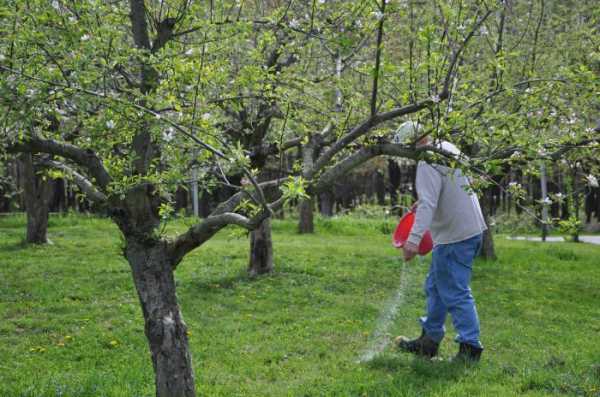
There are many methods for adding nutrients. To ensure fertilizers are beneficial, they must be used correctly.
Into the planting hole
Proper planting of young trees requires adding fertilizer to the planting hole. For each tree, apply 30 grams of superphosphate, 1 kilogram of ash, 2 buckets of compost, and 20 grams of potassium chloride.
Under the root
For root feeding, use solutions and dry preparations. These should be applied to the trunk circle. First, it's recommended to loosen the soil and water it. A young seedling requires 3 buckets of water, while a mature tree requires 60 liters.
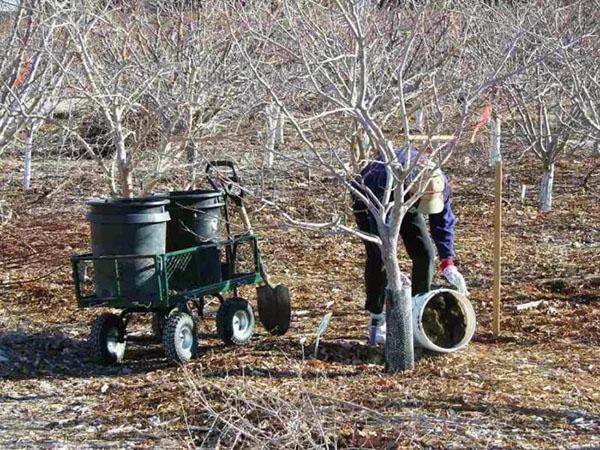
After the moisture has been absorbed, dry fertilizers can be applied. They are scattered half a meter from the trunk and raked in. Liquid fertilizers can be simply poured into the soil.
On a green leaf
Foliar feeding is recommended for trees 3-4 years old. This procedure should be performed in cloudy weather.
This is best done in the morning or evening. It's important to remember moderation. Excessive fertilizer causes leaves and fruit to fall off.
There is also a risk of chlorosis.
Timing and features of plant fertilizing
To apply fertilizers correctly, it's important to consider seasonal factors. Fertilizers are selected based on the plant's biological cycle.
Spring
Before bud break, the tree is sprayed with Bordeaux mixture. To do this, use 300 grams of lime and copper sulfate per bucket of water. This prevents fungal growth and enriches the tree with valuable nutrients.
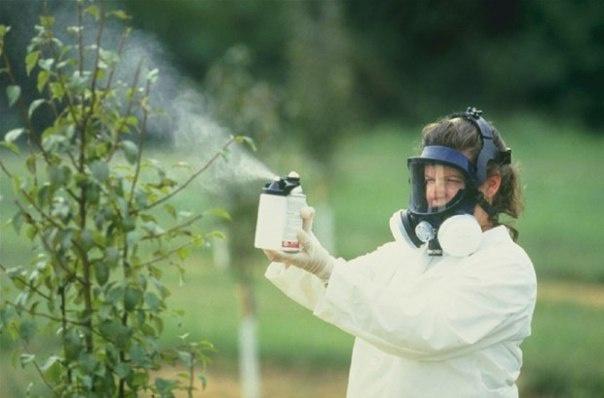
Before blossoming, 2-4-year-old cherry trees are treated with a urea solution. Mature trees require three additional applications during the spring. Urea is used for the first application. Ammonium nitrate is applied to the trunk circle.
During the flowering period, before the fruit ripens, prepare a special fertilizer. For this, mix 1 liter of mullein and 2 cups of ash per 10 liters of water. For a tree less than 7 years old, 1 bucket of the mixture is required.
Summer
Young trees don't need fertilizing in July or August. Cherry trees that are producing berries are fertilized in early summer. Nitroammophoska (NAP) is applied to the tree trunk. Use 1.5 tablespoons of the product per bucket of water.
In August, after the harvest, apply superphosphate. Mix 25 grams of powder with 10 liters of liquid. This will help establish buds for next year.
Autumn
In September, fertilizer is applied to restore depleted soil. This will help the tree survive frosts. For cherry trees under four years old, a potassium sulfate solution is added to the tree's trunk. 25 grams of the solution is added to a bucket of water.
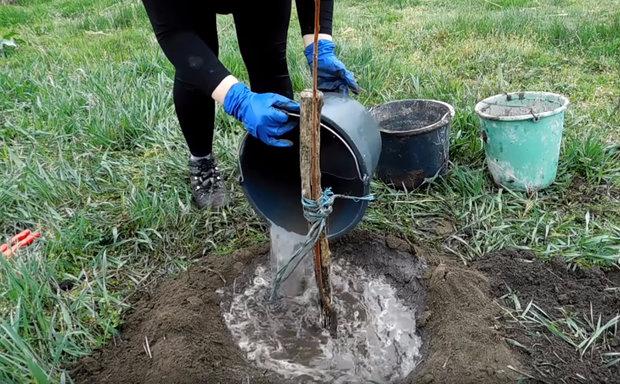
In September or October, add 3-4 kilograms of humus. Work it in to a depth of 15 centimeters. This should be done every three years. Fruit-bearing trees require superphosphate. Each plant requires 300 grams of the substance.
Types of fertilizers and application rules
Today, there are many fertilizer options. The choice of fertilizer depends on the specific needs, crop age, and season.
Organic additives
Cherry trees can be fertilized with organic fertilizers. There are many options available today.
Green manure
The space between the trees should be seeded with mustard. A mixture of oats and peas is also suitable. This will help combat bacteria and fungi. Once the grass has decomposed, it will make excellent fertilizer. Legumes are considered a good green manure for cherries.
Lime
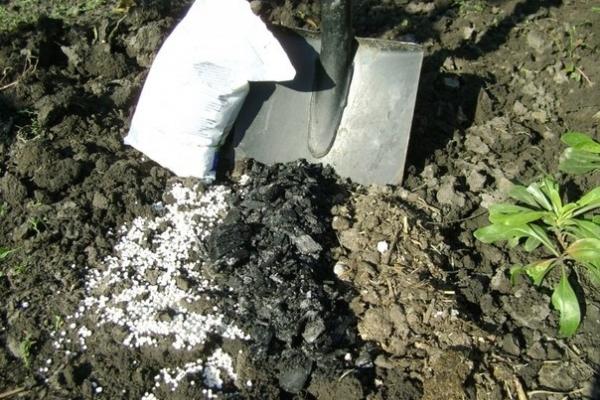
Liming is recommended every 4-5 years. For light soils, 400-600 grams per square meter is sufficient. For heavy soils, increase the proportion to 500-800 grams.
Ash
It contains many beneficial substances, including potassium, phosphorus, sulfur, and zinc. Using ash as a fertilizer improves metabolic processes and increases frost resistance.
Compost
This fertilizer enriches the soil with nutrients, which is essential for cherry trees. A young tree will benefit from 5 kilograms of compost. A mature tree requires at least 30 kilograms.
Chicken manure
This fertilizer contains a lot of nitrogen, so it is used during flowering. However, it is important to control the proportions and consistency to avoid damaging the roots.
Inorganic additives
There are many inorganic products that are used for cherry trees.
Ammonium nitrate
This fertilizer contains a lot of nitrogen, which is essential for young plants. For seedlings, 150 grams of the product is sufficient. Mature trees require up to 300 grams.
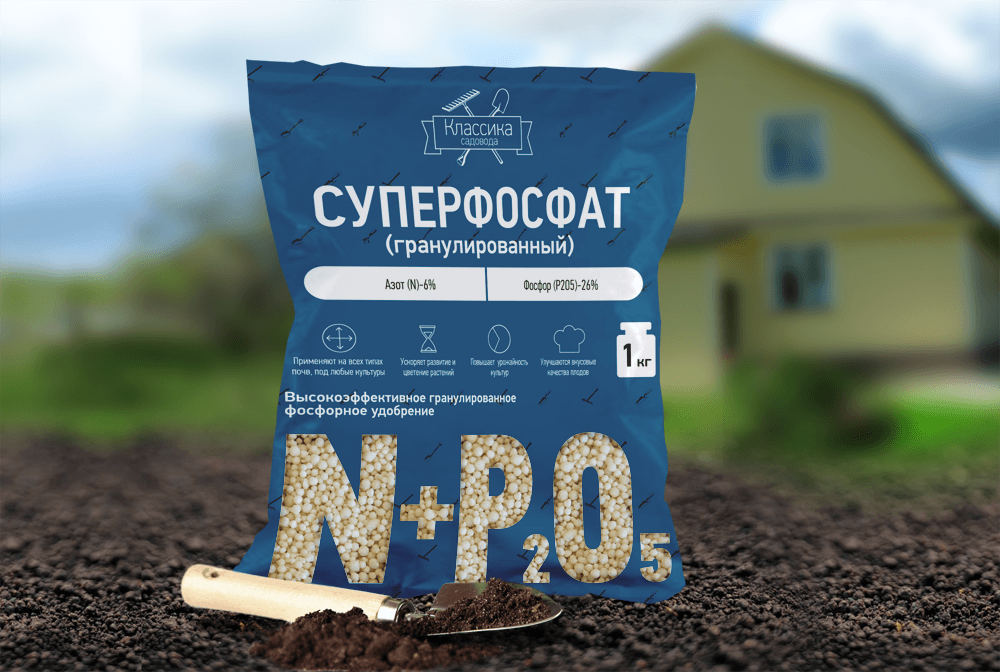
Superphosphate
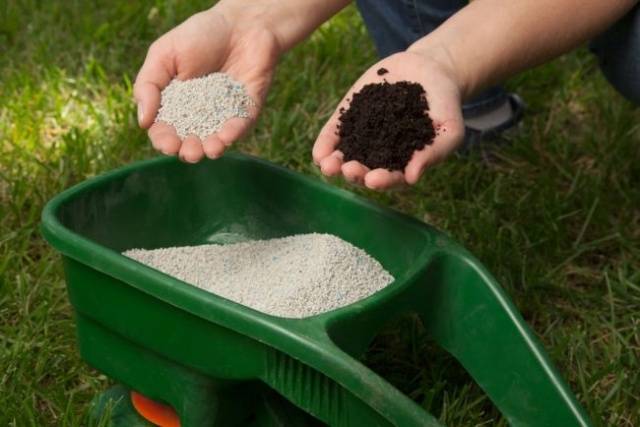
Cherry trees benefit from fertilizing with superphosphate. It contains phosphorus, which slows down the tree's aging process and improves the berry's flavor. 100-150 grams of superphosphate are required per square meter.
Urea
Cherry trees can also be fertilized with urea. This product contains nitrogen, which is essential for the growth of green mass. It is combined with potassium salt. Depending on the age of the plant, 50-300 grams of the substance are used.
Dolomite
Cherry trees thrive on dolomite flour, which reduces soil acidity and improves its quality. The substance enriches the soil with nitrogen, magnesium, and phosphorus. 500-600 grams are required per square meter.
Nitrogen
In spring, cherry trees require nitrogen fertilizer. This promotes root development, ensures foliage growth, and stimulates photosynthesis. It also increases fruit production.
Zinc
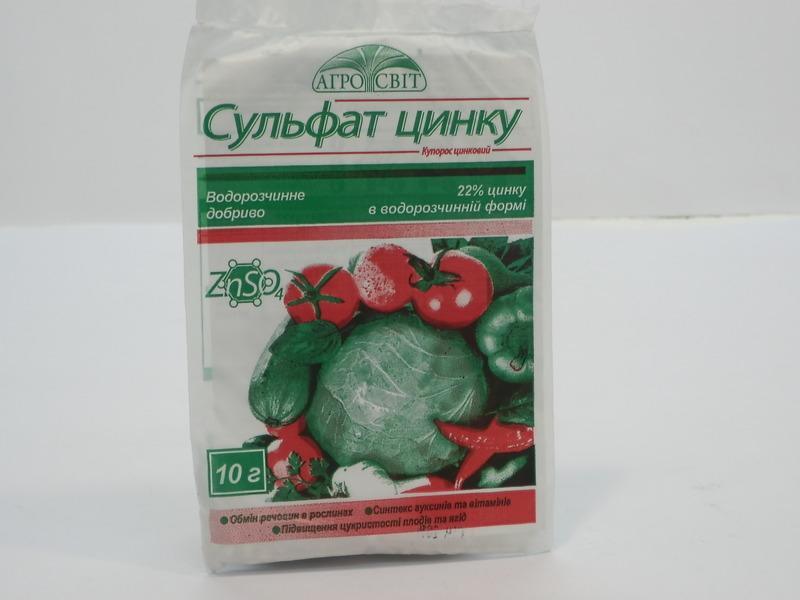
Zinc deficiency causes various health problems. To correct this deficiency, spray the crown with zinc sulfate.
We follow the rules
To bring fertilizers cherry benefit, they need to be entered correctly. To do this, it's worth following some recommendations.
Fertilizer application rates for different tree ages
To ensure that berry tree feeding is effective, the age of the plant should be taken into account when choosing preparations.
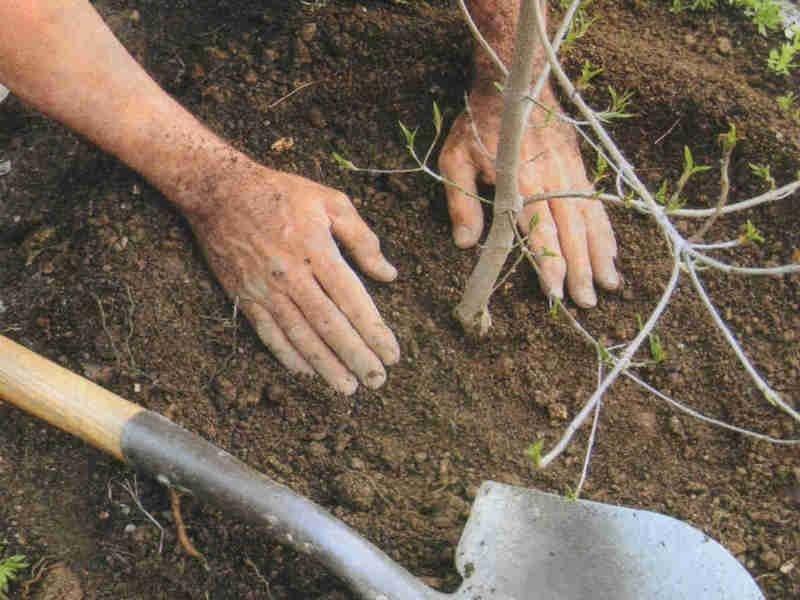
When planting seedlings
To ensure the seedling's development, prepare a hole for it. Add two buckets of rotted manure, one tablespoon of potassium salt, two tablespoons of superphosphate, and one kilogram of wood ash.
For 3-4 year old cherries
It's recommended to fertilize these cherry trees with organic matter, such as manure or compost. Plants that have begun to bear fruit should be fertilized at least three times during the growing season. Plants older than seven years require mineral fertilizers every other year.
Fertilizing fruit-bearing and old cherry trees
To prevent dry branches from sucking out the sap, the tree should be pruned. Fertilizer requirements depend on the soil composition and the condition of the plant. Cherry trees over 12 years old require 60 kilograms of compost. Plants over 20 years old require 80 kilograms of the substance.
When applying fertilizer, increase the amount of ammonium nitrate and superphosphate. Root feeding is performed every 3 years.
Periodicity
The frequency depends on many factors. In spring, trees should be fertilized with nitrogen fertilizers before flowering. After flowering, rotted organic matter can be used.
In summer, during the growing season, preparations containing nitrogen are used.
They are used 2-3 times during the season. In the fall, fertilizers should be applied after the harvest. At this stage, potassium, calcium, and phosphorus are used.

What to do in case of overdose
When applying fertilizer, it's important to strictly adhere to the dosage and frequency. Excessive fertilization will result in poor tree development and low yields. In this situation, the dosage should be adjusted.
Features of fertilizing berry crops
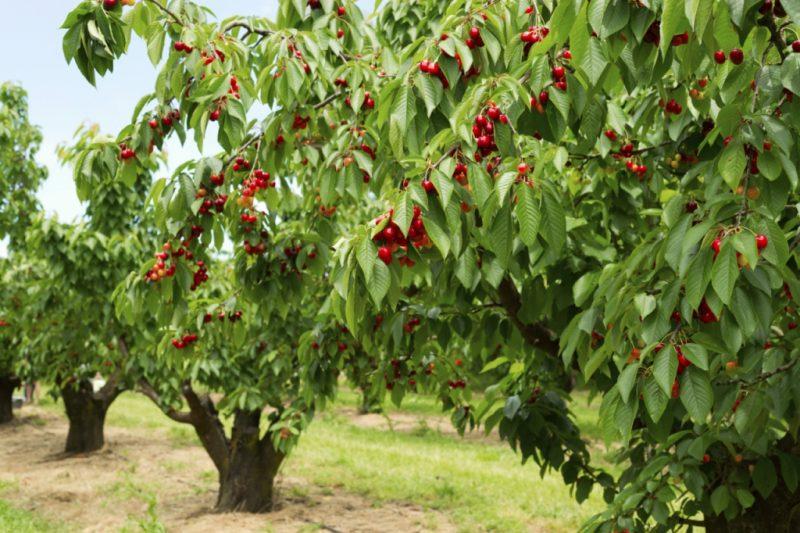
When fertilizing cherries, it is worth considering other features - the presence of diseases, the growing season.
In case of illness
During the disease's development, measures must be taken to eliminate it. For this purpose, fungicides or insecticides are used.
After illnesses
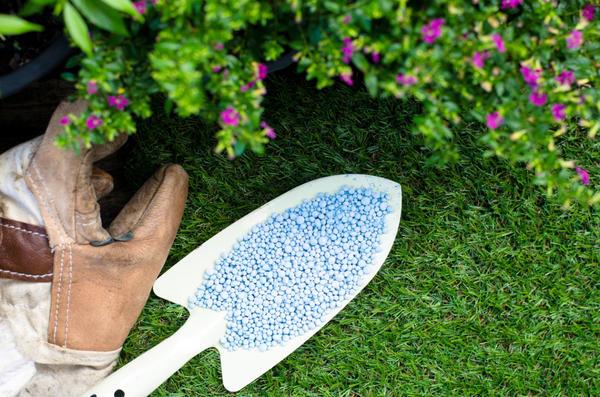
After bacterial or fungal infections, the tree needs to strengthen its immune system and increase its resistance. This is achieved by using complex fertilizers—organic fertilizers and mineral supplements. However, the application rate should be 1.5 times higher than for standard fertilizers.
After transplanting and pruning
It's best to use organic fertilizers such as compost, humus, and chicken manure. Ready-made fertilizers are also available. After fall pruning, it's a good idea to apply potassium and phosphorus. This strengthens the plant's immune system and increases fruiting.
During flowering and fruiting
Root feeding is done when buds are emerging. A bucket of water with a kilogram of mullein dissolved in it should be poured under a young tree. For cherries older than seven years, double the amount of mullein. Potassium and phosphorus-containing fertilizers are used to increase yield.
Before winter
The type of fall fertilizing depends on the fertilizers applied in the summer and spring. After applying organic matter, it's best to use mineral fertilizers—potassium sulfate, rock phosphate, or superphosphate. using phosphate rock The plant should be watered generously. Finally, the trunk and branches are treated with a solution of copper sulfate or urea.
Fertilizing cherry trees can increase their yield, accelerate their growth, and protect them from diseases. To achieve good results, it's recommended to strictly adhere to the recommended dosage and application schedule.
Related posts:
 Peach tree care and agricultural secrets, pest control
 How to plant walnuts, care for them, and grow them at home
 Methods for planting and propagating cherries at home
 The best grape varieties for growing in the Urals, planting and care rules in summer
 Timing and rules for peach pruning, formation scheme after harvesting
 Descriptions of the 20 best cherry varieties for the Moscow region, their planting and care
 Rules for planting and caring for pears in open ground, how to grow them correctly
 Description and cultivation of the 15 best cherry plum varieties for the Moscow region, planting and care rules