
- Characteristics of the disease
- Signs of defeat
- What harm can it cause?
- How to fight
- Agrotechnical measures
- Processing
- Bordeaux mixture
- Fungicides in combination with insecticides
- Copper sulfate solution
- Systemic drugs
- Horus
- Delan
- "Skor"
- Fitosporin
- Pentafag
- Trichodermin
- Planriz
- Guapsin
- Treatment scheme
- Traditional methods
- Clay and lime
- Tobacco infusion
- Preventive measures
- How to restore a tree after disease
- Resistant varieties
- Early Kuban
- Juicy
- Morettini's favorite
- In memory of Rodionov
- Redhaven
- Early Kyiv
- Saturn
- September yellow
- Tips from experienced gardeners
When growing peaches, one often encounters various diseases. Even with perfect care, there's no guarantee that the tree won't eventually become ill. One common peach disease is leaf curl. At the first sign of the disease, immediate treatment is essential.
Characteristics of the disease
Peach leaf curl is caused by a fungus (Taphrina), a member of the order Taphrinaceae. The fungus penetrates the tree through cracks in shoots or through buds. Most often, curl affects one-year-old or two-year-old shoots on which young leaves have just blossomed, 5-8 days ago. Infection of old leaves occurs extremely rarely and mainly in cases where the peach tree is very weak.
Causes of peach curl:
- The weather is favorable for fungus (frequent rains, dampness and low temperatures, so the most dangerous period is early spring).
- The presence of cracks in the buds and bark (if a blunt instrument was used during pruning and the cut areas were not processed).
Fungi often overwinter in these cracks, and as soon as favorable weather sets in, they begin to actively multiply.
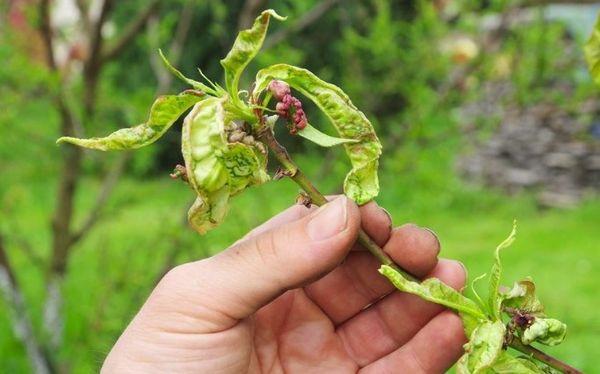
Signs of defeat
The main symptoms of peach leaf curl are:
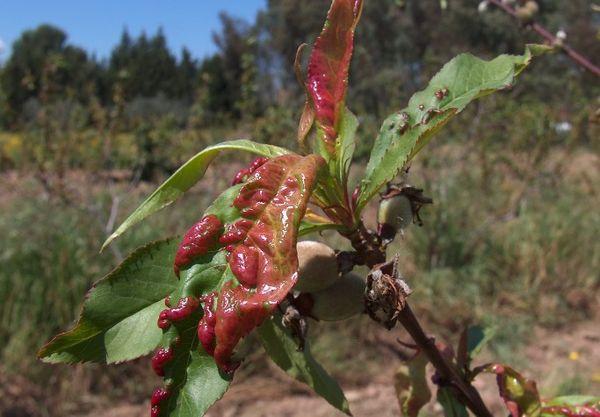
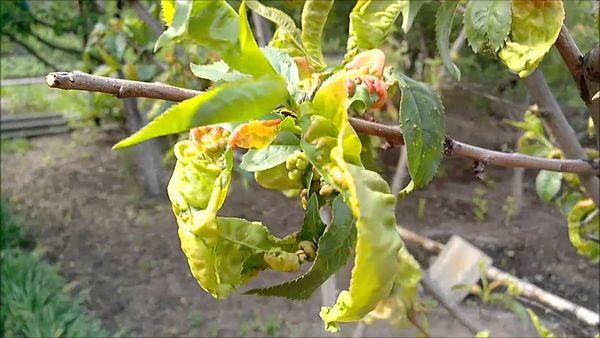
- Light green swellings appear on the leaves; as the disease progresses, they darken and acquire a reddish tint.
- The leaves thicken and, due to developmental disturbances, they grow underdeveloped.
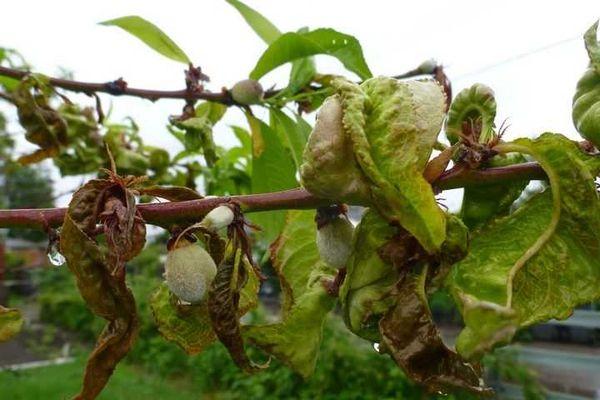
- A waxy coating can be seen on the leaves, which causes them to first turn black, curl up, and then fall off.
- Gum forms on the bark.
- Young shoots grow deformed.
- Some leaves turn yellow.
- The leaves dry out and fall off.
The danger of the disease is that after all the symptoms appear on the foliage, the ovaries begin to die, which leads to a significant reduction in yield.
What harm can it cause?
Like any other disease, leaf curl negatively impacts the tree's health. Because shoots grow deformed and fruit buds fail to develop, yield declines. The longer the disease progresses and no treatment is taken, the poorer the peach tree's growth and fruit production will be. Ultimately, lack of treatment may result in the death of the plant.
How to fight
Peach leaf curl should be treated immediately after the disease first appears. You can use chemicals or treat the tree with folk remedies. You can even combine both for increased effectiveness. Preventative measures are also important.
Agrotechnical measures
Agronomic control measures are effective for treating peach leaf curl. Trees are sprayed with various chemicals.
Processing
At the first signs of illness The peach is processed immediately Chemicals. However, many of them are quite toxic to both trees and humans, so it's important to follow the instructions carefully. During treatment, wear a protective mask and a suit that covers all areas of the body. It's best to wear a hat. Treatments should be carried out in the evening after sunset to avoid burning the leaves.
Bordeaux mixture
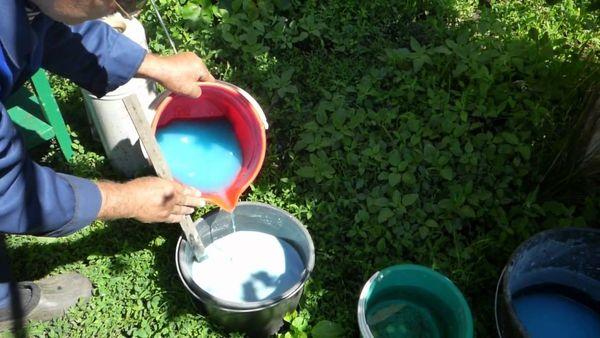
One effective remedy against leaf curl is Bordeaux mixture. A 3% solution of Bordeaux mixture is used for this treatment. It quickly produces positive results when treating leaf curl. Bordeaux mixture can be sprayed on trees in early spring before bud break as a preventative measure. It is also effective in treating advanced stages of the disease.
However, frequent use of the product can negatively affect shoot growth and fruiting, so it is better to alternate Bordeaux mixture with other preparations.
Fungicides in combination with insecticides
Peach leaf curl can be successfully treated with fungicides in combination with insecticides. This method allows for faster elimination of the fungus and a full recovery of the peach trees.
Copper sulfate solution
Copper sulfate is used to treat fungus in early spring, when buds are just beginning to swell. For spraying, prepare a 2% copper sulfate solution. A small amount of lime can be added to the solution. Repeat the treatment 3-4 days after the first.
Systemic drugs
Another effective treatment for peach tree leaf curl is systemic treatments. Some are low-toxic and do not penetrate plant tissue; the key is to follow the correct dosage when preparing the spray solution.
Horus
Horus is an effective treatment for leaf curl. Treatment begins in early spring, before bud break. When beginning treatment, it's important to remember that prolonged use of the same product can cause the fungus to develop resistance to the active ingredients. It's best to alternate treatments to enhance effectiveness.
Delan
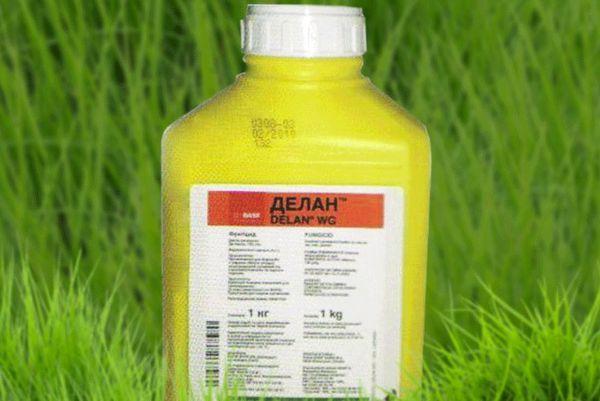
Fungus can be treated with the drug "Delan." It works similarly to most systemic medications. Treatments are carried out in early spring. Trees are sprayed once every two weeks. It is recommended to carry out no more than four treatments per season.
"Skor"
The product "Skor" is effective against peach leaf curl. The solution should be applied to trees in courses in the evening after sunset. The first treatment is carried out after the buds have swollen. The trees are sprayed again 10-14 days after the first treatment. Depending on the stage of the disease, two to four treatments are carried out during one growing season.
Fitosporin
Fitosporin is a non-toxic product, safe for humans, and does not penetrate plant tissue. It can be used to treat leaf curl even during fruit formation. The product can be used an unlimited number of times, with 2-3 week intervals. This long period is necessary to prevent fungi from developing resistance.
Pentafag
Peaches can be treated with "Pentofag" before bud swelling and fungal activity. Repeat the treatment 15-20 days after the first treatment.
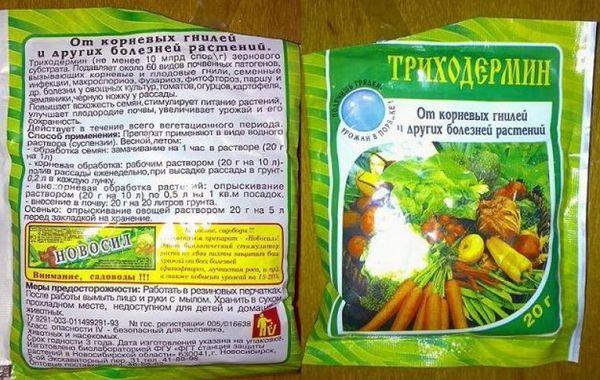
Trichodermin
The product is used for spraying after the outdoor temperature reaches 15 degrees Celsius. Trichodermin is applied to well-warmed soil before the fungi begin to activate.
Planriz
Peaches are sprayed with Planiriz in early spring, before the buds have opened. The treatment is repeated two weeks after the first application. No more than four sprays can be applied during the growing season.
Guapsin
Another effective treatment against many fungal diseases of peaches, "Guapsin" is also used in courses. No more than four applications are carried out per season.
Treatment scheme
Peach leaf spot control products are applied in early spring, before the buds begin to open. Typically, sprays are administered in courses with intervals of 10-14 days, but longer intervals are also possible (depending on the product). The more toxic the chemical, the fewer sprays are recommended.
Traditional methods
Traditional methods help as additional measures to combat the disease.
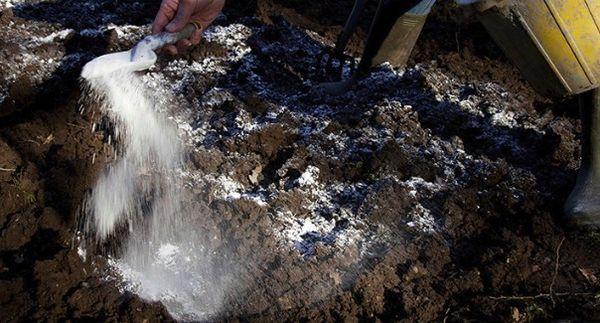
Clay and lime
Clay and lime are diluted in 10 liters of warm water in a 1:1 ratio, then sprayed onto the plant. Repeat the process several times until all symptoms disappear.
Tobacco infusion
Add 10 liters of water to the tobacco leaves and flowers, bring to a boil, and simmer for another 15 minutes. Remove from heat and let the infusion steep for 24 hours. Then, pour into a spray bottle and spray the trees.
Preventive measures
To avoid having to worry about how to treat peach tree leaf curl, you should take preventative measures in advance. After each pruning, all cut areas must be treated with garden pitch to prevent fungi from penetrating into the cracks.
Affected wood and foliage are pruned and burned. The soil is regularly loosened, and weeds are pulled. In the spring before bud break and in the fall after harvest, the trees are sprayed with a lime solution.
How to restore a tree after disease
Once the peach tree has been cured, it's important to provide favorable conditions for it to recover quickly. This requires careful care. Use warm water for watering, and avoid overwatering or overdrying the soil. Regularly apply mineral and organic fertilizers. Weed the soil and eliminate weeds.
Every autumn it is necessary to carry out sanitary pruning of the tree.
Resistant varieties
To avoid having to worry about how to treat leaf curl, you can immediately plant varieties that are immune to this disease.
Early Kuban
The tree is medium-sized, with a rounded crown and moderate density. Fully ripened fruits are oval, slightly flattened on the sides. The lateral suture is poorly visible. The skin is pubescent, golden in color with a pink blush. The flesh is juicy and not stringy. The harvest is fully ripe around the second half of July.
Juicy
The crown is oval and spreading. Foliage is medium. Fully ripened fruits are oval, with a pubescent skin. The color is light green and creamy, sometimes with a slight pinkish blush. The flesh is juicy and sweet. The stone is large and difficult to separate from the flesh, even when fully ripe.
Take a look Also
Morettini's favorite
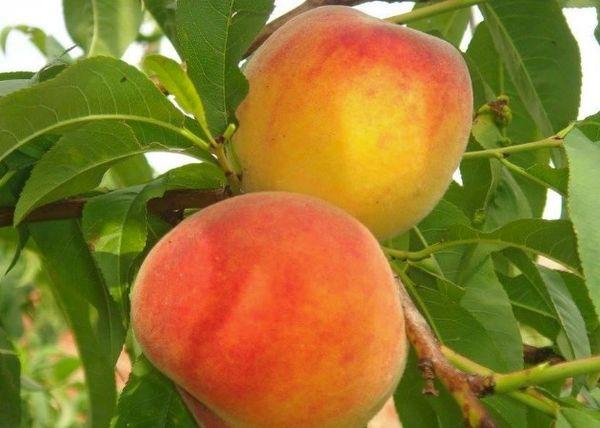
Peach trees bloom in the second half of April. The crown is round and spreading. Ripe fruits are medium-sized, weighing from 110 to 125 g. The shape is oval. The skin is pubescent, not dense, and easily peels from the flesh. The skin is yellow with a pink blush, and the ventral suture is clearly visible.
In memory of Rodionov
The crown is oval and spreading. The tree has medium foliage. Inflorescences open in the second half of April. The fruits are orange in color and medium in hairiness. The flesh is sweet with a hint of tartness. The harvest ripens from the second half of July to the first half of August.
Redhaven
The tree is a tall tree, reaching a height of 5 m. Its crown can spread up to 10 m. Inflorescences open in the second ten days of April. The flowers are pink and fragrant. Ripe fruits are large, weighing up to 150 g. The skin is a rich orange.
Early Kyiv
The crown is spherical, medium-sized, and compact. This variety is suitable for growing in small spaces. Inflorescences open around early May. Ripe fruits are round, flattened on the sides.
Saturn
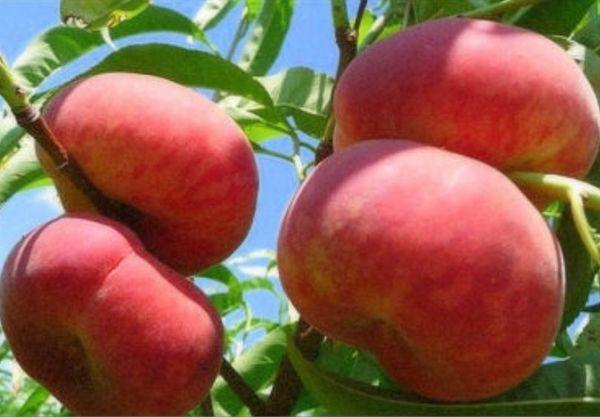
This variety belongs to the fig family. The tree is moderately spreading, with an oval crown. Ripe peaches are orange-pink in color, with a pubescent skin. The flesh is firm, juicy, and very sweet.
September yellow
The crown is rounded and spreading. Ripe fruits are a rich orange hue with a pinkish blush. The variety's winter hardiness is noted among its advantages.
Tips from experienced gardeners
Tips for gardeners on growing peaches:
- To avoid having to deal with fungal diseases in the future, carefully select seedlings and buy them only from trusted sellers. Buying from someone else can lead to the risk of acquiring a diseased seedling.
- Every fall, the soil around the peach tree is dug over, the leaves are raked away, and then the tree is pruned. This is the simplest thing you can do to prevent fungal growth.
- If there are trees nearby, they should also be inspected. A peach tree can often become infected from a neighboring tree.
- Regular application of mineral and organic fertilizers will help boost the plant's immunity, which, in turn, along with preventative measures, will prevent fungi from attacking the peach tree.
By following simple agricultural practices, you can forever forget about fruit trees suffering from fungal diseases.
Related posts:
 Description of varieties and beneficial properties of fig peach, cultivation technology
 Rules for propagating peaches by cuttings, timing, and care
 How to treat peach trees for aphids and the best methods for pest control
 Timing and rules for peach pruning, formation scheme after harvesting
 Timing and methods of grafting a peach tree, rules of procedure
 Description of the Kyiv Early peach variety, planting and care instructions
 How to properly grow a peach tree from a seed at home, planting and care
Peach tree care and agricultural secrets, pest control
How to properly grow a peach tree from a seed at home, planting and care
Peach tree care and agricultural secrets, pest control