
- Description and Features
- History of selection
- Main characteristics
- Fruit
- Bloom
- Frost resistance
- Productivity and fruiting
- Areas of application of fruits
- Disease resistance
- Pros and cons of the variety
- How to plant correctly
- Selection and preparation of planting material
- Root system
- Skeletal branches
- Vaccination site
- Age of the tree
- Recommendations for choosing planting dates
- Requirements for the location
- How to prepare the soil and site
- Planting diagram
- Pollinators
- Stavropol pink
- Harnas
- Volcano
- Inca
- Care instructions
- Trimming
- Sanitary
- Rejuvenating
- Fruit rationing
- Formation
- Watering mode
- Weeding and loosening
- Top dressing
- Preparing for winter
- Mulching and care of the tree trunk circle
- Diseases and pests
- Curly hair
- Gum flow
- Aphid
- Codling moth
- Weevils
- Fruit moth
- Harvesting and storage
- Methods of reproduction
- Tips from experienced gardeners
The Golden Jubilee peach variety is very popular among gardeners. This crop is characterized by high yields and delicious fruits. To ensure the plant develops properly, it is important to select the right seedling and carry out planting procedures. Following agricultural recommendations is also crucial. This variety requires timely watering, fertilizing, and pruning.
Description and Features
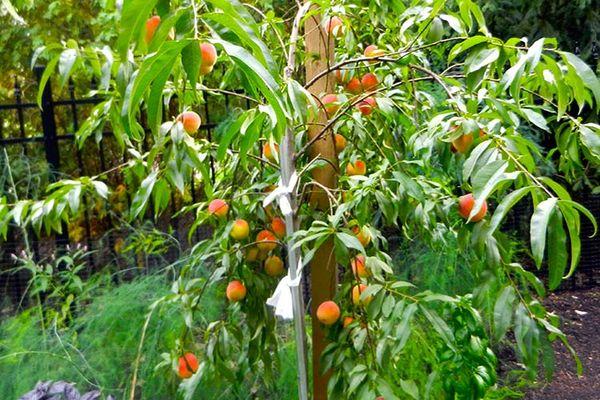
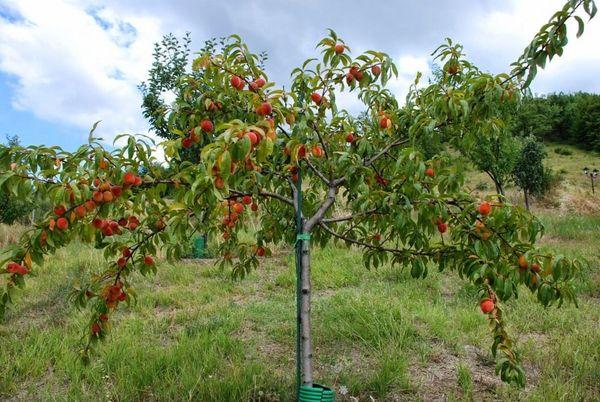
This plant is a table variety. It is a medium-sized tree with a spreading crown. It is characterized by rapid growth. In just a few years, the peach tree reaches 5 meters. The plant has broad, yellow-green leaves with serrated edges.
History of selection
This anniversary peach variety was developed by American breeders back in 1921. The plant is a descendant of the Elberta and Greensboro varieties. It was added to the State Register in 1947. It is recommended for cultivation in the North Caucasus region. The plant is also cultivated in Crimea. Besides Russia, the variety is widely grown in Asia and Europe.
Main characteristics
This variety is very popular among gardeners. It is characterized by high yields and adapts well to any climate.
Fruit
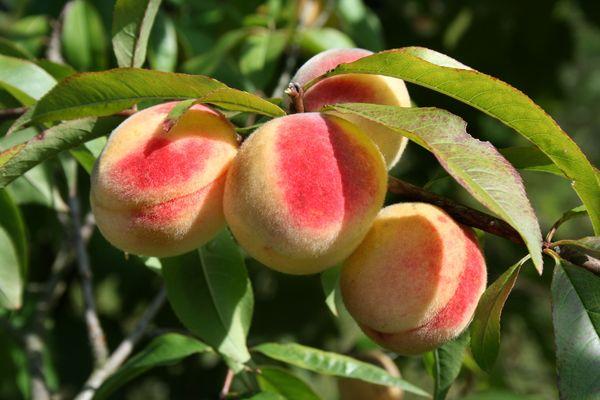
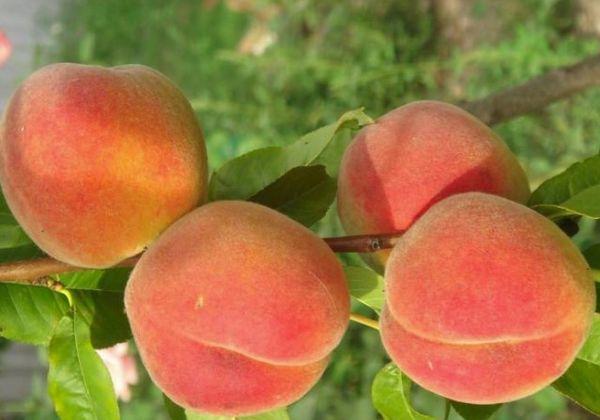
Peaches are characterized by large fruits, weighing approximately 140 grams. They are broadly oval in shape and have a rounded top.
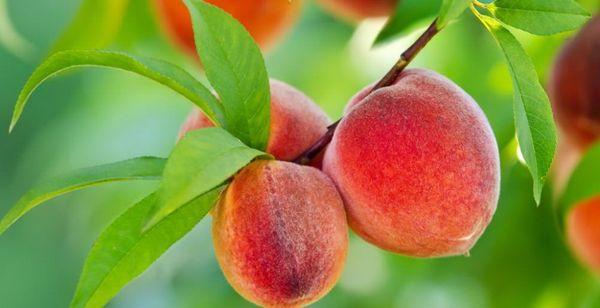
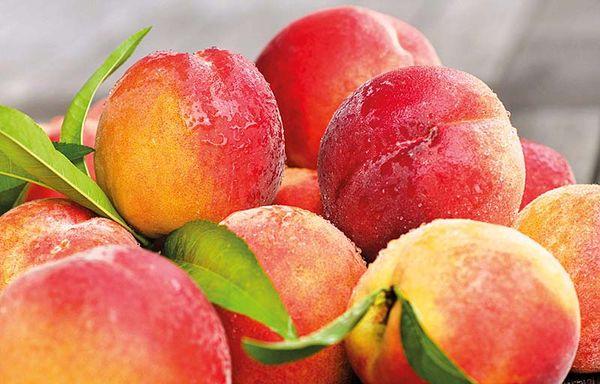
The outer skin is golden-yellow, covered with a slight fuzz. Inside is orange flesh, tinged pink around the pit. The fruit tastes sweet with a slight tartness. The pit is medium-sized and easily removed.
Bloom
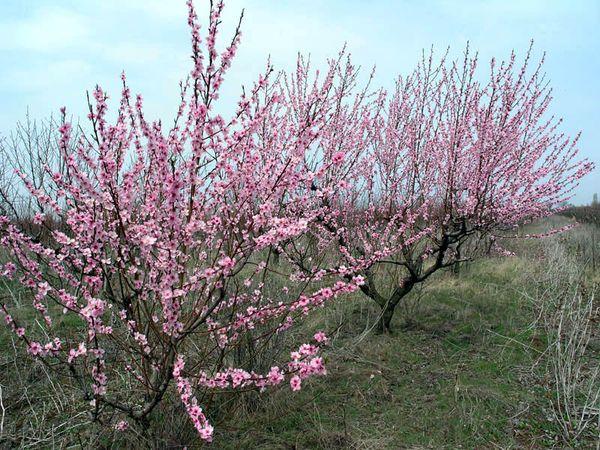
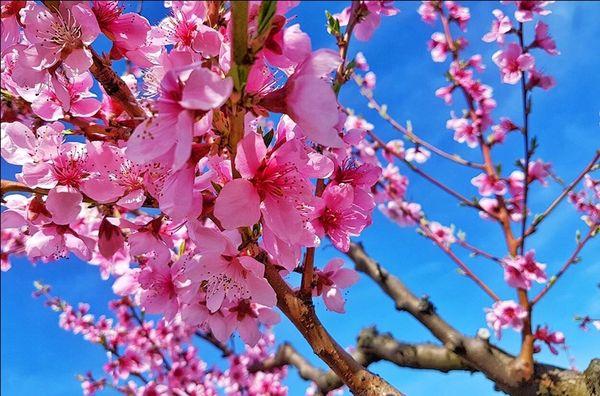
Blooming begins in mid-May and is profuse. The plant produces bell-shaped, deep pink flowers with concave petals.
Frost resistance
The tree exhibits excellent frost resistance in regions recommended for cultivation. It also exhibits good winter hardiness in the Crimean steppes, which are characterized by snowless winters.
Productivity and fruiting
A 10-year-old tree can yield up to 50 kilograms of fruit. In the foothills, a larger harvest is possible – up to 66 kilograms.
Areas of application of fruits
Peaches of this variety are versatile. They can be eaten fresh, canned, or used in desserts or compotes. Freezing is also perfectly acceptable. This is the easiest way to store fruit, preserving the maximum amount of nutrients.
Disease resistance
The plant has high resistance to diseases and pests. It is resistant to clasterosporium and powdery mildew.
Pros and cons of the variety
The key advantages of this variety include the following:
- Early fruiting. The tree begins bearing fruit 3-4 years after planting.
- High yield. It can reach 60 kilograms.
- Good commercial quality. Peaches of this variety have an attractive appearance and distinct aroma.
- High winter hardiness. The crop can withstand temperatures down to -25 degrees Celsius.
- Disease resistance. The plant is virtually immune to fungal infections.
However, the culture is not without its drawbacks:
- Insulation is necessary in the central zone. The plant cannot be grown in northern regions, as it will freeze.
- They don't transport well. After shipping, ripe peaches become spotted. Therefore, if transporting long distances, peaches should be picked early.
- The need for high-quality care. Failure to follow agricultural recommendations can result in unpalatable fruits and reduced yields.
- Tendency to drop. Ripe peaches can remain on the tree for a maximum of three days. After that, they fall off and spoil.
How to plant correctly
To ensure the tree develops fully, it is important to carry out planting work correctly and provide it with high-quality care.
Selection and preparation of planting material
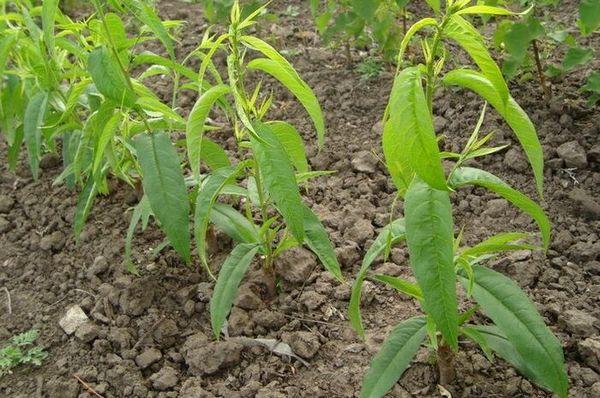
First of all, it's important to pay attention to the selection of seedlings. Only high-quality planting material will ensure a strong and healthy tree.
Root system
Plants with well-developed roots take root most easily. It's important that the roots are free of visible damage. They shouldn't be dry or diseased. When cut, the roots should be white.
Skeletal branches
They should be symmetrical. It's important that the skeletal branches have a healthy appearance and show no signs of disease.
Vaccination site
Particular attention should be paid to the grafting area. A good root collar should be firm. It is important that there is no juice or build-up on it.
Age of the tree
The age of the seedling is also important. An annual plant is best suited for planting in open ground.
Recommendations for choosing planting dates
This peach variety can be planted in spring or fall. The specific time period is chosen based on the region's climate.
In the central part of the country, the best time to plant is in the spring—late April. During this season, the tree will have time to strengthen and accumulate strength to survive the harsh winter.
In the south, plants can be planted in the fall. However, it's recommended to do this approximately one month before the first frost.
Requirements for the location
When choosing a site for planting peaches, choose sunny spots that are well-protected from the wind. If the tree is planted in the shade, problems with generative bud formation will occur. As a result, the fruit will be small and tasteless. It's best to plant peaches in the southwest or south facing areas of the site.
The quality of the fruit is affected by the soil composition in which the trees grow. It is recommended to plant them in fertile soil. Loose and sandy loam soils are ideal for this purpose. The plant can also be planted in loamy soil, but it is important that it has a high degree of aeration.
How to prepare the soil and site
Before planting, it's a good idea to dig up the bed. This will oxygenate the soil and clear it of weeds.
Planting diagram
To achieve good results in growing crops, it is important to carry out planting work correctly:
- Dig a hole for planting. The hole should be large enough to accommodate the root system.
- Make a mound of fertile soil. Add fertilizer containing organic and mineral components.
- In the central part of the hole, install a peg 1 meter high.
- Place the seedling in the hole on a raised bed of soil. Then, spread out its roots and cover with soil. Deepen the grafting site by 5-10 centimeters.
- Compact the planting area thoroughly. It's recommended to work from the outside of the tree's trunk circle toward the base.
- Attach the tree to a stake and water it. Each plant will require two buckets of water.
- Cover the soil around the plant with a mulch layer 6-8 centimeters thick. Sawdust, humus, or compost are all suitable.
Pollinators
Golden Jubilee is considered self-fertile. However, cross-pollination can increase its yield. To achieve this, plant other peach varieties that bloom around the same time.
Stavropol pink
This variety was developed by Stavropol specialists. Each tree can yield up to 40 kilograms of fruit. The peaches have a sweet and sour taste and juicy white flesh. The fruit is often used to make jams and compotes.
Harnas
This variety was developed by Canadian breeders. It is characterized by high yields. The fruits have an excellent dessert flavor. Each one weighs up to 140 grams.
Volcano
The plant was developed by Canadian scientists. The fruits have an excellent dessert flavor and withstand long-distance transportation well. The variety is characterized by a stable yield.
Inca
This Polish variety was obtained through open pollination. The tree grows over 5 meters tall and is virtually disease-free. The fruits have a dessert flavor and juicy flesh.
Care instructions
In order for a plant to develop normally, it should be provided with high-quality and comprehensive care.
Trimming
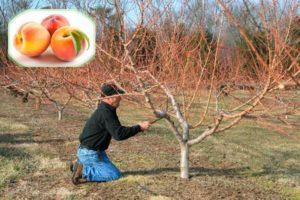
During the first few years of life, peach trees require mandatory formative pruning. After that, only sanitary or rejuvenating pruning is performed.
Sanitary
This procedure is aimed at removing broken and diseased shoots. Branches that interfere with each other are also removed. The cut areas should be treated with garden pitch.
Rejuvenating
This procedure is performed to rejuvenate the tree. It helps extend its lifespan and promote abundant fruiting.
Fruit rationing
This procedure is performed after flowering, when fruit buds are forming. First, it's important to remove weak branches.
Formation
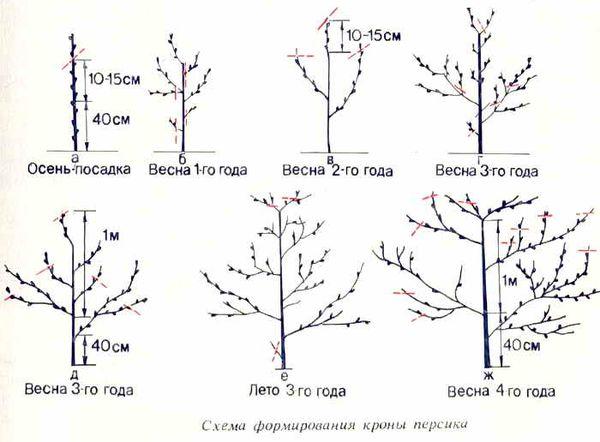
Formative pruning should be performed during the first four years of a tree's life. The specifics depend on the desired crown shape.
Watering mode
The soil should be kept moderately moist. The watering schedule is adjusted based on the weather, soil type, and age of the tree. On average, 40-50 liters of water are applied per week. The soil should be allowed to dry out between waterings.
Weeding and loosening
After moistening the soil, it should be loosened immediately. This will improve oxygen flow to the root system. Weeding is also a good idea.
Top dressing
The first time to fertilize a peach tree is three years after planting. Organic and mineral fertilizers are used for this purpose. To increase the tree's frost resistance, potassium and phosphorus-containing fertilizers are applied in the fall.
Preparing for winter
To protect the plant from frost, it is recommended to cover it with special materials. It is important that they allow moisture and air to pass through. With the arrival of spring, there is a risk of roots freezing. Mulch will help protect them from recurrent frosts.
Mulching and care of the tree trunk circle
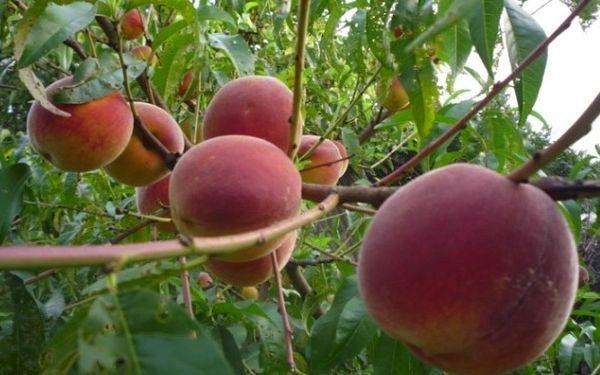
Mulching helps retain moisture in the soil and prevents weed growth. Sawdust, peat, and compost can all serve as mulch.
Diseases and pests
Despite the variety's resistance to diseases, it is sometimes susceptible to fungal infections and pest attacks.
Curly hair
The disease is caused by a fungal infection. The leaves swell and turn brown. Bordeaux mixture helps combat the disease. Other treatments that can be used include Oxychom and Skor.
Gum flow
A thick, dark mass appears on the trunk and branches. Problems arise from improper pruning or pest infestations. Sometimes, overwatering is the cause.
Aphid
When aphids attack, small insects appear on the tree. To protect the peach tree, plant dill or other herbs around it.
Codling moth
This is a dangerous pest whose caterpillars consume flowers, fruits, and leaves. This can result in the destruction of the entire crop.
Weevils
These are small beetles that eat flowers. This can result in crop losses. Insecticides can help control these insects.
Fruit moth
Insects eat buds, leaves, and even seeds. Pests become active during budding.
Harvesting and storage
In the south, the fruit is harvested in the first half of August. In the central zone, everything depends on the weather. In cool summers, peaches ripen in late summer.
It is not recommended to keep the fruits on the tree for a long time, as they may fall off. The harvest can be stored for 8 days. If the fruit is picked a week earlier, this period increases to 20 days.
Methods of reproduction
This plant can be propagated by seeds, grafting, or cuttings. Growing trees from cuttings requires the help of specialists who can create the necessary conditions.
Producing a full-grown tree from a seed is quite difficult. Such seedlings do not retain the varietal characteristics of the parent plant. Propagation by grafting requires the selection of a high-quality rootstock.
Tips from experienced gardeners
To grow this peach variety, you should follow these recommendations:
- correctly select and prepare planting material;
- carry out planting work correctly;
- water on time;
- carry out pruning of the plant;
- apply fertilizers;
- provide protection against diseases and pests.
The Golden Jubilee peach is very popular with many gardeners. This variety is highly productive and produces delicious fruit. However, it requires high-quality care.
Related posts:
 The best grape varieties for growing in the Urals, planting and care rules in summer
 Methods for planting and propagating cherries at home
 Descriptions of the 20 best cherry varieties for the Moscow region, their planting and care
 The best eggplant varieties for growing in a polycarbonate greenhouse: planting and care
 Description and cultivation of the 15 best cherry plum varieties for the Moscow region, planting and care rules
 Description and characteristics of the 27 best plum varieties for the Urals, planting and care
 The best methods for growing grapes from seeds at home
 Conditions for growing mandarin at home and rules for caring for the tree