
- Is it possible to grow cherries from seeds?
- Pros and cons of the method
- Which varieties are suitable for germination?
- Preparatory stage
- How and when to collect cherry pits
- Preserving cherry pits before planting
- Natural stratification: spring and autumn
- Planting and germination at home
- Necessary soil
- Pot size
- Core landing algorithm
- How to care for planted seedlings
- When to transplant into open ground
- Further care
- Will the tree bear fruit?
- Common mistakes of beginning gardeners
You bought some incredibly delicious cherries at the market and wanted to have the same ones decorate your garden plot. Do you want to know? How to grow a cherry tree from a seedBelieve me, it's entirely possible. Even the pit from the berry you ate will give rise to a cherry tree if you create the right conditions and follow a few rules. Just don't expect to get the properties you're so drawn to.
Is it possible to grow cherries from seeds?
Nature has arranged it so that cherry pits serve precisely the purpose of creating new trees. Self-seeding is the method by which many cherry trees reproduce. This circumstance is a significant advantage in favor of growing a cherry tree from a pit. It's up to you to decide whether this is worth the time and effort in your garden.
But if you decide to do so, it's worth knowing that it will take time and patience, and there's no guarantee that the resulting tree will have the same varietal characteristics and produce fruits as tasty as those of its parent cherry.
Pros and cons of the method
Propagating cherries from pits has undeniable advantages. It's an excellent method if you need to:
- use a tree as a rootstock to ensure successful grafting of a variety that would otherwise be impossible to root;
- obtain a large number of wild cherry seedlings;
- grow a tree of the variety that you liked so much;
- continue breeding work.
But, unlike grafted trees, even if the tree freezes completely or dries out, its roots are capable of giving life to new shoots, meaning the variety will be preserved.
Moreover, these cherries are better adapted to the climate conditions of the area where they grow. And their root system is capable of firmly anchoring the tree in the soil and actively supplying it with water.
There are some downsides too:
- the yield will not be the highest and will not be regular;
- The cherry tree will not begin to bear fruit until it reaches 5-7 years of age (even 8-10 years).
Which varieties are suitable for germination?
To ensure that growing a fruit-bearing tree is a sure thing, you will need to use certain cherry varieties, such as Shpanka, Barbados, Red, Surinam, and Pink.
According to the recommendations of experienced gardeners, it is precisely these that should be propagated if you do not want the tree, grown with such difficulty, to turn out to be frail and sick and not bear fruit.
Important! Don't try to grow a tree from store-bought cherries. The chances of getting a fruit-bearing tree are extremely low. Your chances are much better if the cherries come from a neighboring garden.
Preparatory stage
To achieve the expected result, the cherry pit must be carefully prepared for germination, and it is equally important to plant it correctly.
How and when to collect cherry pits
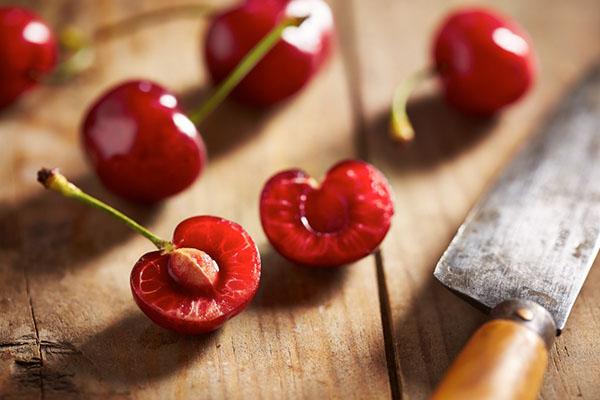
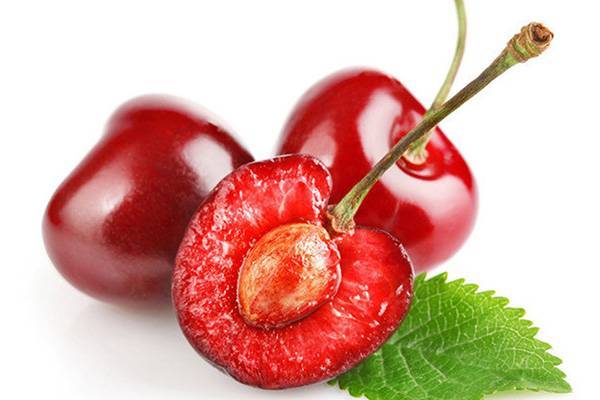
The sprouting seedling will have to break open the cherry seed coat, which isn't easy. Choose larger and riper berries for further germination. The first thing you'll need to do after picking them is separate the pulp from the pits.
Preserving cherry pits before planting
How do you preserve cherry pits before planting? Don't let them dry out or rot. To do this, you'll need to take several steps:
- remove any remaining juice and pulp by rinsing thoroughly in cold water;
- place in an even layer on the fabric and leave in the shade to dry;
- For storage, it is better to use a paper bag and then pack it in a plastic one;
- Before sowing, keep in a dry place, making sure that the temperature does not rise above 20 ºС.
Natural stratification: spring and autumn
To ensure germination, the seeds undergo a special preparation process called stratification. Simply put, they are kept in a cold environment in a specific manner.
- Autumn.
If cherry pits are sown in the fall, they are first soaked for a week. Cold water is used for this purpose, and it is essential to change the water daily. The pits are placed in the soil six weeks before the soil freezes, burying them 3-5 centimeters deep and maintaining a 15-centimeter distance between them.
During the winter cold, the cherry trees are covered with a snowdrift. In the spring, young cherry trees will require weeding, watering, and loosening of the soil. Autumn stratification is natural.
- Spring.
Artificial stratification of cherry pits is carried out 3-4 months before planting them in the ground.
The first method is similar in its effect on seeds to natural stratification. Cherry pits are soaked in the same manner. After a week, a sterilized 3-liter jar is filled 2/3 full with a mixture of substrate and soaked cherry pits. When preparing the substrate, you can use:
- wood sawdust;
- coarse sand;
- dry grass - finely chopped;
- crushed peat;
- sphagnum moss;
- fine expanded clay.

The substrate will also need to be treated to prevent mold and rot. Excellent results are achieved using a solution of potassium permanganate, Maxim, or Benazol.
A jar of the mixture, sealed with a plastic lid, is buried in the soil and removed only after the ground has thawed. The sprouted seeds can be planted in peat pots or directly into the ground.
Another method of spring stratification involves soaking the seeds in water for 3-5 days. They are then mixed with the substrate (described above). They are kept in plastic containers in a cool place for 3 to 4 months (but not in the freezer). This is enough time for the sprouts to emerge.
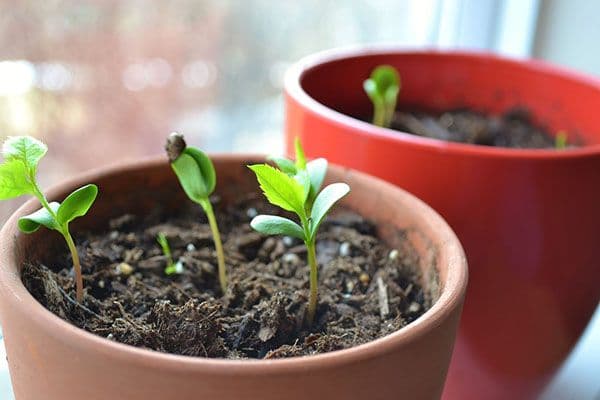
Planting and germination at home
October is the best time for planting. Early spring is best. It's worth remembering that cherry trees don't tolerate transplanting, so it's best to choose a location right away. It's important to keep the soil moist; it shouldn't dry out.
Necessary soil
If you can choose the same soil for the seedling as the mother cherry tree, do so. This is the best option. If this is not possible, a store-bought potting mix for seedlings will do.
Pot size
To germinate cherry seeds, each one will need its own small pot, up to half a liter in volume.
Core landing algorithm
The seeds can be planted in a single, fairly large container, keeping a distance of 15-20 centimeters between the planted seeds. The holes in the ground containing the cherry "seeds" are then filled with soil.
How to care for planted seedlings
Caring for cherry seedlings is little different from traditional care: as soon as the seedlings appear, you can begin weeding, loosening the soil, watering, and ensuring the plant remains healthy.
When to transplant into open ground
When the sprouts reach 25-30 centimeters, you can plant the cherry trees directly in the ground. With proper care, they can grow up to half a meter in one season.
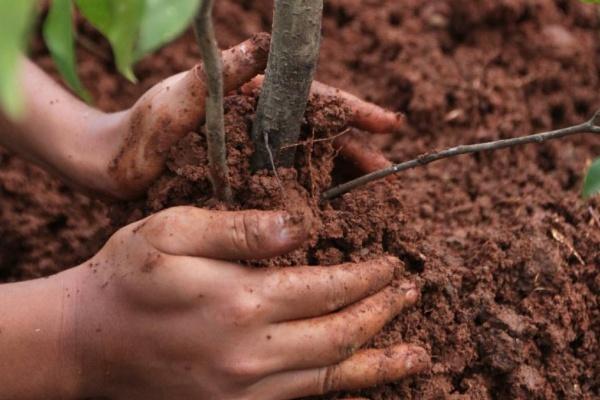
Further care
It consists of the most common actions:
- loosen and water the soil in time;
- remove weeds;
- add fertilizers and humus;
Important! If the soil in which the cherry tree is planted was fertilized in the fall, no additional feeding is required. However, cherry trees planted in pots will need to be fed after a couple of months.
- as it grows (from the 2nd year of life), shape the crown - perform spring pruning;
- resist diseases and pests.

It is important to properly prepare young cherry trees for their first winter:
- covering the roots, mulching the tree trunk circle;
- generous watering (up to eight liters per plant);
- In regions with particularly harsh winters, the trunk and crown also require insulation in the last ten days of October; newspaper or burlap are suitable for wrapping them.
Will the tree bear fruit?
It's long been known that cherries grown from seeds lose the qualities of the parent tree. If you want to reap abundant harvests from them, follow certain farming practices, but most importantly, choose the right planting material. Otherwise, you risk growing a wild cherries with low yields and mediocre flavor.
Not every seed can grow a full-fledged cherry tree, capable of producing a bountiful harvest. Forget about large store-bought cherries. Instead, consider your neighbor's orchard.
If desired, you can graft a cultivated variety onto a seedling grown from a seed to be completely sure of the result.
Common mistakes of beginning gardeners
Experienced gardeners warn their novice colleagues against the most common mistakes in growing a tree from an ordinary cherry pit:
- variety unsuitable for local conditions;
- there is not a single pollinator variety nearby;
- planting too deep;
- insufficient watering during dry summers;
- mineral starvation in acidic soils.
Learn from the mistakes of others, avoid your own, and you will receive abundant harvests year after year.
A seed makes excellent planting material. It's a gift from nature itself. It can sprout without human intervention. And for a gardener, this process isn't particularly difficult. Time and patience are all that's needed.
Related posts:
 Is it possible to grow an apricot tree from a seed in your garden? How to plant and care for it?
 Description and pollinators of the Vladimirskaya cherry variety, planting and care
 Description and varieties of cherry variety Shpanka, planting and care
 When is the best time to transplant a cherry tree? Rules and step-by-step instructions.
 How to grow a cherry tree from a seed at home
 13 Best Cherry Jam Recipes for Winter
 Description and cultivation of the best varieties of felt cherry, planting and care
 The best recipes for homemade cherry jam with and without pits for the winter, storage