
- How Vladimirskaya was bred
- Description of the variety
- Tree size and crown branching
- Flowering and pollinating varieties
- Ripening time of the harvest and taste qualities of berries
- Collection and use of fruits
- Resistance to frost and drought
- Immunity to diseases and pests
- Advantages and disadvantages: is it worth planting?
- Necessary conditions for growing
- Location and lighting
- Climate conditions
- Soil composition
- Favorable and unfavorable neighbors
- How to plant a cherry tree in a garden
- Deadlines
- Preparing a planting hole for seedlings
- Step-by-step landing algorithm
- Care instructions
- Irrigation
- Tree trunk area care: loosening and mulching
- What to fertilize with
- When planting in open ground
- To stimulate growth
- During the fruiting period
- Sanitary and formative pruning
- Sanitary pruning
- Formative pruning
- Seasonal treatments
- Preparing for winter
- How to propagate the variety
Among the wide variety of fruit and berry crops, the cherry, especially the Vladimirskaya variety, is very popular. This variety was developed a long time ago, and over that time, many people have experienced its high productivity and excellent taste. In spring, the entire tree is covered in delicate white flowers, and in summer, the branches bend under the weight of juicy berries. The plant is easy to care for, making planting and caring for it accessible to everyone.
How Vladimirskaya was bred
The cherry tree's birthplace is considered to be Greece, specifically the small town of Kerasounda. It was from there that it began its journey through cities and villages. In the 12th century, it was brought to the Vladimir province. According to legend, wandering monks brought it. The plant gradually acclimatized to the rather harsh climate, as the parent plant was not known for its winter hardiness.
Over time, this cherry variety became established and spread, and the city of Vladimir became the region's largest cherry orchard city. In 1947, the variety was recognized as a regional cherry tree, and in 2014, a monument was erected to the tree as a symbol of the Vladimir region.
Description of the variety
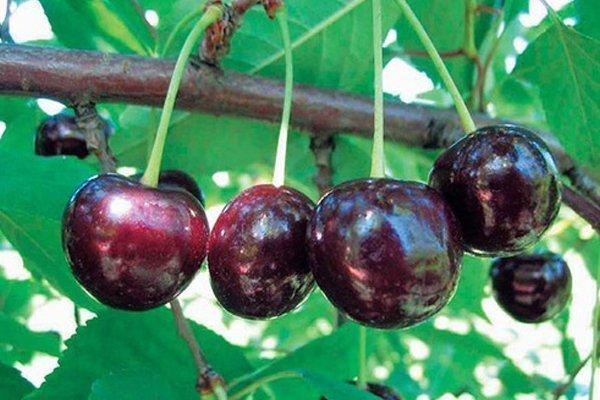
The taste of Vladimirovka cherries is considered a classic cherry flavor, with an ideal combination of acidity and sweetness, and a subtle, unrivaled aroma.
Tree size and crown branching
The Vladimir cherry is a spreading shrub, 3 to 5 meters tall, with flexible branches and a round crown. The young shoots are the most fruitful. They droop downward, hence the name "weeping." The branches of the Vladimir cherry are covered with small, dark green leaves with serrated edges, elongated into a boat-shaped form.

Flowering and pollinating varieties
The Vladimirskaya cherry tree begins blooming in May and lasts for two weeks. During this time, the tree is covered in white or pink inflorescences, each consisting of 5-7 small flowers.
The Vladimirskaya cherry is a partially self-fertile variety. For successful pollination, it requires pollinators growing in close proximity to the tree. These are most often other cherry varieties:
- Turgenevka;
- Lyubskaya;
- Rastunya;
- Student;
- Zhukovskaya.
To attract bees, honey plants are planted:
- bells;
- lungwort;
- Alyssum.
 Some gardeners resort to this method of attracting bees: spraying cherry trees with a weak solution of sugar or honey.
Ripening time of the harvest and taste qualities of berries
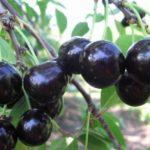
The first berries appear only in the third year after planting. Fruiting continues throughout July. Cherries are loosely attached to the stems, so they are picked immediately after ripening. In productive years, a single tree can yield over 20 kilograms of fruit. The berries are round, slightly elongated, dark red, and have firm, sweet-tart flesh. The small seeds are easily separated.
Collection and use of fruits
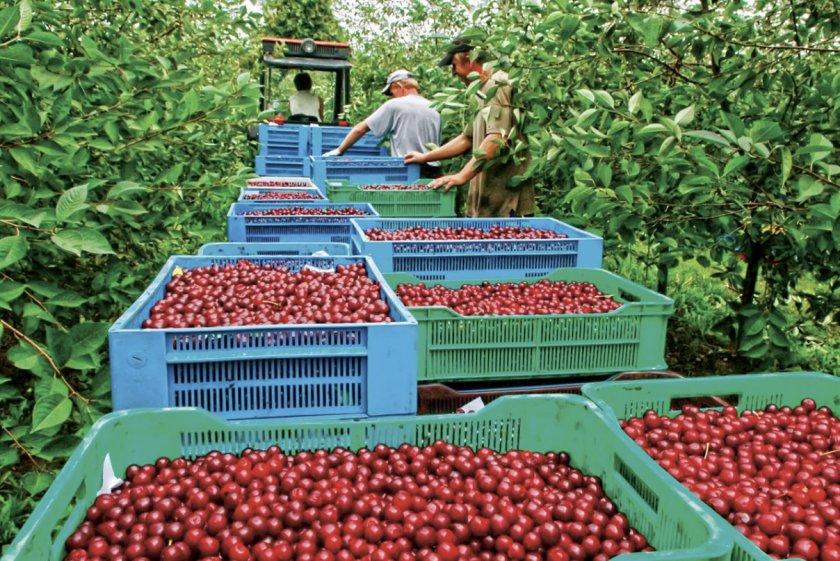
This cherry variety is very productive and is often grown commercially. The harvested berries can be stored for a long time without losing their flavor, and are suitable for long-distance transportation. Cherries are eaten both fresh and canned. They are used to make jam and delicious fillings for pies and dumplings. Cherries are an excellent ingredient for juices and compotes.


Cherries are also used in folk medicine. They are a good antiseptic, expectorant, and laxative. Eating cherries helps lower blood sugar.
Resistance to frost and drought
The Vladimirskaya cherry is a moisture-loving and frost-hardy plant. It does not thrive in regions with very hot and dry summers, but it can tolerate short periods of intense heat without loss. Severe frosts are also unfavorable, as they damage the generative buds (which contain the flower buds).
Immunity to diseases and pests
The Vladimirskaya cherry is a very ancient variety, so it is not immune to new types of fungal diseases:
- Clasterosporium (characterized by spots on the leaves, wilting and falling of fruits);
- coccomycosis (causes premature yellowing of leaves, drying of fruits and death of the entire tree);
- anthracnose (affects fruits, manifests itself in the form of growths);
- moniliosis (manifested as growths on the trunks, leading to rotting of the fruit).
Cherry trees often become victims of parasitic insects:
- cherry moth (attacks young foliage, laying eggs in the fruit);
- aphids (cause leaves to curl);
- slimy sawfly (damages young cherry ovaries);
- Cherry weevil (feeds on young buds).
Advantages and disadvantages: is it worth planting?
The advantages of this variety largely outweigh its disadvantages. For many gardeners, the Vladimirskaya cherry is a favorite, and they have preferred it for many years.
The advantages include:
- unpretentiousness;
- high productivity;
- excellent taste and benefits;
- good transportability;
- possibility of use in folk medicine.
The disadvantages of Vladimirskaya cherry are:
- the possibility of damage to generative buds in severe frosts;
- tendency to fungal infections;
- partial self-fertility.

Necessary conditions for growing
In order for a tree to thrive in a given area, it is necessary to adhere to a number of specific conditions regarding the planting location, surroundings, and soil composition.
Location and lighting
For normal tree development in spring, it's important that the generative buds aren't damaged during the winter. Cherry trees should be planted in a leeward location, protected by a fence or house wall. Proper fruiting depends on sufficient sunlight. Neighboring trees should not interfere with the tree's growth or shade it.
Climate conditions
The Vladimirskaya cherry variety can be cultivated throughout the country, but the best harvests are obtained in the central regions of Russia (Moscow, Bryansk, Vladimir, and Oryol regions).
Soil composition
Cherry trees' root systems need adequate oxygen and should not be subject to constant moisture. Choose sites without a high water table. Loose black soil is the most suitable soil type. If there is a risk of overwatering, a drainage system should be considered.
Favorable and unfavorable neighbors
Bad neighbors for the Vladimirskaya cherry variety include apple trees, pears, carrots, black currants, gooseberries, and sea buckthorn. These crops should be planted in a different corner of the garden. They will deplete the soil, causing the fruit to lose its sweetness.
The Vladimirskaya cherry will improve its taste and productivity when grown alongside other cherry varieties, as well as plums, cherry plums, grapes, and roses.
How to plant a cherry tree in a garden
Following some planting rules for Vladimirovskaya will help speed up the fruiting period and ensure a high-quality harvest.
Deadlines
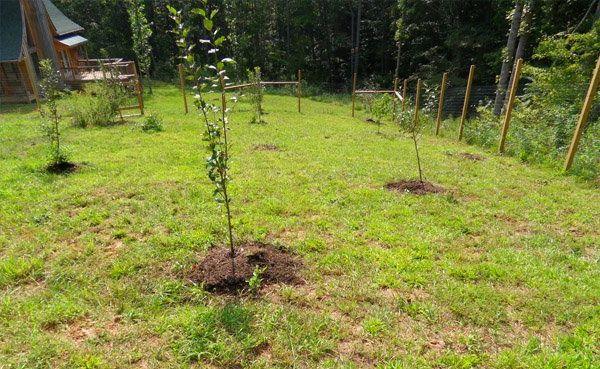
In most regions, cherry trees are planted in late April, after the frost has passed. The seedlings take root well over the summer. Fall planting is only practical in the south, in regions with warm and humid autumns.

Preparing a planting hole for seedlings
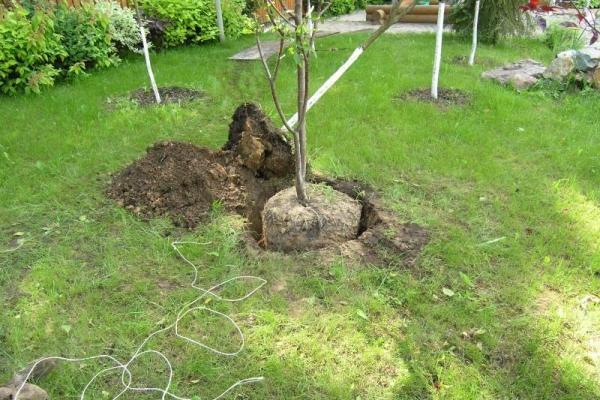
Planting holes for cherry tree seedlings should be prepared in advance, at least two weeks before planting. The holes should be 80 centimeters deep and wide, with a distance of about 4 meters between them. Several more holes should be dug around the hole to allow for the simultaneous planting of pollinator seedlings. Fertilizer (superphosphate at a rate of 120 grams per hole) or a nutrient mixture (3 buckets of compost per 1 liter of wood ash) should be added to the bottom of each hole.
Step-by-step landing algorithm
Planting is carried out carefully, following the procedure. Then the seedling will take root successfully and delight with bright green foliage, and then – the first fruits.
- A peg about a meter high is driven into the side of each hole.
- The seedling is carefully removed from the container, the roots are straightened and lowered into the hole.
- Fill it with soil, making sure that there are no empty spaces inside.
- The soil is compacted so that the root collar protrudes 3-5 centimeters above ground level.
- A watering groove is formed around the trunk and the plant is watered generously.
- The tree is tied to a peg; this should protect it from gusts of wind.
- The soil is mulched with straw or sawdust to protect the roots from drying out in the heat and from freezing in the winter.
- It is recommended to spray the seedlings with a solution of the phytohormone Epin. This will help them develop properly.

Care instructions
Like other crops, the Vladimirskaya cherry requires constant, proper care, which includes organizing watering, maintaining the root system, timely fertilizing and pruning, and preparing for winter cold.
Irrigation
Cherry trees require infrequent but abundant watering. The water should saturate the entire root system, but at the same time allow sufficient oxygen to reach the tree. While the cherry tree isn't bearing fruit, it only needs to be watered 4-5 times per season. For uniform irrigation, you can install medium-pressure sprinklers throughout the area.
After the start of fruiting, the watering scheme is more complex:
- The first spring watering is done after flowering to prevent blossom drop. Watering frequency is then increased, and a week before the cherries ripen, it is stopped completely.
- After harvesting, water sparingly. Its purpose is to saturate the plant with moisture before entering winter. Watering ceases in the fall, before the onset of frost.
Tree trunk area care: loosening and mulching
To protect against weeds and ensure adequate aeration for the roots, weed and loosen the soil regularly to a depth of 10 centimeters. This is recommended after watering. Then, mulch is applied to prevent premature drying, waterlogging, and weeds.
The growth of weeds around the trunk is unacceptable, as they take up a significant portion of the nutrients.
What to fertilize with
The most important principle of cherry fertilization is to apply fertilizers at specific times and in moderate amounts. This will help limit excessive shoot growth.

When planting in open ground
When planting cherries in their permanent location, a combination of organic and mineral fertilizers is added to each hole. This includes humus, superphosphate, and potassium chloride. No additional fertilizer is added during the following year.
To stimulate growth
The next few years are a period of active cherry tree growth. Nitrogen-containing fertilizers are designed to stimulate this process:
- in the spring, add 20 grams of ammonium nitrate and 30 grams of urea (per 1 square meter) along the edge of the tree trunk hole;
- spray the cherry tree with a urea-based nutrient solution (20 grams per 10 liters of water);
- Once every two years, add well-rotted manure (10 kilograms per tree), placing it at a depth of 10 centimeters.


During the fruiting period
Once the cherry tree begins bearing fruit, it's crucial to ensure it grows in nutritious soil. The fertilizing procedure is as follows:
- Organic and mineral fertilizers are added annually in the fall. The recommended dosage per square meter should be 10 kilograms of manure, 20 grams of superphosphate, or 200 grams of ash fertilizer.
- Starting at six years of age, cherry tree fertilization is increased by 30 percent. Green manure is also used.
- Once every five years, the soil is limed with slaked lime during digging. This is done to reduce soil acidity.
Sanitary and formative pruning
Cherry trees require regular crown pruning. This helps create a beautiful crown (formative) and prevents diseases (sanitary).
<img class="aligncenter wp-image-46223" src="https://harvesthub.decorexpro.com/wp-content/uploads/2019/05/obrezka-dereva.jpg" alt="cherry tree pruning» width=»600″ height=»400″ />
Sanitary pruning
This involves removing diseased and dead branches. This is done in the spring, before the sap begins to flow. Furthermore, young shoots, which rob the mother cherry of some of its nutrients, should be pruned to the roots.
Formative pruning
Cherry tree crown pruning is performed annually to shape the tree's crown. In the first year, a skeleton of 4-5 healthy branches is formed. Subsequent pruning periods are performed taking into account the placement of the main branches.
Seasonal treatments
Cherry pruning is done not only in spring but also in autumn. This is done for sanitary purposes and to thin out the trees. It's important to do this before frost sets in. Excessive branch density can affect the sugar content and size of the fruit.

Preparing for winter
Preparing for winter frosts is aimed at preventing buds from freezing and preserving cherry fruit production. This includes the following:
- The bark is cleaned, the trunk and main branches are whitewashed (half a kilogram of copper sulfate, 2 kilograms of chalk, 100 grams of glue).
- Water thoroughly and apply fertilizer.
- Mulching is carried out.
During the first years of their life, cherry trees are protected from the cold. They are covered for the winter with a natural, breathable material. Then, the trunks are covered with dry leaves or spruce branches, and snow is raked up to the trunks.
How to propagate the variety
Various methods are used to propagate Vladimirskaya cherry.
- cuttings (for this, shoots are prepared in advance, planted, waited for rooting and transplanted to a permanent location);
- by grafting (using wild seedlings onto which improved crops with high fruit quality characteristics are grafted);
- seeds (after separating the seed from the pulp, carefully process it in a weak solution of manganese, sow it in a nutrient medium, and after germination, sow it in open ground);
- root shoots (after selecting two-year-old daughter shoots, they are separated from the mother trunk, wait for their own root system to form, and then transplanted to a permanent location).
The Vladimirskaya cherry is suitable for growing even for inexperienced and novice gardeners. It's easy to grow, and will reward patience, love, and care with beautiful blooms and an abundance of delicious, healthy berries.
Related posts:
 Description and cultivation of the best varieties of felt cherry, planting and care
 Description and propagation of the Bessey cherry variety, planting and care rules
 Description and characteristics of 17 dwarf cherry varieties, planting and care
 Description and varieties of cherry variety Shpanka, planting and care
 20 Best Cherry Varieties for the Central Russian Region with Descriptions and Characteristics
 Description and varieties of Zhelezistaya cherry, planting and care
 Description of the 25 best cherry varieties for the Urals and Siberia, planting and care in open ground
 Description of the 10 best black cherry varieties, planting and care in open ground