
- The history of cherry breeding
- Pros and cons of the variety
- Characteristics of the tree
- Dimensions and appearance of the tree
- Frost and drought resistance
- Immunity to diseases
- Pollinators, flowering period and ripening time
- Productivity, fruiting
- Where are berries used?
- Step-by-step algorithm for planting the Saratov Baby
- The optimal time for planting a seedling
- Selecting a suitable site
- Favorable and unfavorable neighbors
- Technology of planting crops
- Caring for cherries in open ground
- Watering frequency depending on the season
- Fertilization
- Caring for the tree trunk circle
- Pruning and crown shaping
- Preventive treatments
- Preparing the tree for winter
- Gardeners' reviews of the variety
The Saratovskaya Malyshka cherry is an early hybrid that delights gardeners with delicious, sweet-and-tart berries as early as June. The tree blooms and produces a small harvest in its third year. Malyshka cherries respond well to fertilizing and tolerate frost and short-term drought. Branches should be slightly pruned in spring, and the trunk should be insulated before the onset of cold weather. Preventative measures are recommended to prevent diseases.
The history of cherry breeding
In 1995, the Saratov Experimental Station bred a cherry-sweet cherry hybrid, the Malyshka. Popularly known as the Saratov Malyutka, the new variety was created by crossing the Rannyaya cherry with the Duke (a cherry-sweet cherry hybrid). The Malyshka's creators were breeders Galina Dymnova and Anna Kruglova.
Pros and cons of the variety
Advantages of the Malyshka cherry:
- early fruiting (in the 3rd year);
- frost resistance;
- consistently high yields;
- compact tree size (up to 2 meters);
- Excellent taste and commercial characteristics of berries.
Disadvantages of the variety:
- self-infertility;
- shedding of ripe berries;
- average resistance to various diseases.

Characteristics of the tree
The Malyshka cherry tree differs from other cherry varieties in its small tree size, early fruiting, and large berries. This weather-resistant hybrid can be grown throughout the central region of Russia.
Dimensions and appearance of the tree
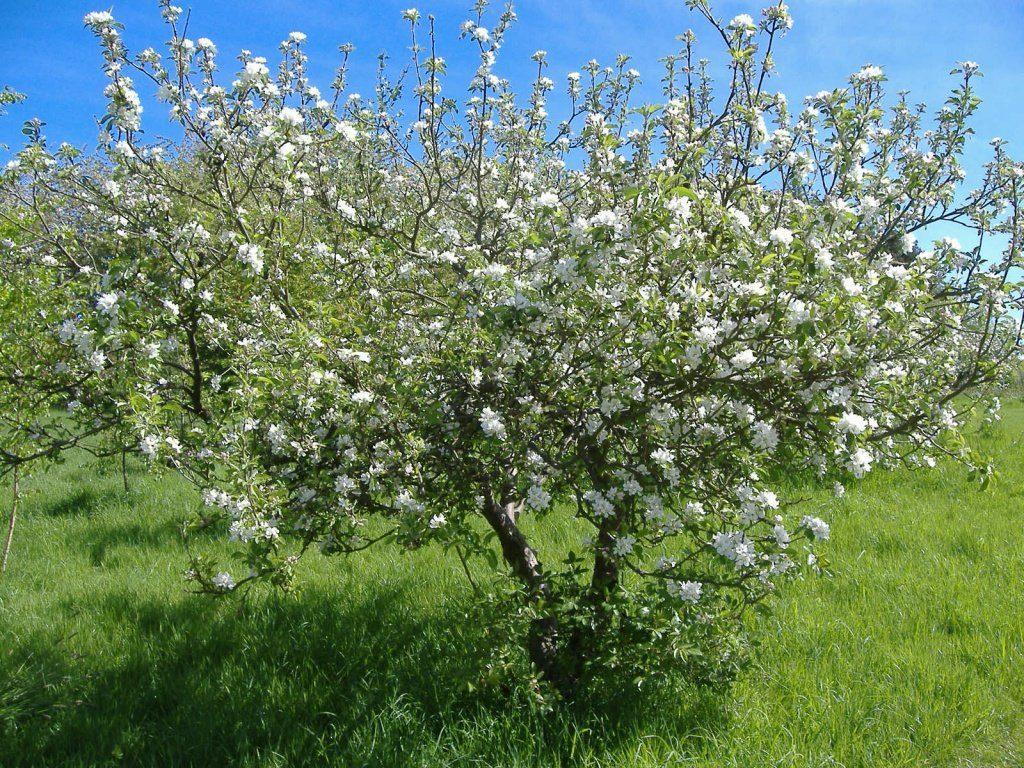
The Baby Cherry is a compact tree growing to a height of 2-2.5 meters. It has a dense, spherical crown with spreading branches. The bark is smooth and grayish-brown. The leaves are dark green, ovate, with a pointed tip and serrated edges. Large, white flowers appear on the stems, either solitary or in clusters of three.
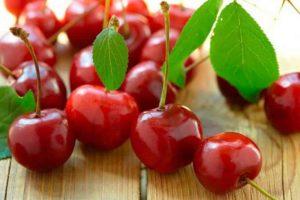
The fruits are round, bright red, with shiny, smooth skin and reddish, juicy flesh. Each berry weighs 5 grams. The flavor is like that of a cherry—sweet and sour. Inside the berry is a small stone that separates easily from the flesh.
Frost and drought resistance
The Malyshka cherry tree has average frost resistance. Without shelter, it can withstand temperatures down to -10-20 degrees Celsius. In regions with harsher climates, the tree needs to be insulated for the winter. The cherry tree adapts well to any weather conditions.
During prolonged drought, it is recommended to water the tree once a week (1-3 buckets of water).
Immunity to diseases
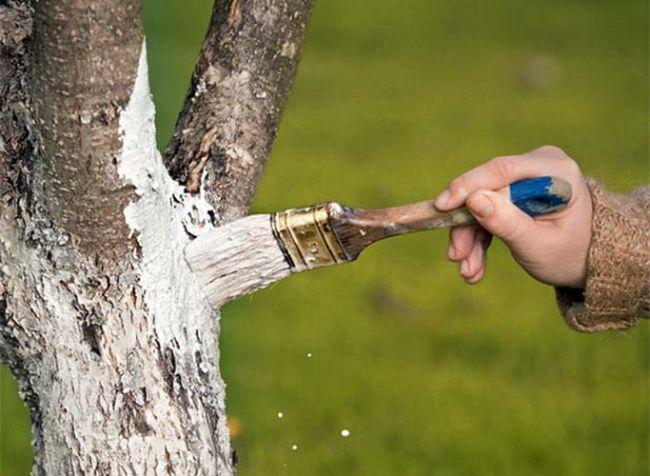
The Malyshka cherry tree has a good immune system, but in rainy and cool weather, the tree, growing in poor soil, can become infected with fungi or viruses. To prevent diseases, preventative measures are taken (whitewashing the trunk with lime and spraying the foliage with fungicide solutions).
Pollinators, flowering period and ripening time
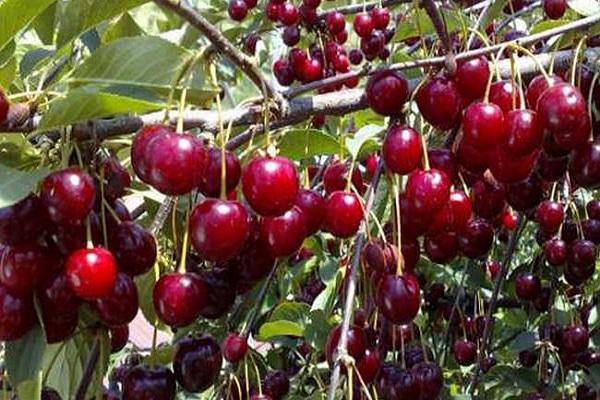
The Malyshka cherry tree blooms in mid-May, and the berries ripen in the second ten days of June. This is an early, self-sterile hybrid. To achieve a higher yield, cherry varieties with similar flowering periods should be planted near the Malyshka. The best pollinators for the Saratovskaya Malyutka include Turgenevka, Lyubskaya, Molodezhnaya, and Nord Star.
Productivity, fruiting
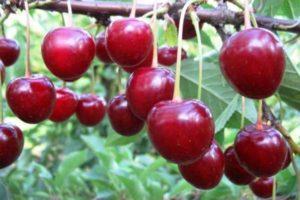
The Saratovskaya Malyutka cherry tree grows quickly, and the first small crop of berries can be harvested as early as the third year. Weather conditions and fertilizing influence the size and quantity of the fruit. The average yield per tree is 13.5-15 kilograms. In favorable years, the yield is higher. A single cherry tree aged 8-10 years can yield up to 25 kilograms of berries.

Where are berries used?
The Saratovskaya Malyutka cherry is a table berry. Ripe fruits are eaten fresh or processed. They are used to make juices, preserves, and jellies. They are also dried, frozen, and canned. Cherries thin the blood, improve digestion, and strengthen the immune system.
Step-by-step algorithm for planting the Saratov Baby
You can plant the Malyshka cherry tree yourself. First, you need to purchase a 1-2 year-old sapling. A young tree should have a healthy and developed root system, flexible branches, and a trunk height of up to 1.2 meters.

The optimal time for planting a seedling
The Malutka cherry tree is typically planted in early spring (April) – before the buds open and the sap begins to flow. In warmer southern regions, the seedling can be planted in the fall (before September 20). The young tree will have time to establish roots in its new location before frost sets in. A seedling purchased in late fall can be dug into the ground at an angle and then planted in its permanent location the following spring.
Selecting a suitable site
The Saratovskaya Malyshka prefers sunny garden areas protected from drafts and winds. It is not recommended to plant the tree in low-lying areas where water will accumulate after rain. Cherries thrive in fertile leaf mold, black earth, sandy loam, or loamy soil. If the soil is too clayey, it can be amended with sand and peat. If the soil is poor, add a bucket of compost. For acidic soil, apply lime: 300 grams of lime per square meter.

Favorable and unfavorable neighbors
Other pollinator cherry varieties can be planted near the Malyutka cherry tree. The distance from the neighboring tree should be 2-5 meters. Cherries thrive alongside sweet cherries, plums, and pears. It is not recommended to plant trees with a strong root system near the Saratovskaya Malyutka, such as birch, oak, poplar, spruce, and linden. Cherries do not tolerate apple trees near the tree. It is best to avoid tomatoes, peppers, and eggplants near the cherry tree. Raspberries and gooseberries are also not recommended near the Malyutka.
Technology of planting crops
How to plant a cherry tree Baby:
- Two weeks before planting, you need to dig a hole 65 centimeters deep and 70 centimeters wide.
- It is necessary to leave 2-3 meters of free space to the neighboring tree or bush.
- The top layer of soil must be set aside, the excavated soil mixed with a bucket of humus, wood ash (300 grams), superphosphate and potassium sulfate (100 grams each), peat and sand.
- Before planting, the roots can be placed in water with Kornevin or Heteroauxin for 4-5 hours.
- A 1.45 metre high stake needs to be driven into the centre of the hole.
- Fill the hole with soil, place the seedling on top, straighten the roots and sprinkle with the remaining soil.
- The root collar should be 5 centimeters above the soil surface.
- The soil around the tree needs to be lightly compacted.
- After planting, you need to pour 2 buckets of water under the roots.
- The tree must be tied to a support, and the area around the trunk must be mulched with sawdust.

Caring for cherries in open ground
The Malyshka cherry is an easy-to-grow crop. However, by following all the proper cultivation practices and applying fertilizers on time, you can achieve higher yields.
Watering frequency depending on the season
During the first months after planting, a young seedling should be watered weekly. A mature tree requires watering only in dry and hot weather. Watering is essential in the spring, during flowering, and in early summer, when the berries are ripening. Pour 2-5 buckets of water under the root ball. Water weekly, in the evening. Avoid watering during rain. Before wintering, pour 5-7 buckets of water under the root ball.
Fertilization
The Malyshka cherry tree is fed in its second year. In the spring, add half a bucket of rotted humus or compost to the tree's trunk. During the first few years, the plant requires a lot of nitrogen. In the summer, water the tree with a urea solution (20 grams per 12 liters of water).

In addition to nitrogen, a mature tree requires phosphorus and potassium. Before flowering, the cherry tree is watered with a solution of superphosphate and potassium chloride (35 grams per 12 liters of water). In the fall, the trunk area is treated with lime milk. Before winter, the cherry tree is fed again with potassium and phosphorus. For the winter, the soil around the tree is mulched with humus.
Caring for the tree trunk circle
After watering, the soil around the tree should be loosened and the soil crust broken up to improve oxygen circulation. Weeds should be removed. In the fall, all fallen leaves and old mulch should be removed from under the tree. Before wintering, the area around the tree trunk should be watered with a lime solution, and in the spring, the area should be treated with copper sulfate.

Pruning and crown shaping
To properly shape the crown, annual branch pruning is performed in early spring, before bud break. On a young tree, the top shoot is removed, and side branches are shortened by a third. On a mature tree, no more than 5-7 skeletal branches are left, the rest are cut back to the ring. Each year, branches from the previous year are shortened, and shoots growing inward and thickening the crown are pruned.

In the fall, after the leaves have fallen, perform sanitary pruning: remove all diseased and broken branches. The cut areas are treated with copper sulfate and garden pitch.
Preventive treatments
The Malutka cherry tree can become diseased if there is a nutrient deficiency or excess. Rainy and cool weather can trigger the disease. Common diseases of the Saratovskaya Malutka include moniliosis (leaves dry out, berries rot), coccomycosis (dark spots and holes on the leaf blades), and anthracnose (rotten spots on the fruit).
To reduce the risk of infection, preventative measures are taken in early spring. The tree trunk is whitewashed with lime or Bordeaux mixture, and the area around the trunk is watered with a copper sulfate solution.
Foliage should be sprayed with fungicides (Fitosporin-M, Topaz, Skor, Poliram, Nitrafen) before and after flowering. In hot, dry weather, cherry trees are susceptible to insect attacks, including aphids, cherry sawflies, weevils, and shoot moths. Insecticide sprays such as Karbofos, Iskra, Inta-Vir, and Aktara protect against pests. Chemical treatments should be carried out before or after flowering, three weeks before harvest.
Preparing the tree for winter
After the leaves fall, perform sanitary pruning of the branches. The area around the tree trunk is cleared of fallen leaves and weeds. The tree trunk is whitewashed with lime, and the soil is treated with Bordeaux mixture. Before winter, the tree should be watered generously and fertilized with potassium and phosphorus. The area around the tree trunk can be mulched with peat and humus at the end of October.
Before frost sets in, the trunk can be wrapped in burlap and agrofibre. During winter, snow should be regularly raked towards the tree; this will provide additional frost protection.
Gardeners' reviews of the variety
Arkady Petrovich, 59 years old.
"I've been growing the Saratovskaya Malyshka for about ten years now. The berries ripen before all the others. The harvest is good; the branches are literally covered with cherries. The tree tolerates winter cold well, even without cover."
Related posts:
 How to plant walnuts, care for them, and grow them at home
 20 Best Cherry Varieties for the Central Russian Region with Descriptions and Characteristics
 Characteristics and description of the Shokoladnitsa cherry variety, pollinators and fruiting
 Description and characteristics of 17 dwarf cherry varieties, planting and care
 Description and cultivation of the best varieties of felt cherry, planting and care
 Description and propagation of the Bessey cherry variety, planting and care rules
 Description of the 25 best cherry varieties for the Urals and Siberia, planting and care in open ground
 Descriptions of the 20 best cherry varieties for the Moscow region, their planting and care