
- Basic requirements for cherry varieties for the Northwest
- The best varieties of cherries
- Lightning
- Dessert Volga
- Crimson
- Amorel Nikiforova
- Shpanka Shimskaya
- Lyubskaya
- Star
- Ruby
- Vladimirskaya
- Garden
- Lotovaya
- Griot of Ostheim
- Early Amorel
- Self-fertile varieties
- Low-growing and dwarf varieties
- The sweetest cherries
- Felt cherry varieties
- Winter-hardy, for northern regions
- Specifics of planting and caring for cherries in Northwest Russia
Most summer residents and gardeners aspire to grow this beautiful tree, covered in delicate white flowers in spring and studded with scarlet cherries in summer. But choosing a cherry tree for the Leningrad Region climate is a responsible task; the best varieties must possess the necessary characteristics: hardiness, good adaptation to growing conditions, and frost resistance.
Basic requirements for cherry varieties for the Northwest
The northwest region of the country is the northernmost region where cherries can be grown. Therefore, for successful growth, development, and fruiting, cherry varieties must possess the following qualities:
- unpretentiousness and endurance;
- resistance to diseases (in particular, to fungal diseases);
- good adaptation to different growing conditions and temperature “swings”;
- frost resistance, as well as resistance to spring and early frosts;
Moreover, these characteristics are important for Karelia, Tver, and Yaroslavl regions.
The best varieties of cherries
To avoid making a mistake when choosing a fruit tree for a northern garden plot, a gardener needs to know the characteristics of the best varieties.
Lightning
A frost-hardy variety with a resilience similar to that of felt cherries. Characterized by late fruiting, Zarnitsa fruits are small, averaging 2.0 grams. They are dark red, with a balanced, sweet and sour flavor. Suitable for processing and fresh consumption.
Dessert Volga
This medium-sized cherry tree grows up to 3 meters. It has excellent frost resistance, is partially self-pollinating, and produces a high yield of up to 12 kilograms. The berries are burgundy in color, glossy, and weigh 3.0-3.5 grams. The berries are delicious, with juicy flesh and easy to peel.
Crimson
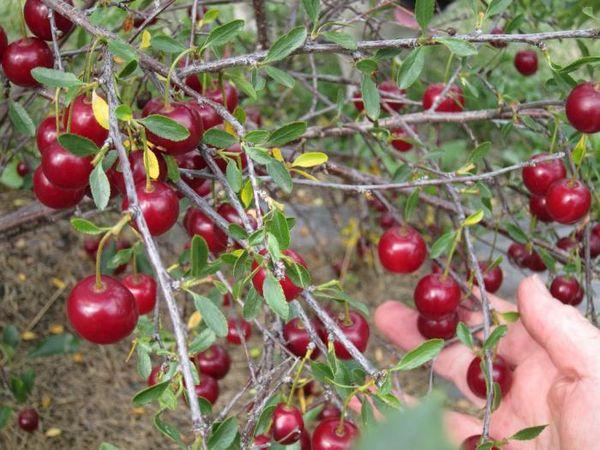
Although cherry is zoned for the Central Russian climate, it is successfully grown in the Leningrad Region. This is due to its high frost resistance and low maintenance. The tree is a bush-type, growing to a height of 2 meters, with moderate vigor. It ripens early and requires pollinators. The berries are large, dark red, weighing 3.5-4.0 grams, and have excellent flavor.
Amorel Nikiforova
This variety, distinguished by its high frost resistance, has been known and regionalized since the mid-20th century. The tree is medium-sized, reaching 2.5-3.0 meters in height, is partially self-fertile, and ripens mid-season. The berries are deep red, medium in size and weight—2.5-3.0 grams. They have a delicate, harmonious flavor and juicy flesh.
Shpanka Shimskaya
One of the best cherries suitable for cultivation in the Leningrad Region. It easily withstands temperatures down to -35°C (-35°F) and blooms during spring frosts. It boasts good disease resistance, high yields, and low maintenance. This vigorous cherry tree grows up to 6 meters. The cherries are crimson, massive, and large, weighing up to 5.0-6.0 grams, with a refreshing, sweet-tart flavor and a rich cherry aroma.
Lyubskaya
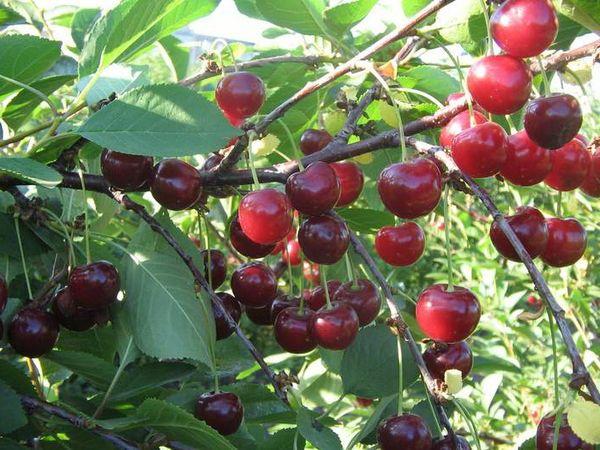
A variety with good frost resistance, proven drought tolerance, and a high level of self-fertility. It is characterized by a medium ripening period. Lyubskaya cherries are large—3.5-4.0 grams in weight—and a rich, burgundy color. They have a sweet, but not cloying, flavor, a slight tartness, and a pleasant aroma.
Star
A variety suited to the Leningrad region's climate. It ripens early and is partially self-fertile, vigorous, and forms a pyramidal crown. The cherries are large, weighing 3.0-4.0 grams, and bright red.
They have a refreshing sweet taste with a slight sourness and juicy flesh.
Ruby
Zoned for the Northwest since the 1970s, this variety is distinguished by its high frost resistance. It ripens mid-late and has medium vigor, reaching heights of up to 2.5 meters. It produces large, fleshy cherries, weighing 3.5-4.0 grams. The flavor is predominantly tart, and the flesh is juicy and yellowish. The berries are not suitable for long-distance transportation.
Vladimirskaya
A popular, early-ripening cherry variety, known for a long time. It is frost-hardy, but the blossoms are susceptible to spring frosts. It is disease-resistant, including those caused by harmful fungi, and tolerates irregular watering. The tree is vigorous, with a bushy, dense crown. The cherries are medium-sized, dark, almost black, and have a sweet-tart flavor. The Vladimirskaya cherry yield is average: 4-5 kilograms.
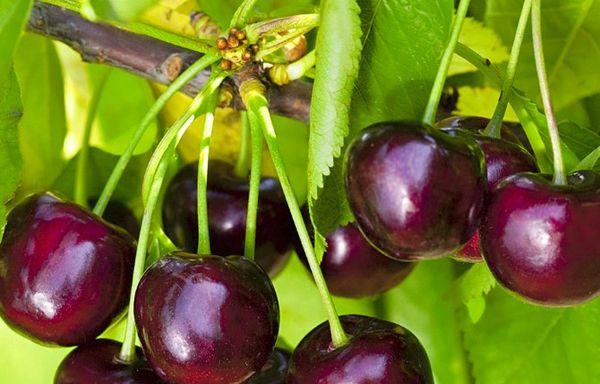
Garden
Frost-hardy, regionalized varieties that tolerate adverse weather conditions are generally suitable for cultivation in the Leningrad Region. It is desirable for garden cherries to have high disease resistance.
Lotovaya
An ancient variety, also known as Lutovka or Lotovka. It was introduced to the local market in the mid-20th century but has not achieved widespread recognition. It has medium vigor and forms a well-foliated, spreading crown. The fruits are dark red and large, weighing 3.5-4.0 grams. The flavor is predominantly sour, with a sugar content of 11.7%. It is characterized by a high yield – up to 15 kilograms of fruit per tree.
Griot of Ostheim
An ancient Spanish variety, cultivated in Russia since the mid-20th century. It boasts vigorous growth, reaching up to 4 meters. The cherries are medium-sized—3.0-3.5 grams—dark red, with excellent flavor.
Early Amorel
A "folk-bred" variety suitable for cultivation in the Northwestern Federal District. The tree grows 2.5-3.0 meters. The berries weigh 3.0 grams, are light red, vibrant, with tender, juicy flesh and a sweet-tart flavor.
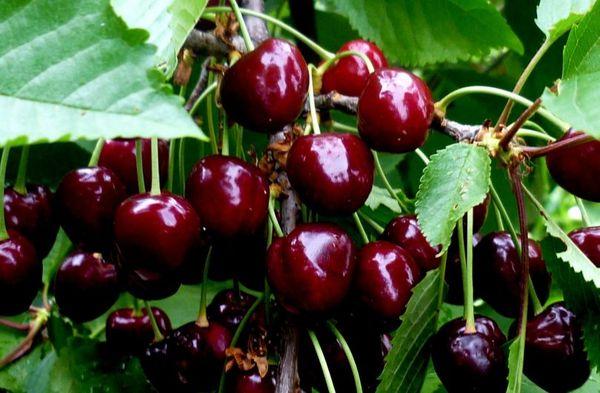
Self-fertile varieties
When choosing self-fertile or partially self-fertile varieties, there is no need to plant additional pollinators. However, as gardening practice shows, the presence of additional pollinators increases the yield and quality of the fruit itself.
Therefore, it is desirable to have several varieties on the site that are similar in flowering time.
Low-growing and dwarf varieties
For smaller plots, as well as for garden decoration and landscaping, dwarf cherry varieties are chosen. However, it's worth noting that their fruits are inferior to traditional varieties in size and flavor.
An interesting choice for a summer house would be:
- Bead;
- Low-growing Moscow;
- Standard;
- Winter Garnet.
The sweetest cherries
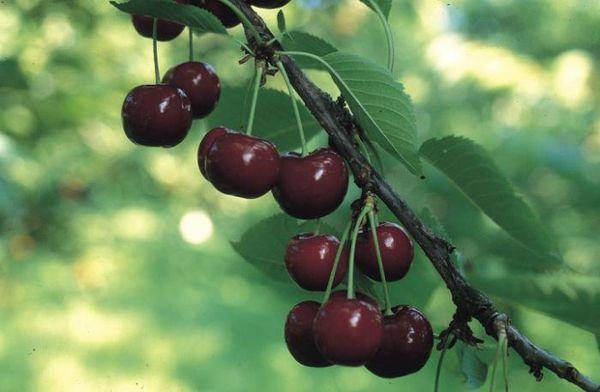
It's always a pleasure to harvest not only beautiful, large berries, but also delicious and very sweet ones. These qualities are especially prized by gardeners in northern regions, where climate conditions can cause many fruits to become downright sour.

Felt cherry varieties
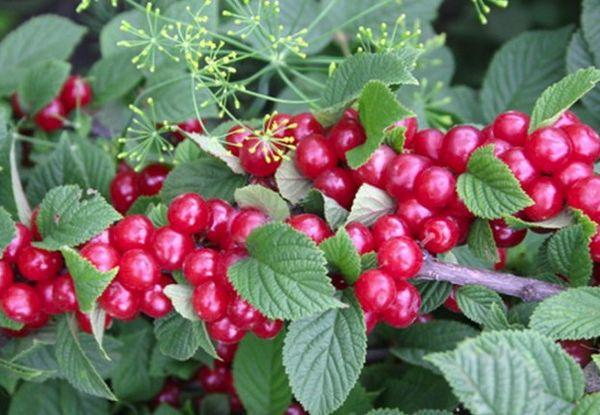
High ornamental qualities, tasty, attractive fruit, good yields, and high frost resistance make felt cherry a popular crop among gardeners in northern regions. The most commonly chosen varieties are:
- Natalie;
- Alice;
- Fire;
- Fairy tale.
Winter-hardy, for northern regions
For the Northwestern climate, select regionalized varieties with high winter hardiness and resistance to spring frosts. Only then will the tree grow and bear fruit for many years.
Specifics of planting and caring for cherries in Northwest Russia
Growing cherries in the northern and western climates, provided you choose zoned varieties, isn't particularly difficult, but it does have some peculiarities. Planting is standard: first, a planting hole is prepared. It's filled with a substrate consisting of mature compost, sand, humus, and non-acidic peat, with a mandatory drainage layer at the bottom.
Planting is done in the spring to allow the tree to establish roots before frost sets in. A mandatory procedure for young trees before winter is mulching the area around the trunk with a thick layer of organic matter (bark, straw, or green manure).
It is important to carry out preventative treatments against diseases in a timely manner, and to wrap seedlings in a thick layer of agrofibre for the winter.
Related posts:
 Description of the 25 best cherry varieties for the Urals and Siberia, planting and care in open ground
 Description and pollinators of the Vladimirskaya cherry variety, planting and care
 Characteristics and descriptions of the 40 best red currant varieties
 20 Best Cherry Varieties for the Central Russian Region with Descriptions and Characteristics
 Description and characteristics of 17 dwarf cherry varieties, planting and care
 Description and cultivation of the best varieties of felt cherry, planting and care
 Description and varieties of cherry variety Shpanka, planting and care
 Description of the Zhukovskaya cherry variety, planting and care in open ground