
- Ornamental cherry: description and characteristics of the crop
- How is it different from the usual one?
- Does it bear fruit?
- Advantages of using in landscape design
- Growing conditions
- Zoning
- Suitable climate
- Soil requirements
- What diseases does ornamental cherry tree suffer from?
- Bacterial cancer
- Milky shine
- Fungal burn or moniliosis
- Hollow spot
- Late blight
- Features of planting and caring for Japanese cherry trees
- Timing and technology of planting in open ground
- Watering
- Trimming
- What to feed
- Seasonal treatments
- Winter protection
- Varieties and types of Japanese cherry trees for growing in the garden
- Alba Plena
- Rosea Plena
- Cherry Maksimovich
- Sakura Kiku - Shidare
- Kanzan
- Terry
- Gardeners' reviews of the crop
Among fruit trees distinguished not only by their high ornamental value but also by their considerable yield, the Zhelenistaya cherry variety is particularly popular. It has proven itself to be exceptionally successful. This relatively low-maintenance plant can delight with an abundance of berries even in adverse weather conditions. However, despite its good frost resistance, Zhelenistaya cherry should not be left unprotected.
To achieve the desired effect—an attractive appearance—it is necessary to become familiar with the strengths and weaknesses of this plant, as well as the intricacies of planting and care.
Ornamental cherry: description and characteristics of the crop
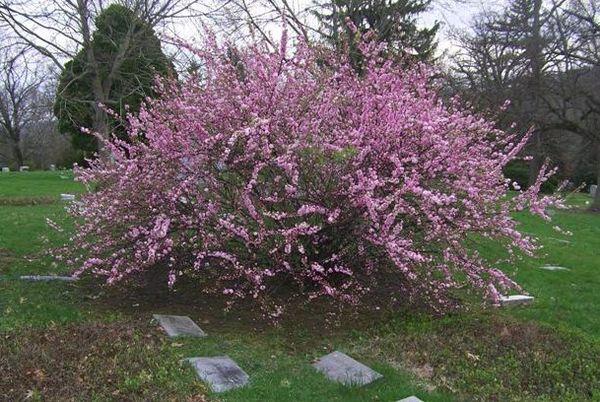
The Zhelezistaya cherry is common in China, Korea, and the southern Primorsky Krai. It is a compact, multi-stemmed shrub. Its height does not exceed one and a half meters, and its crown diameter is almost the same.
This ornamental plant does not lose its presentable appearance either in spring or autumn.
The branches of the Zhelezistaya cherry are slender and reddish-brown. The leaf blades are either wide and lanceolate or oblong and ovate. They are no more than 8 centimeters long. The upper part is tapered, the edges are serrated, and the color is light green.
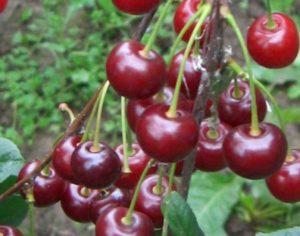
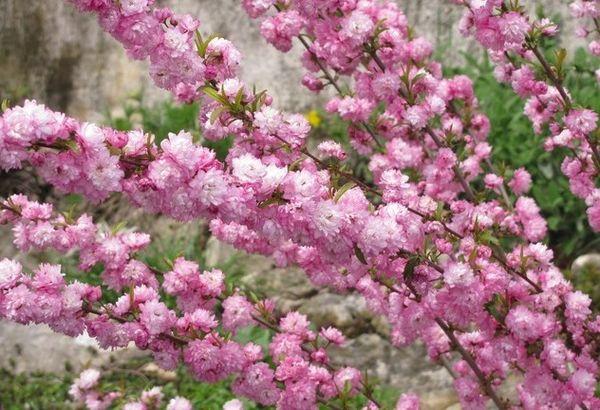
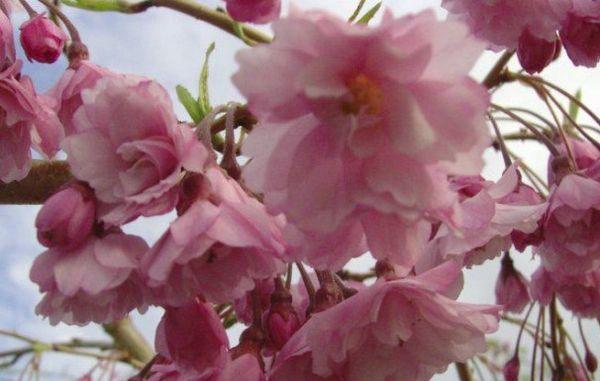
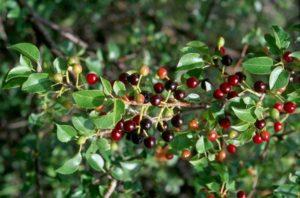
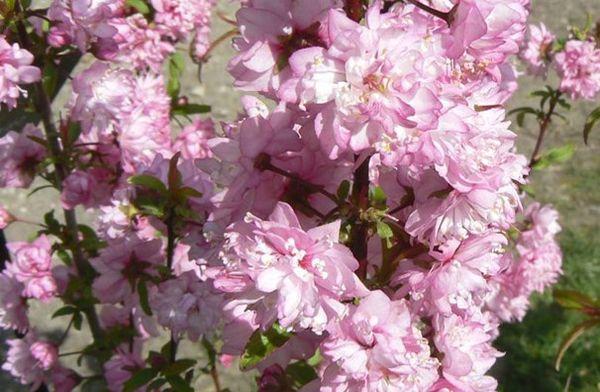
The solitary flowers are pink and axillary. The spherical fruits are a distinct red. When fully ripe, they turn black. The Zhelezistaya cherry is characterized by slightly dry flesh, thin skin, and a sharp pit tip. Overall, Zhelezistaya cherries are not very edible; they have a bittersweet taste. Ripening occurs in early August.
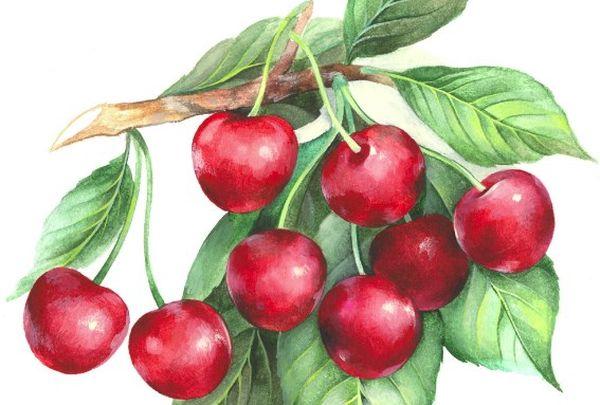
However, there are hybrid forms of the Zhelenistaya cherry, which delight not only with their excellent decorative qualities, but also with their ability to produce an edible harvest.
There are varieties on the market that don't produce fruit but are distinguished by their luxurious appearance. They are often used exclusively for landscaping parks, garden plots, and country houses.
The undeniable advantage of the sterile Zhelezistaya cherry is the cleanliness of the area beneath it, as there are no berries that fall to the ground and spoil the entire garden's appearance.
One of the advantages of the Zhelenistaya cherry is its undemanding soil conditions. When choosing a location, it's important to choose an area with ample sunlight. Thanks to its excellent self-seeding, the plant quickly forms dense thickets.
Planting the Zhelenistaya cherry tree in the shade is acceptable, but don't expect it to bloom profusely. The blossoms bloom in late April to early May. Under favorable growing conditions, the shrub can live for a hundred years.
 Important! The Zhelezistaya cherry is a valuable honey plant. Productivity rates are 30-50 kg/ha.
How is it different from the usual one?
The main distinguishing features of the Zhelenistaya cherry include:
- ease of growing on the site;
- unpretentiousness regarding growing conditions;
- rapid growth rate;
- suitable for beginner gardeners;
- high decorative characteristics.
Does it bear fruit?
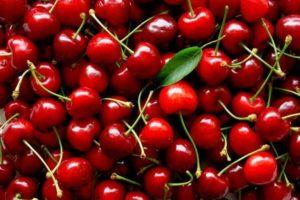
The Iron Cherry produces spherical, red-colored berries. They are abundant, but rarely used as a food product due to their bittersweet flavor.
Advantages of using in landscape design
The Iron Cherry is rightfully considered a unique plant. It can be easily incorporated into any garden style. It looks stunning as a standalone plant or in combination with other ornamental plants. It looks particularly striking against a backdrop of emerald conifers, as well as near ponds or small evergreen shrubs (like topiary).
Growing conditions
To successfully grow the Zhelezistaya cherry tree in your garden, you need to follow certain recommendations regarding site selection, planting technology, and maintenance.
Zoning
You can plant this attractive fruit tree almost anywhere. It thrives in southern Siberia, too. However, in the rest of Siberia, it won't grow without covering it with spruce branches and hay.
In severe frosts, the Zhelenistaya cherry tree dies.
Suitable climate
The Zhelenistaya cherry tree can only delight with its blooms and luxurious appearance in suitable conditions—a temperate climate. Extremely cold temperatures are unsuitable for the plant.
Soil requirements
The Zhelezistaya cherry quickly takes root and thrives in soils with sufficient air and moisture permeability and fertile soil. Heavy soils are unsuitable for growing it. If the soil is deficient in nutrients, mineral supplementation is necessary.
Important! To prevent root rot, select a planting site with deep groundwater—at least two meters.
What diseases does ornamental cherry tree suffer from?
If not cared for properly, the Iron Cherry is often susceptible to dangerous diseases. To save the plant, treatment must be initiated at the first sign of illness.
Bacterial cancer
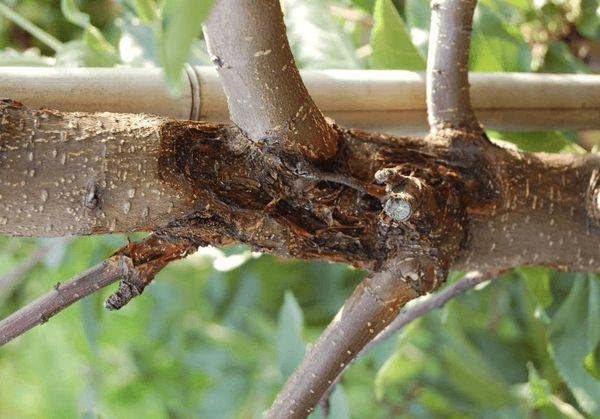
The disease develops on the Zhelezistaya cherry tree primarily in winter and spring. The trunk and branches are affected. The disease can be identified by the presence of dark lesions, a resinous wood structure, death of the upper portion of the shoots, and yellowing of the foliage.
Milky shine
The source of the problem is a fungus. It is identified by a silvery sheen on the leaf blades and silvery-blue spots on the wood. The enzymes secreted by the pathogen destroy the bark and cause the death of the plant.
Fungal burn or moniliosis
Obvious symptoms of this disease include: drying of leaf blades, wood cracking, gum formation, and wilting of flowers. The disease develops under conditions of excessive moisture and poor air circulation around the plantings. To restore Zhelenistaya cherry needs to be processed copper-containing drug.
Hollow spot
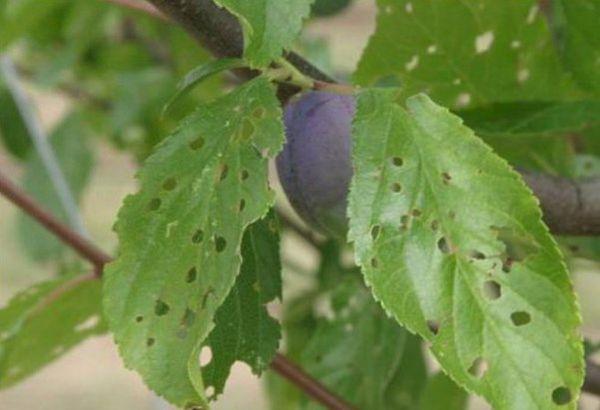
Visible purple-red lesions appear on the foliage, which eventually turn brown. Holes then appear in these areas, and the leaves die. Disease control measures include disposing of diseased leaves and treating with Bordeaux mixture. If large branches are infected, saving the plant is virtually impossible.
Late blight
Both shoots and roots are affected, leading to gradual wilting and leaf fall. A vertical stripe and crack form on the trunk. If the damage is severe, the Zhelenistaya cherry tree dies.
Seasonal treatments with specialized products help minimize the development of dangerous diseases in fruit crops. Additionally, ensure a good drainage layer, proper irrigation, and prompt removal of fallen leaves.
Features of planting and caring for Japanese cherry trees
Proper planting of seedlings and high-quality care are the keys to the plant's high decorative value.
Timing and technology of planting in open ground
Planting takes place in the spring, after the threat of frost has passed. The Zhelezistaya cherry tree planting algorithm involves the following steps:
- Prepare the site. Two weeks in advance, dig a pit 80 centimeters deep and 60-80 centimeters wide. The key is to make sure the hole is large enough to accommodate the cherry tree's root system.
- Place a 10-centimeter layer of expanded clay and broken brick drainage material at the bottom. Fill the hole with fertile soil to form a mound. This should include topsoil and compost, mixed 1:1. It's also a good idea to add a little urea and other high-nitrogen fertilizers.
- Place the prepared seedling in the center of the hole and cover the roots with soil. The key is to ensure the root collar is 2-4 centimeters above ground level.
- Gently compact the soil and water at a rate of 3-5 buckets per planting.
- Mulch with wood sawdust and peat.
Watering
Irrigation should be done sparingly. Five to seven days after planting, begin watering the plants using 3 to 5 buckets of water. Subsequent waterings are repeated as the topsoil dries.
Trimming
Pruning is carried out in the second year after planting in a permanent location. The pruning period is the first half of April and the beginning of August. Damaged and deformed shoots should be removed. The wound surface must be treated with garden pitch.
What to feed
To prevent poor development of the ferruginous cherry, avoid a deficiency of nitrogen, potassium, and organic fertilizers. For example, 7-10 grams of mineral nutrients and 4-6 kilograms of organic matter should be applied per square meter (for average soil fertility). If the soil is poor, 8-10 kilograms of natural fertilizer and 15 grams of mineral fertilizer will be needed.
Seasonal treatments
In the spring, before bud break, the cherries are sprayed with a urea solution, using 700 grams of solution per 10 liters of water. After 1-2 days, they can be treated with Bordeaux mixture (3%) or copper sulfate at a rate of 100 grams per 10 liters of water. After harvesting the berries, the plant is sprayed with 1% Bordeaux mixture.
Winter protection
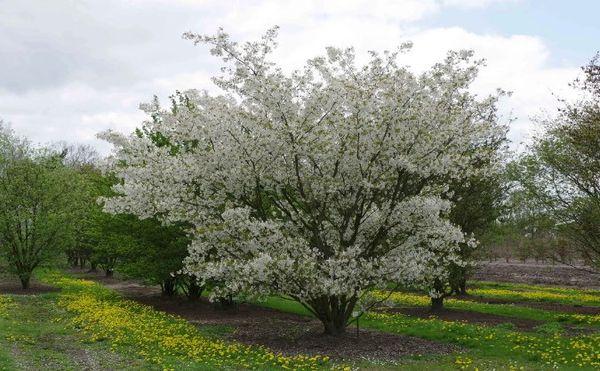
Although the Zhelezistaya cherry tree has sufficient frost resistance (class 4), it still requires additional protection during the winter. The trunk is whitewashed to protect it from rodents, and the soil is covered with spruce branches, agrofibre, and peat.
Varieties and types of Japanese cherry trees for growing in the garden
Among the varieties of Zhelezistaya cherry, the following are very popular:
Alba Plena
This ornamental shrub is distinguished by its graceful leaf blades and flexible, brown-hued branches. Double, snow-white flowers, reaching only 2.5 centimeters in diameter, closely resemble roses. The plant is spherical in shape, reaching a height of 1.2-1.5 meters, with an annual growth rate of 20 centimeters. Alba Plena's fruits are not edible.
Rosea Plena
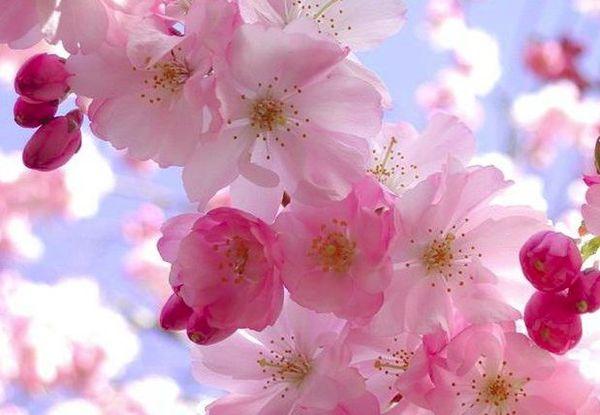
The plant grows up to 1.5 meters in height and is quite attractive. Its axillary pink flowers are particularly striking. The foliage is a distinct green and lanceolate. The spherical fruits are edible.
Cherry Maksimovich
This deciduous shrub features oblong-ovate leaves and white flowers that exude a pleasant scent. This shade-tolerant plant grows vigorously, reaching a height of 8 meters. It requires no winter cover.
Sakura Kiku - Shidare
The deciduous tree has a drooping crown. Sakura reaches 3-5 meters in height and 3-4 meters in diameter (at 20 years of age). Annual growth is 20-30 centimeters, and the tree can live for over 100 years. The elliptical leaves are 8-10 centimeters long, and the dark pink flowers are 6 centimeters in diameter. It rarely produces fruit.
Kanzan
This fast-growing plant adds 20-30 centimeters each year. The main branches are quite strong, and the crown is primarily funnel-shaped, but as the tree matures, it becomes more spreading.
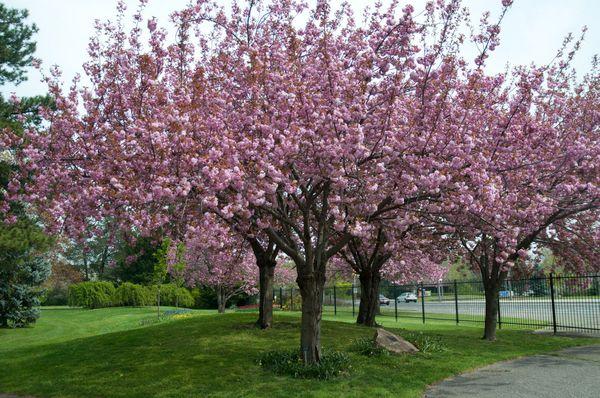
The leaves are elliptical, 8-12 centimeters long, and their color changes from bronze to green depending on the season. The purple-pink flowers are 6 centimeters in diameter. The fruits are small, black, and bitter.
Terry
The tree grows up to 5 meters tall and has a broad, rounded shape. The dark green leaves are medium-sized and dark green in color. The plant is characterized by increased immunity to major diseases. The double white flowers are 2.5-3 centimeters in diameter, gathered in inflorescences of 3-5. Flowering is late, and winter hardiness is increased. It does not produce fruit.
Gardeners' reviews of the crop
Marina, 45 years old, Voronezh
I bought a Zhelezistaya cherry tree at my local market. I planted it near my house in a sunny spot. I was delighted with its lush blooms and low maintenance.
Anton, 56 years old, Belgorod
This plant is interesting and beautiful. It grows quickly, but maintains its shape with timely pruning. I highly recommend it!
Alexey, 34 years old, Saratov
I was quite pleased with the Zhelezistaya cherry tree. This attractive tree doesn't require any special growing conditions. The main thing is to follow basic agricultural practices.
Related posts:
 Description and cultivation of the best varieties of felt cherry, planting and care
 Description and propagation of the Bessey cherry variety, planting and care rules
 Description and pollinators of the Vladimirskaya cherry variety, planting and care
 Description and varieties of cherry variety Shpanka, planting and care
 Description and characteristics of 17 dwarf cherry varieties, planting and care
 20 Best Cherry Varieties for the Central Russian Region with Descriptions and Characteristics
 Description of the 25 best cherry varieties for the Urals and Siberia, planting and care in open ground
 Description and characteristics of the miracle cherry hybrid, planting and care of the variety