
- Advantages of dwarf varieties
- Characteristics of culture
- Dimensions and external description of the tree
- The nuances of placement on the site
- Pollinator varieties
- Flowering and fruiting
- Where are the fruits used?
- Planting principle
- Features of caring for dwarf cherry trees
- Popular varieties of low-growing cherries
- Gnome
- Anthracite
- Crimson
- Bead
- Vita
- Winter pomegranate
- Dwarf cherry Standard
- Latvian
- Baby
- Youth
- Low-growing Moscow
- In memory of Mashkin
- Saratov baby
- Tamaris
- Miracle Cherry
- Chocolate Girl
- Shpanka
Dwarf cherry varieties are just as good and productive as their regular counterparts. For gardeners, farmers, and vegetable growers with limited space and low-growing trees, this is the only way to grow a harvest of delicious and healthy berries.
Today, various varieties of dwarf cherries have been developed, differing in the size and color of the berries, the height of the tree, and the growing conditions in different climatic zones.
Advantages of dwarf varieties
Before planting a compact tree in your garden, you need to familiarize yourself with the advantages and disadvantages of this fruit crop.
Advantages:
- Low-growing trees are not afraid of gusty winds and drafts. Even gusts of wind will not harm the cherry tree.
- Dwarf trees have a well-developed root system, located close to the soil surface, and therefore inaccessible to deep groundwater.
- Compact trees grow and develop quickly, and fruiting occurs much earlier than in taller trees.
- The abundant yields of dwarf cherry varieties make it possible to grow hybrid trees on an industrial scale.
- Trees are not at all demanding regarding soil composition.
- Simplified care and collection of ripe berries.
- This dwarf cultivar easily tolerates winter frosts and spring freezes. The trees require no additional maintenance before winter dormancy.
As can be seen from the listed advantages, even novice gardeners and farmers can grow dwarf cherries.

The disadvantages of compact trees include the small size of the berries and their tart, sweet and sour taste.
Characteristics of culture
The main difference from other cherry varieties is the fruit's compact size. A dwarf tree can be grown even in the smallest garden or allotment, yielding delicious and healthy berries every year.
Dimensions and external description of the tree
Dwarf cherry trees grow quickly and resemble a voluminous, spreading bush. The maximum height of a mature cherry tree rarely exceeds 2 meters. The branches are thin but strong, reddish in color, with small, pointed leaves that change color with the seasons.
During the flowering period, the tree is completely covered with large, white flowers with a pleasant, light aroma.

The nuances of placement on the site
The dwarf tree is planted in sunny, south-facing areas. The compact plant easily grows among larger garden trees. This fruit tree is not fussy about soil, but produces the best yields in fertile soil.
Pollinator varieties
Among the dwarf varieties, there are both self-fertile and those requiring neighboring pollinators. Cherry varieties with similar flowering times are suitable as pollinators.
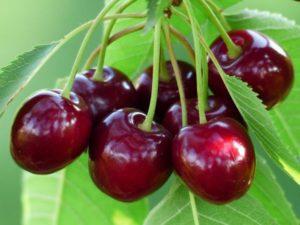
Flowering and fruiting
The tree enters the flowering phase in May. The flowering period lasts from 15 to 25 days. Dwarf cherry trees begin bearing fruit in their second or third year of growth.
Fruit ripening depends on climate conditions and the variety of dwarf cherry. Some berries ripen as early as mid-July, while others ripen only in early autumn.

Where are the fruits used?
Ripe dwarf cherries contain a large amount of vitamins, minerals, and amino acids. They have versatile uses. Dwarf cherries are processed commercially into juices, nectars, jams, preserves, and frozen.
Gardeners and vegetable growers make compotes from berries, cook jam, and add them to desserts and baked goods.
Planting principle
Dwarf cherry seedlings are planted in open ground in the spring. To do this, the seedlings are soaked in water for 5-7 hours and then transferred to pre-prepared holes.
- The depth of the hole for seedlings is from 40 to 50 cm, the diameter is from 60 to 80 cm.
- The distance between plantings is calculated based on the size of the adult plant.
- Drainage is placed in the hole, and the soil from the holes is mixed with mineral fertilizers.
- A supporting peg is driven into the hole and fertile soil is added.
- The seedling is lowered into the hole, the roots are carefully laid out and covered with the remaining soil.
- The soil around the seedling is compacted and watered, and the tree is tied to a peg.
Important! Planted seedlings should not be shaded by tall plants.

Features of caring for dwarf cherry trees
Compact cherry trees easily tolerate both drought and frost, so they don't require any special care.
- Trees are watered as the soil dries out. Watering is especially important during flowering and fruit ripening. Newly planted trees also require watering. Young trees require irrigation more frequently than mature fruit trees.
- Fertilize the cherry tree 3-4 times a year, alternating mineral and organic fertilizers.
- In spring and fall, shrubs undergo sanitary and formative pruning. This pruning process not only shapes the tree's crown but also removes any broken, weak, or damaged shoots.
- In early spring, trees are treated preventatively against pests, fungal infections, and viruses. Special products available at flower shops, garden centers, and nurseries are used for this purpose. Fruit trees are also treated with the same product before winter dormancy.
- The tree trunk circle is loosened, weeds are removed and mulched with sawdust or dry leaves.
Important! Before winter dormancy, garden plants should be fed with complex mineral fertilizers.
In northern regions, young plants are additionally insulated. The area around the trunk is lined with dry leaves or spruce branches, and the trunk itself is wrapped in burlap or natural fabrics.

Popular varieties of low-growing cherries
The many years of experience and work of breeders around the world allow us to select the dwarf cherry variety that best suits its parameters and characteristics for cultivation in different climatic zones.

Gnome
The Gnome cherry is self-pollinating and resistant to low temperatures and pests. The berries ripen in late summer. The red fruits are juicy, with a sweet and sour flavor. This variety is weakly resistant to viruses and fungi.
Anthracite
This compact, frost-resistant fruit tree grows up to 2 m with a wide, spreading crown and dark berries.
The fruit harvest ripens in mid-July. The berries are large and juicy, with dark burgundy flesh and a sweet and sour flavor. The Anthracite cherry is unable to self-pollinate and requires a pollinator. Suitable pollinators include the Shalunya variety and the Samsonovka cherry.

Crimson
The maximum height of this fruit tree is 2 meters. The crown is spherical and dense. This variety was developed by crossing the Vladimirovskaya cherry and the Shubinka variety. The trees are not self-pollinating and require pollinating neighbors.
The red, juicy berries with a predominantly sweet flavor ripen in July. This variety isn't particularly productive, with no more than 7 kg of ripe fruit being harvested from a single tree. The trees are resistant to fungal and viral diseases.
Bead
This compact fruit variety grows up to 2 meters. A distinctive feature of the Businka cherry is its ability to self-pollinate. Ripe fruits are small, dark red, with juicy, sweet flesh. The Businka cherry tolerates frost well and has natural immunity to many viral and fungal diseases.

Vita
The large, red berries of the Vita variety ripen in early July. The tree is short, reaching a maximum height of 2 meters, and lacks the ability to self-pollinate. When selecting pollinators, the early flowering time of this fruit crop is taken into account.
The variety is resistant to fungal diseases.
Winter pomegranate
The Winter Garnet fruit tree is self-pollinating. This hybrid cherry was bred for exceptional winter hardiness, making it recommended for cultivation in northern regions. Trees reach 1.5 to 1.8 meters in height and produce a high yield. A single plant yields up to 10 kg of sweet, juicy, bright red berries.
Winter pomegranate is protected by natural immunity against fungal and viral diseases.
Dwarf cherry Standard
A self-pollinating dwarf cherry variety. The compact trees don't grow taller than 2 meters, yet they produce a bountiful harvest. A single plant yields 10 to 17 kg of ripe, juicy, dark burgundy berries. The tart-flavored fruits are excellent for making jams, compotes, and juices.
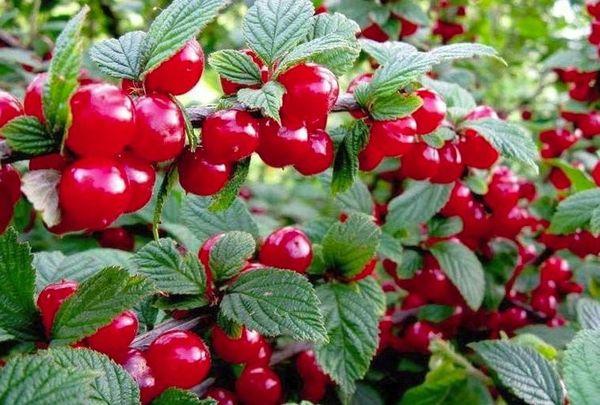
Latvian
Self-fertile cherries were developed in the Baltic countries. The fruits ripen in mid-summer. A single dwarf plant can yield up to 30 kg of ripe berries. The Latvian cherry variety has weak immunity to fungal and viral diseases. However, with proper care, the tree can bear fruit for up to 20-25 years.
Baby
The hybrid variety Malyshka easily tolerates cold winters and is resistant to fungal infections.
This variety boasts a high yield. A single small bush yields 10 to 17 kg of ripe, juicy, burgundy-hued berries.

Youth
A compact tree with a drooping, branched crown. Ripe berries are dark burgundy, juicy, sweet, with a slightly tart flavor. This garden plant begins to bear fruit at 3-4 years of age.
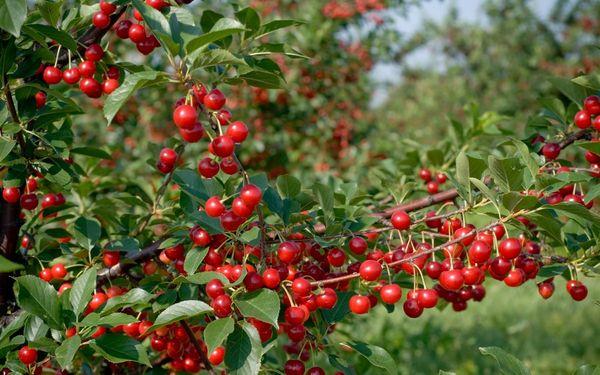
Low-growing Moscow
The low-growing Moscow cherry rarely exceeds 2 meters in height. Its dense, spherical crown requires annual pruning for formative and sanitary maintenance. The berries are medium to small in size, dark burgundy, juicy, and have a sweet-tart flavor. The ripe fruit is harvested in mid-July. This variety is not self-pollinating. The best neighbors are the Vladimirskaya and Sklyanka cherry varieties.
In memory of Mashkin
This dwarf cherry tree grows to a maximum height of 2 meters. The crown is dense and spherical. The berries are harvested in mid-July. The fruits are large, red in color, with juicy flesh and a sweet flavor.
The Mashkina memory variety is weakly resistant to winter cold and fungal infections.
Saratov baby
This fruit variety ripens in late June. The berries are juicy, large, and have a pleasant sweet-and-tart flavor. The tree is characterized by rapid growth and early fruiting.

Tamaris
The shortest growing dwarf cherry variety. The fruit ripens in late August. The berries are dark red with juicy, sweet flesh.
The variety is distinguished by its high yield, but due to the large number of berries, the branches often break.
The plant is frost-resistant and immune to fungal infections.
Miracle Cherry
The tree begins to bear fruit in the 3rd year of growth, but to obtain abundant harvests it will need pollinating neighbors.
This small tree produces 10 to 15 kg of ripe berries by the end of June. The cherry tree has a spreading crown, and the large number of berries causes the branches to bend considerably. The Chudo Cherry variety requires annual pruning.
The berries are very large, some specimens reach the 10g mark, juicy, sweet, dark burgundy in color.

Chocolate Girl
The Shokoladnitsa tree blooms in early May. The ripe berries are harvested in the second half of July. The fruits are large, brown in color, with juicy flesh and a sweet and sour taste.
The trees of this hybrid variety are short, up to 2 m, with a spreading, moderately dense crown. The variety is characterized by high yields and frost resistance, but is susceptible to fungal diseases.
Shpanka
This hybrid dwarf fruit variety was created by crossing cherry and sweet cherry trees. It is characterized by frost resistance, high yield, and disease resistance. The berries are medium-sized, red, juicy, and have a sweet-tart flavor.
Related posts:
 Description and cultivation of the best varieties of felt cherry, planting and care
 Description of the 10 best black cherry varieties, planting and care in open ground
 20 Best Cherry Varieties for the Central Russian Region with Descriptions and Characteristics
 Description and characteristics of the Kharitonovskaya cherry variety, planting and care
 Description and pollinators of the Vladimirskaya cherry variety, planting and care
 Description and varieties of cherry variety Shpanka, planting and care
 Description of the Zhukovskaya cherry variety, planting and care in open ground
 Description and propagation of the Bessey cherry variety, planting and care rules