
- History of the Lyubskaya cherry breeding
- Habitat
- Advantages and disadvantages
- Characteristics of the variety
- Tree size and annual growth
- Root system
- Pollinators, flowering period and ripening time
- Fruit collection and processing
- Resistance to low temperatures and drought
- Immunity to diseases and pests
- Step-by-step landing algorithm
- Deadlines
- Selecting and preparing a seedling
- Preparing the planting hole
- Landing technology
- Caring for crops in open ground
- Irrigation
- Fertilization
- Loosening and caring for the tree trunk circle
- Seasonal treatments
- Shelter for the winter
- Review of the Lyubskaya cherry
The Lyubskaya cherry variety is self-fertile. This is highly prized by fruit tree growers, as most trees require a nearby pollinator. This cherry has been cultivated for decades, producing high yields and requiring little maintenance.
History of the Lyubskaya cherry breeding
The exact origin of this variety is unknown. It has been cultivated since the 19th century. An application to add the cherry to the state register was only submitted in 1947. It is believed that the Lyubskaya cherry is the result of folk selection.
Habitat
This variety grows well in any region. It is primarily cultivated in the south and central regions of Russia. The variety is prone to random mutations, which can cause variations in yield, color, and fruit size.
Advantages and disadvantages
The following are noted as positive qualities of the Lyubsky variety:
- high yield;
- transportability;
- low tree growth;
- self-pollination;
- high content of vitamin C;
- drought resistance;
- easy care.
Disadvantages include low immunity to fungi and average frost resistance.
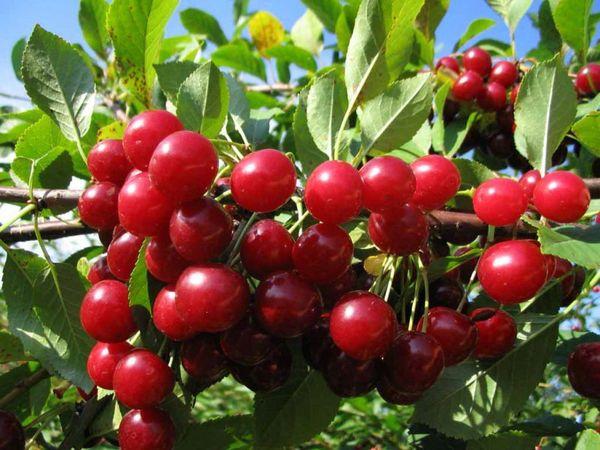
Characteristics of the variety
The variety description includes tree size, growth, pollinators, roots, fruits, resistance to drought, frost and diseases.
Tree size and annual growth
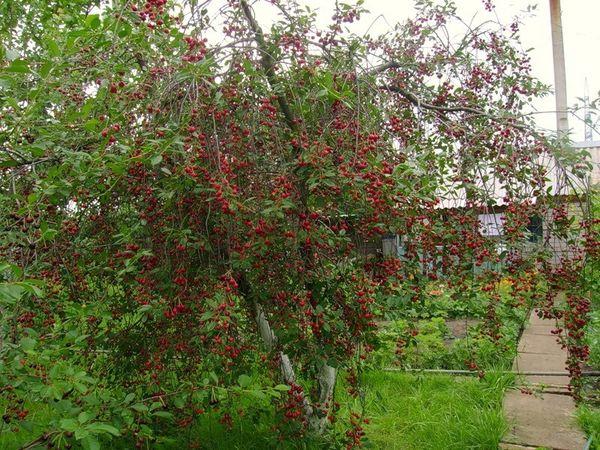
The tree's maximum height is 3 meters. Many gardeners prefer to train the tree to have a bushy crown. This will facilitate harvesting. Annual shoot growth is approximately 1 meter. Without formative pruning, the tree will develop a spreading crown.
Root system
The tree's roots are well-developed and extend deep into the ground, allowing them to draw moisture from deeper soil layers. This allows the cherry tree to cope well with drought.
Pollinators, flowering period and ripening time
The Lyubsky variety is self-fertile. It doesn't require a pollinator to grow. The cherry tree produces over 50% of its potential yield on its own. To increase yield, trees with a similar flowering period are planted next to the Lyubsky variety.
Fruit collection and processing
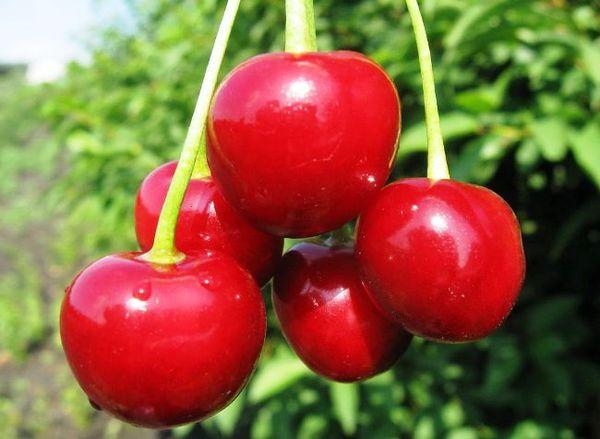
Once ripe, the harvest is collected in one go. If the berries are to be stored for longer than 24 hours, they are harvested with the stems attached. With the stems attached, they can be stored for 10 days. Without the stems, they should be processed within 24 hours.
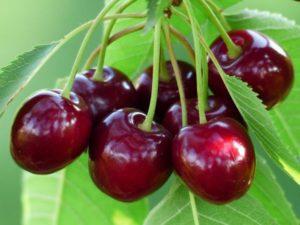
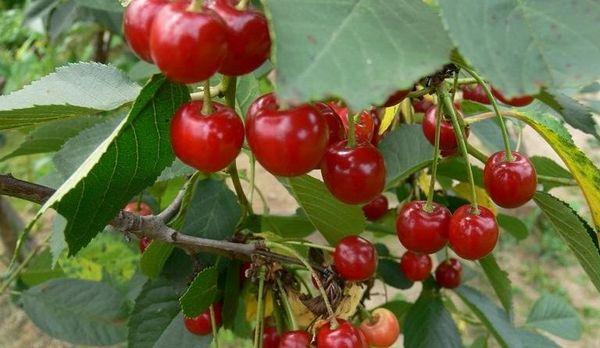
Cherries are too tart to be eaten fresh. Therefore, they are used for preserves: wine, jam, and compotes.
Resistance to low temperatures and drought
The plant exhibits moderate frost resistance. It is suitable for growing in temperate or southern climates. It cannot withstand northern frosts and dies.
Thanks to its robust root system, cherry trees cope well with drought. The tree draws its nutrients from groundwater.
Immunity to diseases and pests
Lyubskaya doesn't have strong immunity to fungal diseases. It's most commonly affected by coccomycosis and powdery mildew. Fungicides are used to combat these. In case of insect attacks, insecticides are sprayed.
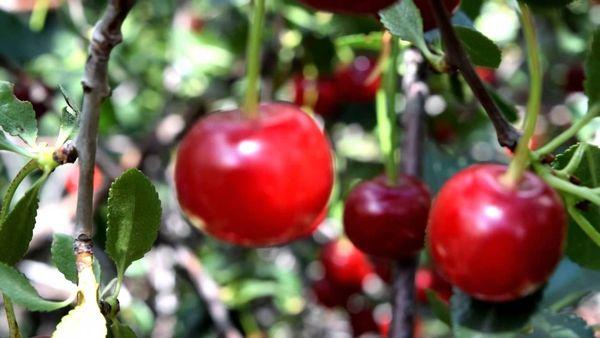 Important! Stop pest and disease control 20 days before harvest.
Step-by-step landing algorithm
To plant seedlings, the timing is observed, young cherries are selected and prepared, and a clear algorithm of manipulation is followed.
Deadlines
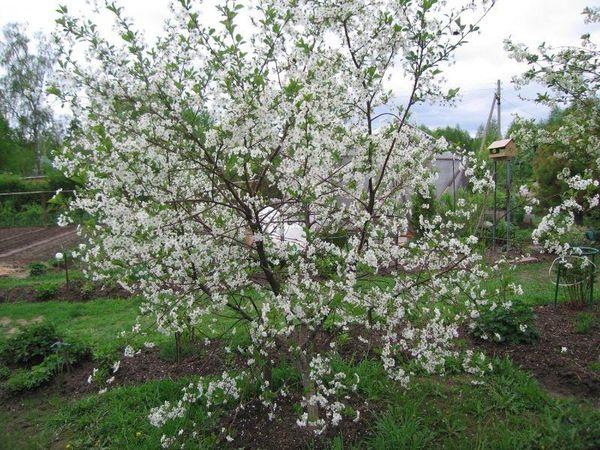
Cherry trees can be planted outdoors in spring or fall. In southern regions, planting begins in mid-April, and in temperate climates, in late April. Cherry trees thrive better after spring planting. Over the summer, the trees gain strength and become acclimated to their new location.
Selecting and preparing a seedling
Young trees are purchased from stores and nurseries. To purchase a healthy seedling, pay attention to certain signs:
- the plant must be annual or biennial;
- absence of root rot;
- The tree must be healthy, without damage to the bark or growths.
Preparing the planting hole
To grow cherries, choose a well-lit location. Then dig a hole about 1 meter in diameter and 1 meter deep. Mix the excavated soil with 10 kg of humus or other organic matter. Add superphosphate, potassium nitrate, and nitrogen fertilizer. Add some of the mixture back into the hole.
Important! Prepare the planting hole in the fall for spring transplanting. When planting in the fall, begin preparatory work two weeks before planting.
Landing technology
Planting is carried out according to a certain technology:
- The seedling is soaked in water for several hours;
- They place it in a hole;
- Straighten the roots;
- Sprinkle with earth in layers, compacting each one;
- Leave a tree trunk circle 8–10 cm deep;
- Water with 40 liters of water;
- The tree trunk circle is mulched with moss, straw, and chopped grass.
To secure the tree to the stake, it is driven in before planting. This helps prevent the trunk from breaking in strong winds.
Caring for crops in open ground
For successful cultivation and high yield, it is recommended to follow the rules for plant care.
Irrigation
Cherries tolerate drought well. Water three times per season. The first time is before buds begin to form. The second time is during flowering. The third time is after harvesting, for the winter. Young cherries require 4-6 liters of water; fruiting cherries require 3-4 liters more. Pour the water into the tree's trunk.
Fertilization
Cherry trees don't need additional feeding for the first three years. They get their nutrition from the fertilizer applied at planting. In subsequent years, a complex fertilizer containing nitrogen, phosphorus, and potassium is applied in the spring. Once sap has begun to flow through the trunk, nitrogen is not added.
Loosening and caring for the tree trunk circle
Loosening and removing weeds improves aeration of the tree's root system. These two procedures are combined and performed as needed.
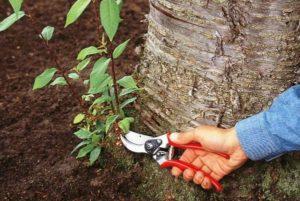
Root suckers are growing around the tree trunks and need to be cut back. They are robbing the plant of nutrients and reducing yield.
Important! Applying mulch around the trunk retains moisture and nutrients and prevents weed growth. This makes cherry tree care much easier.
Seasonal treatments
Lyubskaya cherry is prone to fungal diseases. To avoid this, preventative measures are taken early in the season. The tree is dusted with copper sulfate. This kills pests living in the roots and under the bark and also enriches the cherry with minerals.
Before the sap begins to flow, the tree is sprayed with an antifungal solution. Its effect lasts for 10 to 20 days. The spray is repeated at this interval. Twenty days before harvest, the spray is removed.

Shelter for the winter
Lyubskaya has average frost resistance. To speed up the plant's recovery after winter, it needs to be well covered for the winter. This is a multi-step process:
- Mulching the tree trunk circle with straw, moss, and cut grass.
- Young trees' branches are covered for the winter using breathable fabrics. These are secured to the cherry tree trunk with ropes.
- The trunk is treated with whitewash up to the first branching; this will protect it from rodents that feed on the bark.
Review of the Lyubskaya cherry
Valentina, 34 years old, Krasnodar
I've had the Lyubskaya cherry tree growing on my plot for eight years now. Every year it produces a bountiful harvest. The berries are quite sour, so we use them for compotes and jam. I bought two seedlings so they could act as additional pollinators for each other.
Anton, 32 years old, Chekhov
This year, I bought a Lyubskaya cherry sapling from a nursery. I planted it in the fall. By spring, the tree had grown tall and began to produce its first buds. I planted another cherry tree nearby, which blooms at the same time. My neighbors have been growing this variety for a long time. Each tree produces almost 30 kg of cherries.
Elena, 53 years old, Sochi
I grow the Lyubsky cherry variety commercially. We have 15 trees on our plot, five in each row. The trees produce a good harvest. We harvest the fruit by leaving the cuttings on the tree. It transports well and sells quickly. It's an easy-to-care-for tree. To prevent fungal attack, we treat the plants with fungicides two to three times per season.
Related posts:
 Description and cultivation of the best varieties of felt cherry, planting and care
 Description and pollinators of the Vladimirskaya cherry variety, planting and care
 Description and varieties of cherry variety Shpanka, planting and care
 Description and propagation of the Bessey cherry variety, planting and care rules
 20 Best Cherry Varieties for the Central Russian Region with Descriptions and Characteristics
 Description and characteristics of 17 dwarf cherry varieties, planting and care
 Description and pollinators of the cherry variety Malyshka, growing rules
 Description and varieties of Zhelezistaya cherry, planting and care