
- The history of cherry breeding in Shubinka
- Pros and cons of the variety
- Growing region and climatic conditions
- Main characteristics of the variety
- The appearance of the tree
- Fruiting
- Description of the fruit
- Pollinators
- Ripening period and yield
- Transportability and use of berries
- Winter hardiness
- Susceptibility to diseases and pests
- Planting a crop on a plot
- Required soil composition
- Timing and rules for planting seedlings
- We organize competent care
- Irrigation and fertilization
- Crown formation
- Insect and disease prevention
- Preparing for winter
- Methods of reproduction
- Gardeners' reviews
The Shubinka cherry variety is one of the oldest varieties and is very popular in temperate climates. It is a tall, beautiful tree and is widely cultivated. This hybrid is considered long-lived; its fruit is juicy, sweet and tart, and suitable for canning and cooking. It requires full sun and shelter from the wind.
The history of cherry breeding in Shubinka
The Shubinka cherry originated in the late 19th century in the Moscow province. It quickly gained popularity in neighboring regions. This variety is also grown in Ukraine, Belarus, Moldova, and the Baltic states. The hybrid has become popular in warmer climates. However, as science continues to advance, new varieties emerged within a few years that proved much more resilient to cold climates.
Pros and cons of the variety
The advantages of this variety are:
- Winter hardiness.
- Does not require special care.
- High yield.
- The variety is late, so the berries are picked even in September.
- When overripe they do not fall off.
- Well preserved.

But the hybrid also has its disadvantages:
- The berries are small and slightly sour, so they are rarely eaten fresh.
- Disease resistance is low.
But despite its shortcomings, the variety remains popular among gardeners and hobbyists, as it is quite winter-hardy and does not require special care.
Growing region and climatic conditions
Cherry is grown in the central regions, as it has average frost resistance. The tree is at risk of growing in areas exposed to strong winds, as its branches are thin and vulnerable to pressure. Steppe areas are not suitable for the plant, as the windy terrain can damage the delicate tree.

Main characteristics of the variety
Currently, the Shubinka cherry ranks second among the most popular and widespread varieties. Its qualities make it ideal for industrial production. However, recently, other varieties have been replacing it.
The appearance of the tree
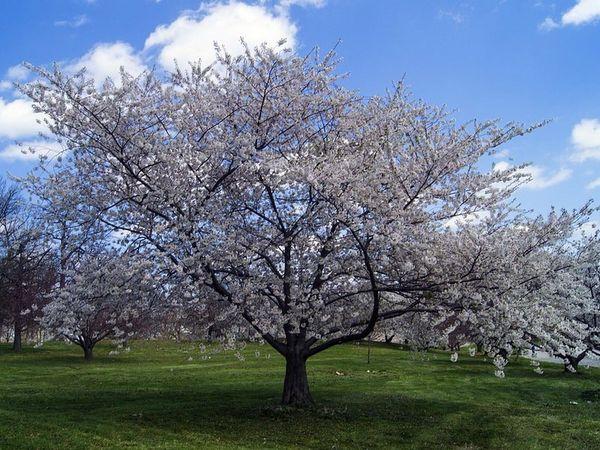
The tree grows 2-4 meters tall. It has a pyramidal crown. The foliage is medium dense. The shoots and branches are very thin, brown with a slight gray tint. The tree has a large inflorescence, long, rounded leaves, green with a slight sheen, and smooth to the touch. The buds are medium-sized and brown. The bark is strong and does not peel.
The wood is strong but thin, making it susceptible to sudden changes in weather.
Fruiting
The tree bears fruit late, with berries expected closer to August. The harvest continues until mid-September. Fruiting begins in the fourth or fifth year of life. A tree can yield up to 25 kilograms of berries. Therefore, the variety is suitable for processing. To ensure a good harvest, several more trees are planted on the property.

Description of the fruit
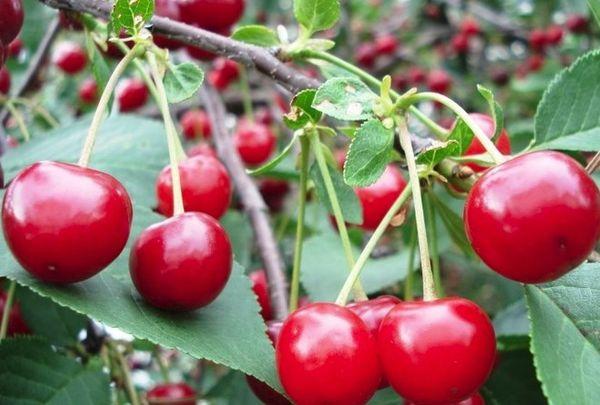
Cherries are medium-sized, weighing from 2 to 4 grams. The skin is firm, a delicate red hue, and has a pleasant, fresh aroma. The flesh is soft, juicy, and not very sweet, making it most often used for preserves. The fruit has a low sugar content. The pit is small, round, and difficult to separate from the flesh.
Pollinators
Cherry trees are partially self-sterile, so they require additional pollinators to achieve a high yield. The best pollinators for the tree are considered to be Lyubskaya, Anadolskaya, Kharitonovskaya, Griot Podbelsky, Shchedraya, Sayka, and Griot Ostgeymsky. If there are no other trees in the area, only 30 percent of the blossoms will produce a harvest. Cherry trees are also pollinated by sweet cherries. The tree is also pollinated by insects.

Ripening period and yield
Cherries ripen late. Picking is slow, as the berries are firmly attached to their stems. The harvest depends on the quality of the pollinator, weather, soil, and plant care.
Transportability and use of berries
Cherries are picked with the stems, so they last longer during transportation and don't leak juice. The peel will also protect the pulp from damage, so the fruits can be transported over long distances.
Winter hardiness
This variety is considered winter-hardy, but still requires a moderate climate. In this case, the tree is insulated for the winter, especially around the trunk. Young trees are lined with straw and paper from thermal bags. Then, a small mound of snow is piled on the plant. With the arrival of spring, the protection is removed from the trunk to prevent the tree from drying out.
Susceptibility to diseases and pests
The Shubinka cherry variety is susceptible to diseases such as powdery mildew, fruit rot, and bacterial blight. The tree is often affected by coccomycosis. Initially, the leaves are affected, but if the disease is left untreated, the berries can also be damaged. The shoot moth is another pest that damages shoots and buds.
Planting a crop on a plot
Cherry trees require a warm, sunny location. They are typically planted near a fence or wall, 6-8 meters apart. Avoid planting this variety in low-lying areas due to the damp soil.

Required soil composition
The soil shouldn't be too acidic or soggy. Before planting, weed, till, and fertilize the soil. Use 1.5 kilograms of compost and 50 grams of potassium phosphate or potassium phosphate per square meter.
Timing and rules for planting seedlings
The soil is prepared in the fall. The soil is dug and weeds are removed. Afterwards, the area is fertilized. A month later, the hole is dug. The size of the hole is 70 x 70 centimeters.
If several trees are planted at once, the distance between holes should be 6 meters.
Line the bottom of the prepared hole with bark and place stakes. Then add compost or manure and cover with a layer of fertile soil. Choose a seedling that's 60 centimeters tall and 2-3 years old. After placing it in the hole, spread the roots and bury it, tie it to a stake, and compact it with soil. Dig a hole around the plant, add 4 buckets of water, and cultivate the soil with compost.

We organize competent care
During the first year of life, the plant doesn't need to be fertilized; the area around the tree should only be cleared of weeds. Fertilizing should only begin a year after planting. Water the plant regularly.
Irrigation and fertilization
Water the plant every 20 days, adding up to 20 liters of warm water each time. Fertilizing begins one year after planting. Add potassium nitrate to the water. At the beginning of summer, feed the tree with ammonium nitrate.
Organic and mineral fertilizers are applied in autumn to protect the plant from frost. A superphosphate solution is used first.
Crown formation
The first pruning is done when the tree is planted in the ground. Six to seven strong branches are left. This procedure is repeated annually for five years. Once the crown is established, pruning ceases. The cherry tree's condition and health are monitored, and any diseased branches are pruned and destroyed.

Insect and disease prevention
The Shubinka cherry tree is susceptible to the negative effects of coccomycosis and shoot moth. Leaves are often affected, so they should be pruned and burned. To combat bacterial blight and powdery mildew, use a solution of Bordeaux mixture (60 grams per 10 liters of water).
Rot is controlled with colloidal sulfur (40 grams per 5 liters of water). Aphids are controlled with Oxychom (80 grams per 10 liters of water). Apply treatments every day. It's important to remember that trees cannot grow and develop fully in low-lying areas; they will often become diseased there. Preventative measures are carried out annually, especially at the end of the growing season and with the arrival of autumn.

Preparing for winter
Cover the tree trunk area and mulch the soil to a depth of 10 centimeters. The mulch should not touch the tree trunk, otherwise the bark will rot and decay.

Young trees are tied to prevent damage to the bark. Preparing cherry trees for winter depends on the growing location. Preparing is usually mandatory. It's important to protect the trunk area and root system from frost.
Methods of reproduction
Seed propagation is very rarely used. Cuttings, grafting, or root suckers are used for propagation. Cuttings are prepared in July. First, they are soaked in water. The cutting is planted vertically in a box, with its end 3-4 centimeters deep in the potting mix. The distance between the cuttings should be 7-8 centimeters. The plants are placed in a warm, bright location, but avoid direct sunlight. Once the cuttings have rooted, the plastic covering is removed. The seedlings are overwintered in trenches and planted in the spring.
Rootstocks are also often grown from seeds. For this, well-dried material is used. Sow in the fall or spring before frost.
Gardeners' reviews
Sergey Petrov: "This variety has long been familiar to our family. My grandfather used to plant this cherry tree in his garden. The berries don't have much flavor, but they're great for preserves. My wife also likes tart cherries. The tree is resistant to many diseases, but we still perform preventative measures every year."
Dmitry Pastukh: "It's a fairly winter-hardy variety, but we still insulate it. We had to plant several more cherry varieties on the plot because the first year's harvest was too poor. Afterward, the harvest increased. We even gave a few seedlings to our neighbors."
Anna Kirilova: "The cherries are small, so we usually make jam, preserve the juice, and make compotes. The care is simple, but we had to find a bright, elevated spot to plant them. We use disease control solutions and propagate them using cuttings."
Related posts:
 Descriptions of the 20 best cherry varieties for the Moscow region, their planting and care
 Description and cultivation of the 15 best cherry plum varieties for the Moscow region, planting and care rules
 How to plant walnuts, care for them, and grow them at home
 Description and characteristics of the 27 best plum varieties for the Urals, planting and care
 Description of the 25 best cherry varieties for the Urals and Siberia, planting and care in open ground
 Description of the Vasilisa cherry variety, cultivation and care
 Description of the 30 best plum varieties for the Moscow region, planting and care
 Characteristics and description of the Shokoladnitsa cherry variety, pollinators and fruiting