
- History of Morozovka cherry breeding
- Advantages and disadvantages
- Brief description of the variety
- Productivity, fruiting
- Pollination, flowering period and ripening time
- Application of berries
- Frost and drought resistance
- Immunity to diseases and pests
- Necessary conditions for growing
- Climate and planting regions
- Soil composition
- Favorable and unfavorable neighbors
- Planting technology
- Selecting a site
- Preparing the planting hole and seedling
- Tree planting algorithm
- Care instructions
- Irrigation
- Top dressing
- Loosening and hilling
- Crown pruning
- Seasonal treatments
- Protection from birds and rodents
- Preparing for winter
- Reviews of the variety
The Morozovka cherry variety is designed for growing in the northern regions. It is highly frost-resistant and produces a high yield. The berries are medium-sized, sweet, juicy, and transport well. This variety requires little maintenance. Purchasing a seedling is completely cost-effective.
History of Morozovka cherry breeding
The Morozovskaya cherry was developed by Russian breeders. Scientists from the Michurin All-Russian Institute worked on it. The variety was named after the scientist T.V. Morozova. It was created for cultivation in cold regions. Morozovka was obtained by crossing the Lyubsky and Vladimirsky varieties.
Advantages and disadvantages
Morozovka cherries have their advantages and disadvantages. The positive aspects include:
- high frost resistance;
- regular and stable harvest;
- disease resistance;
- grows well in drought conditions;
- the tree grows up to 2.5 m, which makes harvesting easy and quick;
- transportability of berries;
- high taste qualities of fruits.
Self-sterility is a drawback. For fruit to set, a pollinator is required, and its flowering period must coincide with the cherry tree's.
Brief description of the variety
The variety description includes yield, fruiting, pollination, flowering, ripening, and immune characteristics.
Productivity, fruiting
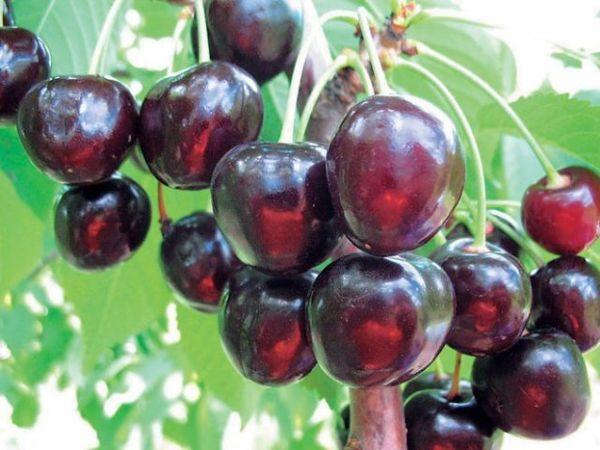
This variety produces high yields with pollinators. Without them, the plant flowers but does not produce fruit. Fruit formation begins in mid-July and ends by the end of the season. Large, dark-burgundy berries, weighing up to 5 grams, form on the shoots. A single tree yields over 35 kg of berries.
Pollination, flowering period and ripening time
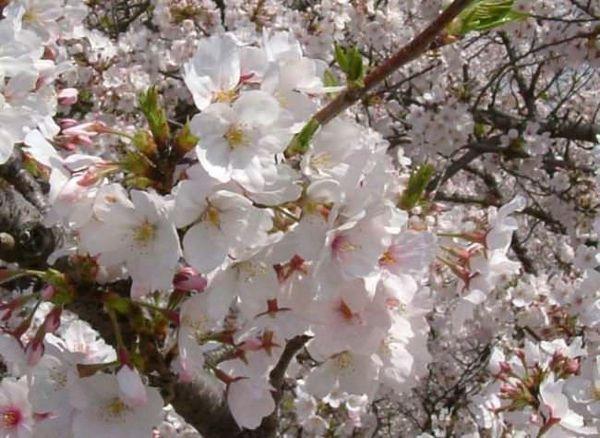
Pollinators are essential for fruiting. For this variety, two to three trees are recommended. Under these conditions, the cherry will produce a consistent and high yield. The following varieties are suitable for pollination:
- Zhukovskaya;
- Vladimirskaya;
- Turgenevka;
- Lebedyanskaya;
- Griot Michurinsky.
Important! Having multiple pollinators increases Morozovka's yield.
Application of berries
Morozovka cherries are grown commercially and in private gardens. The berries are sweet and suitable for fresh consumption. The harvest is also processed into compotes, jams, homemade wine, liqueurs, cordials, and frozen. This variety sells well, being grown commercially on large farms and enterprises.

Frost and drought resistance
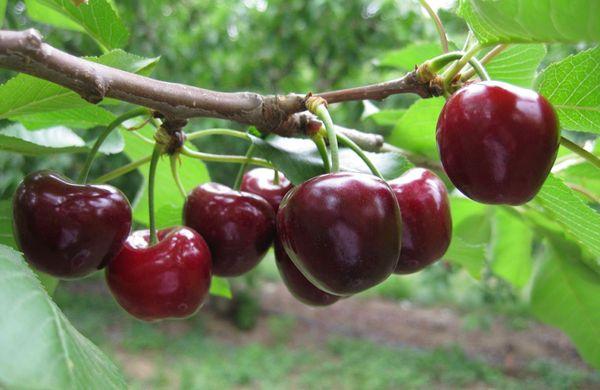
The tree is highly frost-resistant, surviving temperatures below -35°C. Its robust root system draws nourishment from groundwater, helping it cope with drought and reducing the need for watering.
Immunity to diseases and pests
Morozovka has strong immunity to coccomycosis. However, it is susceptible to other diseases that require control and prevention. Diseases common to cherries include:
- rust;
- fire blight;
- sooty mold;
- fruit rot;
- holey spot;
- gummosis.
If fungal damage occurs, the foliage is sprayed with fungicides. Damaged areas are removed first.
Cherry trees are attacked by harmful insects. They feed on the fruit, bark, and foliage of the tree. These include:
- aphids;
- cherry moth;
- piper;
- ringed silkworm;
- hawthorn.
Insects die after treatment with insecticides. This procedure is performed 2-3 times per season.
Important! Stop spraying with chemicals 20 days before harvest.
Necessary conditions for growing
To achieve a high yield, optimal growing conditions must be created. The right location and soil composition will provide the cherry tree with everything it needs for good development.
Climate and planting regions
Cherries are suitable for growing in any region. Their high frost resistance and early ripening fruit make them suitable for planting in Siberia, the Urals, temperate latitudes, and the south. In southern regions, the fruit is ready for harvest as early as midsummer. Most cherry varieties are unsuitable for northern regions, as they struggle with winter frosts. Morozovka allows you to grow cherries in your own garden and enjoy their fruits.
Soil composition
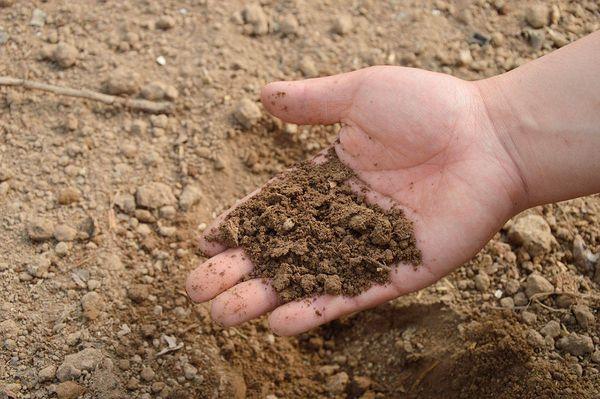
The plant isn't picky about soil composition. Loamy, sandy loam, and sandy soils are suitable for planting. In clay soils, drainage is added to the planting hole to ensure drainage of excess moisture. The soil pH should be neutral. Fertilize the plant before transplanting it outdoors.
Favorable and unfavorable neighbors
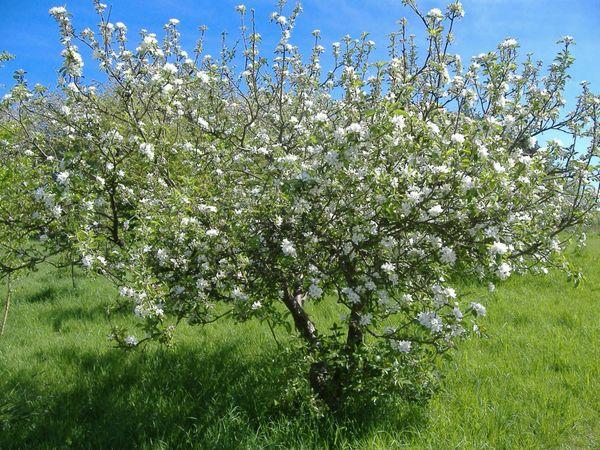
Cherries are planted next to other varieties. Apple, plum, and peach trees also do well. Avoid planting Morozovka near shrubs, as their roots branch out and rob the tree of nutrients.
Planting technology
Planting follows a specific procedure. You need to consider the location and prepare the planting hole and seedling in advance.
Selecting a site
Cherry trees thrive in sunny, wind-protected areas with at least eight hours of sunlight per day. Choose sites where the groundwater table is at least 1.5 meters deep. Higher groundwater levels will cause the plant to experience excess moisture.
Preparing the planting hole and seedling
Prepare the planting hole in advance. If planting in spring, work should be done in the fall; in spring, two weeks before transplanting. The procedure is as follows:
- They dig a hole about 1 m deep and in diameter;
- The soil from the hole is mixed with humus, superphosphate and potassium nitrate;
- Half of the mixture is poured back into the hole.
Before planting, soak the seedling in water for several hours. Only then is it transferred to the hole.
Important! Don't leave the plant's roots unwatered, as they may dry out.
Tree planting algorithm
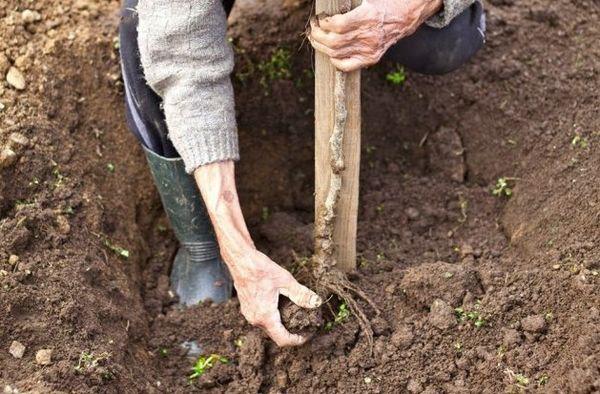
Planting of seedlings is carried out according to a certain algorithm:
- The tree is placed in the hole;
- Straighten the roots;
- Sprinkle with soil in layers;
- Each layer is compacted by hand;
- Form a tree trunk circle 8–10 cm deep;
- Water with 4-6 buckets of water;
- Mulch the area around the trunk with straw, sawdust, and cut grass.
Care instructions
To achieve a high yield, it's necessary to create optimal growing conditions. To achieve this, the plant needs to be watered, fertilized, pruned, protected from rodents and birds, and then trimmed and covered for the winter.
Irrigation
Cherries tolerate drought well. Additional watering increases fruit production and strengthens the plant's immune system. There are three mandatory waterings per season:
- before the buds begin to form;
- during flowering;
- after harvesting.
A young tree consumes 50–60 liters at a time, while a fruiting tree consumes 70–80 liters. The liquid is poured into the area around the trunk.
Important! Overwatering a tree leads to root rot and death.
Top dressing
After planting, the tree has enough nutrients to last for three years. After that, mineral fertilizers containing potassium, phosphorus, and nitrogen are applied annually. Urea and copper sulfate are used in the spring. From the seventh year of growth, fertilizers are applied every two years.
Loosening and hilling
Loosening and weeding are combined. This procedure is performed as weeds grow around the tree trunk. Hilling is performed three times per season: before bud formation, during flowering, and during fruiting. The trunk is covered with soil to a height of 20 cm. This will retain moisture at the tree's roots.
Crown pruning
Formative pruning is performed during the first three years. Morozovka is characterized by spherical branching. In subsequent years, damaged, broken, and dry branches are pruned. This procedure is performed in the spring to form the crown and in the fall for sanitation. Pruning improves the tree's quality, increases yield, and prevents fungal infestations and rot.
Seasonal treatments
In spring, it's recommended to prevent diseases and insect attacks. This is done by spraying with insecticides and fungicides. Repeat this procedure three times per season. The frequency depends on the expiration date of the chemical. Once the chemical expires, repeat the spraying.
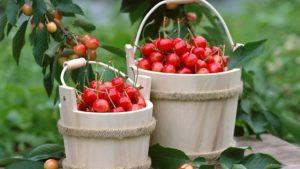
Copper sulfate is also applied to the area around the tree trunk. It kills harmful insects that live under the bark and in the roots of the cherry tree.
Protection from birds and rodents
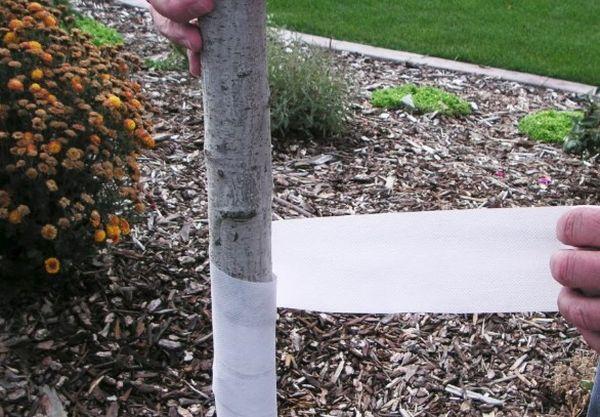
To protect against rodents, the trunk is coated with whitewash at the beginning of the season and before winter. This deters the animals and prevents them from feeding on the bark.
Birds eat part of the harvest. They need to be scared away, and for this purpose, the following are used:
- cellophane;
- cassette tape;
- sound frequency devices;
- mesh with wide holes.
All these devices are hung on the branches.
Preparing for winter
The tree is highly frost-resistant. To ensure its recovery in the spring, it is recommended to cover it for the winter. For both mature and young trees, mulch the trunk area using:
- straw;
- wood sawdust;
- chopped grass;
- moss.
Important! Seedlings should be covered for the winter using breathable fabrics. Their frost resistance peaks in their third year.
Reviews of the variety
Evgeniy, 36 years old, Vladivostok
Five years ago, I planted a Morozovka cherry tree on my plot. Other varieties struggled with the winter. I planted apple trees with the same blooming period next to it. Three years later, the first berries appeared. They are large and sweet, and I really liked them. Now the cherry tree produces a large harvest, enough for fresh eating and processing.
Angelina 43 years old, Astrakhan
I like the Morozovka cherry tree because it ripens early. By early summer, I can harvest it. The berries are large and sweet. Birds are especially fond of them, so I installed a sound-frequency device to ward them off. The tree produces a high yield, so I planted it next to other cherry trees.
Klavdiya, 56 years old, Moscow
My neighbor was raving about the Morozovka cherry tree. I decided to buy a sapling and plant it. I planted it in the fall. The tree has strengthened over the winter. I hope it takes root and produces a fruitful harvest. My neighbor shared some berries with me; they are large and sweet.
Related posts:
 How to plant walnuts, care for them, and grow them at home
 Description and characteristics of the Tyutchevka cherry variety, planting and care
 Description of the Red Early apple tree variety, agricultural technology and specific care
 Peach tree care and agricultural secrets, pest control
 Description and cultivation of the Skorospelka pear variety from Michurinsk
 Descriptions of the 20 best cherry varieties for the Moscow region, their planting and care
 Causes and treatment of cherry diseases, methods of pest control
 Description and pollinators of the cherry variety Malyshka, growing rules