
- What care does a tree need?
- Watering
- Frequency of watering
- Requirements for water temperature and composition
- Whitewashing the tree trunk
- Loosening the soil and caring for the tree trunk circle
- Fertilization
- What does cherry like?
- How to apply fertilizer correctly
- Pruning and crown shaping
- Pest and disease control
- Covering the tree for the winter
- Seasonal schedule of gardening work
- Spring
- Summer
- Autumn
- What to consider
- Features of caring for seedlings and old trees
- During the flowering and ovary period
- After harvesting
- Common mistakes of beginning gardeners
Cherry is a stone fruit crop in the Rosaceae family. There are 150 species worldwide, five of which are cultivated in orchards, including various interspecific hybrids, including cherry-sweet cherry hybrids. Cherries are prized for their early ripening fruit, excellent flavor, medicinal properties, and suitability for canning. With proper care throughout the year, cherry trees will consistently produce a bountiful harvest and maintain their longevity.
What care does a tree need?
Cherry trees require care both in the garden and at the dacha. Their productive lifespan does not exceed 20 years, and periodic fruiting is common. With proper care, it is possible to harvest every year and extend the fruiting lifespan of cherry trees to 30 years.
Important! Carefully examine the cherry varieties growing in your area, find their names, and read information about them. The variety determines the tree's growth pattern and fruiting type.
Watering
Watering ensures the plant receives nutrients, as they absorb them from solutions. Watering young trees is especially important to allow them to develop a strong root system.
Frequency of watering
All cherry varieties are drought-tolerant, so frequent watering is not recommended. The first watering should be given in May. If the winter was light on snow, then before flowering, two waterings of 100-120 liters per mature tree are needed. Active growth begins 7-10 days after fruit set. Before the berries begin to ripen, trees require two waterings. If the weather is very hot, a third additional watering is needed.

When cherry blossoms change color and ripen, watering is not recommended. The fruit becomes watery and overly sour, and the thin skin cracks. After harvesting, in early August, water once. If there was no rain in the second and third ten days of August, a single, light watering is necessary to avoid stimulating shoot growth. In October, a moisture-replenishing watering at double the normal rate is necessary.
The best method of watering is by flooding the tree's trunk with a hose. Experts recommend digging trenches 70-80 and 120-150 centimeters from the trunk, around the trunk's circumference.
The first ditch should be 10-12 centimeters deep, the second 20-30 centimeters. These ditches are used to supply mineral fertilizers and irrigation water.
Requirements for water temperature and composition
Ideally, water cherry trees from a container at the end of the day, warmed by the sun and allowed to settle. It's acceptable to water cherry trees and other garden crops from a garden tap if the water is pumped from a local reservoir.
Important! Watering cherry trees directly from a well is not recommended. Allow the water to settle and warm up.
In some regions, the salt content of water is unfavorable for irrigation. If you use highly saline water for a long time, the soil soon becomes unsuitable for plant growth. To avoid adverse effects, submit a 1-1.5 liter water sample for analysis. Water suitable for irrigating cherry trees should contain less than 1 gram of salts per liter.

Whitewashing the tree trunk
Whitewashing cherry tree trunks increases the tree's longevity. At the dacha, whitewashing is done in October, during the last visits before winter. In a garden plot, this can be postponed until February, when the risk of frost cracks is high. Whitewashing is done with slaked lime. First, clean the bark with a stiff wire brush, treat it with a 3% ferrous sulfate solution, let the wood dry, and then begin whitewashing.
Loosening the soil and caring for the tree trunk circle
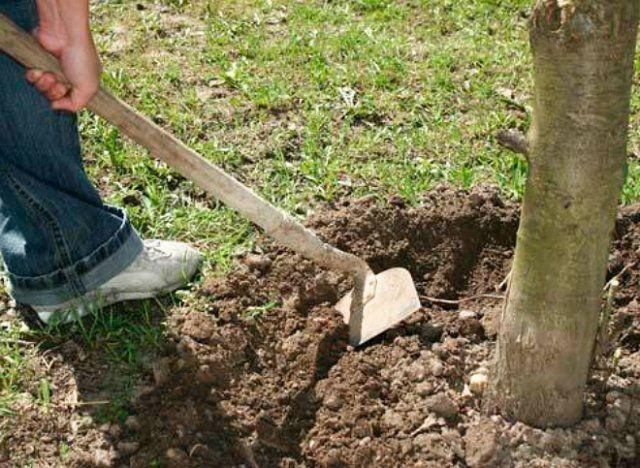
The cherry tree's root system extends far from the trunk and is shallow. The bulk of the roots are located in the soil layer, no deeper than 6-12 centimeters, well beyond the projection of the branches. Therefore, a zone around the trunk equal to two crown diameters is designated. Within this zone, the soil should be free of weeds and loose. Loosening is done with a rake with short, blunt teeth to avoid damaging the roots. During the summer, the area around the trunk is mulched with freshly mown grass without seed heads.
Fertilization
Cherry varieties that originated from the common and steppe varieties are less demanding in terms of mineral nutrition than cherries that originated from the sweet cherry.
What does cherry like?
Experienced gardeners have noted that alfalfa, peas, lupines, beans, pumpkins, and squash planted nearby have a beneficial effect on the growth of young cherry trees. Cherry trees can be stunted if planted nearby with tobacco, corn, or sunflowers. Mature trees require annual organic fertilizers and require increased potassium levels.
How to apply fertilizer correctly
In the fall, add humus or compost at a rate of 30-40 kilograms per plant. In the spring, spraying the newly emerging leaves with a urea solution at a rate of 40 grams per 10 liters of water at a temperature of 30-35 degrees Celsius is effective. After fruiting, apply phosphorus-potassium fertilizer at a dose of 40 grams of superphosphate and 60 grams of potassium salt per tree trunk to prepare the plant for winter and increase frost resistance.
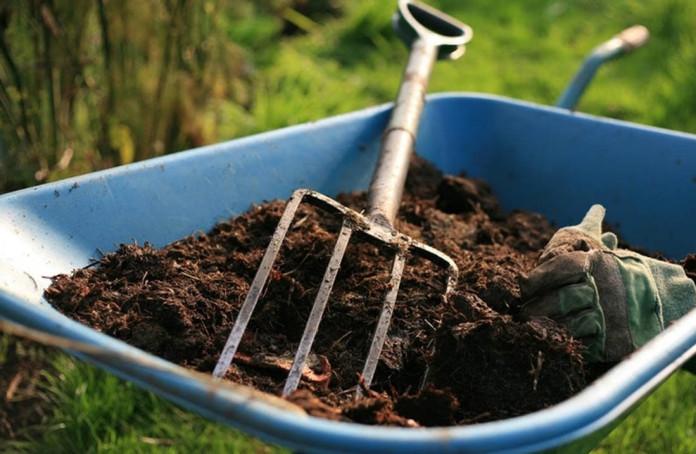
Fertilizers are applied to a depth of 5-6 centimeters and raked in. Compost and phosphorus-potassium fertilizers are effectively applied to a circular ditch or furrow.
Pruning and crown shaping
Young trees require formative pruning from their third year. This can be done in two ways for different varieties:
- according to the type of bush - 4-5 first-order branches are left, 8-10 second-order branches are formed on them, a total of 12-15 branches;
- According to the type of tree, a 45-60 centimeter trunk is formed, from which 3 branches of the first and second tiers are formed, the central conductor is cut 20 centimeters above the branches of the upper tier.
Mature trees need to be pruned twice a year: in the spring for basic pruning, and in the fall for sanitary pruning, which involves removing broken branches and gummosis. Many gardeners are interested in the question, Is it possible to trim the tops of fruit-bearing branches on a cherry tree?? Carefully examine the branches of the cherry trees and assess the nature of the fruiting.
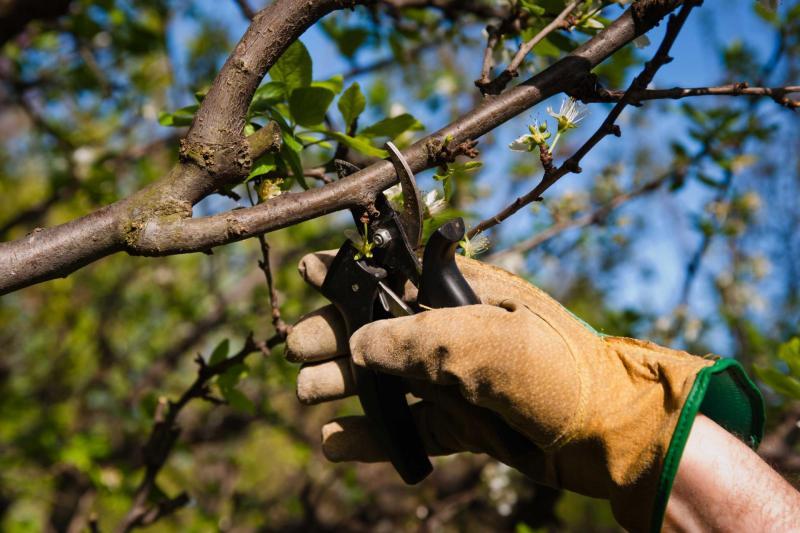
Caution! On varieties that bear fruit from single generative buds on last year's shoots, shortening pruning of branches is not recommended.
If fruit buds form in groups on special branches, they need to be shortened to stimulate the growth of new fruit groups.
Pest and disease control
Cherry trees are susceptible to diseases:
- moniliosis (monilial burn);
- coccomycosis;
- Clasterosporium (hole spot);
- rust.
Cherry trees are sprayed 2-3 times to prevent diseases using Horus, Skor, HOM, and Ridomil Gold, strictly following the instructions. Fungicides can be mixed with pesticides.
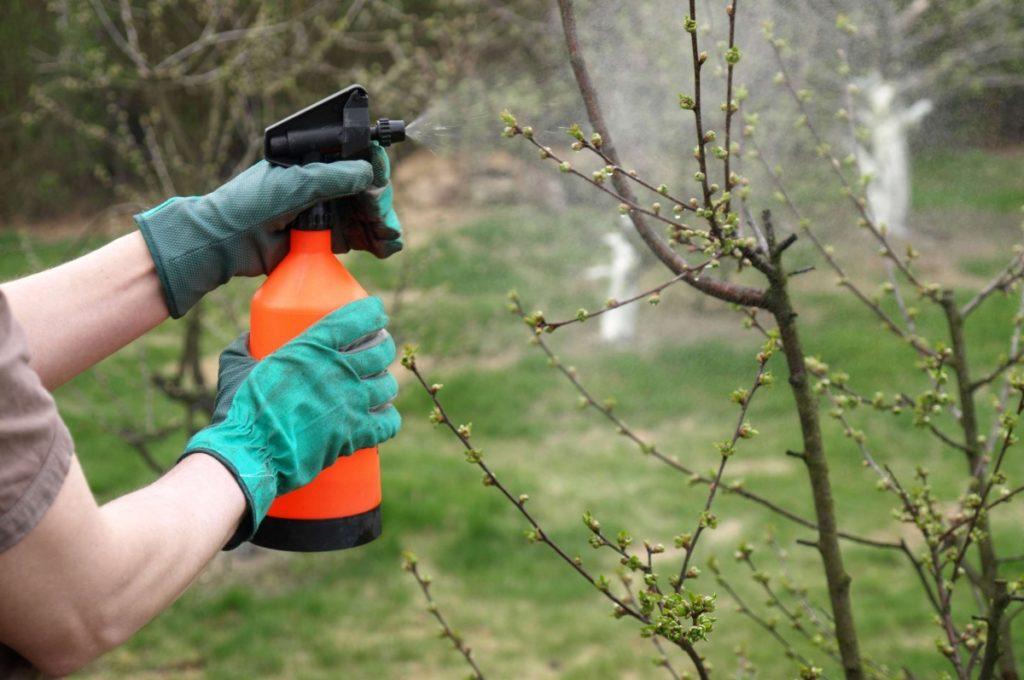
During the summer, cherry trees are threatened by pest infestations, including cherry sawflies, weevils, and black aphids. Weevils are particularly damaging to the fruit, causing the berries to become worm-eaten. If infested, trees should be treated with Fufanon. All chemical treatments should be completed at least 20-30 days before the harvest begins.
Covering the tree for the winter
Trees up to five years old are covered for the winter with non-woven material, wrapping them in 2-3 layers along their entire height. The root system is mulched with peat. Cherry-based varieties benefit from winter insulation at any age.
Seasonal schedule of gardening work
Carefully study the schedule of garden work for cherry tree care to plan a trip to the dacha, purchase of fertilizers and plant protection products.
Spring
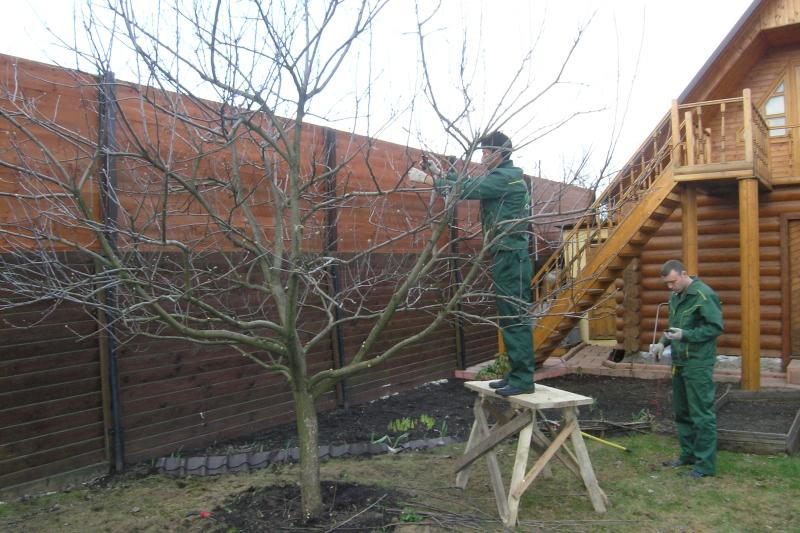
In spring, the schedule includes the most difficult work of pruning and chemical treatment of plants.
- March – snow retention to saturate the soil with moisture.
- April – uncovering, removing old leaves from tree trunks, pruning and shaping trees, in the third ten-day period – spraying against diseases and pests.
- May – spraying against diseases and pests; if there is a threat of frost, protection is provided using smoke bombs, watering and fertilizing.

Summer
In summer, a full range of watering, weeding, and cultivation work is carried out. Most varieties ripen in July. Cherry berries should not be allowed to fall. In August, cherries are not watered, but weeding continues.
Autumn
In September, no watering is needed. In October, water the trees, rake the leaves, and whitewash the trunks at the dacha. In November, wrap them up to protect them from frost.
What to consider
Cherry tree care has its own nuances at different ages and growing seasons, which you should be aware of. We'll explore the specifics of caring for young and mature trees, as well as during flowering, pollination, fruit set, and preparation for winter.
Features of caring for seedlings and old trees
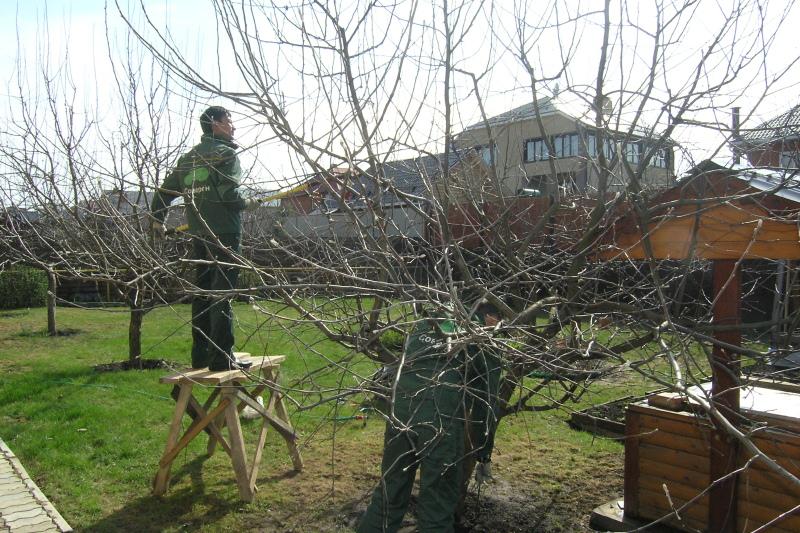
A young cherry tree or shrub is not pruned in the first year; the shoots are allowed to develop. Older trees should have bare branches trimmed and vertically growing shoots rejuvenated.
During the flowering and ovary period
If young trees bloom in the first year of planting, they should not be allowed to bear fruit; the ovaries should be removed. Avoid watering, as this can cause the ovaries to drop.
After harvesting
In the Belgorod region, for example, the main cherry harvest occurs in July. The berries ripen gradually, and are picked in 3-5 stages. The berries don't fully ripen, so they shouldn't be picked before they're fully ripe on the tree.
If stored for 4-5 days without refrigeration, the juice inside the fruit begins to ferment, and the product spoils.
To make it easier to harvest a bountiful crop from old trees, people sometimes resort to cutting down high-growing old branches.
Common mistakes of beginning gardeners
Cherry trees are generally easy to grow. Often, a lack of fruit is not due to inadequate care, but to the wrong variety. Many varieties are self-sterile and require pollinators. Another common mistake is pruning long fruit-bearing branches.
We hope our recommendations will help you avoid mistakes and always have a good cherry harvest!
Related posts:
 Description and pollinators of the Vladimirskaya cherry variety, planting and care
 Description and varieties of cherry variety Shpanka, planting and care
 13 Best Cherry Jam Recipes for Winter
 Description and characteristics of the miracle cherry hybrid, planting and care of the variety
 Description and cultivation of the best varieties of felt cherry, planting and care
 Description and propagation of the Bessey cherry variety, planting and care rules
 When is the best time to transplant a cherry tree? Rules and step-by-step instructions.
 Description of the 10 best black cherry varieties, planting and care in open ground