
- Selection and cultivation regions
- Advantages and disadvantages of the Skorospelki pear from Michurinsk
- Description and characteristics
- Size and annual growth of the tree
- Life expectancy
- Fruiting
- Flowering and pollinators
- Ripening time and harvest
- Tasting evaluation and scope of application of pears
- Susceptibility to diseases and insect pests
- Resistance to low temperatures and drought
- Planting technology
- Selecting and preparing a landing site
- Dimensions and depth of the planting hole
- How to prepare a seedling
- Timing and technology of planting operations
- Further care
- Watering mode
- Top dressing
- Whitewash
- Crown formation
- Weeding
- Seasonal treatments
- Preparing for winter
- Methods of reproduction
- Potential difficulties when growing
- Gardeners' reviews of the Skorospelka variety from Michurinsk
The Skorospelka pear from Michurinsk is an early-ripening variety that produces one of the largest yields per tree per season. The plant also boasts other advantages, such as increased resistance to frost and undemanding environmental conditions. Since 2002, this variety has been popular among gardeners worldwide.
Selection and cultivation regions
The Skorospelka pear from Michurinsk was developed by breeders S. P. Yakovlev and A. P. Gribanovsky in the 1980s at the Michurin Research Institute. The variety was created by crossing Bere Ligel and Citron de Carme. After extensive testing since 1986, the plant was added to the Unified State Register of Pear Cultivars of the Russian Federation in 2002.
The variety was recommended for cultivation in the Central and Middle Volga regions. Due to its increased resistance to severe climate change and its undemanding nature, the crop is suitable for cultivation in virtually all areas.
Advantages and disadvantages of the Skorospelki pear from Michurinsk
The Skorospelka pear variety from Michurinsk has the following advantages:
- large amount of harvest from a tree in 1 season;
- taste qualities of fruits;
- increased resistance to frost and climate change;
- early period of flowering and fruit ripening;
- immunity to some diseases that affect other pear varieties.
Among the disadvantages of this tree, gardeners note:
- susceptibility to various pests;
- low shelf life of fruits.
Description and characteristics
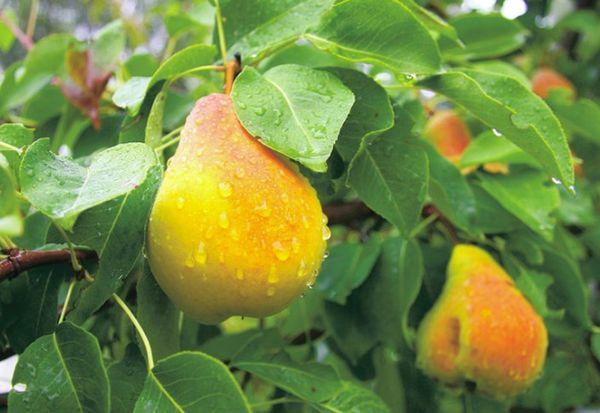
The Skorospelka pear variety from Michurinsk is an early-ripening plant that begins bearing fruit 5-6 years after planting. The fruit fully ripens around the second half of July. This variety is characterized by increased frost resistance, with the plant being able to withstand temperatures down to -40°C without special shelter.
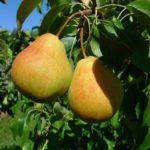
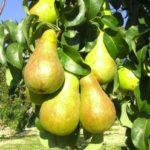
Another advantage of this cultivar is its complete immunity to scab, which can only spread to the tree if infected by nearby infected plants. The yield increases year after year, with the peak fruit production occurring 9-11 years after planting. The fruits are small, but they form in small clusters on the branches. They are regularly shaped and have a pleasant golden hue with a reddish tint.
Pears are versatile and suitable for mass production, either raw or in confectionery.
Size and annual growth of the tree
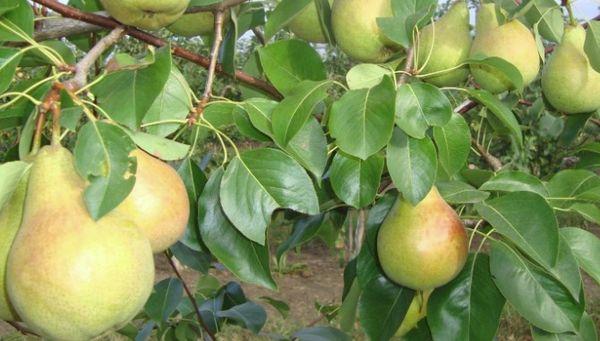
This variety is a tall tree and can easily reach a height of over 6 meters. The plant grows approximately 50 centimeters annually. It has a pyramidal or rounded crown with a medium density. The tree has light brown bark.
Life expectancy
The Skorospelka pear variety from Michurinsk can grow on average up to 35-40 years, provided the necessary climate conditions and care are met.
Fruiting
The crop is highly productive; up to 100 kilograms of fruit can be harvested from a tree in a single season. This yield can vary depending on overall temperature conditions and proper care.
In general, the fruits are small in weight and reach 80-100 grams, but are formed in groups on the branches.
Flowering and pollinators
The flowers of this variety are bisexual and self-pollinate, without the need for additional crops in the garden. Inflorescences begin to appear in early May with the onset of warmer weather.
Ripening time and harvest
Fruit formation on the branches begins in the first half of June, and full ripening occurs in late July. The fruit is harvested either fully ripe or slightly green. In the latter case, it is left for several days to ripen naturally. This typically takes 5-6 days. A single 6-year-old tree can yield up to 60 kilograms of fruit per season.

Tasting evaluation and scope of application of pears
Tasters rate the taste of the Skorospelka pear from Michurinsk at 4.7 out of 5 possible points. The rating was based on the following criteria:
- sweetness level;
- juiciness;
- pulp density;
- appearance;
- peculiarities.
The fruits of this crop have moderate sweetness, soft and juicy structure.
For this reason, pears are difficult to store and transport over long distances. Because the flesh is soft and juicy, it is easily damaged by the weight of other fruits. The product has a high marketable appearance, with a golden color that turns red on one side over time.

Susceptibility to diseases and insect pests
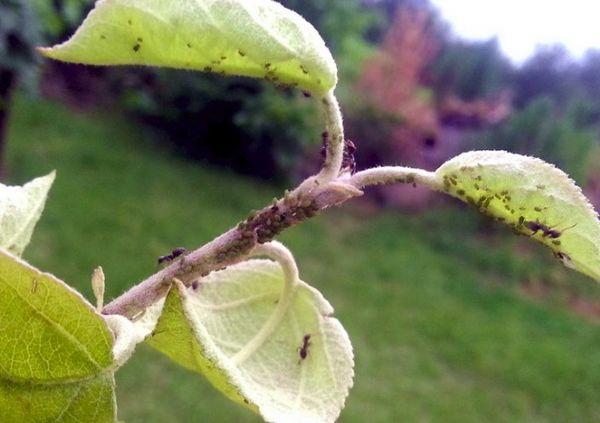
This variety is completely immune to scab, but the disease can occur on the tree if there are other infected plants nearby. The Skorospelka pear is primarily susceptible to the following diseases and pests:
- Gypsy moth. These insects are found on the bark of pear trees. A large number of these pests can damage not only the harvest but also the overall health of the tree. To prevent silk moth infestations, periodically clear the area around the tree of weeds.
- Mites. They often appear on the bark of plants. To combat them, it's necessary to monitor the tree's condition and remove damaged areas. Another method is periodic whitewashing of the tree's trunk.
- Rotten fruit drop. It appears on tree leaves and fruit, which then fall to the ground. The disease resembles rust spots in appearance. Such leaves and fruit should be removed.
Resistance to low temperatures and drought
This variety has increased frost resistance and can withstand temperatures down to -40°C without special protection. However, this can lead to the development of various diseases and pests. To ensure a safe environment for the tree, cover and mulch it during periods of frost. The plant can tolerate drought. If the tree does not receive sufficient moisture for an extended period, it will begin to develop diseases, and the yield will decrease.

Planting technology
Proper planting of a pear tree will allow it to grow faster and produce a larger harvest.
Selecting and preparing a landing site
It's best to plant the tree in areas with ample sunlight. Dry spots are also suitable, but they require regular watering. It's important to minimize shade, as the flavor of the future fruit directly depends on the amount of sunlight received.
For more effective crop growth, groundwater must flow at a depth of at least 2-2.5 meters from the surface.

Dimensions and depth of the planting hole
Before planting, dig a hole in the soil 1 meter deep and 80 centimeters wide. This should be done two weeks to a month before planting. Then, fill the hole 1/3 full with fertile, loose soil.
How to prepare a seedling
Before planting, the root system of the seedling can be soaked in a solution of root growth stimulator for 2-3 hours.
Timing and technology of planting operations
It's best to plant trees in the fall or spring. Most gardeners plant in the fall to allow the plant time to develop its root system and adapt to the new conditions. With this planting method, young trees will be ready before the growing season begins.
Before planting, drive a 130- to 150-centimeter stake into the ground. Place the seedling in the hole so that it faces north of the stake. Afterward, spread out the root system and cover it with soil, compacting it thoroughly. It's important that the root collar remains above the soil surface.

After planting, water the seedling with 20-30 liters of lukewarm water and tie it to a stake. After a couple of days, apply mulch to prepare the tree's root system for cold weather.
Further care
Caring for a pear tree includes regular watering, fertilizing, preventative treatments against diseases and various pests, as well as clearing the surrounding area of weeds and preparing it for winter.
Watering mode
Pear trees require infrequent but abundant watering, approximately 20-30 liters per square meter of the tree's trunk circle. Watering three to four times throughout the season is sufficient. If the climate is dry, the frequency should be increased.
Top dressing
Fertilizer is applied only in the 5th or 6th year, when the tree begins to bear fruit and requires constant feeding to ensure a stable harvest. Pear trees are fertilized with nitrogen and mineral fertilizers. These can be purchased at any specialty store. Gardeners recommend fertilizing twice a year, before bud formation and after the fruit ripens.

Whitewash
Every year, you can whitewash the pear tree trunk to prevent the development of pests and the occurrence of various diseases.
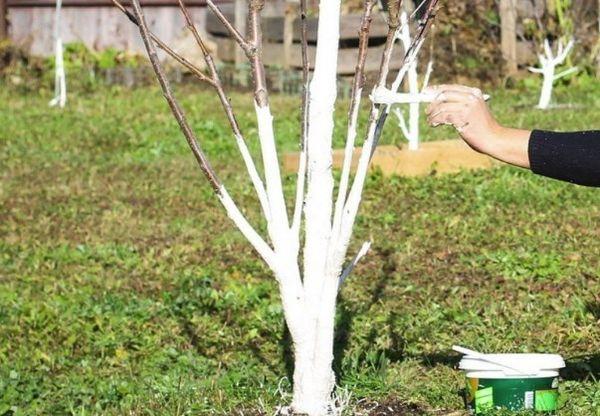 When preparing the whitewash solution, you can add fungicides. This will enhance the preventative effect.
Crown formation
Regular crown pruning helps prevent the fruit from shrinking. If branches with a large number of fruits are planted too densely, they develop unevenly, resulting in pears weighing only 30-50 grams.
Weeding
Weeding is carried out in the event that other crops and weeds form around the tree, which may interfere with the stable growth of the tree.
Seasonal treatments
This variety is rarely susceptible to diseases and various pests. To prevent them, the tree trunk should be whitewashed annually and treated with fungicides. The crop should be sprayed 3-4 times per season.

Preparing for winter
This variety has increased frost resistance and can withstand temperatures down to -40°C, but it's best to prepare the tree for frost early in its development. To do this, mulch it using:
- straw;
- fallen leaves;
- wood sawdust;
- inorganic materials.
Methods of reproduction
Pear tree propagation is carried out using the following methods:
- basal shoots;
- layering;
- cuttings;
- seeds.

The most common method of propagation is by cuttings. This method involves pruning shoots in the fall that have 4-5 leaves and 2 internodes. After this, the cuttings are prepared and, once germinated, planted in soil. After regular care, the plants are transplanted into open ground.
Potential difficulties when growing
The Skorospelka pear from Michurinsk is an easy-to-grow variety, and growing it presents few challenges. All complications can be avoided with consistent care, including:
- crown formation;
- weeding;
- watering;
- fertilizer;
- preventive treatment of wood against pests and diseases;
- cleaning the area around the crop.
Gardeners' reviews of the Skorospelka variety from Michurinsk
Dmitry, 31 years old, Minsk.
The Skorospelka pear variety from Michurinsk is suitable for any gardener, from beginner to professional. It requires little care and tolerates low temperatures.
Fedor, 42 years old, Krasnodar.
"We have several trees of this variety growing at our dacha, and we harvest about 50-70 kilograms of fruit per season. The plant is not susceptible to disease and easily tolerates any conditions."
Related posts:
 Description and full characteristics of the Yakovlev Memory pear variety, planting and care
 Description and full characteristics of the August Dew pear variety, planting and care
 Description and full characteristics of the Lada pear variety, care and cultivation
 Description of the 23 best pear varieties for the middle zone, planting and care rules
 Description and characteristics of 14 varieties of the Bere pear variety, planting and care
 Description of the Rogneda pear variety, planting and care instructions
 Rules for planting and caring for pears in open ground, how to grow them correctly
 Description and subtleties of growing the Russian Beauty pear variety