
- History of breeding and botanical description of pear
- Pear growing area
- Varieties and comparative characteristics of pear varieties
- When to expect fruiting from a pear tree
- Tasting evaluation of pear fruits
- Storage and transportation of pear crops
- Rules for planting pear trees in a plot
- Preparing the site and the pear seedling
- Keep your distance
- Timing and algorithm of planting operations
- The subtleties of caring for the crop
- Irrigation
- Fertilization
- Sanitary and formative pruning of pears
- Caring for the tree trunk circle
- Pear Pests: Control and Protection
- Pear disease: treatment and prevention
- Gardeners' reviews of the variety
Winter-hardy pear varieties are popular with amateur gardeners and fruit nurseries. To date, breeders have developed over 900 varieties. The goal was not only to improve taste but also to increase the fruit's resilience to various weather conditions. Many professionals worked on this topic, including Pavel Yakovlev, after whom one of the pear varieties was named. The Yakovlev pear variety is beloved by gardeners and summer residents for its ease of care, high disease resistance, long shelf life, and excellent taste.
History of breeding and botanical description of pear
The domestication of the pear began with wild trees growing in European forests. Among Russian pears, the Ussuri pear is considered one such example. The first cultivated varieties were developed from the Ussuri pear by breeder Pavel Yakovlev.
The researcher's son, Sergei Yakovlev, soon joined the breeding work. He and his father determined that the aforementioned pear could produce varieties with good resistance to various pear diseases. The goal of their experiments was to achieve:
- stability;
- winter hardiness;
- productivity;
- keeping quality;
- attractive appearance;
- excellent taste.
Sergei Pavlovich decided to name the variety in memory of his father, as they had worked hard on it and achieved significant success. By combining varieties like Tema and Olivier de Serra, he succeeded in developing a variety that met all the above criteria.
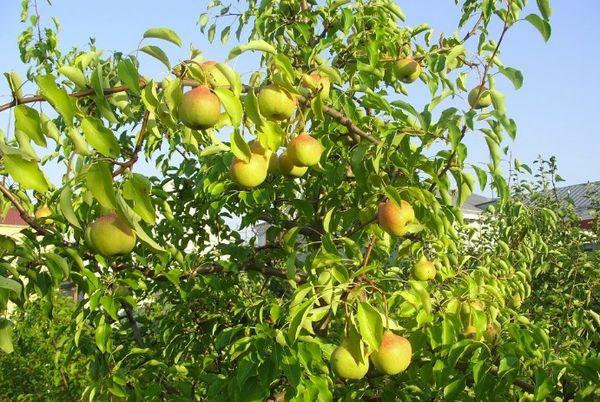
The tree is small in size, grows rapidly, and has a round crown. The pear branches are located at 90 degrees to the trunk.OC. Buds are very vigorous, with good shoot formation. Simple and compound rings begin to bear fruit quickly. The medium-thick shoots are light brown in color and geniculate with small spines.
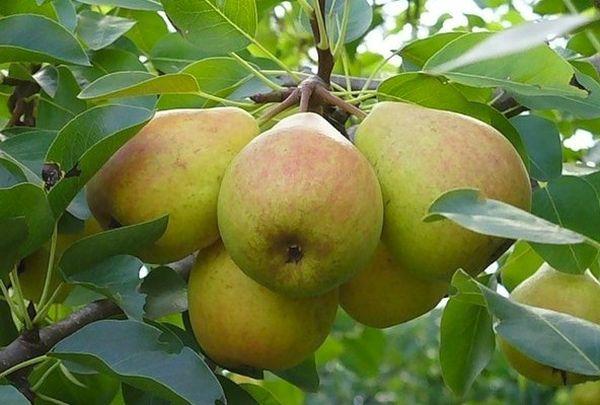
The pear's buds are curved, traditional, and smooth, with a large subbud cushion. The leaves are medium-sized, ovoid, and have a twisted and slightly curved tip. The flowers are white, with clustered inflorescences and separate petals.
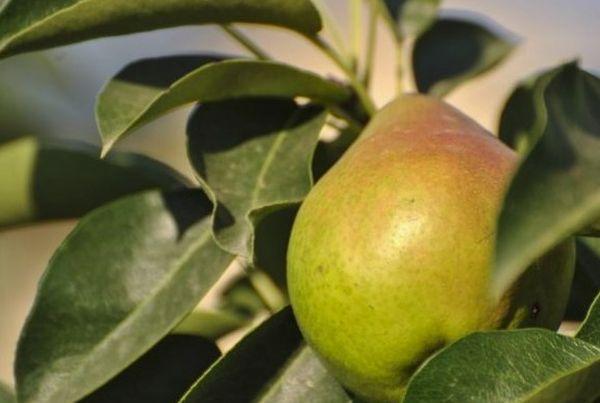
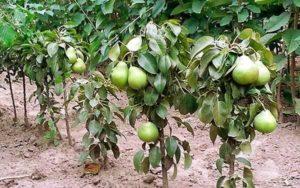
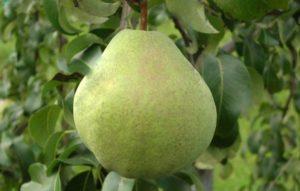
The fruits are irregular, medium-sized, and have a wide, pear-shaped form. The skin is smooth and slightly shiny. Fresh fruits are light yellow, slightly tanned. When ready to eat, the color turns golden yellow, the blush turns orange, and small subcutaneous spots appear. The flesh is juicy and pale yellow.
The pear tree begins to bear fruit 3-4 years after planting. A mature plant can yield up to 26 kg of fruit. Seed rootstocks allow for dense plantings. This is an ideal solution for smaller gardens and plots.
Pear growing area
Thanks to the work of researchers, the pear was added to the State Register of Breeding Achievements of the Russian Federation in 1985. The variety began to be distributed in the Central, Volga-Vyatka, and Middle Volga regions, as well as the Central Black Earth District.
Growing this pear variety requires frost-resistant rootstock. In the south of the country, trees germinate and bear fruit well on their own root system. They are also unaffected by low temperatures and adverse weather conditions.
Today, the Yakovlev Memorial Pear can be found in the Moscow, Oryol, Tambov, and Voronezh regions. Cultivated trees have also been introduced to Ukraine and Belarus.
Varieties and comparative characteristics of pear varieties
Pavel Yakovlev continued experiments in cultivating wild trees, begun by Ivan Michurin. His goal was to create varieties suitable for the Northern and Ural regions, as well as Siberia. Using the Ussuri pear as a parent species, he was able to cultivate the following cultivars:
- in memory of Yakovlev;
- Autumn Yakovleva;
- Yakovlev's favorite.
A complete description of each type will be given in the table.
| Characteristics | In memory of Yakovlev | Autumn Yakovleva | Yakovlev's favorite |
| 1. Who registered | All-Russian Research Institute of Genetics and Breeding of Fruit Plants | ||
| 2. When registered | 1985 | 1974 | 1965 |
| 3. In which regions is it grown? | In the Central, Central Black Earth, Volga-Vyatka, Middle Volga | In the Central Black Earth, Lower Volga | In the Central, Central Black Earth, Middle Volga |
| 4. Botanical description of the tree | The tree is low-growing and grows rapidly. The crown is compact, round, and dense. Shoots form quickly. Both simple and compound ring-shaped branches are suitable for fruiting. | The tree is tall and grows quickly. The crown is spreading, broadly pyramidal, and sparse. Fruiting requires rhizomes and fruiting twigs. | The tree is tall, with a vigorous, broadly pyramidal, and sparse crown. Ring-shaped and spear-shaped trees are suitable for fruiting. |
| 5. Yield level | High | Tall, pollinated by varieties like Avgustovskaya and Lada | Partial, pollinated by Duchess |
| 6. Fruiting rate | 3-4 years after planting | In 5 years | After 5-6 years |
| 7. Frost resistance | High | Average | High |
| 8. Drought resistance | Moisture-loving species | Tolerates heat well | Does not tolerate drought well |
| 9. Disease resistance | High | Low | Low |
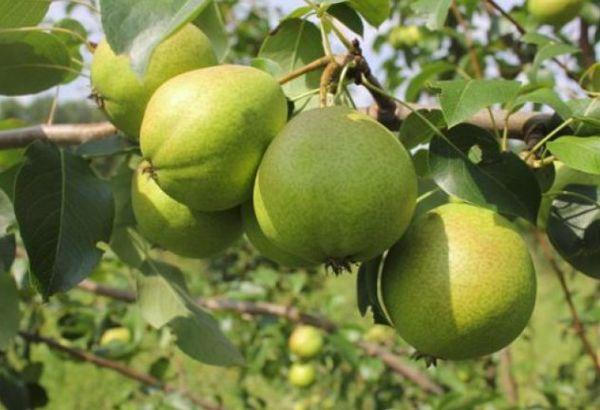
| 10. Description of fruits | The fruits are broadly pear-shaped and slightly ribbed. They weigh up to 130 g. The skin is light yellow, slightly tanned. The surface is smooth, with occasional subcutaneous spots. The flesh is juicy and slightly tart. The aroma is distinct. | The shape is round-diamond-shaped and ribbed. The size is medium, weighing up to 155 g. The color is green with a slight tan. When ready to eat, the color changes to green-yellow, the blush turns yellow, and large brown spots appear under the skin. The flesh is firm and juicy. The flavor is sweet and sour, with a nutmeg aftertaste. The aroma is faint. | The shape is round-diamond-shaped, broadly pear-shaped. The size is medium, weighing up to 195 g. The color is greenish-yellow, with a light blush. The skin is firm. The flesh is coarse and coarse-grained. The juiciness is medium, the flavor is sweet. The aroma is faint. |
| 11. Fruiting period | Early autumn | In the fall | In the fall |
| 12. Purposes of use | Universal | Universal | Universal |
| 13. Transportation ability | High | High | Low |
| 14. Yield size from one tree | Up to 27 kg | Up to 42 kg | Up to 21 kg |

When to expect fruiting from a pear tree
The Yakovlev Memorial pear is an early-bearing variety, with the first harvest occurring after 3-4 years. The fruits appear in early autumn and ripen in early September. Under favorable conditions, the harvest can begin as early as August. In colder regions, harvesting can last until October.
Although the pear tree is small, it can yield up to 27 kg in the first few years. Despite weather and frost, it bears fruit every year. The pear harvest only increases. The variety does not need a pollinator, as the yield level is quite high.
Tasting evaluation of pear fruits
Pears have a juicy, sweet-tart, semi-oily flesh. The aroma is pleasant and distinct. Their biochemical composition contains a wealth of beneficial substances:
- sugar 12.5%;
- acidity 0.30%;
- ascorbic acid 10 mg/100 g;
- catechins – 31.2 mg/100 g.
Due to the high sugar level, the fruit is a versatile product, suitable for fresh consumption, making jam, preserves, compote, juice, and marmalade.
Storage and transportation of pear crops
Pear fruits are firmly attached to the branches, making harvesting and transportation easier. Regarding shelf life, researchers have reached the following conclusions. In a room with a temperature of -1OC or -2OWith humidity no more than 95%, fruits can be stored for up to 76 days.
Rules for planting pear trees in a plot
Early spring is considered the standard time for planting pears. At this time, the plant hasn't yet begun to grow and sap, but the soil is already warming. It's important to seize the right moment to plant pears, which lasts for 14 days in early spring. Once planted, the pear seedlings will take root, begin to grow, strengthen, and be ready for winter.
Preparing the site and the pear seedling
The pear tree's site should be well-lit, sun-warmed, and protected from the wind. Large or tall trees should be kept away from the planting site. It's best to plant the pear tree on a hill. Placing seedlings in low-lying areas is not recommended due to the accumulation of cold air and ground currents.
It's a good idea to fertilize the soil beforehand. A mixture containing humus, lime, and essential minerals (superphosphate, potassium chloride) is effective. If the soil is highly acidic, liming should be applied.
When choosing a pear seedling, the following points should be taken into account:
- It's best to buy planting material in the fall, when the variety of produce is much greater. In fruit nurseries, pears are dug up en masse in early to mid-fall, and unsold stock is stored until spring. This can result in poor-quality pear seedlings.
- A well-developed root system and smooth bark without signs of rot or damage indicate a quality seedling. It's best to choose one- or two-year-old pear trees. Mature trees are less likely to establish themselves, and they grow and bear fruit slowly.
- If you buy a pear tree in the fall, you should plant it in the ground before early March—this will help it preserve better. To do this, dig an oblong hole no more than 30 cm deep. First, add sand, then place the roots, with the top of the tree at the edge of the hole.
- The root system is fertilized with a mixture of cow manure and clay. Then, the rhizomes should be covered with two buckets of sand and 10 liters of water. When frost sets in, the hole is filled with soil.
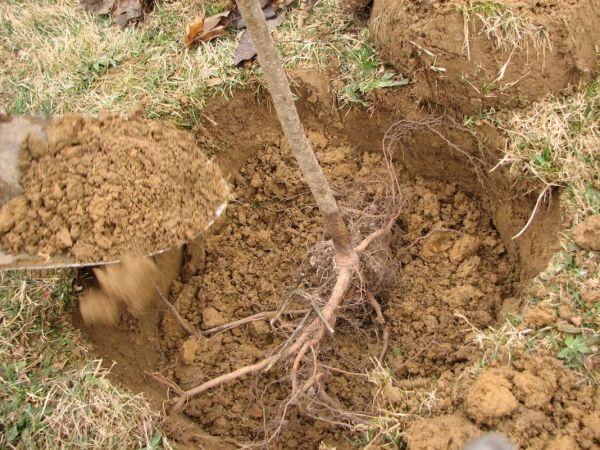
A basement or cellar is also suitable for storing pear trees. The room temperature should not be below 0OC or higher +5OWITH.
Keep your distance
When planting the aforementioned pear varieties in groups, remember that they are tall trees, reaching up to 15 m in height. Trees should be spaced 5 m apart, with at least 6.5 m between rows. If the pears are low-growing, space them 3-3.5 m apart, and 4-4.5 m between rows.
Timing and algorithm of planting operations
Spring is the optimal time for planting pear seedlings. Sometimes planting can take place in the fall, in mid-October. The process is as follows:
- First, a hole is dug 100-120 cm deep and 100 cm wide.
- Next, the pear tree needs to be planted quickly. A permanent growing location is important for pears.
- The first thing you need to do is make a clay-water “bath” for the root system.
- After soaking the roots in the solution, place them in the hole. A small mound is formed at the bottom of the hole, into which the plant is placed, carefully straightening the rhizome.
- The next step is filling the plant with soil. The neck is positioned 5-6 cm above ground level.
- The soil in the area around the trunk is compacted, watered with a bucket of water, and lightly tamped.
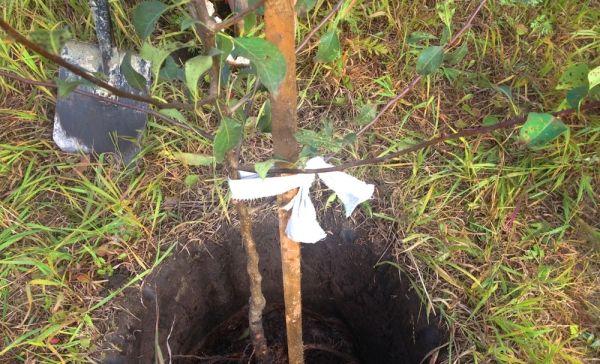 After some time, the soil should be covered with organic mulch - this will prevent the growth of weeds and the drying out of the soil.
The subtleties of caring for the crop
With proper care, the Yakovlev Memorial pear can ensure long-term productivity and a bountiful, high-quality harvest. Yakovlev fruit varieties form their own crowns, but pruning can prevent insect infestations and disease. Sanitary, formative, and rejuvenating pruning will prevent the pear's crown from becoming overloaded with fruit. Proper irrigation and fertilizing are essential.
Irrigation
The pear tree thrives on moisture, so during dry summers it requires ample watering. In arid regions, the plant should be provided with regular irrigation. Each seedling requires at least 25-30 liters of water.
Fertilization
During the first year after planting, pear trees require no additional fertilizing. In the second year, the trees are fertilized with potassium, phosphorus, and nitrogen solutions. Fertilizing should be done annually. The first application of fertilizer occurs in early spring, before active flowering begins. This should be accompanied by ample irrigation, requiring 40-50 liters of water.
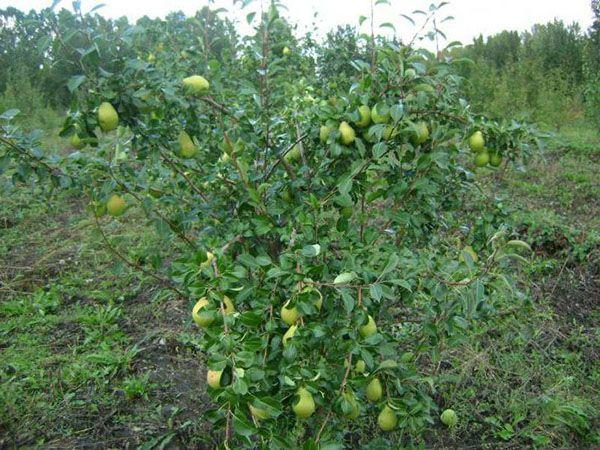
The second feeding is applied during flowering, and the third when fruit sets. Flowering can be improved with mineral supplements. During the summer, the plant requires organic amendments, and in the fall, it can be fed with potassium-phosphorus mixtures.
It's possible to avoid diseases and pests. In late March or early April, it's recommended to spray the tree with a chemical product such as Nitrafen or Karbofos. Spraying with a biological product such as Dendrobacillin or Entobacterin will also be effective.
Sanitary and formative pruning of pears
Old branches of the pear tree should be pruned, some can be shortened - this will limit the tree's growth in height. Yakovlevskie pear varieties They are quite sun-loving and require spring thinning pruning. Proper crown shaping evenly distributes the load of fruit across the branches. This also facilitates access to the fruit and facilitates protective irrigation. A thinned crown improves sunlight and air penetration.
The first pear tree pruning should be done in the first year after planting. Subsequent pruning is done twice a year. This will stimulate branch growth and increase fruit production. "Age-specific" pruning rejuvenates the tree by shortening the upper foliage by 1-1.5 times.
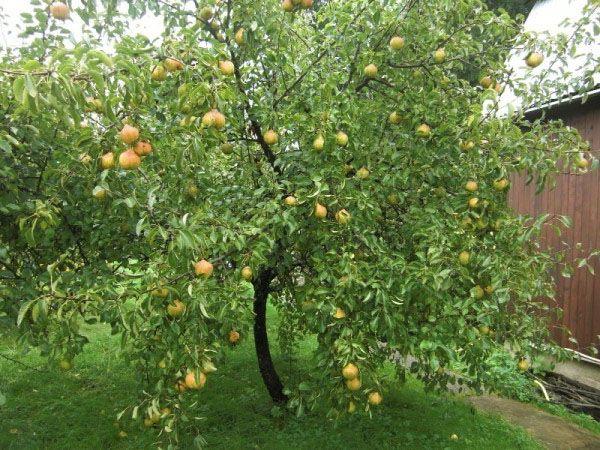
All branches are cut off, leaving only the thick skeletal branches at the bottom; there should be no more than five of these. A common pear tree foliage shape is an umbrella. To shape the tree into this shape, you'll need sharp tools. The cut area is treated with garden pitch.
Caring for the tree trunk circle
To protect the pear tree from freezing, the area around the tree trunk is wrapped in warm material such as foam rubber or burlap. A protective net is placed over the insulation to prevent hares, mice, or moles from gnawing at the pear tree's rhizomes.
In winter, you can cover the pear tree with snow and flood the trunk with water. The ice cap will prevent the plant from freezing.
Pear Pests: Control and Protection
Pests on pear trees can be prevented by preventative fungicide spraying. In early March or mid-November, spray the trees with a 3% Bordeaux or Burgundy mixture.
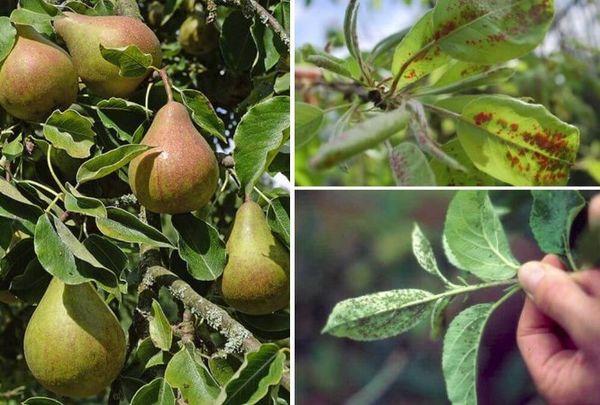
Pears are most often affected by the following pests:
- Flower beetle. During the winter, it burrows into the ground around the trunk and fallen leaves. If it overwinters successfully, the beetle emerges from the ground in the spring and climbs onto the foliage. It feeds on the pulp of flowers, eating the buds from the inside. During flowering, it consumes leaves, flowers, and young shoots. This pest can be removed manually. At low temperatures, the beetles become rigid and can be easily removed by shaking the branches. A mat should be laid under the pear tree beforehand.
- The pear codling moth. To overwinter, it forms a cocoon in the soil. With the arrival of spring, the caterpillar emerges, climbs onto leaves, and begins laying eggs. After hatching, the larvae penetrate the pear fruit, reducing its flavor and shelf life. Control of the pest can be achieved by collecting and destroying fallen leaves, loosening or digging the soil, applying fertilizer, and spraying insecticides such as Decis Profi.
- Aphids. When they appear, they infect pear leaves, branches, the soil around the trunk, young shoots, buds, ovaries, and flowers. Aphids can be controlled by timely fertilization. In the spring, the tree is fertilized with nitrogen and organic matter. After the snow has completely melted, nitrogen is added to the soil. Organic solutions are applied after the pear tree has blossomed. During the summer, the tree requires micronutrients and nitrogen fertilizers. With the onset of autumn, the pear is fertilized with organic matter, potassium, phosphorus, and ash. Chemical treatments are carried out using products such as Karbofos, Bankol, Actellik, Biotlin, and Aktara.
The use of fungicides and insecticides is advisable only in the presence of diseases and parasites on the pear.
Pear disease: treatment and prevention
The Yakovlev Memory pear is resistant to scab and fungal diseases, while the Osennyaya and Lyubimitsa varieties have average resistance.
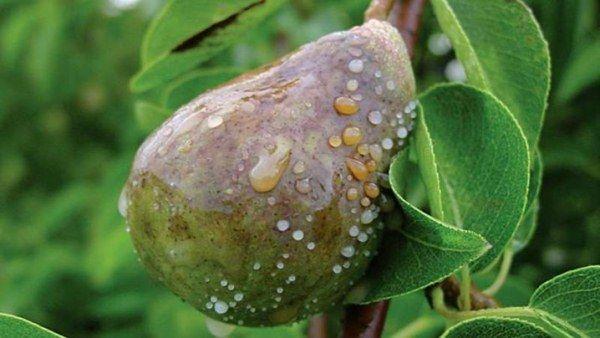
The most common pathologies for pears are:
- Scab. Characterized by olive-brown spots on the underside of leaves. These spots then spread to the fruit, leading to rotting. Because the fungi that cause scab are frost-tolerant, scab should be treated in mid-autumn. Rake and burn fallen leaves, dig up the area, and spray the seedling and surrounding soil with a urea mixture.
- Sooty mold. In July and August, after aphids appear, pear trees are attacked by sooty mold. It thrives on the sweet secretions of the aphids. Leaves and fruit become covered with a grayish-white coating, which eventually develops into a blackened, soot-like appearance. First, remove the aphids, then kill the fungus with fungicides.
- Moniliosis affects not only pears but also other fruit trees. Infection occurs during active flowering due to bees carrying fungi and pollen. Moniliosis spreads through flowers, fruit stalks, pistils, shoots, and leaves. As a result, the plant suffers from moniliosis, which is manifested by wilting and blackening of the fruit. The first step is pruning the diseased shoots along with the healthy parts (no more than 25 cm). Fungicides are used for further treatment.
The pear tree should be treated with a freshly prepared solution. The dosage must be strictly adhered to, otherwise the seedling may be damaged or burned. Personal protective equipment, such as goggles, gloves, a respirator, and protective clothing, is essential.
Gardeners' reviews of the variety
Elena, 38 years old, Krasnodar
We have a Yakovlev Memorial pear tree growing in our yard. I adore it for the deliciousness of its fruit, even though it suffers from scab and frost.
Nikolay, 60 years old, Zhitomir
I love Yakovlev's memory for its excellent qualities. I eat the fruit fresh and also make compotes and jams. It's ideal for cooking.
Lyudmila, 58 years old, Nizhny Novgorod
Having planted this variety in my yard once, I've never regretted it. The yield is high; for several years in a row, I've harvested 2-3 buckets of pears. I got my first harvest in the third year of planting. I try to feed and prune them regularly while everything is growing well.
Alexander, 65 years old, Ivanovo
I have a pear tree like this growing at my dacha; it's been bearing fruit for eight years now. The fruit is sweet, juicy, and has a honey-like aroma. If it doesn't get regular watering, I cover the area around the tree with sawdust mulch, and I water it. This retains moisture and prevents weeds.
Related posts:
 Rules for planting and caring for pears in open ground, how to grow them correctly
 Description and full characteristics of the August Dew pear variety, planting and care
 Description of the 23 best pear varieties for the middle zone, planting and care rules
 Description and full characteristics of the Lada pear variety, care and cultivation
 Description of the Forest Beauty pear variety, planting and care specifics
 Description of the Rogneda pear variety, planting and care instructions
 Description of the Cathedral pear variety, planting and care features
 Description and cultivation technology of the pear variety Memory of Zhegalov