
- What is characteristic of the Conference pear?
- History of origin
- Habitat
- Dimensions of a mature tree
- All about fruiting
- Flowering and pollinators
- Ripening time and harvest
- Tasting evaluation and use of fruits
- Immunity to diseases
- Resistance to low temperatures and drought
- Pros and cons: is it worth planting?
- Landing specifics
- Site selection and preparation
- Tree patterns and spacing
- Technological process of landing
- Further care
- Watering and fertilizing
- Caring for the tree trunk circle
- Pruning methods
- Diseases and pests: seasonal treatments
- Preparing for winter
- Reproduction of culture
- Reviews of the variety from experienced gardeners
Among the many pear varieties, those that can be stored over winter are especially prized. During this time, the body lacks vitamins, which can be replenished by the fruit. The Conference pear can be stored for 3-4 months after harvest. Below is information on the variety's pros and cons, planting considerations, subsequent care, and reviews from experienced gardeners.
What is characteristic of the Conference pear?
This pear variety can only grow in warm regions. Its fruits are unique in that they ripen not on the branches, but rather when collected in crates.
History of origin
The pear received its name after being shown at a British conference in 1895. Breeders worked on its development for 10 years. The conference quickly gained recognition throughout Europe.
Habitat
After Europe, the variety reached America and China. It is actively cultivated in Moldova and Ukraine, and is brought to Russia for cultivation in the southern regions. Growing the pear in the Moscow region requires additional conditions.
Dimensions of a mature tree
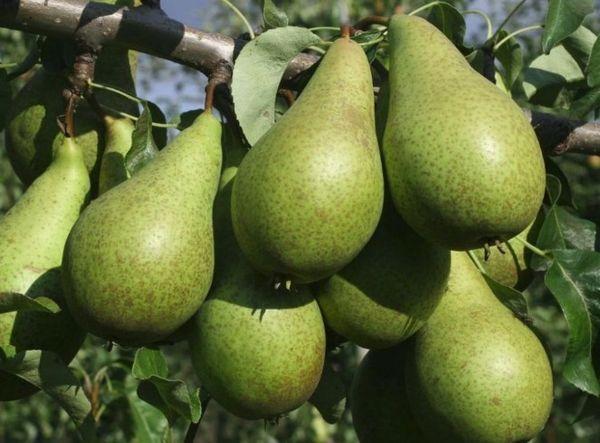
The Conference pear tree reaches 4-5 meters in height. It can gain 50-70 centimeters per season. Its crown is spreading, and its numerous branches are densely foliated.
All about fruiting
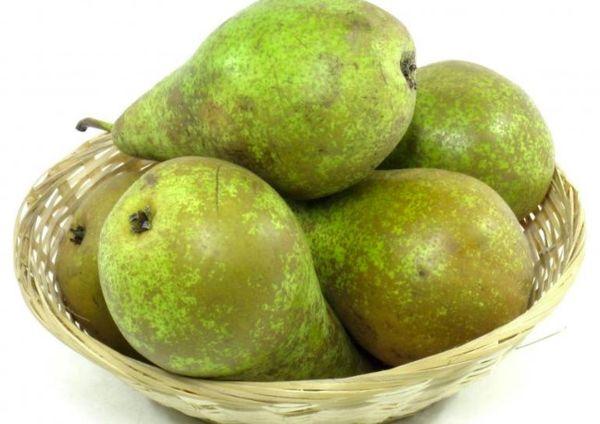
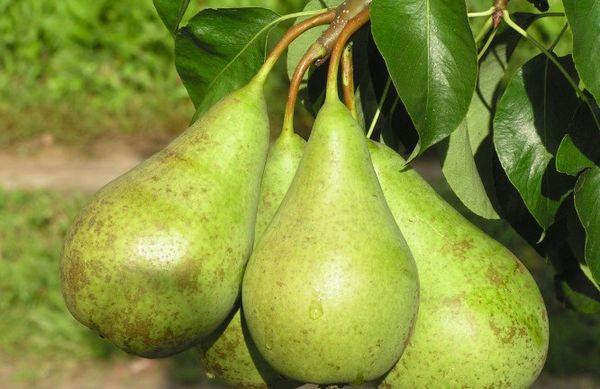
The crop ripens uniformly. The fruits are elongated, cone-shaped, and bottle-shaped. They keep well for five months, making them suitable for commercial cultivation.
Flowering and pollinators
The Conference pear begins blooming in May. Its simple flowers, consisting of five petals, are gathered into inflorescences. The pear is highly self-pollinating: 60-70% of the flowers produce fruit.
If you plant a pollinator tree near the crop, the yield will increase significantly.
Pear varieties such as Bere Bosc and Williams are planted nearby. In addition to increasing the yield, they also enhance the fruit's flavor.
Ripening time and harvest
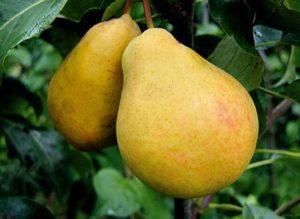
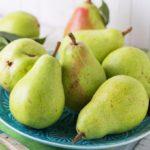
Conference pears ripen in late September. All the fruits are roughly the same size, weighing between 130 and 150 grams. They are yellow-green in color. On the sunlit side, the pears take on a yellow-brown hue.
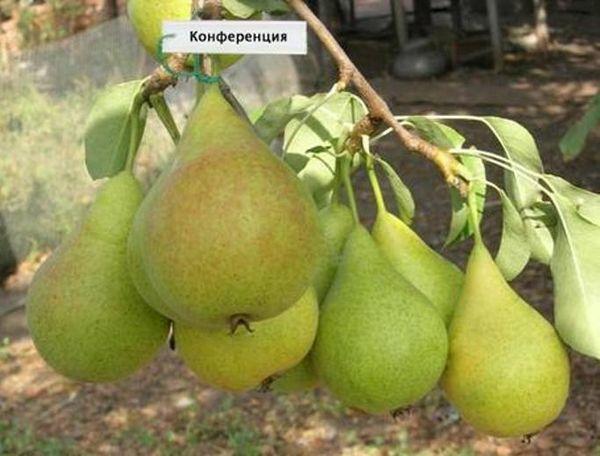
A gardener can harvest 30-40 kilograms of fruit from young seedlings, and 75-95 kilograms from mature trees. The fruit doesn't fully ripen on the tree, so it's harvested and stored in a ventilated area. After a few days, it ripens and can be stored.
Tasting evaluation and use of fruits
Conference fruits are tasty, juicy, sweet, and slightly tart. They are low in calories, making them suitable for those trying to lose weight. Besides eating them fresh, pear jam is made from pears, jam, compote.
Immunity to diseases
Conference berries are resistant to scab and fire blight, but can be affected by powdery mildew and ethnomosporium. They should not be planted near rowan, as they share the same diseases and pests. Proper care will prevent these problems.
Resistance to low temperatures and drought
The Conference pear is suitable for growing in southern regions. It tolerates drought well, but its winter hardiness is low. The tree will not survive temperatures below -18°C.
Pros and cons: is it worth planting?
The positive properties of the Conference include the following characteristics:
- drought resistance;
- self-pollination;
- rapid tree growth;
- abundant fruiting;
- wonderful fruit taste;
- good shelf life;
- high degree of transportability.
Disadvantages include the Conference's low winter hardiness and its dependence on climatic conditions. In cold, rainy summers, the fruits will be tasteless.
Landing specifics
To ensure the Conference produces good results, it is necessary to select one-year-old trees with a well-developed root system for planting.
Site selection and preparation
The pear tree should be planted in a sunny, wind-protected location. Conference pears thrive in loose, fertile soil with a neutral or slightly alkaline pH.
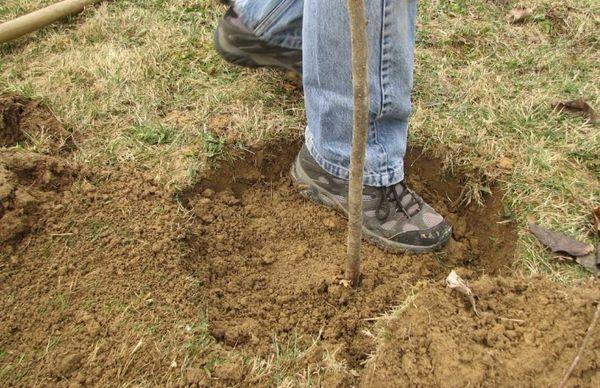
The best time to plant a tree is mid-September. Prepare the planting hole two weeks in advance. The soil is enriched with organic matter and minerals. Experienced gardeners recommend dropping a handful of rusty nails into the bottom of the hole.
Tree patterns and spacing
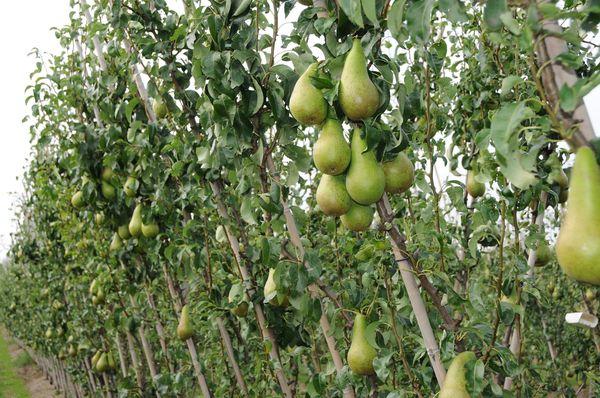
To ensure plants receive sufficient light and adequate nutrition, avoid planting them too close together. The minimum distance between seedlings is 5 meters.
If a gardener wants to plant a pollinator variety, the distance to it should be no more than 10-15 meters.
Technological process of landing
Before planting a tree, the root system must be soaked for 12 hours in water containing growth stimulants.
The procedure for planting a pear tree is carried out step by step as follows:
- A hole measuring 1x1 meter is dug.
- Drainage made of sand, broken bricks, and expanded clay is installed at the bottom.
- Fertile soil is piled up into a mound.
- A seedling is placed in its center, and the roots are spread out to the sides.
- The root system is covered with soil and the soil is lightly compacted.
- The tree trunk circle is watered.
Important! The tree's root collar should be 3 centimeters above the soil surface.
Further care
During the spring and fall seasons, pear trees require the following care: watering, fertilizing, weeding, mulching, and pruning. To prevent diseases and pests, spray with insecticides and fungicides.
Watering and fertilizing
Although Conference is a drought-resistant variety, timely watering determines the quantity and quality of fruit. This is especially important in the first year after planting. The frequency of watering depends on the amount of summer rainfall.
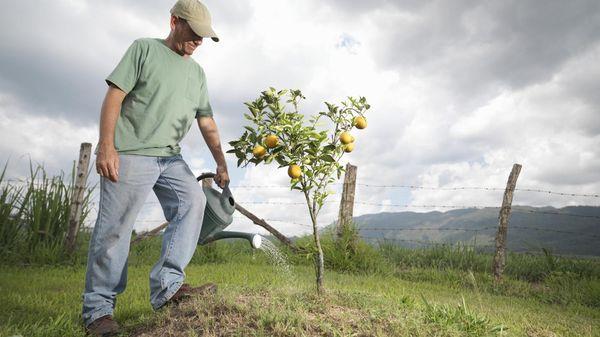
In spring, ammonium nitrate is added to the tree's trunk to enrich the soil with nitrogen. Before flowering, the crown can be sprayed with a superphosphate solution. After fruiting, the pear tree is fertilized with potassium and phosphorus.
Caring for the tree trunk circle
The pear growing area is kept free of weeds that can carry diseases and pests. After watering or rain, the area around the tree trunk is lightly loosened to oxygenate the soil and prevent crust formation. To retain soil moisture, the root zone is covered with mulch.
Pruning methods
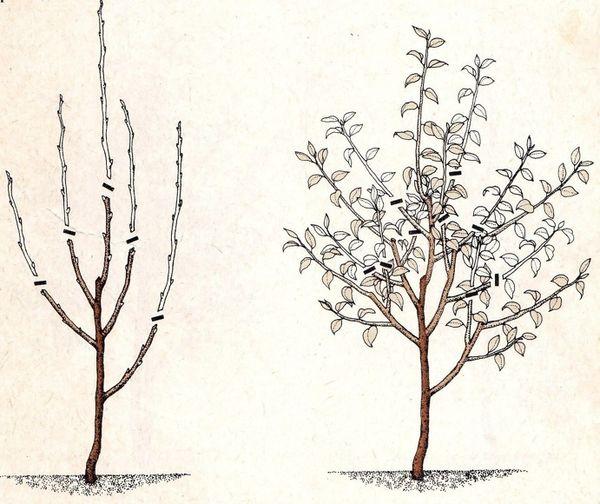
In the spring, before the buds open, pear trees undergo sanitary pruning. This involves removing dead, frost-damaged, and diseased shoots. Pruning can also be performed to create the following shapes:
- Palmette - with this type of pruning, the main branch is cut back by approximately 30 centimeters every year, as well as shoots that thicken the crown.
- The sparse-tiered form involves pruning the main branch higher than the side shoots. This causes a new tier of four skeletal branches to form.
When pruning, vertically growing shoots are cut out: they do not bear fruit, but only thicken the crown.
Diseases and pests: seasonal treatments
Fungal diseases of pears are easier to prevent than to treat. To prevent this, spray the tree with copper-containing preparations in the spring. If the Conference tree is nevertheless affected by these problems, it should be sprayed with any approved fungicide. Whitewashing in the fall and then again in the spring will prevent the occurrence of some diseases and pests.
Preparing for winter
Conference pears don't tolerate frost well, so they need to be prepared for winter. To do this, build a shelter in late autumn. Remove it in early spring to prevent the bark from rotting. Also, in late autumn, the pear needs to be covered with compost to a depth of at least 30 centimeters.
Reproduction of culture
There are several ways to propagate the Conference pear in your garden: layering, cuttings, and grafting. Seed propagation will not convey the variety's characteristics. Experts recommend the best method for growing pears in your garden: grafting a cutting onto a quince or pear rootstock-wild ones.
Reviews of the variety from experienced gardeners
Gardeners praise the Conference variety as a high-yielding variety with delicious, juicy fruit. To avoid disappointment, it's important to know its peculiarity: it ripens fully not on the branches, but after a few days in the container.
Elena, Dnipro
My Conference tree is already 10 years old. This year, the harvest was so great that several branches couldn't be saved: they broke under the weight of the fruit. A neighbor suggested that the crown needs to be trained: this will prevent the branches from breaking, and the pears will be larger. I'll do just that this year.
Natalya Petrovna, Sevastopol,
I have three trees of this pear on my plot, so I get a good harvest. A big advantage of the Conference is that it can be stored for the winter. I sell any surplus at the market. I'm a pensioner, and selling fruit is a small way for me to earn extra income. If you have even a small plot, plant this pear variety; you won't regret it.
Oleg Vasilievich, Rostov
I've been growing Conference pears in my garden for a long time; I don't even remember how old they are. Over the years, their yields have decreased. Last year, after pruning the older branches, the quality of the pears improved. So, I recommend this variety to everyone; I've tried it for years.
Related posts:
 Description and full characteristics of the Yakovlev Memory pear variety, planting and care
 Description and full characteristics of the August Dew pear variety, planting and care
 Description of the Rogneda pear variety, planting and care instructions
 Description of the 23 best pear varieties for the middle zone, planting and care rules
 Description and full characteristics of the Lada pear variety, care and cultivation
 Description of the Belorusskaya Pozdnyaya pear variety, pollinators and cultivation details
 Description and characteristics of the 45 best pear varieties, how to choose
 Description of the Cathedral pear variety, planting and care features