
Given the long, frosty winters, breeders have delighted gardeners with new pear varieties for Siberian regions. These are early ripening, resistant to summer heat and winter frost. In the harsh continental climate, self-fertile varieties are recommended. They are tasty, sweet, ripen much faster, and many fruits have a long shelf life.
The specifics of choosing pears for Siberia
Growing fruit orchards in cold Siberia is not easy. Pears thrive on light and warmth. Special varieties are needed for planting.
The main conditions for selection:
- Frost resistance. To produce delicious, winter-hardy fruits, the variety must be able to withstand temperature fluctuations and severe frosts.
- Early maturity. Summers in Siberia are short. It's preferable to plant early-ripening varieties that bear fruit midseason. Experts recommend choosing self-fertile varieties.
- Adaptability to high temperatures. It's desirable for the plant to be frost-tolerant and not tolerant of summer heat.
- Productivity. Only high-yielding varieties will bear fruit regardless of climatic conditions.
- Planting location. Pears are sun- and heat-loving crops. They are best planted in well-lit areas.
- Soil. Trees are nutrient-sensitive and grow best in rich black soil.
- Watering. The active ripening phase begins around July 20th, when the shrubs need to be watered generously.
- Fertilizing. Apply mineral and organic fertilizers before planting pear trees. Water with a limestone solution in early spring to protect against pests.
It's important to research the specifics of choosing fruit varieties for Siberia in advance. This will help you choose the optimal sweet variety for your region, ensuring you'll be enjoying delicious, sweet fruits as early as July and early August.
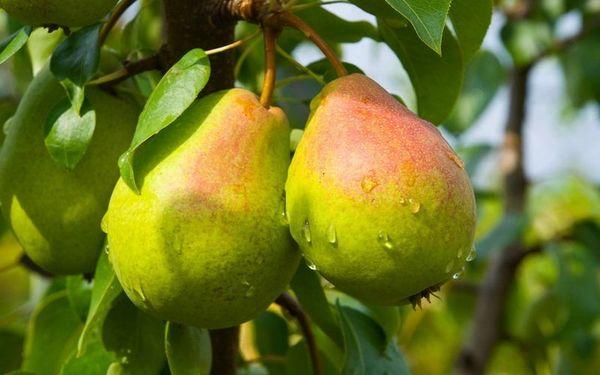
Peculiarities of planting and caring for a pear tree
To get a rich harvest in your garden, you need to consider the specifics of tree planting:
- Site selection. Strong winds are common in many regions of Siberia. It's best to plant fruit trees near buildings, which will provide protection from gusts of wind. However, keep away from poplar trees, which are a favorite breeding ground for leaf rollers (one of the main pests of pears). Covering the shrubs with agrofibre is recommended for the winter.
- Timing. It's best to plant young pear trees and shrubs in the fall.
- Fertilizing. Fertilizing your pear tree is important if you want to grow a bountiful harvest. After digging the hole, add organic matter (superphosphate) to nourish the root system.
- Pruning. The plant's roots grow slowly, and nutrients flow to the upper parts of the trees. To increase yield, the upper dry branches of seedlings are pruned immediately after planting.
Pear trees are not self-pollinating. Therefore, it's best to plant two or three varieties of pear trees.
If the area of the plot is small, then it makes sense to grow columnar varieties.
After planting pear trees, it is important to ensure proper care from the first day:
- Irrigation. Sprinkler irrigation is effective. If it's not possible to install such a system, water the trees under each bush twice in the usual way: in the spring and summer. Also, when the crop ripens.
- Fertilizers. Fruit trees respond well to organic fertilizer applied once per season. Humus and urea increase yields. Potassium chloride can be added to the soil up to three times.
- Preventative measures. The main pests of pears are fruit rot, leaf rollers, and sooty mold. To protect against these, treat with Bordeaux mixture and a fungicide spray.
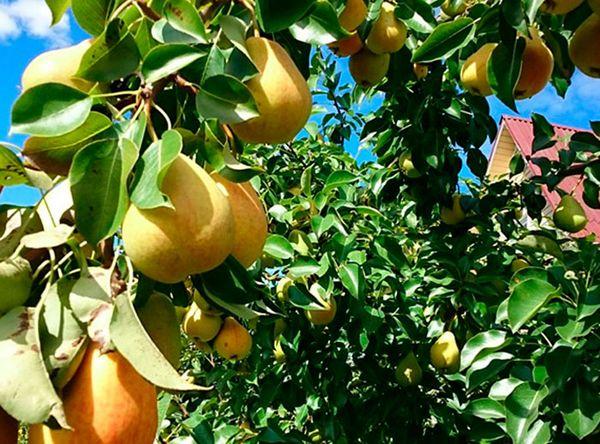
Often infects pear bacteriosisSymptoms: black clogged channels appear on the cut branches, and the leaves turn black. Such branches need to be removed, the cut area should be watered with vodka or alcohol, and then covered with garden pitch.
The best varieties: description and characteristics
Gardening in Siberian regions is risky, so juicy fruit varieties must be carefully selected. The key requirements are self-fertile, early maturing, and frost-resistant.
Dalikor
Dwarf columnar shrubs with a trunk height of up to 2 m. Lifespan: 9-10 years. Fruit weight: 450-500 g.
This variety is resistant to insects and diseases. It boasts rich, tender flesh with a creamy flavor. Pruning allows for the formation of columns with flattened tops. Ripening period: early fall.
Pears are easy to keep. If stored properly, they will last until New Year's.
Dekabrinka
A tall pear tree with a rounded crown, up to 6 m in height:
- leaves are green and oblong;
- fruits are medium-sized, smooth, pear-shaped, weighing 100-150 g;
- the peel is golden.
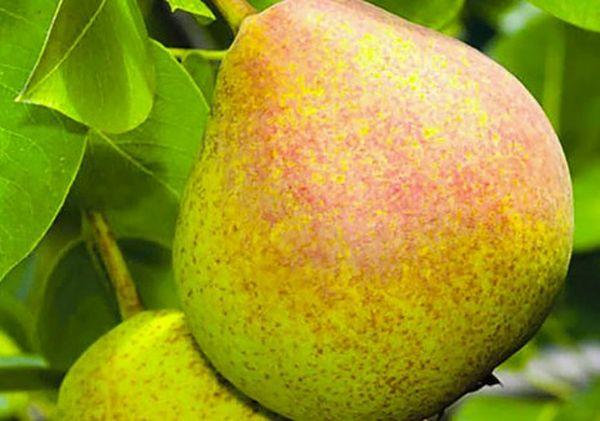
Dekabrinka lives up to its name. This high-yielding, frost-resistant variety is specifically designed for planting in Siberia. The fruits acquire an emerald-amber color as they ripen and retain their flavor for a long time.
Fruiting is good. Yield is stable. Ripening period is the second half of September. Pears are stored in cellars until December. They bloom late in the garden, but can withstand frosts down to -48 degrees Celsius.
Carmen
A beautiful summer table grape variety. Ripens early, in the third ten days of July. Stores until October.
Specifications:
- crown – narrow pyramidal;
- shoots are straight and brown in color;
- leaves - green with a reddish tint;
- the plates are slightly concave;
- The fruits are sweet and sour, not astringent, weighing 160-180 g.
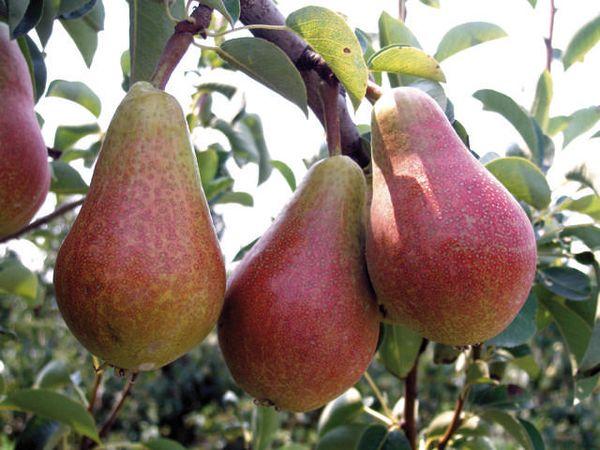
This variety is frost-resistant and transportable. Its lifespan is 25-50 years. However, it requires fertile soil and good drainage. It's best to plant the bushes in early May or the first half of October.
Lel
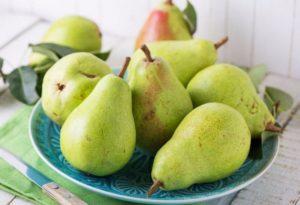
A medium winter-hardy variety, preferred for cultivation in the west and east of Siberia.
Specifications:
- fruits – yellow-green, tender, juicy, weighing 65 g;
- ripening period – end of August;
- growing soil – loam;
- yield – 40-45 kg per tree
Plant seedlings in the spring, after the danger of frost has passed. It's important to water them generously 2-3 weeks after planting to promote growth.
Lukashovka
This variety is highly productive and frost-resistant. However, it is not self-fertile and requires pollinators.
Tree height: up to 5 m. Fruit weight: 100-200 g. Yield: 150-200 kg per tree. Pears have a tart, sour taste. They don't store well. Best used for canning.
Yakovlev's favorite
Suitable for growing in the Central Black Earth region, this variety is quite popular among gardeners.
Description:
- the trees are tall, up to 4-5 m in height;
- skeletal branches, extending from the trunk at a right angle;
- the leaves are round, ovoid, dark green in color;
- inflorescences are white, numerous, with 7-10 flowers;
- the fruits are sourish;
- The pulp has a quince aroma and is yellowish, creamy in color.
The variety is poorly self-fertile, producing up to 10-25 ovaries on its own. It's recommended to plant another pear variety nearby for pollination.
Yield in the 7th year is 20-30 kg.
Myth
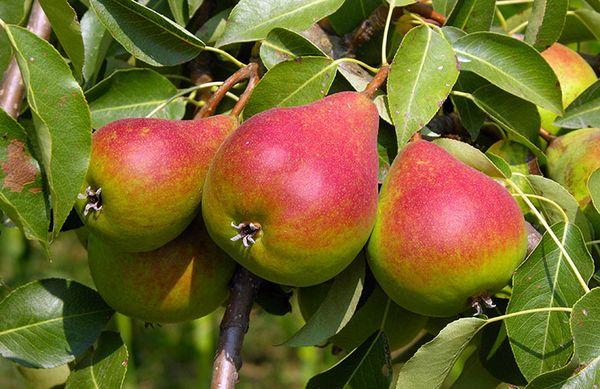
The trees grow up to 5 meters in height. In the spring, elongated green leaves appear. Fruit forms in early summer. Ripening takes up to 50 days.
The fruits are yellow with a rough skin. This is a shelf-stable variety, storing for up to 4 months.
Autumn Dream
High-yielding variety:
- the bushes are low and compact;
- fruits are small;
- the pulp is sweet and sour.
Harvest – late August – early September.
Perun
A moderately winter-hardy pear resistant to fungal infections. Suitable for growing in southern Siberia. Considered self-sterile. Requires pollinators when planting.
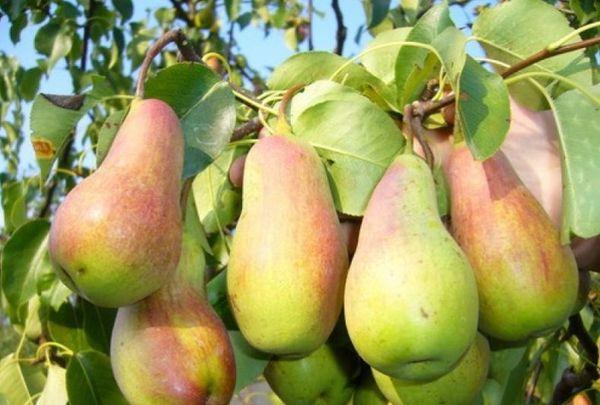
The fruits are golden, bumpy, weighing 51-80 g. They have a sweet and sour taste. Ripening is late, from early October until frost. Planting is done in the spring. The first harvest is obtained after 4-5 years.
Svarog
An ideal variety for the north of the country. It boasts high winter hardiness and impeccable resistance to fungal infections. However, it requires regular watering and is not drought-tolerant.
The fruits are yellow, weighing 60-80 g. The flesh is creamy and slightly tart. Harvest is in mid-September. Yields can reach up to 20-25 kg per tree with proper care.
Firefly
A winter-hardy pear that can withstand temperatures down to -45°C. It boasts excellent flavor. Fruits weigh up to 100g. Ripening period: September. The harvest has a shelf life of 2.5-3 months.
Firefly grows as a tree with a spreading pyramidal crown. The leaves are medium-sized, oval, and slightly pointed. The fruits are small due to the dense crown. They can rot during prolonged storage.
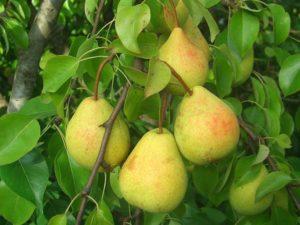
Northerner
A compact columnar variety growing up to 1.5 m.
Description:
- leaves are pointed and wide at the base;
- the crown is dense and pyramidal;
- The fruits are dense, juicy, sweet and sour, weighing up to 100 g.
The yield is low, but the pear tree can withstand frosts down to -50°C. It recovers quickly after a challenging winter. It bears fruit in the second year after planting.
Fairytale
Tall trees up to 4 m in height.
Description:
- the crown is high, pyramidal;
- branches are erect, spreading;
- skeletal stems;
- shoots are straight, dark burgundy;
- the buds are small, oval;
- leaves are elongated, pointed;
- fruit weight – 180-200 g;
- the skin is pale, emerald in color.
The pears themselves are elongated, oblong, with buttery flesh and a subtle aroma. Flowering occurs in May and June. They are early ripening, bearing fruit within one to two years after planting. A tree yields up to 3 kg. By the fourth or fifth year, it can yield up to 12 kg.
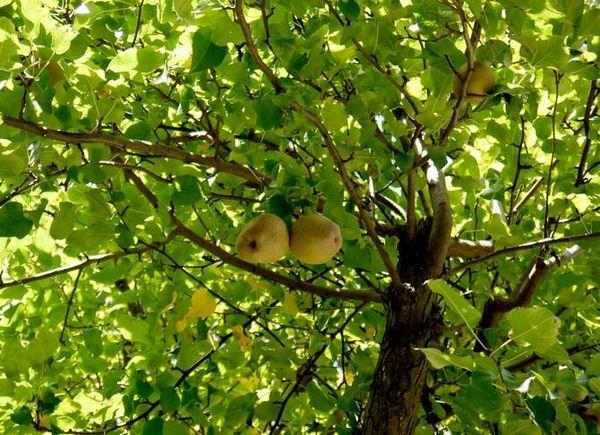 The pear is frost-hardy, productive, and drought-resistant. However, the harvest only lasts 10 days and is not transportable. The fruit spoils quickly and loses its flavor.
Taiga
The fruits are sweet and dessert-quality, weighing up to 90 g. They won't fall off even in strong winds. They can be stored for up to 1 month. The variety is resistant to scab and gall mite. After planting, a harvest can be enjoyed by the end of summer in the fourth year.
Uralochka
An early-ripening variety. Grows up to 5 m in height.
Description:
- the crown is rounded, spreading;
- skeletal branches growing straight;
- the fruits are small, 44-60 g.
The pear tree produces its first harvest in the second ten days of September, in its fourth or fifth year. The fruits remain on the branches for up to 10 days.
This variety survived the winter of 1979, when temperatures dropped to -48 degrees Celsius. The mother tree only suffered a frostbite of 1 degree Celsius. After the winter, the tree yielded 20 kg. Uralochka has a high immunity, adaptability to drought, excellent transportability, and a shelf life of over one month. The only drawback is its small fruit, although this is typical for cold regions.
Many farmers and gardeners today strive to grow pears, despite the challenges they face in the cold Siberian climate. The key is to select frost-resistant varieties after carefully studying their descriptions, pros and cons, and planting and care instructions.
Related posts:
 Description and full characteristics of the Yakovlev Memory pear variety, planting and care
 Description and full characteristics of the August Dew pear variety, planting and care
 Description of the 23 best pear varieties for the middle zone, planting and care rules
 Description of the Rogneda pear variety, planting and care instructions
 Description and characteristics of the 45 best pear varieties, how to choose
 Description and full characteristics of the Lada pear variety, care and cultivation
 Description and characteristics of the Marble pear variety, pollinators and cultivation subtleties
 Description of the Cathedral pear variety, planting and care features