
- The history of Lada pear breeding
- Distinctive features and characteristics of the variety
- Tree dimensions
- Branching of the crown
- Flowering and pollinating varieties
- Ripening time and harvest
- Tasting evaluation of fruits
- Planting technology
- Selecting a seedling
- Preparing the site and planting hole
- Timing and rules for planting operations
- What kind of care does a pear tree need?
- Regularity of watering
- How and what to feed a tree with
- Trimming
- Diseases and pests: treatment and prevention
- Caring for the tree trunk circle
- Preparing for winter
- How does culture reproduce?
- Gardeners' reviews of the variety
Among the wide variety of pears, gardeners and large producers alike are looking for high-yielding crops with delicious fruit that require minimal maintenance. The Lada pear is one such variety. This fruit tree is frost-resistant and weather-resistant. It produces juicy fruit with a medium-sweet and tart flavor.
The history of Lada pear breeding
The Lada pear variety was added to the State Register of Breeding Achievements of the Russian Federation in 1993. Scientists at the Timiryazev Agricultural Academy developed the new hybrid as a result of breeding work 38 years earlier.
The crossbreeding experiments involved the undemanding Belgian variety Lesnaya Krasavitsa and the small-fruited but high-yielding Olga variety.
Distinctive features and characteristics of the variety
A complete description of the Lada pear includes both its positive and negative qualities. The cultivar's advantages include:
- high winter hardiness (up to -36°C), does not require tree cover;
- resistance to fire blight and scab;
- early fruiting - stable fruiting begins 3-4 years after planting;
- yield reaching 0.5 centners per tree;
- undemanding to lighting;
- the ability to bear fruit without additional pollinators;
- sweet taste, versatility of fruit use;
- resistance to shedding.
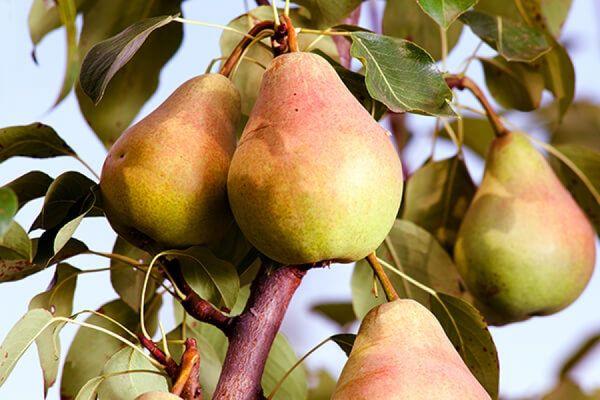
A description of the Lada pear would be incomplete without mentioning its shortcomings. The following disadvantages have been identified:
- inability to preserve varietal properties during transportation of fruits;
- short shelf life, limited to two months;
- small fruits - 100–110 g;
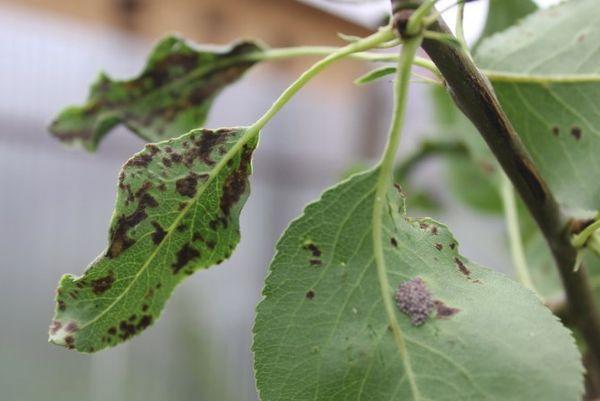
- Fruit trees are often affected by brown spot.
Gardeners cite problems with harvesting due to wasp attacks as a disadvantage.
Tree dimensions
The size of an adult tree does not exceed five meters.
Although the Lada pear variety begins to bear fruit early—in the 3rd or 4th year—the plant continues to develop and grow in height until it is 6–7 years old.
Branching of the crown
The branches, which are several shades lighter than the dark gray trunk, have medium growth vigor. At the beginning of the growing season, the tree forms a cup-shaped crown, which becomes conical (pyramidal) by the end of its growth.
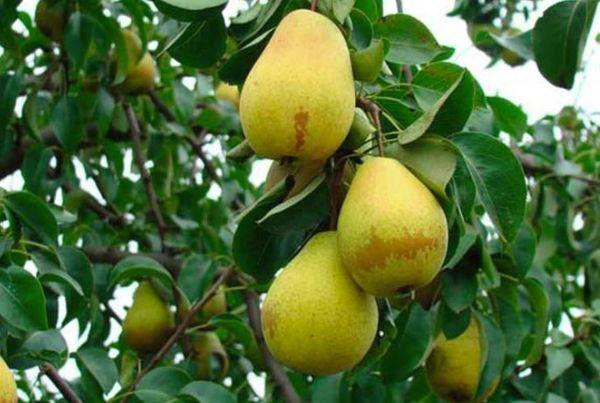
The first tier from the bottom forms a circle with a diameter of up to 4 m, the upper one - 1.5 m. Brown long shoots with short internodes thicken the crown, so they require pruning.
Oval green leaves, elongated towards the ends, smooth without pubescence on both sides.
Flowering and pollinating varieties
The Lada pear's white, cup-shaped flowers are gathered in corymbose inflorescences of 5–8. While fully self-fertile, the tree becomes partially self-fertile under unfavorable growing conditions, so additional pollinators are required to increase yield. Other pear trees that bloom at the same time are planted nearby at least 4 meters away.
Varieties that improve the taste and quantity of fruits include:
- Northerner;
- Rogneda;
- Otradnenskaya;
- Space;
- Chizhovka.
In the absence of these varieties, they plant those whose flowering period overlaps with the flowering of Lada for at least a week.
Ripening time and harvest
Lada pears reach technical maturity in late July or August. The harvest is picked first in regions with milder climates. In the Moscow and Leningrad regions, pears ripen in the first to second ten days of August.
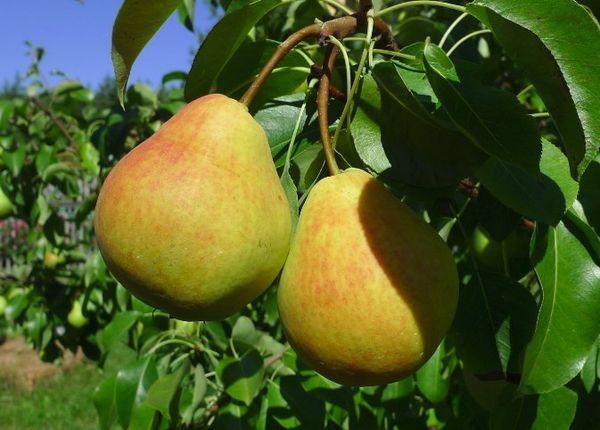
The fruits are picked immediately after ripening, since the fruits remaining on the branches do not fall off, but lose their dessert taste and aroma.
Pears are stored in wooden or plastic boxes, placed in two layers, in a cool, ventilated room for no more than two months.
Tasting evaluation of fruits
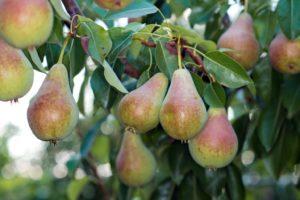
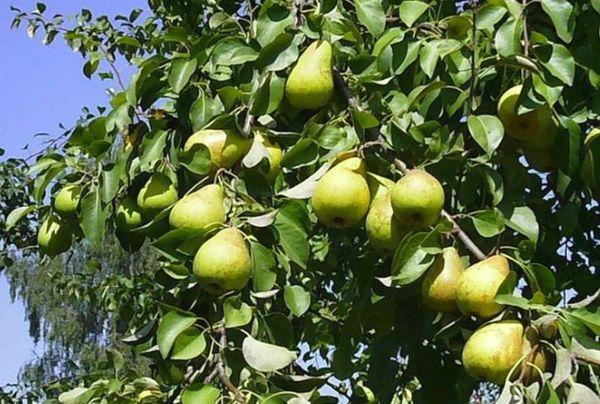
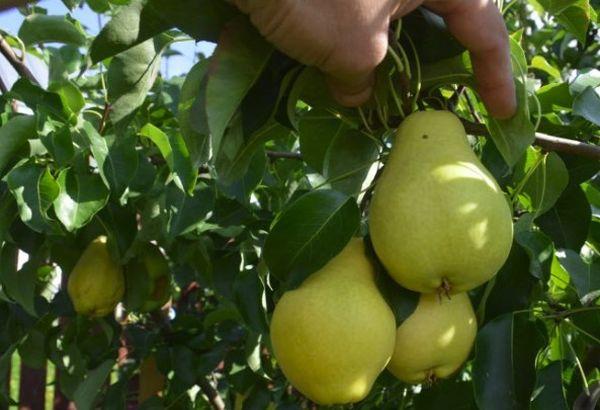
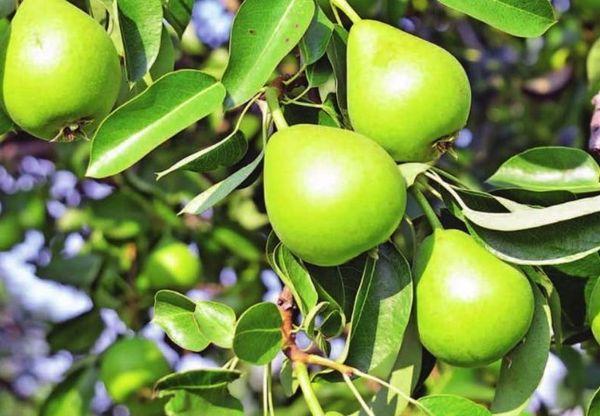
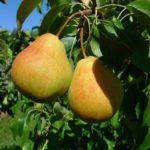
Professional tasters rated the light yellow fruits with a blurred blush at 4.1 points for a medium-sweet and sour taste with a moderate aroma.
The creamy flesh is juicy and fine-grained. These fruits, considered dietary products, are eaten fresh, dried, and cooked to make homemade compotes, juices, and jams.
The fruits are used in baby food, adding pieces of fruit to yoghurts and cottage cheese.
Planting technology
Trouble-free cultivation of the Lada pear depends on the correct selection of seedlings, soil and planting hole preparation, and timely planting in compliance with planting technology.
Selecting a seedling
If you lack the knowledge to independently identify high-quality seedlings, you can trust the staff of specialized nurseries.
But to be sure of making the right choice, you should know the minimum requirements for planting material.
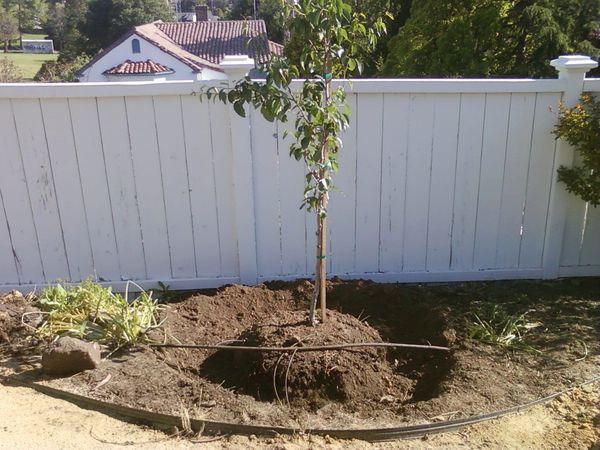
A seedling takes root best when it's two years old. Choose a tree with smooth, dry bark and well-developed, rot-free roots. The tree must be dormant, have live buds, and have a trunk diameter no larger than 1 cm.
Preparing the site and planting hole
The more light and warmth a pear tree receives, the more abundant its fruit production. The tree does not tolerate cold air that accumulates in low-lying areas and groundwater located closer than 3 meters to the surface. Pear roots extend not only deep but also 3 meters wide, so it's important that underground utilities are not obstructed.
Pear prefers fertile loams.
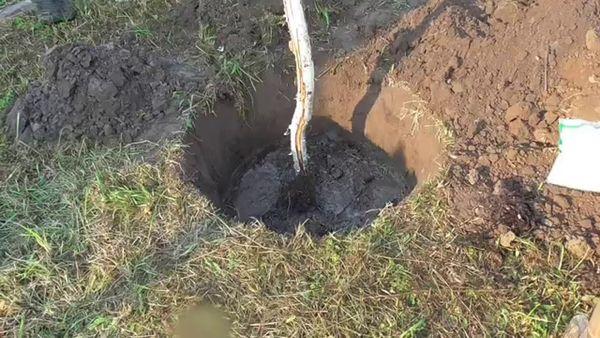
A cylindrical hole for spring planting is prepared in the fall to prevent subsidence during planting. The following dimensions are used: depth – 0.6 m, diameter – 1.0 m.
The top fertile layer of garden soil is combined with 2 buckets of organic matter (manure, humus), 100 g of superphosphate and 200 g of ash are added.
Timing and rules for planting operations
Planting the Lada pear in April gives the gardener ample time to correct any improper tree growth, and the tree enough time to develop its root system. In spring, the trees are planted when the average daily temperature is at least +5°C.
For autumn planting, choose a cloudy, cool September day.
Lada pear tree planting algorithm:
- a support stake is driven into the side, 30 cm from the center of the hole;
- they build a small mound at the bottom, onto which they lower the seedling;
- straighten the roots;
- the plant is covered with fertile substrate in parts, periodically shaking the tree to prevent the formation of voids in the roots;
- compact the soil from above so that the root collar rises above the ground by 3–4 cm;
- tie the seedling to the support;
- make a furrow along the diameter of the tree trunk circle, water with 10 liters of water;
- mulch the planting with peat, humus, and grass.
Experienced gardeners recommend placing a dozen chicken eggs at the bottom of the planting hole to improve soil fertility.
What kind of care does a pear tree need?
The Lada pear requires moderate irrigation, formative and sanitary pruning, and care of the trunk area. Timely fertilizing, preventative, and curative treatments improve the plant's immune defenses and yield.
Regularity of watering
Young trees are watered twice a month. Mature Lada pear trees only need to be watered once a month. Water is delivered to the roots through a 20-cm-deep trench dug along the diameter of the tree's crown. Three buckets of water are applied per square meter of the tree's trunk circle.
How and what to feed a tree with
Fertilizing scheme for the Lada pear variety:
- in the fall, 1 tablespoon of superphosphate and potassium sulfate is added to the tree trunk circle;
- in early spring, the crop is watered with a urea solution consisting of 5 liters of water and 100 g of dry matter;
- in May, the pear is fertilized with nitroammophoska (50 g per 10 l of water);
- after flowering, the tree is sprayed twice with a urea solution (2 tablespoons per bucket of water) at intervals of 2 weeks;
- During fruit filling, feed with bromine water (10 g of substance per 10 l of water) using foliar feeding.
Additional nutrition for the pear is provided by organic mulch around the tree trunks during watering and digging.
Trimming
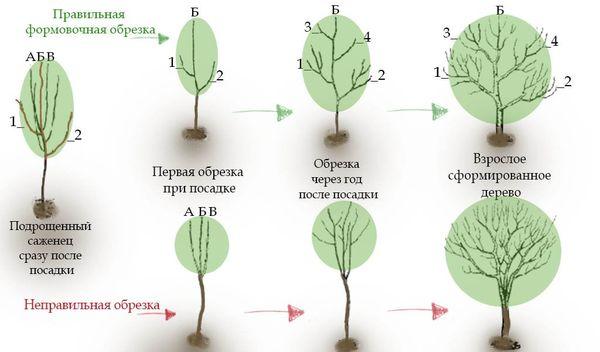
During the growth period of the Lada pear, formative pruning is done in two ways.
The first method, sparse-tiered, involves the annual formation of one tier, consisting of 2-3 differently directed skeletal branches, and pruning the conductor so that it rises above the lateral branches by 25 cm.
With the fan-shaped pruning method, 2-3 branches are formed in the first year at the same distance from the ground, then 1 skeletal branch in a spiral on the conductor.
When planting, the seedling is pruned for the first time. The trunk is shortened to 80 cm and the lateral branches by a quarter. In subsequent years, the tree's skeleton is formed by pruning secondary branches by a third. Every spring and summer, diseased, deformed, thickening, and inward-growing shoots are removed.
Diseases and pests: treatment and prevention
Diseases affecting the Lada pear variety and methods of control:
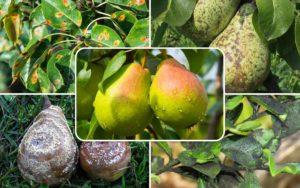
- Fruit rot. Small brown spots appear on the fruit and grow, rendering it inedible. At the first sign of the disease, remove the rotten fruit and treat the crop with Zircon, Fitosporin, or iodine solution. Follow proper agricultural practices.
- Cytosporosis. Dark spots appear on the bark, turning red as they grow. First, sections of the bark die, then buds and branches dry up. Before flowering, treat the tree with Omsih, and after flowering, apply HOM.
- Powdery mildew. A white coating forms on young green leaves, eventually turning brown. Leaves and inflorescences dry up and die. Affected branches are removed. Treatments such as Sulfite and Fundazol are effective.
The most frequently attacked insects are the Lada pear variety:
- hawthorn;
- ringed silkworm;
- pear blossom weevil;
- aphid.
Before the start of the growing season, carry out preventative treatment against overwintered pests by spraying the pear and the trunk circle with a concentrated urea solution (0.7 kg per 10 liters of water).
Aphids and pear blossom beetles are controlled by spraying the crop with a soap-ash solution, tansy and chamomile infusions, and Fufanon, Aktara, and Fastak. Spraying with Karbofos and Rovikurt before flowering helps control hawthorn weed and ringed silkworm.
Caring for the tree trunk circle
Tree trunk care begins in the spring. The area beneath the tree is cleared of snow and debris, and the soil is loosened. These steps are necessary to quickly warm the soil and deliver oxygen, moisture, and nutrients to the roots.
Loosening is repeated after each watering, breaking up the formed crust, and during weeding.
Cleanliness of the tree trunk circle reduces the risk of disease and pest attacks.
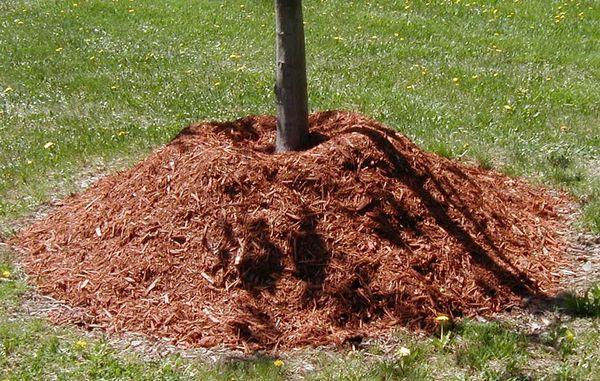
Mulching pear trees with organic mulch—sawdust, hay, peat, or humus—makes caring easier. Mulch retains moisture, insulates the root system, supplies nutrients, and prevents weed growth.
Young shoots must be removed, as their growth inhibits the development of the crop and depletes the soil.
Preparing for winter
Preparatory measures for preparing the Lada pear for the winter period include:
- loosening the tree trunk circle, mulching with a thick 15-centimeter layer of organic matter;
- abundant irrigation with 7-8 buckets of water;
- whitewashing of tree trunks;
- protection from rodents using spruce branches and constructing a frame of metal mesh around the tree.
Young pear trees have their trunks wrapped in paper, while adult trees only need mulch for insulation.
How does culture reproduce?
Small-fruited pears, which include the Lada variety, show good results when propagated by cuttings.
For cuttings, shoots with the following characteristics are selected:
- all the leaf buds have opened except the top two;
- the lower part of the shoot is covered with greenish bark;
- the shoot bore fruit at least twice.
The prepared cuttings consist of two internodes, with the upper cut horizontal and the lower at a 45° angle. Before planting, the cuttings are soaked in a rooting stimulator.
To grow, the cuttings are planted in a container with a 20-centimeter substrate of black soil and rotted manure, deepening them no more than 2 cm. A film is stretched over the top.
Care consists of moistening the soil as needed and creating favorable conditions. The seedlings prefer long, but diffused light.
A month after planting, roots begin to grow on the cuttings. The seedlings are transplanted to their permanent location in the fall.
Gardeners' reviews of the variety
Gardeners' reviews sometimes conflict, but are mostly positive. Fruit tree health and the quantity and quality of the harvest vary depending on the growing location, proper care, and intensity of maintenance.
Vasily Ivanovich, 45 years old, Kyiv
Caring for the Lada pear tree isn't particularly difficult. The sweet and sour, aromatic fruits ripen even in cloudy weather. However, there is one significant drawback. If the fruits are left on the tree for too long, they lose their flavor and texture, becoming soft and chewy.
Lyudmila Grigoryevna, 50 years old, Voronezh
I read that the Lada pear tree begins to bear fruit normally in its third or fourth year, but it took me six years of care to get a bountiful harvest. The fruit, although small, is juicy and sweet. It's a shame that I have to harvest it in the evening, when the wasps are inactive.
Veronika Andreevna, 56 years old, Krasnodar
I fell in love with the Lada pear tree for its winter hardiness and low maintenance requirements. I'm also pleased that the tree is resistant to diseases and pests. I've never had any wormy fruit.
Related posts:
 Description and full characteristics of the Yakovlev Memory pear variety, planting and care
 Description and full characteristics of the August Dew pear variety, planting and care
 Description and subtleties of growing the Russian Beauty pear variety
 Description and characteristics of the Marble pear variety, pollinators and cultivation subtleties
 Description and cultivation of the Skorospelka pear variety from Michurinsk
 Rules for planting and caring for pears in open ground, how to grow them correctly
 Description of the Cathedral pear variety, planting and care features
 Description of the 23 best pear varieties for the middle zone, planting and care rules