
- History of variety selection
- Pros and cons
- Characteristics and features of August dew
- Habitat
- Dimensions of a mature tree
- All about fruiting
- Flowering and pollinating varieties
- Harvest ripening time
- Collection and use of fruits
- Immunity to diseases
- Frost and drought resistance
- Agricultural technology rules
- Timing and technology of planting
- What to plant next to it
- Regularity of watering
- Seasonal fertilization
- Caring for the tree trunk circle
- Crown formation
- Protection and preventive treatments
- Shelter for the winter
- Methods of growing a pear orchard
- Gardeners' reviews of the variety
Gardeners and farmers are drawn to the Avgustovskaya Rosa pear variety for its high productivity, winter hardiness, balanced nutritional profile, and flavor. Its ease of cultivation and decorative crown also play a significant role in choosing the variety.
History of variety selection
When developing the Avgustovskaya Rosa variety, Russian scientists used two original varieties—the domestic Nezhnost (Tenderness) and the Australian Triumph Pakgama (Triumph). These crops combined the best characteristics of the variety—strong immune defense, frost resistance, and high yields, combined with the excellent dessert flavor of the fruit.
The resulting variety, after 5 years of testing, was registered in the State Register of Breeding Achievements of the Russian Federation in 2002 under number 9800204.
Pros and cons
Summer residents and farmers highlight the following properties among the advantages of the crop:
- early maturity of the variety - the beginning of fruiting occurs in the fourth year after planting;
- high yield - 150-200 centners per 1 ha;
- resistance to scab;
- frost resistance up to -36 °C;
- commercial appearance of fruits;
- maintaining freshness during long-term storage;
- high transportability;
- balanced vitamin and mineral complex in the fruits;
- versatility of use;
- drought resistance.
The tasting committee rated the taste of the fruit at 4.5 points.
The following are noted as disadvantages:
- different sizes of fruits despite a bountiful harvest;
- the need for regular pruning;
- partial self-fertility;
- weak immune protection against diseases.
Understanding the pros and cons of pears helps amateur gardeners make an informed choice.
Characteristics and features of August dew
The Augustovskaya Rosa pear differs from other varieties in its vigorous shoot growth, attractive appearance, high yield, and rapid recovery from frost damage. This cultivar possesses a full range of positive characteristics.
Habitat
The Avgustovskaya Rosa pear variety is approved for cultivation in the Central Black Earth Region, where it produces high yields. Planted in sulfurous areas with short summers and long, harsh winters, the pear does not thrive. The climate of southern regions reduces fruiting.
Dimensions of a mature tree
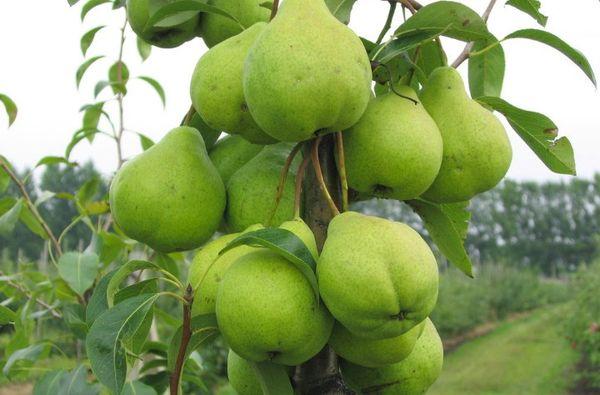
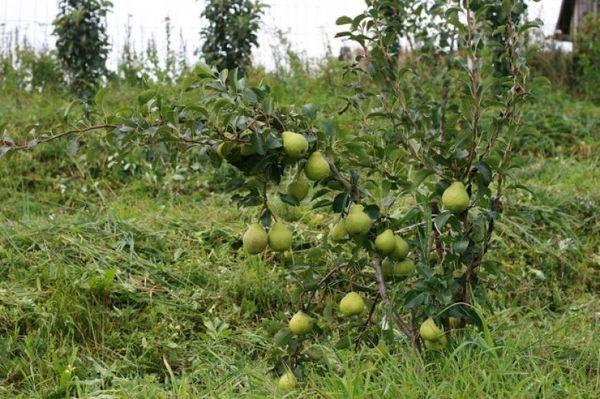
The Avgustovskaya Rosa variety is distinguished by its dwarfism (2.5–3 m), which makes it easier to harvest fruits and care for the crop.
Planting a pear tree enhances the decorative appeal of the plot. The geniculate, arching brown shoots and smooth gray trunk are visible through the egg-shaped green leaves. The drooping crown of medium density creates a refined and elegant appearance.
All about fruiting
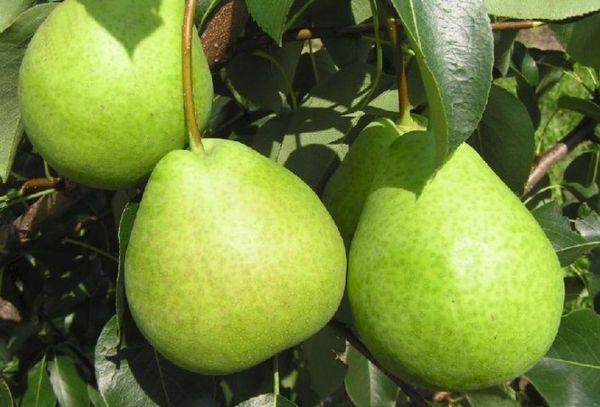
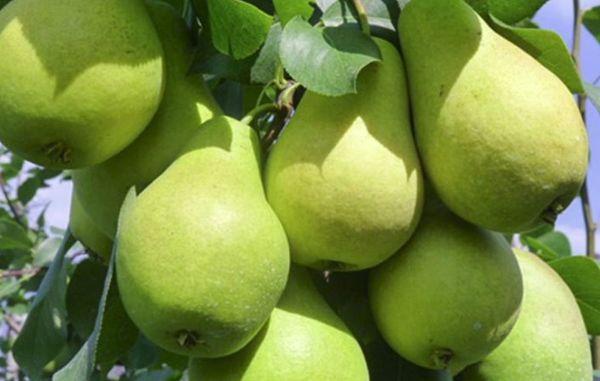
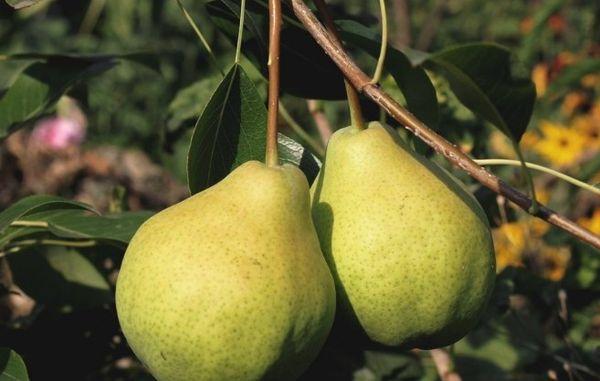
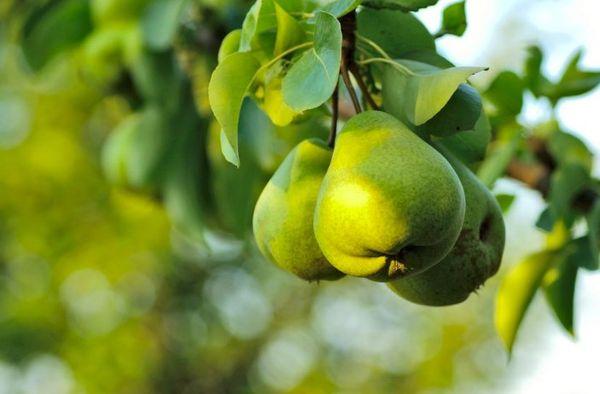
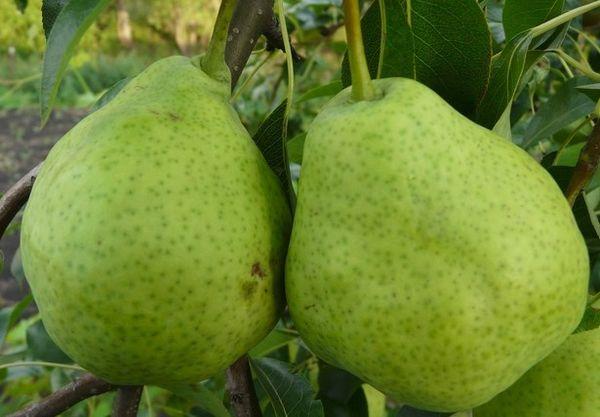
The plain appearance of the August Dew pear is deceptive. Beneath the green-yellow matte skin with a faint blush lies a sweet, aromatic, fine-grained flesh with a piquant tartness.
Each fruit weighs 100–150 g and is short and pear-shaped without ribbing. The skin is thin and matte. Rust is visible at the base where the fruit connects to the arched stalk. The core, containing medium-sized, brown seeds, is onion-shaped.
Flowering and pollinating varieties
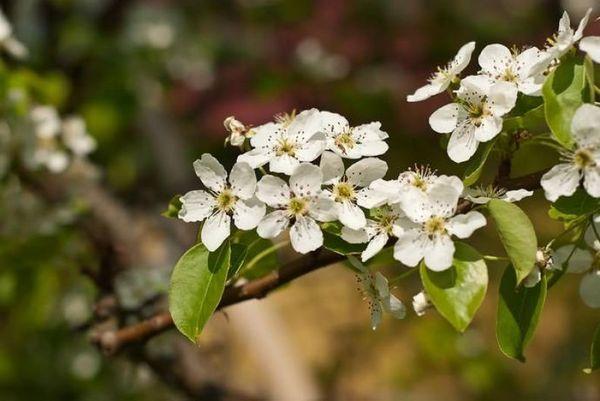
By mid-May, white flowers, collected in inflorescences of 5–10 pieces, bloom on the curved peduncles of the pear tree.
Breeders have stated that August Dew is poorly self-fertile. Gardeners' reviews indicate that the plant does not require pollinators.
The opposing opinions are explained by the fact that pears grow in different climatic conditions, where the tree exhibits properties to varying degrees of expression.
Summer and late summer varieties are suitable for pollination of August Dew:
- In memory of Yakovlev;
- Marble;
- Cathedral;
- Memorial;
- Lada.
The flowering periods partially coincide with the varieties Irista, Tyutchevka, and Yeseninskaya.
Harvest ripening time
The first fruits are harvested in late August, and full technical maturity occurs by mid-September. Left on the branches, the fruits remain fruit-bearing for a long time, retaining their shape, flavor, and aroma.
Collection and use of fruits
To extend the shelf life, the August Dew Pears are harvested by hand a week before they are fully ripe, using a hook to bend the branches.
Table fruits are eaten fresh, juiced, and made into preserves, marmalades, and marmalades. Pears are also included in fruit salads, baked goods, and desserts.
The vitamins and minerals in the fruit provide diuretic, anti-inflammatory, and astringent properties. The fruits are used in folk medicine and in baby food.
Due to its low energy value (47 kcal) and sweet taste, which creates a positive mood, nutritionists recommend including the fruit in the menu when losing excess weight.
Immunity to diseases
To maintain abundant and regular fruiting, the crop requires preventative and curative treatments. The variety is only resistant to scab; there is no information on other diseases.
Frost and drought resistance
The August Dew pear variety is not capricious and easily tolerates adverse weather conditions such as frosts down to -36°C and summer droughts.
According to gardeners, the tree quickly recovers even in snowless winters with temperatures down to -30°C.
Agricultural technology rules
To ensure the Augustovskaya Rosa pear grows healthy and produces delicious, juicy fruit, it's recommended to follow proper irrigation, fertilizing, and crown shaping guidelines. Timely treatments for diseases and pests, as well as preparing the fruit tree for winter, prevent partial crop loss.
Timing and technology of planting
In regions with early, long winters, pear seedlings are planted in the spring (April–May). In areas with a moderate and mild climate, planting is postponed until the fall. Under favorable weather conditions, the tree will have time to establish roots from late October to early October before frost.
Two-year-old seedlings without visible defects, purchased from licensed nurseries, take root better.
If planting is planned for spring, the hole is dug in the fall. If planting is planned for autumn, the hole is dug 2–3 weeks before planting. The top fertile soil layer is mixed with a bucket of humus or compost.
Add 1 kg of ash or 100 g of nitrogen fertilizer, and 1 kg of superphosphate to the soil mixture. If the soil is heavy, add sand. Highly acidic soils are alkalized by pouring a bucket of lime solution into the hole.
The dimensions of the cylindrical hole are: depth - 50 cm, diameter - 100 cm. To drain excess moisture, a 10-centimeter drainage layer is placed at the bottom of the hole.
Planting algorithm for the August Dew pear variety:
- create an artificial small elevation at the bottom of the planting hole;
- install the support;
- the prepared seedling is lowered onto the top of the mound, straightening out the multidirectional and intertwined roots;
- partially cover the tree with soil and pour in a bucket of water;
- add substrate to the top of the hole and compact it;
- tie the seedling to the support;
- a ditch is dug near the tree trunk and watered again;
- mulch the tree trunk circle.
After completion of the procedure, the root collar of the pear remains outside, at a distance of 2–3 cm from the surface.
If you are planting several trees, it is recommended to follow the planting pattern, maintaining a distance of at least 2 m between plants.
What to plant next to it
The phytoncides in maple leaves have a beneficial effect on the pear tree growing nearby. Black poplar repels insect pests. The beautiful rowan tree protects against scab.
The pear also gets along well with certain berry bushes, such as black currants, raspberries, and grapes. Among fruit trees, apples and other pear varieties do not interfere with the growth and fruiting of the pear. Primroses or flowers that grow in the shade of the tree's canopy are planted beneath the pear.
The proximity of juniper, plum, cherry is unacceptable, golden currant.
Regularity of watering
In the absence of drought, five irrigations per season are sufficient for a mature Augustovskaya Rosa pear tree. If the winter was snowless, the soil is first watered in April. The next three irrigations are carried out during the period of ovary formation and fruit ripening. Irrigation is stopped a month before the fruit reaches technical maturity. The last time the tree is watered generously in the fall, preparing for winter (5-7 buckets). A tree older than three years requires 30-40 liters of water per irrigation.
Young trees are watered once a week with 10 liters of water. During dry summers, the frequency of watering is doubled.
Seasonal fertilization
In early spring, before the first loosening, add organic matter (compost, humus, manure) to the area around the August Dew pear tree's trunk at a rate of 5 kg per 1 square meter. Add 1 tbsp each of ammonium nitrate and potassium chloride, and 80 g of superphosphate per the same area.
In May, when the pear tree is in bloom, the plant is watered with a solution of boric acid.
In summer, two weeks after flowering, the plant is fertilized with a solution of ammonium nitrate or urea (30 g of dry matter per 10 liters of water). The fertilization is repeated in early July.
In August, 2 tablespoons of superphosphate and potassium salt are added to 1 square meter of soil for the crop.
When preparing the pear for winter, I add ash to the soil - 1 tbsp. per 1 sq. m.
For better absorption of nutrients, fertilizers are applied to moist soil around the edge of the tree trunk circle, and not under the trunk.
Caring for the tree trunk circle
The pear tree's trunk circle expands as the tree grows and is not limited by the diameter of the planting hole. Care begins in early spring.
The first thing gardeners do is clear the area under the crown of the pear tree from snow and loosen the soil.
The activities lead to the following results:
- the soil warms up faster;
- increases water and air permeability of the soil;
- The absorption of nutrients and vegetation is accelerated.
The pear tree's crown is loosened and weeded several times throughout the summer when the soil becomes compacted and overgrown with weeds. After watering, the soil around the tree's trunk is mulched 10 cm from the trunk to retain moisture and prevent disease and pest attacks.
During the next loosening, the mulch gets closer to the roots and is used by the crop as fertilizer.
It is recommended to clear the soil of tree shoots that inhibit the growth of the mother plant.
Crown formation
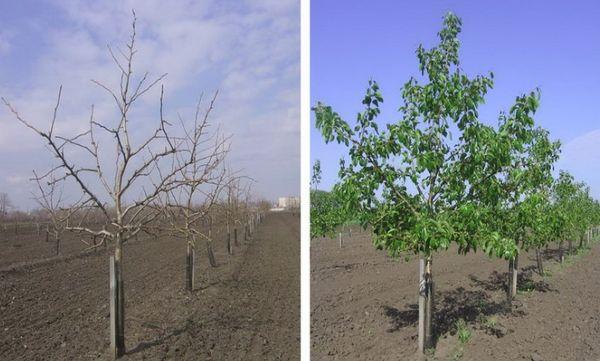
Shaping the crown of dwarf fruit trees, including the August Dew pear, is a simple undertaking. Immediately after planting, the trunk of the sapling is pruned to a height of 0.5 m. Subsequently, the skeletal branches are formed in a spiral, oriented in different directions, without creating tiers. The vertically growing main stem is pruned by 20 cm annually, and the lateral branches are pruned by one-third.
Young shoots growing from the pear tree trunk in the wrong direction and thickening the crown are removed.
Protection and preventive treatments
To prevent crop loss due to damage from diseases and pests, preventative measures are taken:
- in autumn, the area under the tree is cleared of fallen leaves, fruits, and broken branches;
- dig up the soil around the tree trunk;
- whitewash the trunk and lower skeletal branches of the pear tree in spring and autumn;
- monitor the health of the bark, clean cracks to healthy tissue, treat with fungicides;
- Sticky belts are attached to the trunk of the crop, and traps and electronic repellents are placed on the crown.
Lime mortar for whitewashing wood is prepared independently with the addition of clay and copper sulfate, or paint can be purchased from a retail chain.
Pear trees are treated with chemicals three times: the first time when the buds begin to swell, the second time during budding, and the third time after flowering.
To prevent attacks by gall mites, aphids, weevils, and leafhoppers, the tree is sprayed with solutions of Chlorophos (20 g per 10 l of water), Karbofos (50 g per 10 l of water), and Agravertin.
To prevent pears from becoming infected with moniliosis, fruit rot, spotting, and rust, use copper-containing Horus, Agiba-Peak, Topaz, copper sulfate, and Bordeaux mixture. Powdery mildew can be prevented by applying colloidal sulfur (80 g per bucket of water).
Shelter for the winter
Mature Augustovskaya Rosa pear trees do not require insulation. The tree's trunks are mulched with peat or a 15-centimeter layer of sawdust. The trunks are whitewashed, protected from rodents with spruce branches, or a wire mesh frame is constructed around the tree. The plant is watered generously.
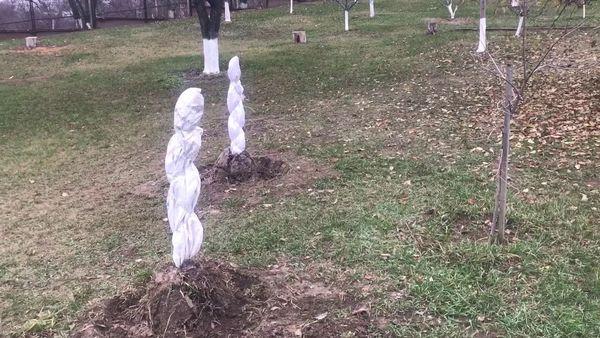
Young pear trees are insulated with burlap, and cardboard, paper, and agrofibre are wrapped around the trunk.
Methods of growing a pear orchard
Growing a fruit tree from seed is a lengthy process and not always worthwhile, as it does not guarantee the characteristics inherent to the variety.
More popular and reliable pear propagation Avgustovskaya Rosa varieties by vegetative methods:
- It's easier to propagate a pear orchard using root suckers. To do this, carefully dig up and separate the rooted sucker from the mother plant, then immediately transplant it to its permanent location.
- When propagating by layering, select a two-year-old branch, bend it toward the ground, and partially bury it in soil placed in a box. The structure is secured with wire. Soon, a shoot with a root system appears on the layered tree, which is separated and planted the following year. Planting material obtained by this method is viable, quickly takes root, and grows.
- To propagate pears from cuttings, select a two-year-old shoot in winter, break it off without separating it from the branch, and wrap it with tape or adhesive tape. In April, when the nutrients have concentrated at the break, the cutting is broken off and placed with the lower cut end in a jar of water. Roots appear within a month. When they reach 5 meters in length, the plant is planted outdoors.
Pear seedlings require intensive care at first - watering, fertilizing, loosening the soil.
Gardeners' reviews of the variety
Gardeners' reviews indicate that the August Dew pear variety has earned positive reviews due to its undemanding nature and productivity.
Svetlana Antonovna, 47 years old
I picked the first five pears from the August Dew. The fruit was hard, probably not ripe enough. I was surprised by the tree's large shoot growth. The branches were almost touching the ground. It became clear that pruning was essential.
Nikolai Mikhailovich, 66 years old
I grow several varieties of pears in my garden, but I've especially liked the August Dew pear. Despite its dull color and small fruit, the tree takes up little space and produces abundant fruit. It tolerates high summer and low winter temperatures well, enhancing the garden's decorative appeal.
Nina Egorovna, 44 years old
The August Dew pear is great in every way, except for its short shelf life. The sweet, juicy fruits stay fresh longer on the branches, so I'm in no rush to harvest.
Related posts:
 Description and full characteristics of the Yakovlev Memory pear variety, planting and care
 Description of the 23 best pear varieties for the middle zone, planting and care rules
 Description and characteristics of the 45 best pear varieties, how to choose
 Description and full characteristics of the Lada pear variety, care and cultivation
 Description of the Cathedral pear variety, planting and care features
 Description of the Rogneda pear variety, planting and care instructions
 Treatment of bacterial blight of pear with antibiotics: causes and symptoms
 Description and characteristics of 14 varieties of the Bere pear variety, planting and care