
- Varieties of Bere pear: description and characteristics
- Summer varieties
- Summer Birch
- Giffard
- Golden
- Autumn crops
- Krasnokutskaya
- Moscow
- Take Luke
- Dil
- Hardy
- Ligerya
- Bosk
- Russian
- Winter varieties
- Ardanpon
- Winter Michurin
- Kyiv
- Features of planting operations
- Deadlines
- Landing rules and scheme
- What kind of care does a fruit tree require?
- Watering and fertilizing
- Trimming
- Whitewashing wood
- Methods of treatment and elimination of diseases and pests
- Preparing for winter
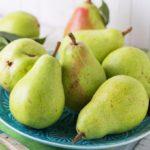
The Bere pear has been cultivated in many countries for over 150 years. France is the historical birthplace of this fruit crop, where most Bere pear cultivars were developed. The main differences among the varieties are characterized by different flowering, fruiting, and ripening times. This fruit variety has gained its popularity due to its low maintenance requirements and the excellent taste of its ripe fruit.
Varieties of Bere pear: description and characteristics
Based on ripening time, fruit crops are classified as winter, fall, and summer. When choosing a fruit tree variety, it's important to consider that each season offers the opportunity to enjoy fruits with completely different flavors and appearances.
Note: While summer varieties of this fruit crop are distinguished by their beautiful, yellow-pink, juicy fruits, the winter variety Bere pear produces firmer, but no less delicious, fruit.
Summer varieties
Most gardeners and farmers prefer to plant summer varieties of fruit crops on their plots, which ripen at the height of the holiday and vacation seasons.

Summer Birch
This fruit crop variety is distinguished by its early fruiting period, excellent natural immunity, and rapid growth:
- Mature trees often reach 7-8 meters in height, with a wide, elongated crown.
- As early as the fourth or fifth year of growth in a garden, fruit trees begin to increase their annual yield. The peak yield of the Bere Letnyaya pear occurs in the 15th or 16th year of development. Trees reaching this age can produce up to 125 kilograms of ripe fruit per season.
- The fruits ripen in early August; in regions with hot weather conditions, harvesting begins in the third ten days of July.
- The fruits are large, pear-shaped, and often reach a weight of 300 grams.
- Ripe fruits take on a yellow or green hue, with barely noticeable gray spots. A pinkish blush develops on the sunny side. The flesh is soft, buttery, white, and very sweet in taste.
Fact! Due to their delicate, thin skin, ripe fruits do not withstand long transportation.
Giffard
Young trees experience their greatest growth. At 5-6 meters, fruit growth stops, but yield and temperature tolerance increase significantly.

The first fruiting occurs in the fifth year of growth. Large, perfectly pear-shaped fruits appear on the trees. When ripe, the fruits turn yellow, with dark spots appearing on the skin. The flesh is white or soft cream, juicy, and has a sweet and tart taste.
The main harvest takes place in September.
Advice! Pears of the Bere Giffard variety have a shelf life of no more than 5-7 days after picking. Therefore, it is not recommended to transport this variety over long distances.
Golden
Perhaps the smallest variety of the Bere pear, bred by an amateur breeder from Belarus:
- Mature trees rarely grow above 3 meters.
- The trees have a dense crown that requires constant shaping and pruning.
- The first fruiting occurs in the 5-6 season of growth and development in the garden plot.
- The fruits fully ripen at the end of summer.
- The hybrid form is distinguished by high yields and excellent natural immunity to many diseases typical of pear trees.
After harvesting, fruits are stored for no more than 10 days without special conditions and equipment.

Autumn crops
Autumn varieties of the Bere pear are characterized by ripening periods that occur at the end of summer or the beginning of autumn.
Krasnokutskaya
The hybrid pear variety Bere Krasnokutskaya begins bearing fruit five seasons after planting the seedlings in open ground. A 10-year-old plant yields up to 50 kilograms of ripe fruit. Trees 15 years and older produce up to 110 kilograms of fruit annually.
The harvest period falls at the end of September or the beginning of October.
This fruit tree is characterized by rapid growth of young seedlings. Mature trees reach 5-6 meters in height with an elongated, oval-shaped crown.
Ripe pears are large, often weighing over 200-250 grams, with a regular pear shape and thin but firm skin of a yellowish-greenish hue. Sometimes a light brown color appears. The pear tastes sweet, with a slightly tart aftertaste and a rich aroma. The flesh is buttery and juicy.
 Advice! To ensure the tree develops fully and produces fruit, it is recommended to prune annual shoots annually.
Moscow
The variety was obtained by crossing summer varieties of Bere pears and autumn varieties of fruit crops.
Trees begin bearing fruit in the third season after being transplanted to open ground. This hybrid form is recognized as a dessert variety with versatile fruit.
The harvest takes place in early autumn. Overripe fruits do not stay on the branches and quickly fall off.
The main advantage of this cultivar is its increased resistance to disease and sudden temperature fluctuations. The fruit crop is also highly resistant to severe frosts.
Take Luke
The hybrid form of the Luca bere is native to France. The trees grow and develop quickly. The first fruiting occurs 4-5 seasons after planting the seedlings in the garden. Fruit trees do not tolerate severe frosts and temperature fluctuations well, but they have excellent immunity to fungi and harmful insects.

The main fruit harvest occurs in late autumn. It is in November that pears reach full ripeness.
The fruits are medium-sized, rarely exceeding 200 grams in weight, with thin, greenish-yellow skin. The pear flesh is moderately juicy, firm, and sweet.
After harvesting, the fruits are stored for up to 90 days, which facilitates the transportation of pears over long distances.
Fact! The main feature of the hybrid pear, Bere Luka, is the presence of thorny spines on the trunk and branches.
Dil
The origin story of this cultivar begins in Belgium. In the early 19th century, a gardener accidentally discovered a seedling in his garden, which was later cultivated.
Specifications:
- The trees grow tall, with a wide, elongated crown.
- To ensure abundant harvests, it is recommended to plant pollinators. The Bere Dil pear itself is not suitable as a pollinator due to its unsuitable pollen.
- Fruit trees enter the fruiting phase 5-6 years after planting the seedlings.
- Harvest occurs at the end of September. Ripe fruits tend to fall off, so harvesting is not delayed.
- The hybrid variety is demanding in terms of growing conditions and soil composition, but under favorable conditions, gardeners and farmers can obtain up to 100 kilograms of fruit from a single tree.
The Bere Dil pear is often affected by diseases and does not tolerate low temperatures.

Hardy
Another French pear cultivar, the Bere, is characterized by rapid growth, with a wide, spreading, elongated crown that widens slightly at the top.
This fruit crop is completely undemanding in terms of growing conditions and care. The first fruiting occurs 4-5 seasons after planting the seedlings. Harvesting occurs in early autumn. Ripe fruits average up to 200 grams in weight, with firm, bright yellow skin and numerous dark or pinkish specks. Experts rate the fruit's flavor as excellent. The flesh is a delicate creamy color, sweet with a slightly tart aftertaste, juicy and aromatic.
Ligerya
There is no reliable information about the origin of the hybrid form of the Bere pear, known as Ligeria. The first mentions of this fruit crop were recorded in the Czech Republic in the late 18th century.
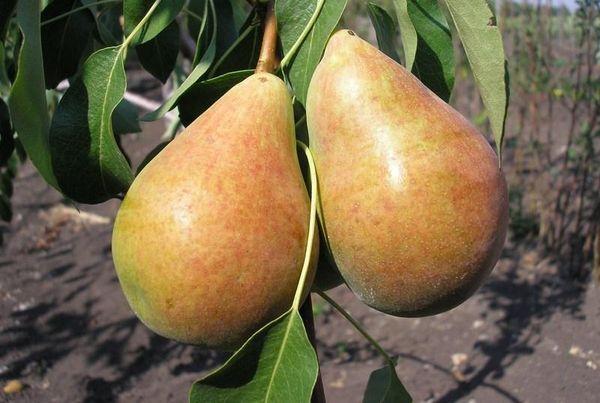
Characteristic:
- The trees are large in both height and width, which requires constant formative and sanitary pruning.
- The fruits ripen in the first half of September.
- Ripe fruits are small in size, with a maximum weight of up to 150 grams, oval in shape and with thin, delicate skin of a greenish hue.
- After harvesting, the skin turns a rich yellow color.
- The fruit's taste is rated high. The pear's flesh is soft, rich in juice, and has a distinct muscat aroma.
The shelf life of the fruit is up to 3 months, which allows the pear to be transported over long distances.
Bosk
The Bere Bosc pear variety was first discovered over 300 years ago. It is still cultivated by gardeners and farmers around the world. The trees grow and develop rapidly, bearing fruit within six seasons of planting. The first ripe fruits appear in mid-September.
The fruits are small, weighing up to 180-190 grams at most, so they accumulate the necessary sugars over the summer. The flesh is soft, juicy, and has a pleasant almond aftertaste. It is covered with a thin, yellowish skin. A pink blush often appears on the sunny side of the fruit.

Russian
The Bere pear cultivar was developed by domestic breeders who engineered the hybrid to be highly resistant to frost and disease.
Mature trees are small, reaching a height of 4 meters, which makes tree care and harvesting much easier.
According to gardeners and farmers, the fruits have excellent taste and a long shelf life, and they can easily be transported over long distances.
Tip! To get a bountiful harvest of delicious pears, it's recommended to plant trees with different ripening times.
Winter varieties
Winter varieties of the Bere pear include hybrid forms of the fruit crop with very late harvest periods, occurring at the end of October and November.
Ardanpon
A late-ripening variety. Harvesting begins in the second half of autumn. The fruits are large, pear-shaped, and often weigh over 200 grams.
According to gardeners and farmers, the trees grow and develop quickly, reaching 6-8 meters in height at maturity. The crown is elongated, pyramidal, with multiple branches and shoots.
Ripe fruits acquire a yellow tint with multiple dark spots and bumps on the surface.
Winter Michurin
This cultivar was developed by Soviet breeders by crossing a wild Ussuri pear with the Bere Royal variety. From its parents, the hybrid form inherited a strong, wide trunk, a tall, elongated crown, natural disease resistance, and enhanced frost tolerance.
The fruit tree begins to bear fruit in its sixth year of growth. The fruits ripen in the second half of autumn. The fruits are sweet and sour in taste, green or yellow in color, with firm, crisp flesh and numerous bumps on the surface.
Interesting! After harvesting, the fruits take on a bright yellow hue, and a pinkish blush appears on the barrels.
Kyiv
This fruit variety is characterized by rapid fruiting, excellent natural immunity, and high climatic tolerance. The Bere Kyivska pear easily tolerates both short-term droughts and sudden temperature fluctuations. The first fruit harvest is obtained as early as the fourth season after transplanting the seedlings into the open ground. Peak yield occurs between the 14th and 16th years of tree growth.

The fruit ripens in late autumn. When stored properly, ripe fruit can be stored for up to 2.5-3 months without losing its flavor or marketability.
Features of planting operations
With rare exceptions, Bere pears don't require special attention during cultivation or subsequent care. However, there are certain growing conditions that are essential for a bountiful harvest of Bere pears.
For growing fruit trees, choose flat, well-lit land with fertile soil.
Important! Fruit crops react negatively to any transplanting or relocation. Therefore, when selecting a site, consider all the necessary requirements for the plants' full growth and development.
Deadlines
The Bere pear variety is planted outdoors in the fall or spring. In the fall, planting should begin 5-7 weeks before the first frost. In the spring, planting should begin before the first bud break, but be sure to plant in soil that has warmed up after winter.
Also, the timing of transplanting seedlings into the soil may depend on the varietal characteristics of the fruit crop varieties.

Landing rules and scheme
Before planting pear seedlings, it is necessary to prepare the land and dig planting holes:
- The area is dug to a depth of 30-40 centimeters.
- Weeds are completely removed and the soil is loosened.
- Depending on the soil composition, it is necessary to add humus and fertilizers; lime is added to soil with high acidity.
- The permissible presence of soil and groundwater is allowed at a level of at least 2.5-3 meters above ground level.
- On the prepared site, planting holes are dug up to 1 meter deep and in diameter.
- The optimal distance between seedlings is from 3 to 4 meters, and between rows up to 5-6 meters.
- Small stones are placed at the bottom of the holes and a fertile mixture is added.
- The prepared hole is generously moistened.
Tip! Prepare the site and planting holes 1.5-2 months before the planned planting of seedlings.
It is recommended to purchase varietal seedlings only from proven and reliable nurseries.
Before planting, the plant rhizomes are soaked in a mixture of warm water and clay, the roots are carefully trimmed and treated with a growth stimulant:
- A pear seedling is placed into the prepared planting hole.
- The rhizomes are carefully distributed throughout the hole and covered with soil, trying not to leave voids in the soil.
- The soil under the plant is compacted and moistened.
After planting is complete, a layer of dry grass or compost is placed around the pear tree.

What kind of care does a fruit tree require?
Not only the future yield of fruit crops, but also the health of plants depends on proper care.
Watering and fertilizing
Pear trees enjoy regular watering but do not tolerate excessive soil moisture. Therefore, trees are watered no more than 4-5 times during the growing season. Each plant receives up to 30 liters of water. During hot weather and prolonged drought, the frequency of watering should be increased.
Mature pear trees don't require additional fertilizer. Organic fertilizer is added to the soil no more than once every two to three seasons. Mineral fertilizers are used as needed, even in particularly poor soils.
Trimming
Tree pruning is carried out based on the varietal characteristics of the fruit crop varieties.
Crown formation begins in the second season after planting the seedlings. This involves annually shaping the skeletal branches, removing all unnecessary shoots and branches. Fruit trees are also pruned for health in the spring and fall.

Whitewashing wood
In spring, whitewashing the branches and trunks prevents trees from getting burned. Fall whitewashing of pear trees helps protect the fruit crop from harmful insects and small rodents.
Methods of treatment and elimination of diseases and pests
Fruit trees are often affected by various viruses, fungi and bacteria, and harmful insects are always ready to feast on young leaves and ripe fruits.
Preventive treatment of pears is carried out in early spring, before the onset of the growing season, and in late autumn, after the final harvest.
Fungicides, insecticides and biological preparations are used for spraying.
Preparing for winter
Before the onset of winter, pear trees require additional care and insulation.
The trees are generously watered, with up to 100 liters of moisture poured under each plant.
The tree trunk circle is loosened, the soil is mixed with a large amount of humus or compost, and spruce branches or dry leaves are laid on top.
The tree trunk is carefully covered with burlap or special material.
In the spring, as soon as it gets warmer, the cover is removed.
Related posts:
 Description and full characteristics of the Yakovlev Memory pear variety, planting and care
 Description of the 23 best pear varieties for the middle zone, planting and care rules
 Description and full characteristics of the August Dew pear variety, planting and care
 Description and characteristics of the 45 best pear varieties, how to choose
 The best ways to store pears at home during the winter
 Description and varieties of the Duchess pear variety, planting and care
 Description and full characteristics of the Severyanka pear variety, planting and care
 Description and subtleties of growing the Russian Beauty pear variety
