
- What are the benefits of pears?
- Benefits of growing on a plot
- What to choose depending on the planting region
- Varieties for the Moscow region and central Russia
- Fairytale
- Tenderness
- Prominent, or Lumpy
- Smartly dressed Efimova
- Vera Yellow
- Venus
- For southern regions
- For Siberia and the Urals
- Other regions
- Summer varieties of pears
- Northerner
- Rogneda
- Sugar
- Summer oily
- Lemon
- Carmen
- Cathedral
- Victoria
- Bere Giffard
- White leaf
- Bashkir summer
- August dew
- Autumn crops
- Cheryomshina
- Ricks
- In memory of Yakovlev
- Otradnenskaya
- Marble
- Muscovite
- Red-sided
- Vermont
- Veles
- Bryansk beauty
- Moscow Bere
- Winter varieties
- Pyramidal November
- Saratovka
- Pervomayskaya
- Pass-Krasan
- Patriotic
- Maria
- Malvina
- Lyra
- Priest
- Conference
- Kondratyevka
- Golden
- Decania
- Angelis
- Melting
- Self-fertile
- With brown and burgundy fruits
- Red-leaved varieties
- Varieties with unusual fruit shapes
- Disease resistant
The best pear varieties have proven their worth time and again and are found in every garden. Each variety requires specific care and the right approach to cultivation, depending on the region.
What are the benefits of pears?
Eating pears improves health and provides the body with essential minerals and vitamins. Pears have the following beneficial properties:
- strengthens the heart organs;
- improves the functioning of the stomach and digestive organs;
- helps to reduce weight;
- used to eliminate vitamin deficiency;
- strengthens the pancreas;
- improves mood;
- strengthens nerves;
- regular consumption increases potency;
- Pear can be used in cosmetology.
The product is also used in cooking for preparing desserts and salads.
Benefits of growing on a plot
Culture has the following benefits that should be considered:
- the tree grows quickly and begins to bear fruit early;
- can be easily grown with other fruit trees;
- the tree does not require maintenance;
- rarely susceptible to fungal diseases;
- seedlings quickly adapt to the growing location;
- the fruits retain their taste;
- Pears attract pollinating insects;
- the culture carries diseases;
- Pears with red leaves and shoots are a decoration of the garden plot;
- does not require special shelter for the winter.
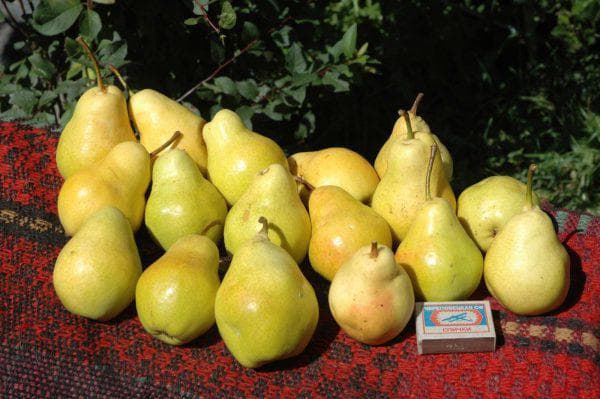
Pear is healthy and is used to improve human health.
What to choose depending on the planting region
To obtain a harvest, it is necessary to correctly determine the type of crop, depending on the region in which the gardener lives.
Varieties for the Moscow region and central Russia
Pears with the best taste can be grown in these regions.
Fairytale
It produces fruit regardless of weather conditions. The tree grows to a height of 3.5 meters. Branches are medium-thick, densely spaced, and the leaves are small. The cultivar gets its name from its attractive appearance. When ripe, the fruit turns dark green with a small red spot on one side. These pears are disease-resistant, making them a popular choice for gardeners.
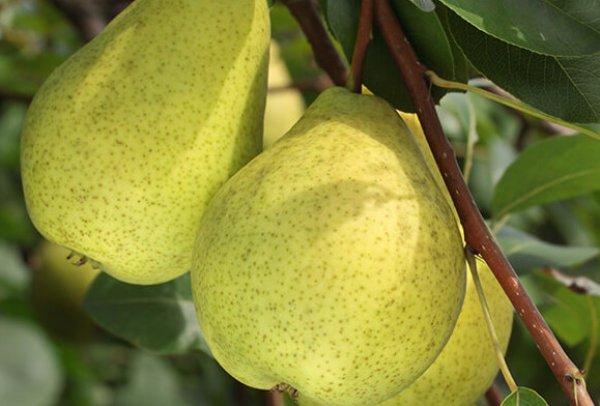
Tenderness
The tree grows up to 4 meters tall. The branches are dense and sparsely spaced. The leaves are large and dark green. The pear is large-fruited and green.
Prominent, or Lumpy
The crown is spreading. The leaves are green and oblong, with pronounced veins. The fruit is greenish-yellow. As it ripens, a dark burgundy spot appears on the fruit. The pear is firm, juicy, and high in sugar.
Smartly dressed Efimova
The plant tolerates low temperatures. The fruits are brown and suitable for storage. Ripening period occurs in mid-August.
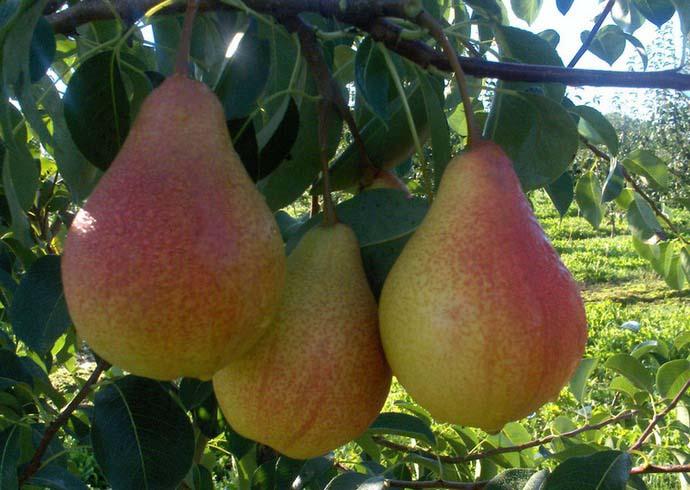
Vera Yellow
The tree is tall, with a strong crown. The pears are winter-hardy and ripen in mid-September. They are distinguished by their yield and taste.
Venus
The crop is easy to care for. The fruit is green, turning burgundy when ripe.
For southern regions
Early-ripening pears can be used in southern regions. These crops require little maintenance, but they do not tolerate low temperatures. Popular varieties include:
- Dicolor;
- Ilyinka;
- Martin.
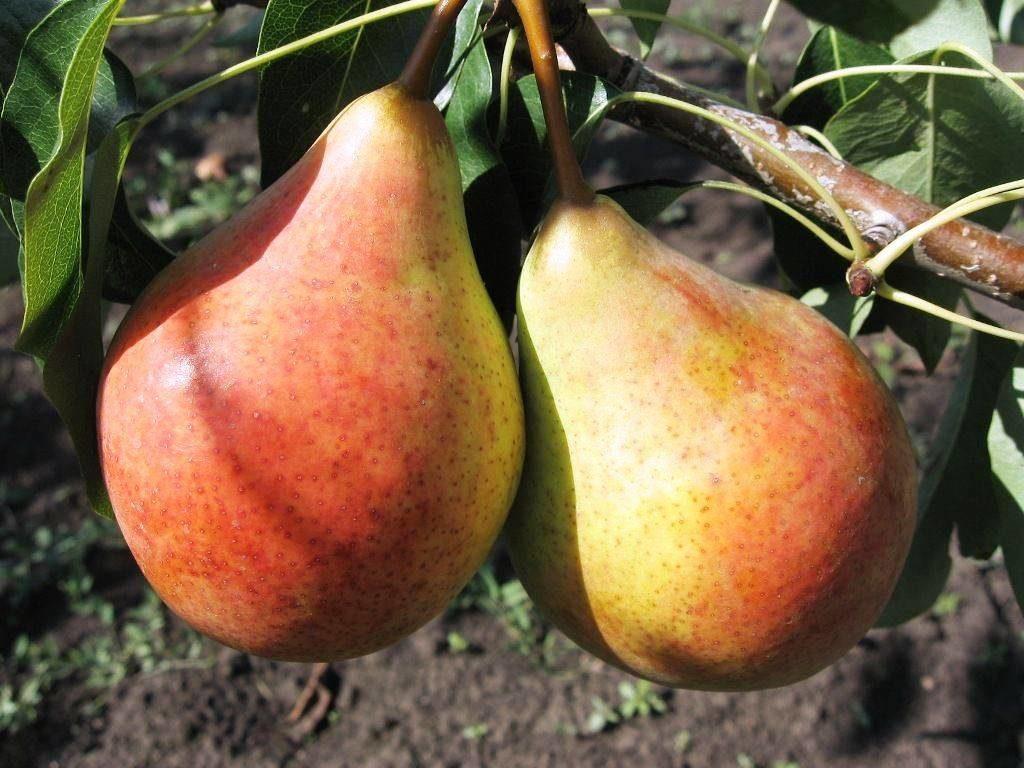
These varieties differ in taste and can be used for storage.
For Siberia and the Urals
For regions with low temperatures, it's important to select crops that can withstand winter. Growing crops in Siberia and the Urals requires following proper care guidelines. Popular varieties include:
- Cathedral;
- Northerner;
- Otradnenskaya.
Take a look Also
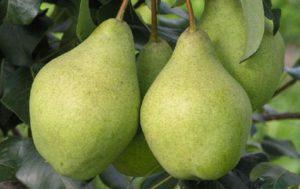
Garden crop varieties require winter insulation and, as a rule, begin to bear fruit by mid-August.
Other regions
The choice of variety should be based on the region where the crop will be grown. In some regions, the following varieties are recommended:
- The following varieties are used for the Rostov region:
- Moldavian early;
- Forest beauty;
- Red Williams;
- Late Kuban.
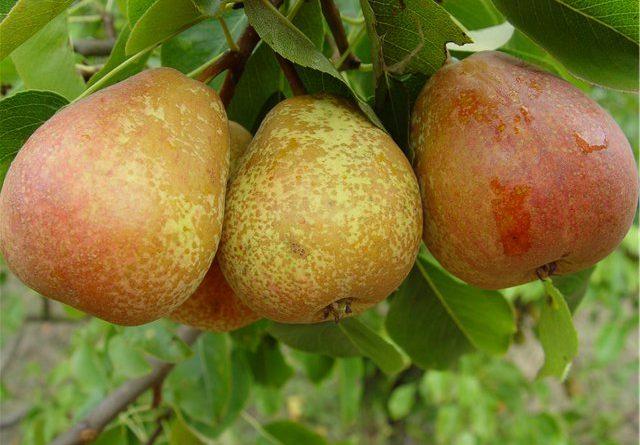
- For the Nizhny Novgorod region:
- School garden;
- Lada;
- Chizhevskaya.
- For the Yaroslavl region:
- Zarechnaya;
- Beauty.
- Pear varieties for the Vladimir region:
- Marble;
- Chizhevskaya.
- Varieties for the Saratov region:
- Seedless;
- Alla;
- Saratovka.
- The most commonly grown crops in the Krasnodar region are:
- Take a look;
- Clapp's Favorite;
- Williams;
- Krasnodar early.
- Types of pears for the Black Earth Region:
- Marble;
- Rossoshanskaya is beautiful;
- Early ripening.
Each type of variety has its own care and cultivation characteristics that contribute to the harvest.
Summer varieties of pears
Pear varieties that ripen in midsummer and differ in sugar content. These include late-summer varieties, which ripen in late August, and early-season varieties, which ripen in mid-July.
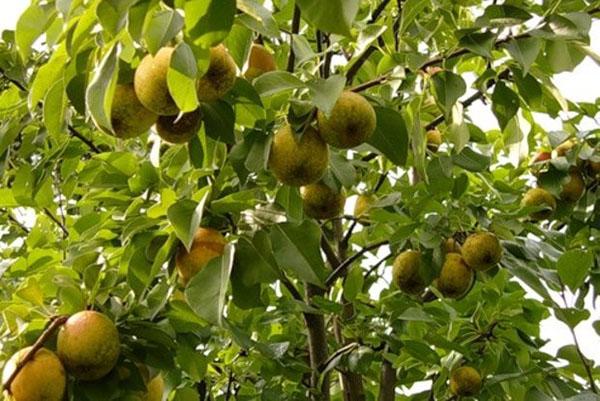
Northerner
The tree is small, up to 3 meters tall. Inflorescences appear in early spring. The pears ripen by the end of July. The pears are green. The skin is rough, and the flesh is sweet and juicy.
Rogneda
This variety produces a large yield. The fruits are small, with soft, yellow skin. They cannot be stored.
Sugar
The plant is early ripening, ripening in late July. The fruits are oblong. The tree has a spreading habit.
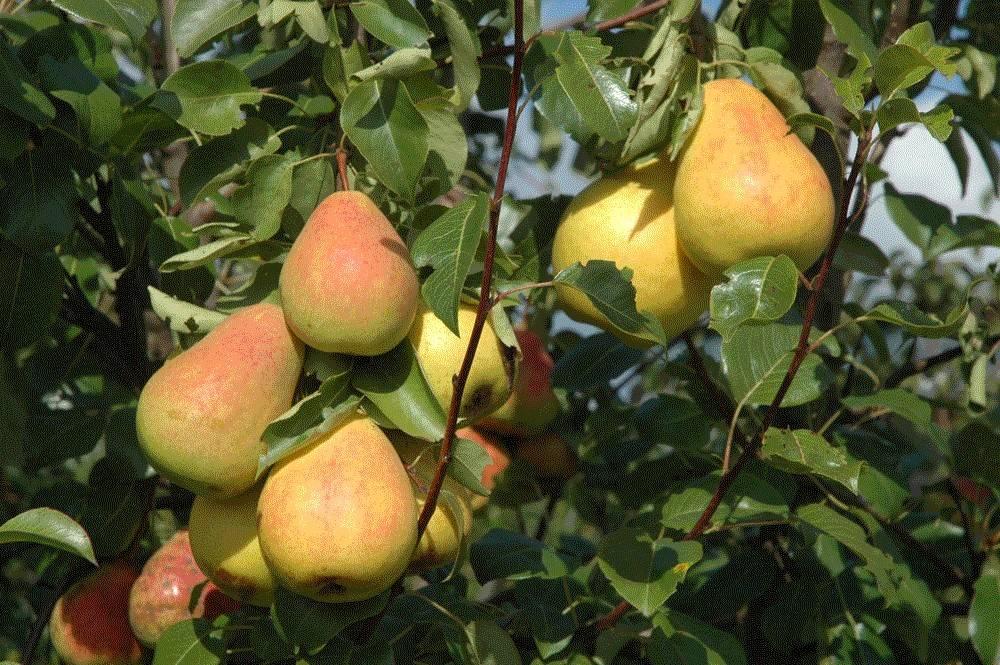
Summer oily
The branches are thin and densely spaced across the crown. The cultivar is resistant to rust and scab. The fruits are small and yellow.
Lemon
Considered a common variety, the tree grows up to 3 meters tall and produces small fruits that turn yellow when ripe. Pears cannot be stored.
Carmen
The tree is distinguished by its height, which can reach up to 6 meters. It has dense leaves with a brownish tint. The fruits are convex, with a purple tint. The flesh is sweet, with a hint of acidity.
Cathedral
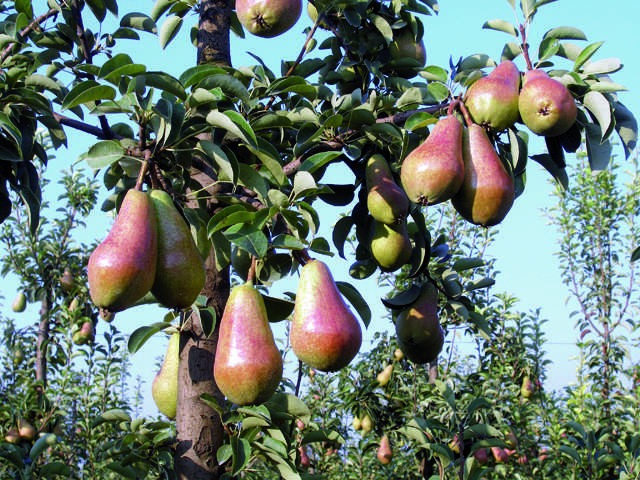
This plant is an early variety that ripens in mid-July. The pears are sweet and orange-yellow. The skin is heavily speckled. They are suitable for fresh eating and canning.
Victoria
The fruit is yellow-green. After harvesting, it requires processing and can be stored for no more than 5 days.
Bere Giffard
A distinctive feature of this variety is the size of the fruit, which can reach up to 300 grams. The plant is tall, with a well-developed crown. The fruits are green with red sides. Ripening occurs in mid-July.
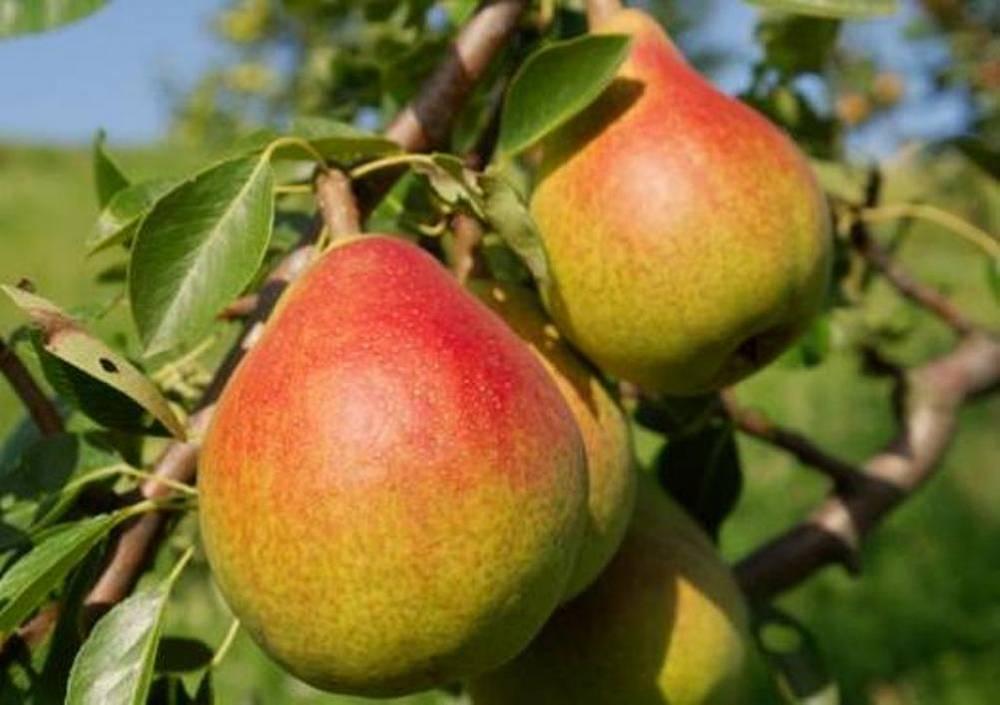 Important: This variety does not tolerate low temperatures well, so this must be taken into account when growing.
White leaf
The fruits are yellow, intensely aromatic, and have sweet flesh. The tree is small and disease-resistant.
Bashkir summer
The plant has a high yield and a moderate resistance to diseases. The pears are small in size with an oily skin. The flesh is soft and juicy.
August dew
It's considered one of the most frequently cultivated varieties. The tree grows up to 10 meters tall, with a well-developed crown. The skin is green, and the flesh is sweet. It's an early-fruiting variety, ripening in mid-August.
Autumn crops
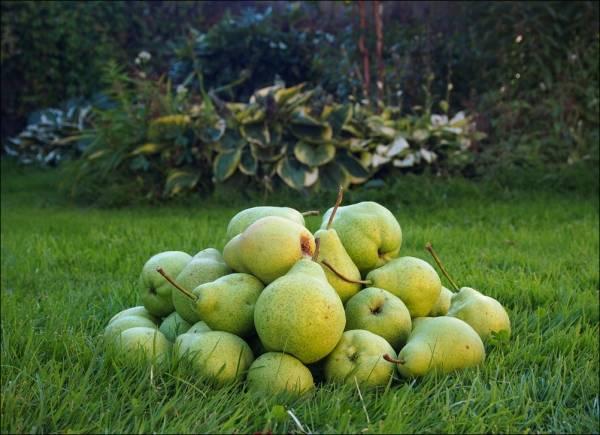
Growing autumn varieties allows you to harvest and store the crop without losing its flavor.
Cheryomshina
The crop ripens in mid-October. It's suitable for growing in regions with rapidly changing weather conditions. The skin is yellow, which deepens as it ripens. After planting, it begins to yield fruit in the sixth year.
Ricks
Ripening period: September. The fruits are large, reaching up to 150 grams, with a soft, yellow skin. A distinctive feature is their tartness.
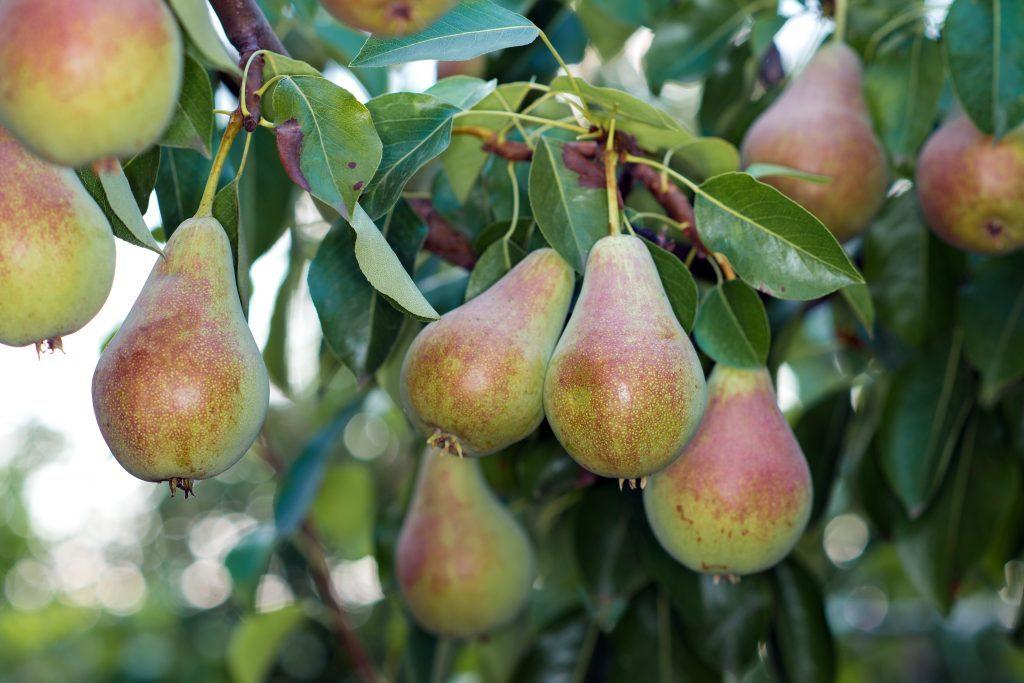
In memory of Yakovlev
The tree can reach a height of up to 4 meters. It produces small pears, borne in clusters. The pears are green with pink sides and a sweet flavor.
Otradnenskaya
The crown is spreading. Ripening period is late September. It is distinguished by its round shape and green skin with a reddish tint.
Marble
It is distinguished by the color of its peel, which has rusty patches. The flesh is juicy and the peel is firm. It is used for storage. The tree can reach a height of up to 5 meters.
Muscovite
The tree is small in stature, with medium-sized, elongated leaves. The fruits are regular in shape and large in size. The skin is green, but turns red when ripe.
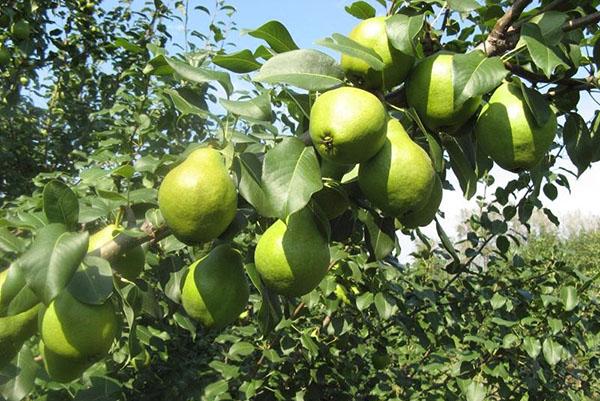
Red-sided
The crop tolerates low temperatures well and is disease-resistant. The pears are large, round, and green with red sides. They are suitable for long-distance transport.
Vermont
The plant tolerates low temperatures well. The fruits have a dessert flavor, and the skin is soft and yellow.
Veles
The fruits are elongated and yellow. They ripen in mid-September. The skin is smooth, thin, and brown. This variety has sweet flesh and can be stored for a long time.
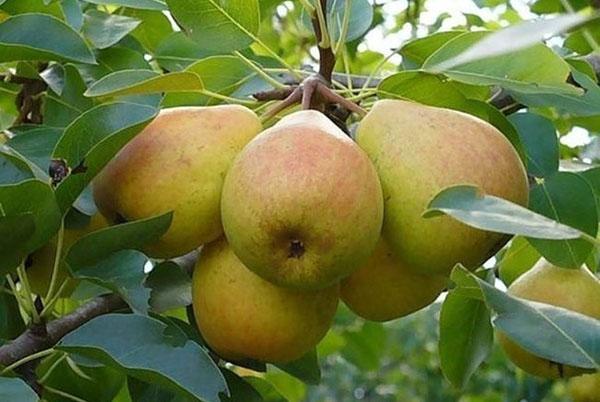
Bryansk beauty
The tree is medium-sized. The pears grow in clusters of 4-5, flattened in shape. When ripe, they turn light yellow. They can be used for storage; the skin is thick and smooth.
Moscow Bere
It produces uniformly sized, classic-shaped fruit. The skin is yellow with a slight blush. The flesh is white and juicy.
Winter varieties
Frost-hardy varieties come in a variety of types, and the fruit harvested from these trees can be consumed throughout the winter. Frost-hardy varieties are the best because they allow for long-term storage of the harvested fruit. Frost-hardy varieties are disease-resistant and require little care. The best varieties are grown in northern regions and are very popular among gardeners.
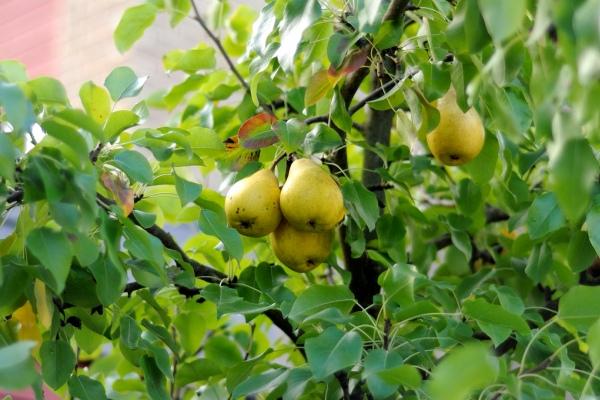
Pyramidal November
The plant has a pyramidal crown. The crops are productive. The trees are resistant to fungal diseases. This large-fruited pear tree, weighing up to 300 grams per specimen, has green skin. These disease-resistant pears are very popular among gardeners.
Saratovka
The tree can reach a height of up to 6 meters. The pears are frost-hardy, elongated, and have pale green skin. The flesh is medium-firm and juicy. These varieties are the best for storage and transportation.
Pervomayskaya
The trees are late-ripening, with the harvest ripening in November. Winter-hardy trees require no cover in late autumn. The pears are medium-sized, green, and have a pleasant, delicate aroma and flavor.
Pass-Krasan
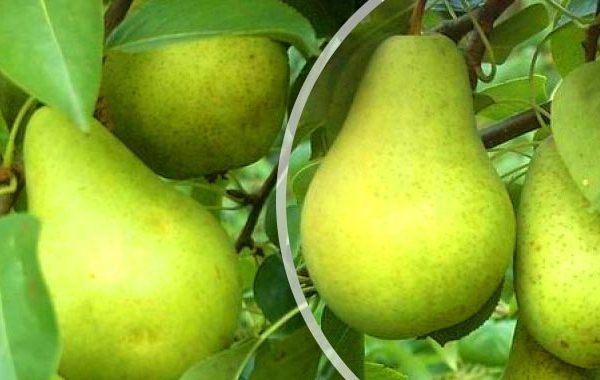
The pear is large, green-skinned, sweet, with slight tart notes. When ripe, the skin turns golden with brown flecks.
Patriotic
These frost-resistant pears are large, weighing over 200 grams. They have a classic shape and a green-yellow color. Harvesting begins in early November.
Maria
Harvesting takes place in late autumn, but the fruits can be stored for a long time. Frost-hardy pears are distinguished by firm, round fruits with burgundy skin. They can be stored in cool conditions throughout the winter.
Malvina
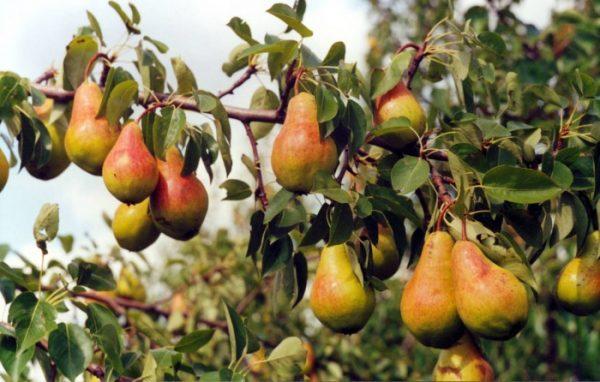
This large-fruited crop is distinguished by its sweet flesh. Its color is yellow-green. After harvesting, the harvest retains its flavor for three months.
Lyra
This garden pear variety is noted for its high yield. Pears weigh up to 200 grams and have smooth, green skin. The aroma is mild, and the flesh is firm.
Priest
It is distinguished by its large size. The skin is pale green and thin. The flesh is juicy and aromatic. It can be stored in a cool place.
Conference
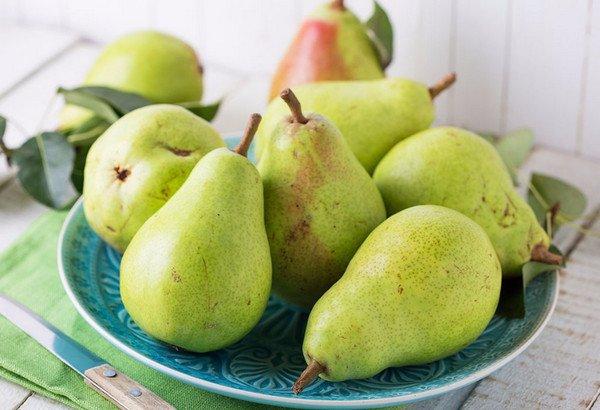
A popular variety among gardeners, the green pears are juicy and pleasantly flavorful. They have a distinctive tart taste, and the harvest can be stored throughout the winter without losing its flavor.
Kondratyevka
The tree is tall, with small, oblong leaves. It produces a high yield. The fruits are firm and suitable for storage. However, the flesh is juicy and sweet. The skin is green and matte.
Golden
The seedlings are resistant to fungal diseases and quickly adapt to new growing conditions. The variety's name refers to the color of its skin. The flesh is yellow and sweet, and with proper care, this hybrid produces large harvests.
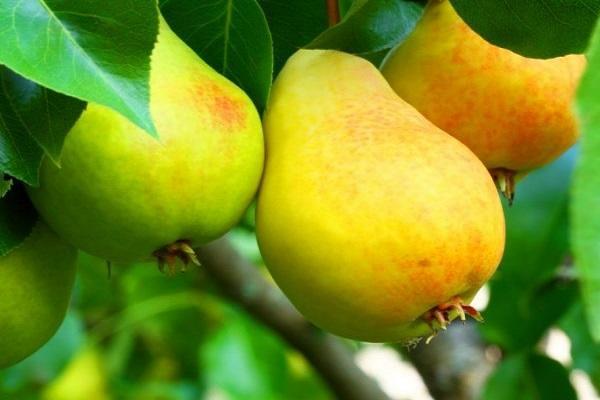
Decania
Medium-sized fruits with a green-burgundy hue. The flesh is juicy, and the fruits are firm. They have a honey flavor. These are the best varieties for storage.
Angelis
The tree is medium-sized. The pears are large and greenish-yellow. You can tell if the fruit is ripe by the presence of small orange flecks.
Melting
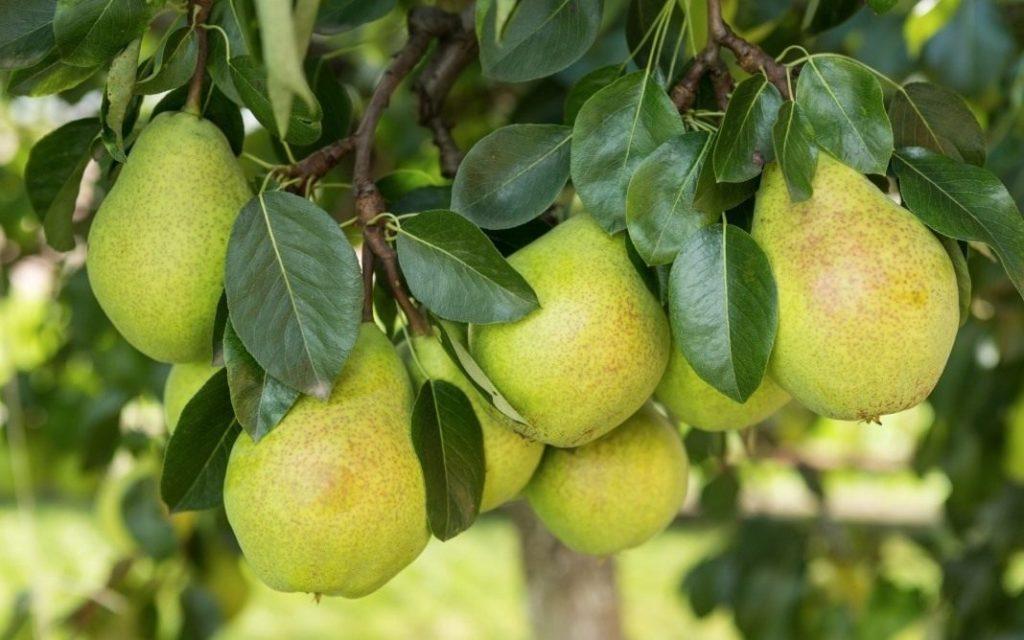
A tree with a dense crown. It is an early-winter variety, producing fruit that can be used throughout the winter. The fruit is tasty, weighing up to 200 grams. The skin is greenish-yellow, with a tart flavor.
Self-fertile
This type of garden tree is characterized by its ability to self-pollinate. This is a significant advantage in areas where pollination may be problematic. The tree produces large harvests regardless of weather conditions. The following varieties are distinguished:
- Maria;
- Tenderness;
- Chizhovskaya.
They do not require care and can bear fruit in large quantities.
With brown and burgundy fruits
Dark burgundy pears are common among certain varieties. Often, shoots and branches on trees are dark burgundy and are used as garden decoration. These varieties include:
- The Purple Pear Brandywine pear bears purple fruit. The tree's dark burgundy shoots are curved.
- Summer Bere is a variety distinguished by red spots on the skin. Once ripe, the spots turn dark burgundy.
- Belarusian late - brown skin, juicy flesh.
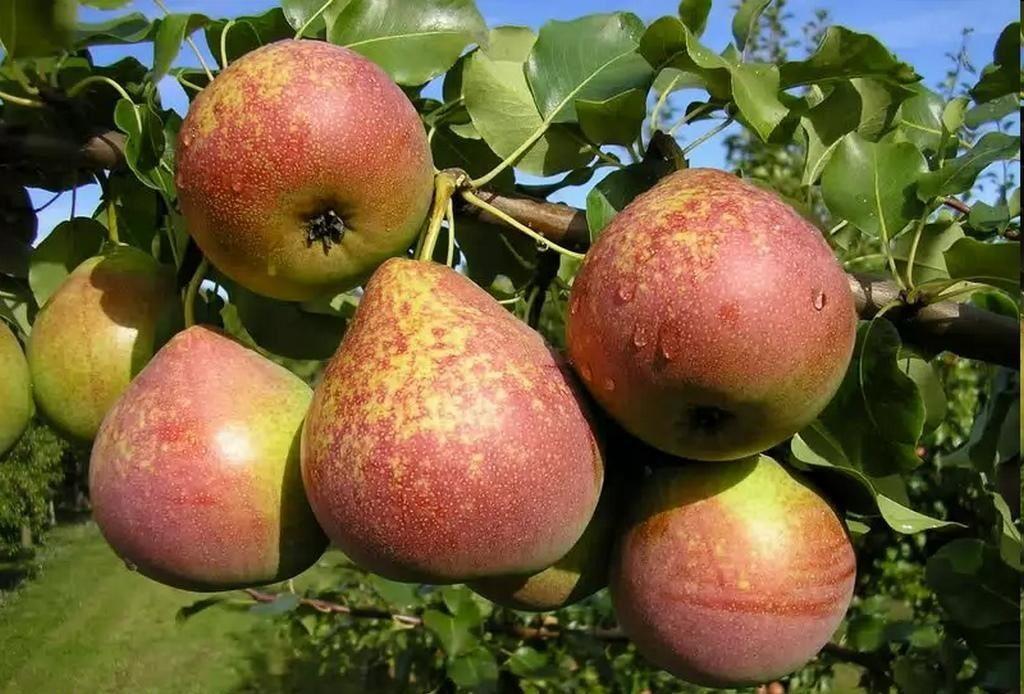
Most often, the spots appear on one side. However, there are specimens that are completely colored in an unusual color.
Red-leaved varieties
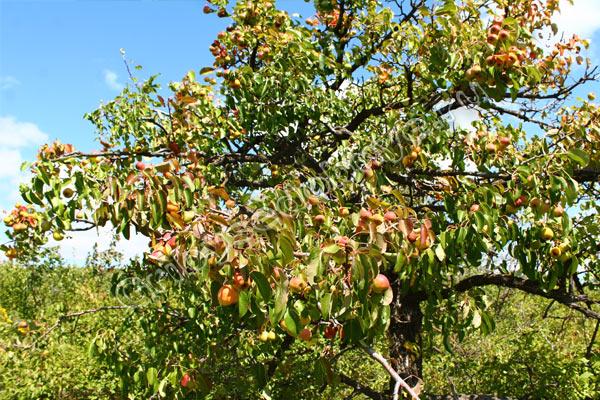
Among garden crops, trees with red leaves and shoots are very rare. Crops with red leaves are wild species and are rarely grown in gardens. These varieties include:
- Forest beauty;
- Wild pear.
Garden pear varieties have dark burgundy and maroon skin. Some pears have red skin, including the Red Williams.
Important: Reddening of foliage may indicate plant diseases.
Varieties with unusual fruit shapes
Unusual varieties include flattened and round shapes:
- The Bergamot variety has flattened fruits;
- Rogneda - round shape, often confused with apples;
- Belarusian and Abbot Vettel have an elongated shape.
Despite their unusual shape, the fruits of flattened and round varieties are distinguished by their high taste qualities.
Disease resistant
Viral and fungal diseases are a common problem for gardeners. To prevent scab and rust from infecting garden trees, specially resistant varieties are selected. The following crops are immune to scab:
- Allegro;
- Early ripening from Michurinsk.
Immunity to other diseases:
- Yakovlevskaya;
- Hera.
These varieties are popular among gardeners and do not require maintenance.
Pears are a popular crop found in any garden. Choosing the right variety will not only ensure a productive harvest but also make growing the plant easier. Unusual varieties with flattened shapes and purple flowers will also be a beautiful addition to any garden.
Related posts:
 Description of the 23 best pear varieties for the middle zone, planting and care rules
 Description and full characteristics of the Yakovlev Memory pear variety, planting and care
 Description of the Abbot Vettel pear variety and the subtleties of growing it
 Description of the 10 best columnar pear varieties, planting and care
 Description and characteristics of the Marble pear variety, pollinators and cultivation subtleties
 Descriptions of the 20 best cherry varieties for the Moscow region, their planting and care
 Description and full characteristics of the August Dew pear variety, planting and care
 Description of the 20 best self-fertile and low-growing pear varieties for the Moscow region