
- What are the characteristics of a columnar pear?
- Botanical description
- Habitat
- The best pollinators for crops
- Features of fruiting
- Advantages and disadvantages
- Popular varieties
- Doyen du Komis
- Dwarf pear Dalikor
- G-322
- Tenderness
- Autumn Dream
- Sapphire
- Northerner
- Tenderness
- Decor
- Pavlovskaya
- Planting and growing
- The timing depends on the landing region
- Site selection and preparation
- Illumination
- Soil composition
- The size of the planting hole and the seedling planting pattern
- Features of the root system and planting technology
- How to care for columnar varieties
- Regularity of watering
- What and how to feed
- Features of crown pruning and shaping
- Pest and disease control
- We cover the tree from frost
- Possible difficulties
Columnar pear varieties are gaining popularity due to their compact size. They are often used in landscaping. They produce a high yield relative to their size. Breeders have developed a number of varieties, making them suitable for cultivation in different climates.
What are the characteristics of a columnar pear?
Dwarf pears have their own characteristics regarding growth, fruiting, and ripening. They require pollinators, the right climate, and a suitable growing location.
Botanical description
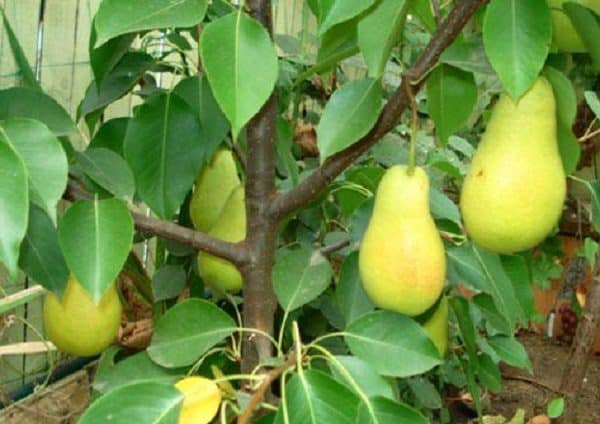
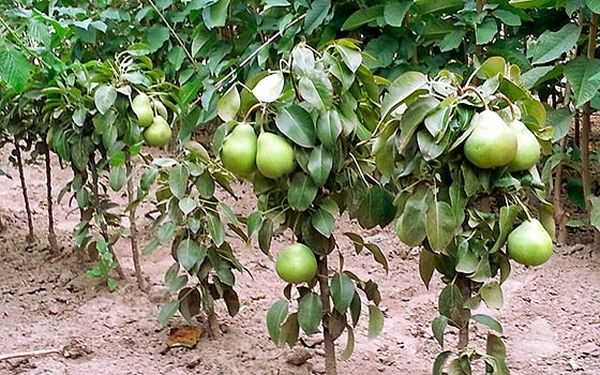
Currently, there are no true columnar pear cultivars. Dwarf trees are often passed off as such. When properly trained, they resemble a column. The fruit ripens on the rings, not on the trunk, as is typical for columnar garden trees.
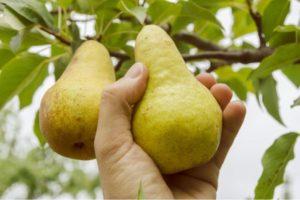
Columnar pears have large, lanceolate green leaves. The fruit produced is large, depending on the variety. On average, these varieties yield 3 to 8 kg of fruit per tree. The plants reach a height of no more than 2.5 m. Fruiting begins in the second year after planting.
Habitat
Columnar pear varieties have now been developed that can withstand severe frosts and prolonged drought. They are divided into varieties with different ripening times:
- early up to 70 days;
- mid-season 110 days;
- late 120 days or more.
The diversity of varieties allows these pears to be grown in all regions: the north, south, and central Russia. Early, short-ripening varieties are suitable for the north, while late-ripening pears are planted in the south.
The best pollinators for crops
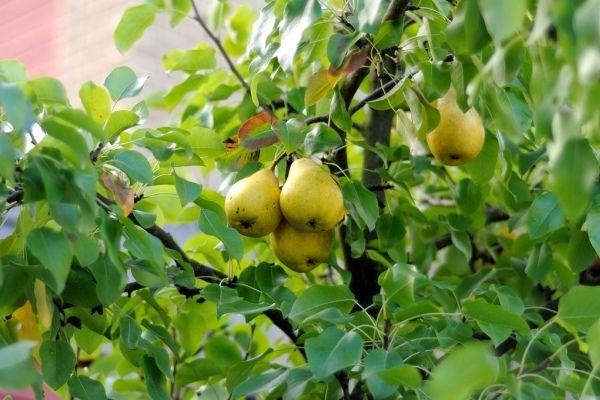
Pollinators are essential for columnar varieties to produce fruit. Any fruit crop whose flowering time coincides with pears is suitable for this purpose:
- other varieties of pear;
- apple trees;
- cherries;
- plums;
- cherries;
- peach;
- nectarine.
Features of fruiting
The tree begins bearing fruit the following year after planting. An average plant yields 3-8 kg of fruit in the first few years. Gradually, the number of fruits per tree increases. Many varieties are considered high-yielding. Pear trees bear fruit for over 10 years.
Advantages and disadvantages
Dwarf varieties have many advantages. Every gardener notes the following positive qualities:
- small size;
- the ability to grow several trees in a small area;
- winter hardiness;
- high yield;
- use in landscape design;
- easy care.
Disadvantages include constant pruning and crown shaping, crown thinning, and elimination of thickening.
Popular varieties
The columnar pear type has its own popular varieties, which are most often found in gardeners' vegetable gardens.
Take a look Also
Doyen du Komis
A pollinator is required, and excess fruit must be removed. In mid-July, the tree sheds some of its fruit on its own. This pear is characterized by early ripening and excellent flavor. The fruit is covered with a thin, yellow skin.
Dwarf pear Dalikor
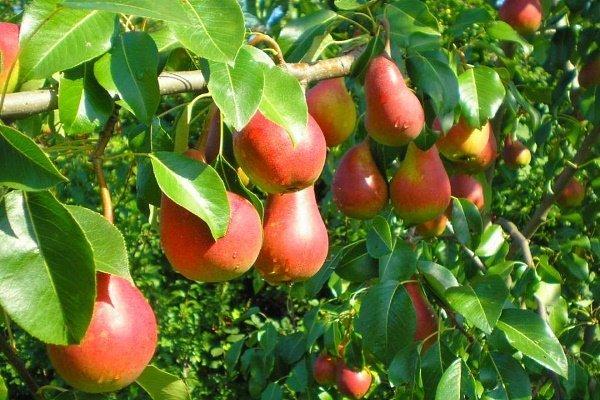
The tree grows up to 2 meters tall. It has a columnar crown, with flattened upper shoots. The fruit is large, weighing up to 350 grams, and ripens throughout the season. The yield increases each year. It is highly resistant to diseases and pests.
G-322
This variety is still in development, so it doesn't have a common name. It's early-ripening and frost-resistant. The fruits are large, up to 400 g. They have a sweet flavor, firm skin, and grainy flesh. They are yellow in color. The harvest occurs in September.
Tenderness
An autumn variety. The fruits are medium-sized, weighing approximately 160 g. They are covered with a thin, dense skin, green with a yellow tint. The flesh is firm, grainy, and beige. The tree produces a moderate yield. They grow to a height of no more than 1.5 m, allowing for multiple plants to be planted in a garden bed.
Autumn Dream
A winter-hardy variety, suitable for growing in Siberia and central Russia. The yield is average. The fruits are large, approximately 200 g. The skin is light yellow. The flesh is firm and juicy. Harvesting takes place in the fall.
Sapphire
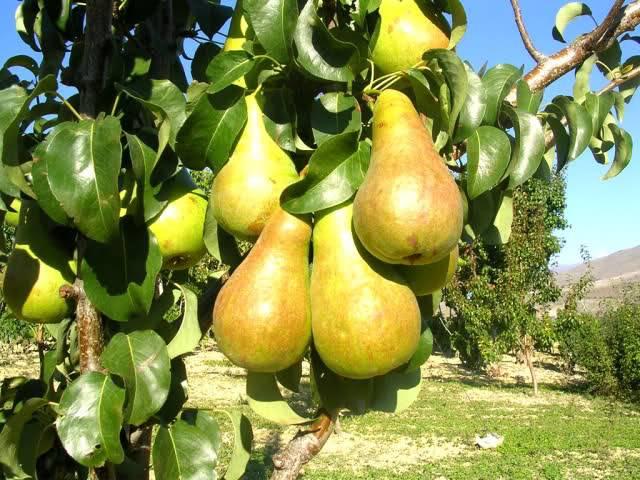
The tree begins flowering in the fall. It reaches a height of 2 meters. It produces large, yellow-green fruits. The flesh is juicy, dense, and grainy. The tree is resistant to scab and other fungi. It tolerates frosts poorly. It is suitable for cultivation in the temperate and southern climates.
Northerner
A winter-hardy pear suitable for northern regions. It tolerates temperatures below -38°C. The fruit ripens in 90 days. The medium-sized fruits have a pleasant sweet flavor. The tree is short and compact.
Tenderness
The fruit ripens in the fall. It is suitable for growing in the south and temperate climates. The medium-sized fruits, up to 170 g, are covered with a thin, dense yellow skin. Slightly tart in taste, they are suitable for fresh consumption and processing.
Decor
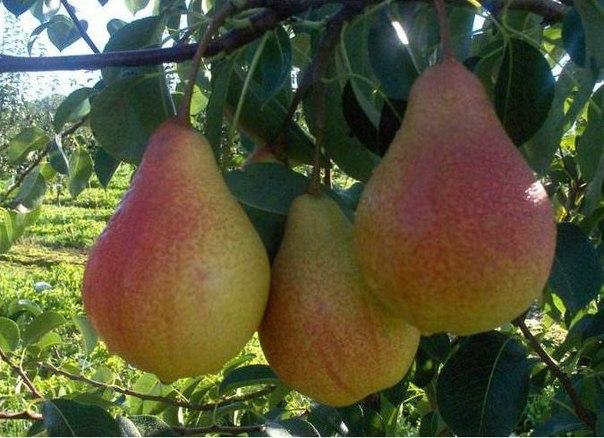
An easy-to-grow pear with strong immunity to fungal diseases. Self-fertile, it doesn't require a pollinator for cross-pollination. It produces high yields, producing large, thin-skinned fruits. The flesh is juicy, grainy, and sweet.
Pavlovskaya
A late-ripening variety, it grows to about 1.5 m in height. It has compact branching. Fruiting begins in the second year after planting. It is widely used in landscape design due to its attractive appearance.
Planting and growing
To ensure a seedling takes root and produces a high yield, it's important to follow planting guidelines: choose the right time for the growing region, and prepare the planting hole and seedling.
The timing depends on the landing region
For temperate climates, the optimal planting time is mid-April and early May. In the Moscow region, this period marks the melting of snow and the thawing of the ground. During the season, the tree will strengthen and be ready for winter. In the Moscow region, planting is practiced in the fall.
For this type of planting, it's recommended to choose winter-hardy varieties. In the Urals, columnar pears are planted outdoors in early May.
By this time, the air temperature should be around 5°C. Preference is given to varieties suitable for northern regions. Fall planting is not practiced in this part of the country.
For planting in the south, spring and fall planting are used. In both cases, seedlings take root well and recover well after winter.
Site selection and preparation
To successfully grow pears, select a site that meets all the crop's requirements. It's important to consider lighting and soil composition when choosing. Prepare the planting site in advance.
Illumination
Pear trees prefer well-lit, draft-free areas. They are planted near other garden crops with similar flowering periods. This way, they will both act as pollinators for each other, increasing yield.
Important! Even for self-fertile varieties, the presence of a pollinator increases yield.
Soil composition
To ensure pear trees thrive, choose loamy, sandy, or sandy soils. The soil pH should be neutral. If it's too acidic or alkaline, the plant will stunt its growth. Soil fertility is also monitored. Organic and mineral fertilizers are applied at planting, followed by regular fertilization.
The size of the planting hole and the seedling planting pattern
Once a site has been selected, a planting hole is dug. The work follows a specific algorithm:
- They dig a hole about 1 m deep and 70 cm in diameter.
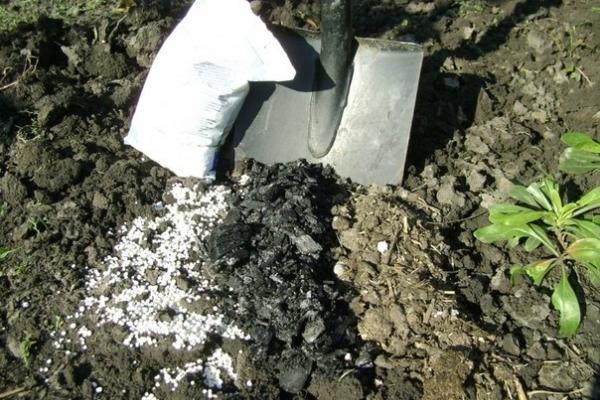
- The excavated soil is mixed with humus, superphosphate, potassium salt and nitrogen fertilizer.
- Half of the mixture is poured back into the hole.
The seedlings are planted according to the diagram. Leave at least 1 meter of space between trees. For more compact varieties, 50 cm is sufficient.
Features of the root system and planting technology
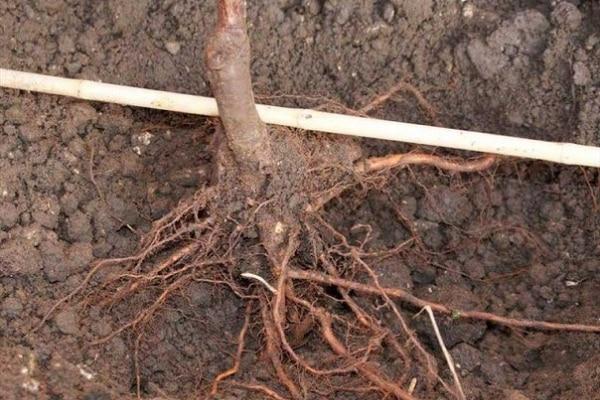
Columnar pears have a unique root system, located close to the soil surface. This should be taken into account when planting. The following instructions apply:
- 20 liters of water are poured into the planting hole.
- Give it time to soak in.
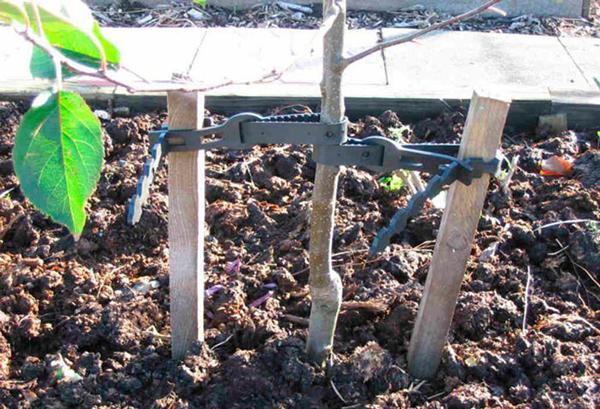
- They drive in a wooden stake 1.5 m high.
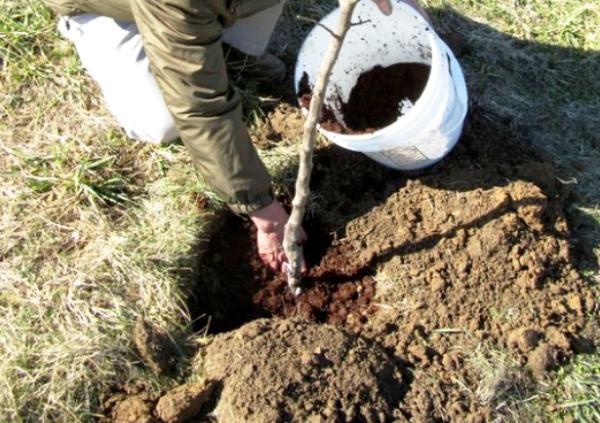
- Place the seedling in the hole.
- Straighten the roots.
- Fill with soil in layers, compacting each one.
- Water with 40-60 liters of water.
- The area around the trunk is hilled up.
- They tie a young tree to a wooden stake.
 Important! When planting, avoid exposing the surface of the roots, as this will cause some of the shoots to dry out and hinder the pear tree's development.
How to care for columnar varieties
To ensure successful cultivation, monitor watering, fertilize, shape the crown and perform sanitary pruning, cover the pear for the winter, and combat diseases and harmful insects.
Regularity of watering
One of the most important aspects of care is watering. Pears enjoy ample watering. Avoid overwatering. Overwatering can lead to root rot. Several mandatory waterings are recommended throughout the season:
- before the buds begin to open;
- during the flowering period;
- during fruit formation;
- after harvest;
- watering for winter.
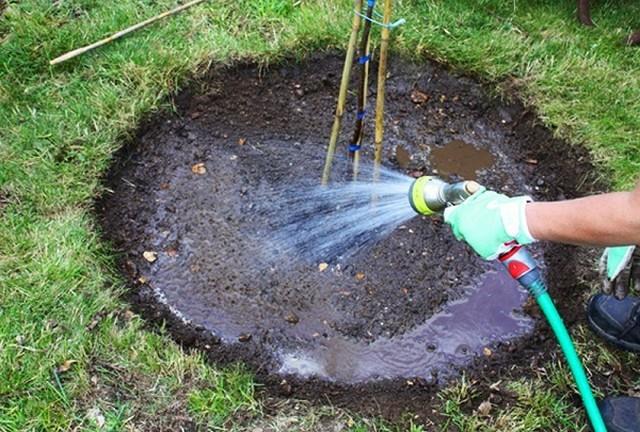
Between 40 and 60 liters of water are used per tree. The liquid is poured in a thin stream around the trunk to avoid washing away the roots.
What and how to feed
For the first two years after planting, pear trees don't require any additional feeding. They receive sufficient nutrition from the fertilizers applied at planting. In subsequent years, they are fed with organic and mineral fertilizers. This is best done in the spring, before the sap begins to flow. Suitable fertilizers for pear trees include:
- compost;
- humus;
- rotted manure;
- chicken manure;
- wood ash;
- urea;
- copper sulfate;
- mineral complexes containing nitrogen, potassium and phosphorus.
 Important! Do not fertilize trees with chlorine-containing compounds. This element slows down the development of pear trees.
Features of crown pruning and shaping
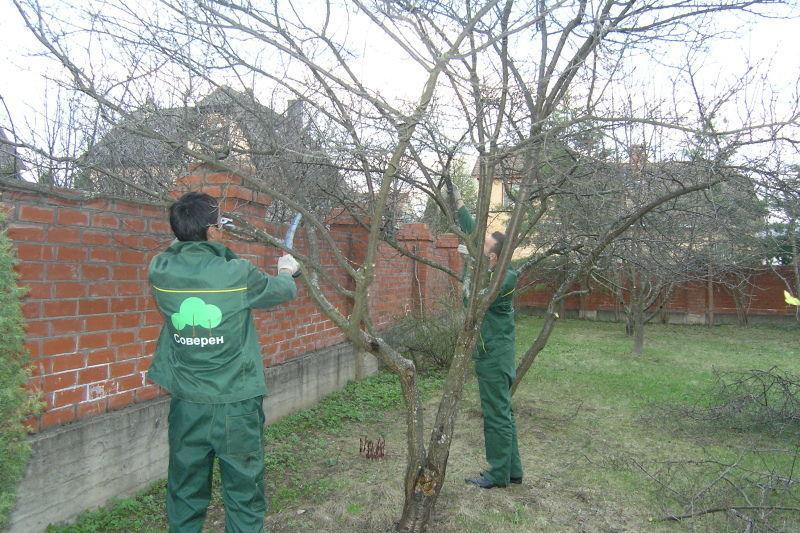
Columnar pears need to be pruned correctly. This is one of the drawbacks of this variety. Pruning is performed annually. If pruning is done incorrectly, the tree will take on an irregular shape. To achieve this, follow these steps:
- In the first year, the skeletal and central shoots are formed.
- Leave their length no more than 60 cm.
- In subsequent years, the procedure is repeated.
- Pruning is done without leaving stumps.
- Incorrectly formed branches are removed.
- They give the crown the appearance of a column.
Pest and disease control
During the summer and spring, signs of disease and small insects may be noticed on the tree. The most common diseases are:
- Tree cancer. Large black growths form on the tree. All damaged areas are cut off, treated with a solution of potassium permanganate, and sealed with garden pitch.
- Scab. Small brown growths are found on branches. To treat this disease, all branches are cut off and burned.
- Powdery mildew. A white coating forms on the foliage, quickly spreading to all leaves. Control is achieved by spraying with fungicides.
- Rust. Orange spots with red centers appear on the leaves. The shoots gradually dry out and fall off. Treatment is by spraying with sulfur or Bordeaux mixture.
Among the pests on the pear tree you can notice:
- aphids;
- copperhead;
- red tick;
- leaf roller;
- peduncle.
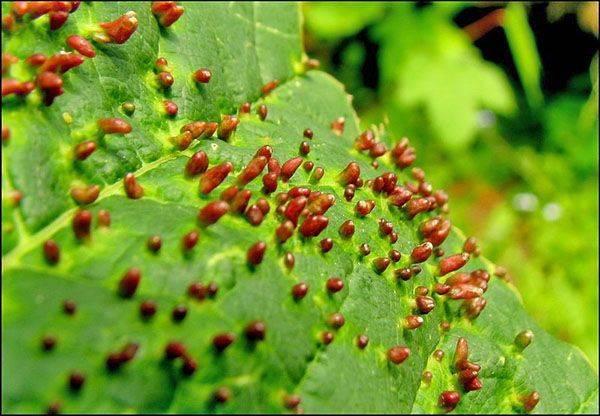
To kill insects, the tree is treated with a broad-spectrum insecticide. This procedure is performed 2-3 times per season.
Important! Stop using chemicals 20 days before harvest.
We cover the tree from frost
To help your pear tree survive the winter, it's recommended to carry out several steps:
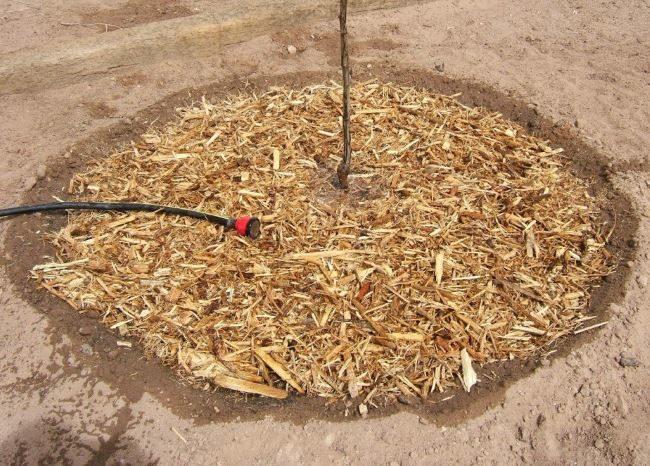
- Mulching the tree trunk circle with straw, sawdust, moss.
- Painting the trunk with whitewash.
- Covering the crown of a young tree with breathable material.
Possible difficulties
When planting and growing columnar pears, inexperienced gardeners make several mistakes:
- Overwatering will cause the tree to die and root rot to develop.
- Incorrect pruning disrupts the columnar shape of the crown.
- Acidic soil slows down plant growth.
- Adding chlorine to fertilizer slows down tree growth.
- Fruits that become smaller in size require pinching of the ovaries in the spring.
Related posts:
 Description and characteristics of the 45 best pear varieties, how to choose
 Description and full characteristics of the Yakovlev Memory pear variety, planting and care
 Description of the 23 best pear varieties for the middle zone, planting and care rules
 Description of the Abbot Vettel pear variety and the subtleties of growing it
 Description and characteristics of the Marble pear variety, pollinators and cultivation subtleties
 Description and full characteristics of the August Dew pear variety, planting and care
 Description and subtleties of growing the Efimova Elegant pear variety
 Description and subtleties of growing the Russian Beauty pear variety
Sapphire
The tree begins to bloom in autumn
Does this happen?
Good afternoon
Thanks, fixed it!
I would like to purchase dwarf varieties of pear.
Good afternoon
Sorry, but we do not sell seeds.