
- Breeding the Russian Beauty pear
- Cultivation regions
- Pros and cons of fruit crops
- Varietal features and characteristics of the variety
- Dimensions and height of the tree
- Life expectancy
- Fruiting
- Flowering and pollinators
- Ripening time and harvest
- Tasting qualities and use of fruits
- Frost and drought resistance
- Immunity to diseases and insects
- Planting a pear tree
- Deadlines
- Soil requirements
- Planting layout schemes
- Preparing the site and seedlings
- The technological process of tree planting
- Care instructions for the Russian Beauty variety
- Watering and fertilizing
- Trimming
- Whitewash
- Loosening and weeding the tree trunk circle
- Seasonal treatments
- Preparing for winter
- Methods of reproduction
- How to Increase Your Yield: Tips and Advice
- Reviews of the variety
Thanks to advances in breeding, gardeners can easily select fruit crops with excellent characteristics and varying ripening times. The Russian Beauty pear is an autumn variety that has gained widespread popularity. This slender, tall tree not only graces any garden but also produces consistent yields and is resistant to disease.
Breeding the Russian Beauty pear
The hybrid was created by crossing two pear varieties—Bere Ardanpon and Doch Blankovoy. Its creator is the renowned breeder S. F. Chernenko. The work was conducted at the I. V. Michurin Research Institute of Genetics by a group of scientists who, in honor of their leader, gave the variety another name—Krasavitsa Chernenko.
Cultivation regions
This variety is recommended for cultivation in the Central and Central Black Earth regions, as it is not particularly frost-hardy. Even in the northern part of the Moscow region, the pear grows slowly and freezes out in cold winters.
Pros and cons of fruit crops
The advantages of the variety include:
- excellent taste of fruits;
- high yields;
- long fruiting;
- self-fertility of the variety;
- resistance to scab.
Among the disadvantages, gardeners note:
- poor frost resistance;
- tendency of fruits to crack during dry periods;
- difficulties in harvesting due to the considerable height of the tree.
Varietal features and characteristics of the variety
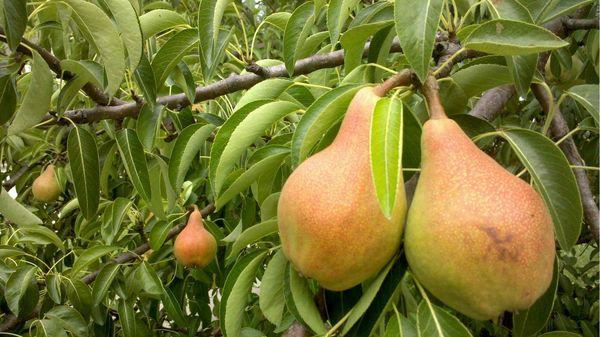
The Russian Beauty pear is a self-pollinating autumn variety. The tree is tall and pyramidal in shape. Flowering begins in May, and fruiting begins in late August to early September. The fruits are large, elongated, and have good shelf life and transportability.
Dimensions and height of the tree
The Russian Beauty pear reaches a height of 5 meters or more when mature. The conical crown is created by gently curved, upward-facing shoots. These shoots are spaced apart. To ensure proper crown formation, experts recommend bending skeletal branches by 50⁰ during the first 5 years of the tree's life.
Life expectancy
The average lifespan of the Russian Beauty pear is 50 years. This can be significantly extended with careful care, regular watering, and fertilizing.
By pruning correctly, removing old, diseased, and damaged branches, the tree is rejuvenated, living longer and bearing fruit.
Under optimal conditions, it can live up to 100 years.
Fruiting
The first fruits from the Russian Beauty pear tree can be harvested within seven years of planting. After another three to four years, the tree's yield (with proper care) increases significantly, reaching 80 kg. Fruiting remains stable for 30 years.
Flowering and pollinators
Pear trees begin to bloom in May, slightly earlier than apple trees. The flowers are white, about 3 cm in diameter, and borne in umbel-shaped clusters.
Even when planted separately, the Russian Beauty pear produces a rich harvest, since it is a self-pollinating variety.
For cross-pollination, it is recommended to plant pears of other varieties nearby:
- Muscovite;
- Moscow Bere;
- Lada Amurskaya.
Ripening time and harvest
In the third ten days of August, pears are not yet fully ripe. They are carefully picked and sorted, with the healthy ones set aside for storage and the damaged ones for processing.
Fruits should be plucked from the branches carefully, lifting upwards. They are placed in boxes in 2-3 layers, interleaved with soft paper. Store in a cool place at temperatures between 0°C and +1°C for no more than six weeks.
Tasting qualities and use of fruits
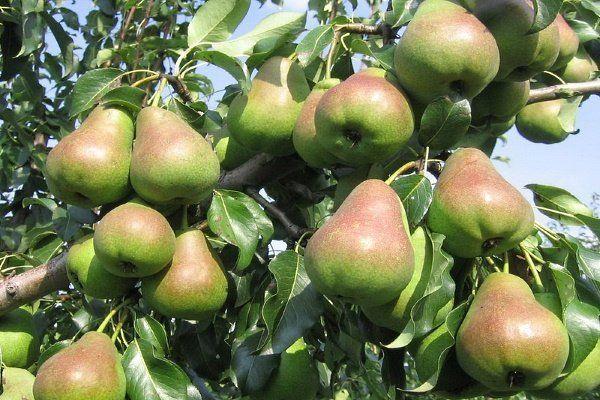
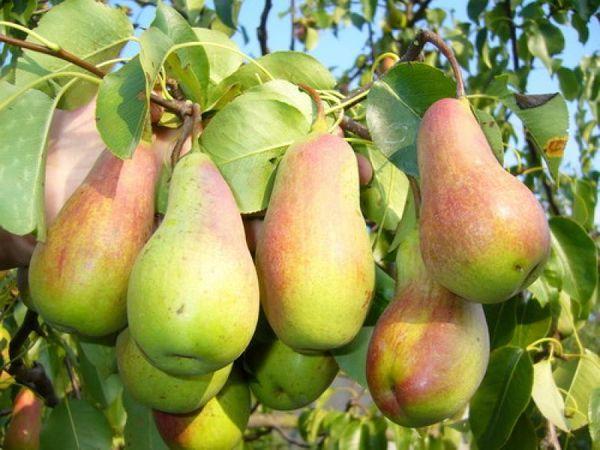
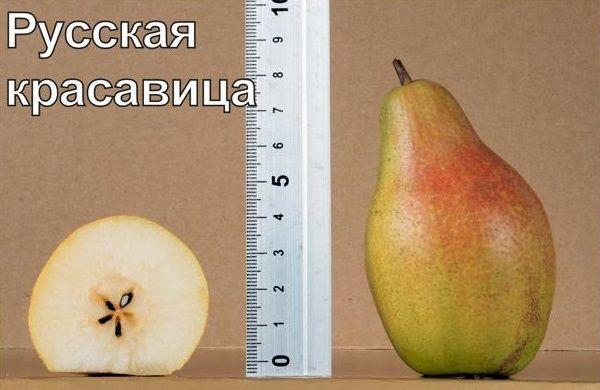
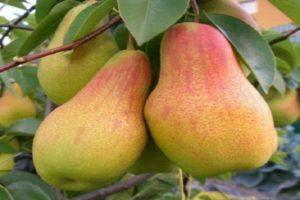
The skin of the Russian Beauty pear is green with a slight blush. When fully ripe, it turns yellow, and the blush turns brown. The flesh is white with a matte finish. The pear has a classic, sweet and sour flavor, buttery, and juicy, with a subtle aroma. The sugar content is 9.8%.
Pears are suitable for making compotes, fillings for baked goods, and jam.
Frost and drought resistance
The Krasavitsa Chernenko pear's frost resistance is rather weak. This can be improved by grafting a Russkaya Krasavitsa scion onto the trunk of a cold-resistant variety.
Fluctuations in soil moisture can cause fruit to crack. This can be prevented by regularly sprinkling your fruit trees.
Immunity to diseases and insects
With proper planting location and careful care, the Russian Beauty pear is extremely rarely affected by scab, powdery mildew, brown spot, and fruit rot. Copper-containing fungicides are used at the first signs of fungal diseases.
To combat the fruit midge and pear codling moth, traps and insecticides are used.
Planting a pear tree
In order for the Russian Beauty pear to take root and begin to develop, it is necessary to choose the right time and place for planting and prepare the soil.
The seedling should be one to two years old, without damage or signs of disease, with active buds and a developed root system.
Deadlines
The time for planting seedlings depends on the region's climate. In the south, it's done in September or October. Since spring is hot and dry, it's difficult for the plant to establish itself at this time, while autumn in southern latitudes is mild, making rooting easier.
In temperate climates, planting occurs early in the spring, in April or May. This allows the Russian Beauty pear tree time to grow stronger before winter.
Soil requirements
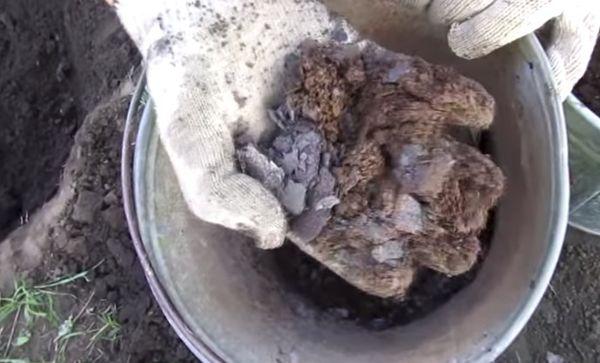
Pear trees require moist, loose, fertile, and well-drained soils. They do not thrive in dense or clayey soils. Acidic soils require liming with dolomite flour.
The seedling's location should be well-lit and free from drafts. Avoid planting pear trees in low-lying areas.
Planting layout schemes
The Russian Beauty pear variety is a tall tree, so it's important to plant young trees so that after a few years they don't shade each other, and their crowns are well ventilated and fully exposed to the sun.
You should maintain a 5-6 meter distance from buildings. The distance between adjacent trees should be at least 6 meters.
Preparing the site and seedlings
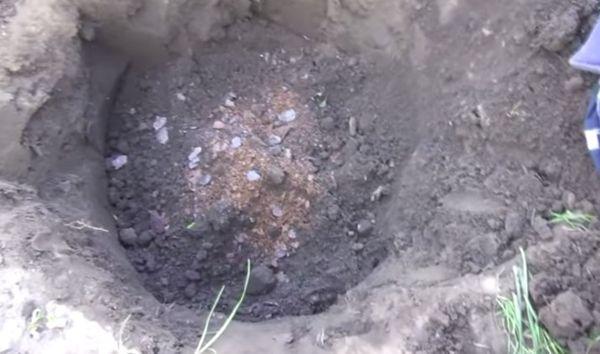
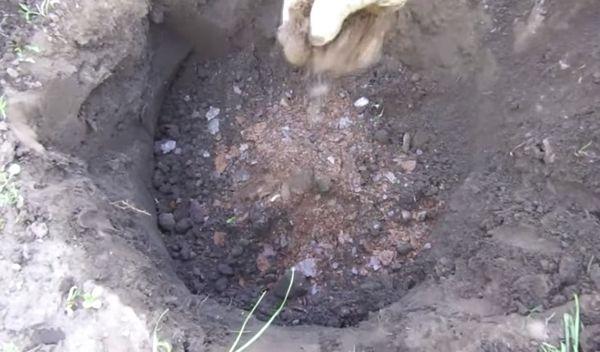
Two weeks before planting, dig the soil to the depth of a spade, breaking up clods and removing weeds. Prepare planting holes with steep sides, 70 cm deep and 80 cm wide, in advance. Ten days before planting, create a 20 cm drainage layer of broken brick at the bottom of the hole. Add a soil mixture consisting of several components (2/3 of the way up) to the top.
- peat - 1 part;
- garden soil - 2 parts;
- compost - 1 part.
Immediately before planting, the thick roots of the young tree are shortened by 10 cm, the top is cut off and the seedling is placed in water for 1 hour.
The technological process of tree planting
To properly plant a Russian Beauty pear seedling, you need to complete a number of steps:
- Drive in a 150 cm high support stake at a distance of 10 cm from the center of the hole.
- Place the pear in the center of the hole and spread out the roots.
- Cover with soil.
- Place the root collar 5-6 cm above the soil surface.
- Lightly compact the soil around the seedling.
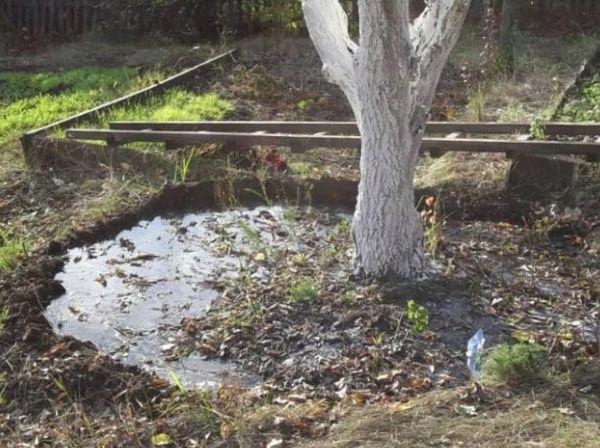
- Make a ditch around the circumference for irrigation.
- Moisturize generously.
- Mulch the soil around the trunk.
- Tie the seedling to the support.
Care instructions for the Russian Beauty variety
The continued growth and fruiting of the Russian Beauty pear tree depends on proper care. Timely watering and fertilizing, pruning, and weeding around the trunk contribute to rapid growth, development, and abundant fruiting within a few years.
Watering and fertilizing
The Russian Beauty pear variety does not tolerate either stagnant or dehydrated soil. During drought, it may shed its fruit.
The watering rate depending on the age of the pear is:
- 12 l - at 2 years;
- 30 l - at the age of 4 years.
Under fruiting pear trees, the soil is moistened to a depth of 60 cm.
Mineral and organic fertilizers are applied starting from the 2nd year of the tree’s life. Nitrogen fertilizers are applied in the spring after the snow melts. In late spring, urea and potassium sulfate are added. Superphosphate is used during fruit formation.
Trimming
To maintain the health of the pear tree and ensure proper crown formation, pruning is carried out at different times:
- In the spring, damaged and dried branches are pruned for sanitary purposes. When shaping the crown, four strong, horizontally growing shoots are left, and the central shoot is shortened.
- In summer, pinching is carried out - pinching the shoots to their hard part.
- In autumn – sanitary pruning (if necessary).
Whitewash
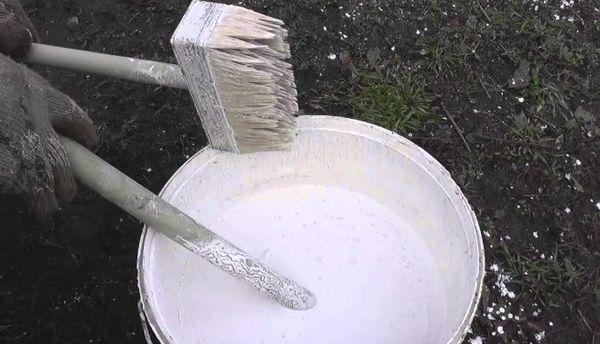
It's carried out twice a year—in the fall and early spring. Whitewashing protects the tree trunk from rodents and burns. The trunk and a third of the lower skeletal branches are whitewashed with lime or a special mixture, after being cleared of lichen and disinfected with a copper sulfate solution.
Loosening and weeding the tree trunk circle
To conserve moisture and remove weeds, loosen the soil around tree trunks in spring and early summer. To prevent crusting, loosen the soil after every rain or watering. The soil should be worked to a depth of no more than 7 cm.
Seasonal treatments
The first insecticide spraying of pear trees is done in early spring, before sap flow and bud swelling. The goal is to kill pests that overwinter in the bark.
The second treatment is carried out during flowering, at the end of April. This is necessary to prevent fungal diseases.
At the end of flowering, plants are sprayed to destroy codling moths.
Preparing for winter
Before the onset of cold weather, the tree trunk area is loosened and the layer of sawdust and peat mulch is increased to 25 cm. The trunk is wrapped in a breathable covering material.
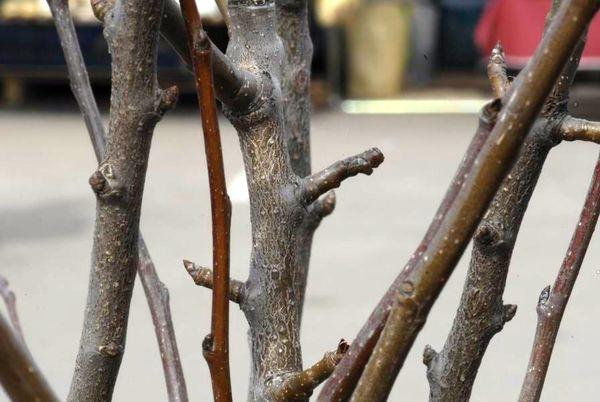
After the snow appears, it is raked up to the trunk of the pear tree, the resulting snowdrift is periodically increased, and the ice crust is broken up.
Methods of reproduction
To obtain a new Russian Beauty pear seedling, either seed or vegetative propagation is used. The former does not guarantee the preservation of all the variety's characteristics.
The vegetative method provides several options for propagation:
- basal shoots;
- layering;
- green cuttings;
- vaccination.
How to Increase Your Yield: Tips and Advice
Experienced gardeners recommend proper fertilization to improve fruiting of Russian Beauty pears, avoiding overfeeding. Otherwise, the plant's energy will be directed toward developing vegetative mass rather than fruit.
A pear tree's yield depends on its skeletal structure. As the crown becomes denser, fruiting decreases, and yields decline.
Reviews of the variety
Panova O., Kaluga Region: "The Russian Beauty pear has been growing in our garden for 15 years. It produces good yields every year. The fruit tastes excellent, but picking them is a bit tricky—the tree is quite tall. They keep for 1.5-2 months."
I.P. Proskurin, Krasnodar Krai: "I planted the 'Russian Beauty' tree seven years ago. The tree is growing quickly, and last year we got our first pears—large, beautiful, and delicious."
Related posts:
 Description of the Forest Beauty pear variety, planting and care specifics
 Description and full characteristics of the Yakovlev Memory pear variety, planting and care
 Description of the early pear variety Bryanskaya Krasavitsa, planting and care
 Description and full characteristics of the August Dew pear variety, planting and care
 Description of the Manchurian Beauty plum variety, pollinators, and cultivation details
 Description of the Rogneda pear variety, planting and care instructions
 Description of the Talgar Beauty pear variety, planting and care instructions
 Description and characteristics of the Marble pear variety, pollinators and cultivation subtleties