
- Selection and regions of plum cultivation
- The main pros and cons of the fruit variety
- Description of the Manchurian Beauty variety
- Size and annual growth
- Fruiting
- Flowering and pollinators
- Ripening time and harvest
- Taste assessment and scope of application of fruits
- Susceptibility to diseases and parasites
- Resistance to low temperatures and drought
- How to plant a tree on a plot
- Required soil composition
- Selecting and preparing a site
- Dimensions and depth of the planting hole
- Timing and rules for planting the Manchurian Beauty plum
- Organization of care
- Watering
- Top dressing
- Crown pruning
- Loosening and mulching the tree trunk circle
- Seasonal preventive treatments
- Reproduction methods
- Gardeners' reviews of the crop
Gardeners love the Manchurian Beauty plum for its delicious fruit, compact tree size, consistent yield, and cold hardiness. Although plums are generally heat-loving plants, this variety is common in the Far East, the Urals, and Siberia. Growing the Manchurian Beauty is easy in any garden. All you need is healthy, high-quality seedlings and basic agricultural knowledge.
Selection and regions of plum cultivation
The Manchurian Beauty plum variety appeared in the mid-twentieth century. The selection of the best seedlings was carried out by the Russian botanist M. F. Ivanov, who was living in Manchuria at the time. Three varieties participated in the breeding process: Simona, Chinese, and Ussuri plums. The first specimens of the Manchurian Beauty arrived in the Far East thanks to A. A. Taratukhin, and their subsequent distribution was undertaken by breeder N. N. Tikhonov. This variety is also known as Chuiskaya Krasavitsa. Other popular varieties, including Katerina, Zarya, and Kolkhoznitsa, were subsequently developed from it.
The Manchurian Beauty plum variety is cultivated primarily in regions with harsh climatic conditions – Siberia, the Far East, and the Urals.
The main pros and cons of the fruit variety
For those wishing to grow the Manchurian Beauty plum in their garden, it's helpful to learn about the main advantages of this variety. Among them:
- rapid ripening;
- universal purpose and application of fruits;
- excellent taste and consumer properties;
- constant yield;
- unpretentiousness in caring for plantings;
- high resistance to frost and drought;
- strong immunity to diseases and insect pests.
However, despite its many advantages, one should not forget about its disadvantages. These include:
- the influence of pollinators on the productivity of a variety;
- intensive growth of the tree, which requires regular formative pruning of the crown.
Description of the Manchurian Beauty variety
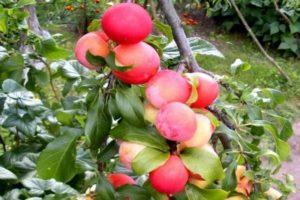
The Manchurian Beauty is easily distinguished from other popular plum varieties by its individual features and characteristics. It has a rounded, dense crown with gray-brown branches and brown shoots. The leaves are elliptical, slightly pointed at the top, and have a concave blade.
Size and annual growth
The Manchurian Beauty tree is compact and classified as a dwarf. Due to the lack of a central basal stem, it is often classified as a shrub. The average height is 1.6 to 1.8 meters. Until it reaches this height, the rapidly growing crown increases by 30-40 centimeters annually.
Fruiting
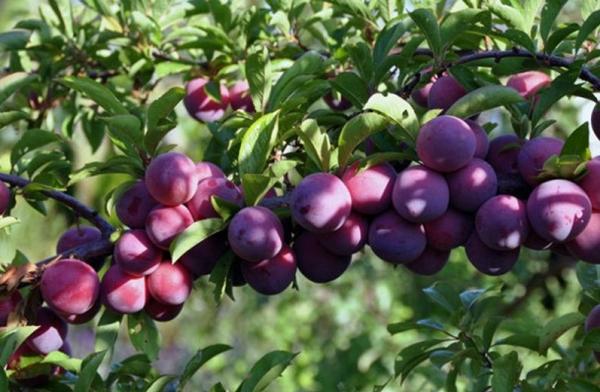
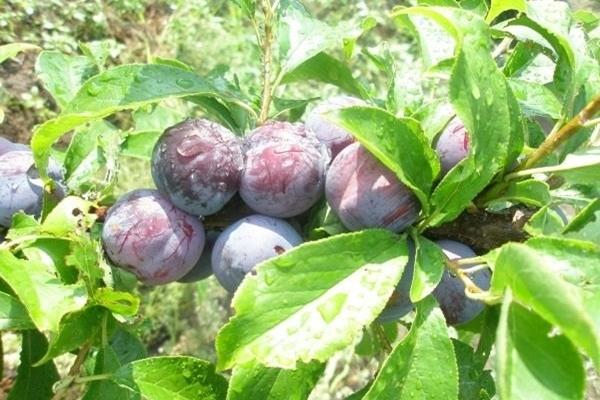
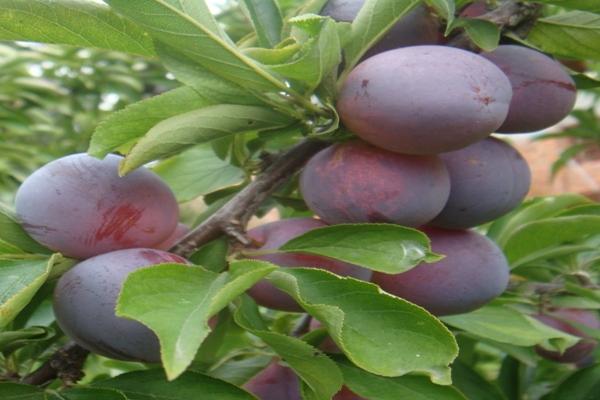
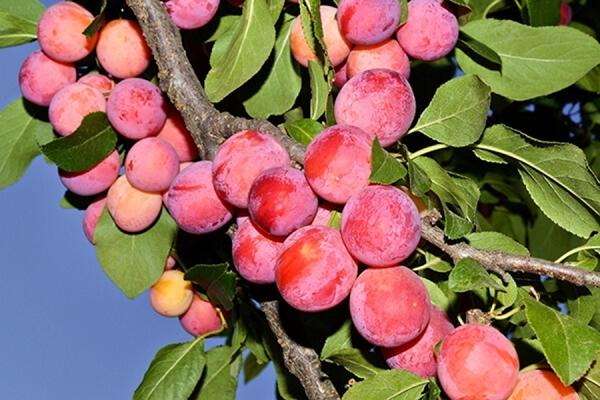
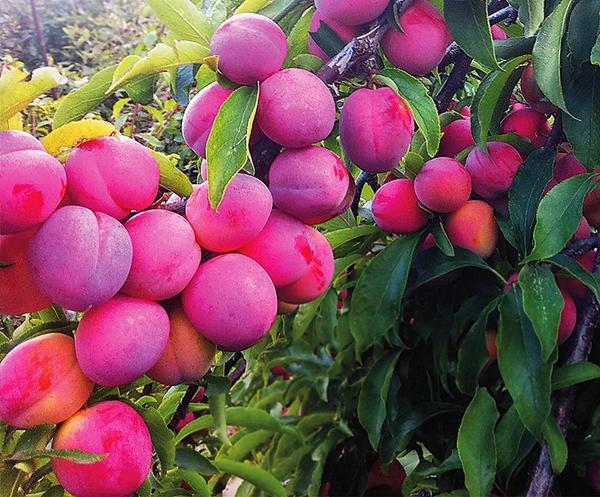
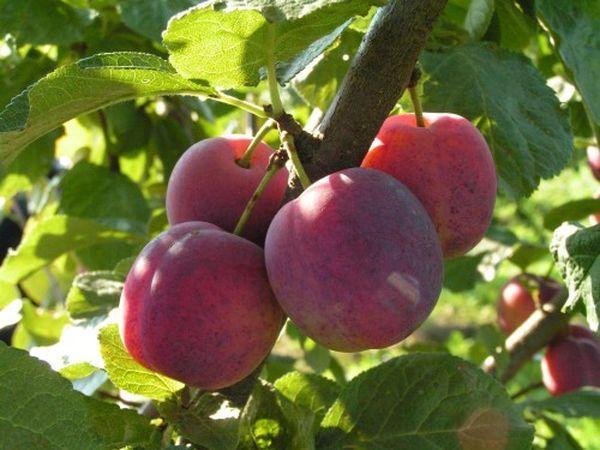
Plums ripen in late summer or early fall, depending on the growing region. They are medium in size and weigh between 15 and 20 grams. Larger specimens, reaching 30 grams, are also found. The plums are held firmly by thick, short stalks.
The dark burgundy skin is covered with a bluish bloom. Thin and fragile, it conceals dense and very juicy yellow-green flesh. Inside lies a pointed, oval-shaped, medium-sized seed.
Flowering and pollinators
The flowers that form on the bouquet branches are miniature and white. Each inflorescence contains three flowers.
The Manchurian plum is not a self-fertile fruit plant and therefore requires reliable pollinators. The following varieties are most suitable for these purposes:
- Ural golden;
- Manchurian prune;
- Ural red;
- Ussuri.
Any of the listed varieties should be planted in the same area with Manchurian plum to increase its productivity.
Ripening time and harvest
The fruits of the Manchurian Beauty begin to ripen in the third ten days of August. This period can continue until mid-September.
Due to uneven ripening, the tree is harvested in two or three stages. It is recommended to do this in the morning hours during dry, clear weather.
Ripe plums can be stored fresh for up to one month.
This variety is characterized by consistent fruiting. Young plants produce about 10 kilograms of fruit, while mature plants yield about 24.
Taste assessment and scope of application of fruits
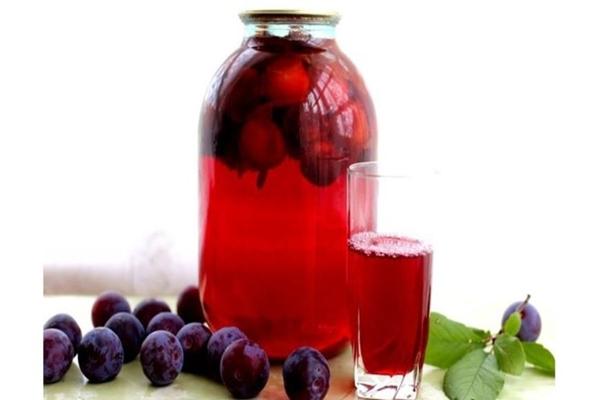
The fruits of the Manchurian Beauty contain ascorbic acid, sugar, and tannins. They have a dessert-like flavor—sweet with a slight tartness. The pulp is very juicy and tender, so it is often eaten fresh, without any additional processing. Since the pit separates easily from the pulp, this variety is suitable for prunes.

There are other uses for Manchurian plum fruits:
- freezing;
- jam, marmalade;
- compote.
Susceptibility to diseases and parasites
The Manchurian Beauty plum has high immunity to pests and dangerous common diseases. It is resistant to rubella, coccomycosis, and clasterosporium. The only exception is moniliosis, but regular preventative treatments in spring and fall will ensure protection.
Resistance to low temperatures and drought
This variety has high frost resistance, inherited from its ancestor, the Ussuri plum. The tree easily tolerates temperatures down to -40°C.
Drought is not detrimental to the Manchurian Beauty, but to ensure the tree feels comfortable, it will require abundant watering and irrigation every ten days.
How to plant a tree on a plot
When planning to plant a tree of this variety, it is necessary to choose the right site and prepare fertile soil.
Required soil composition
The Manchurian Beauty is demanding when it comes to soil quality. Fertile, permeable soil is recommended. Loamy black soil is best.
Selecting and preparing a site
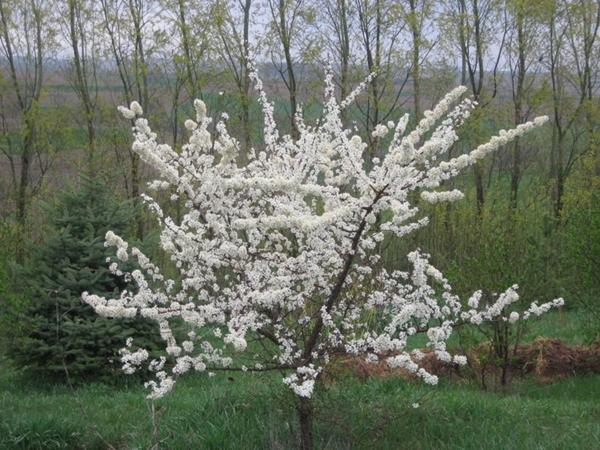
A plum tree will be most productive if planted in a sunny location. It's important to choose a location protected from strong winds and drafts.
Plum planting holes should be dug on a slightly elevated surface. If planted in a low-lying area, the plum will suffer from stagnant, cold air.
The minimum depth of groundwater at the planting site is one and a half meters.
Dimensions and depth of the planting hole
The optimal width of planting holes for plum trees is 80 centimeters, and the depth is 60-70.
Timing and rules for planting the Manchurian Beauty plum
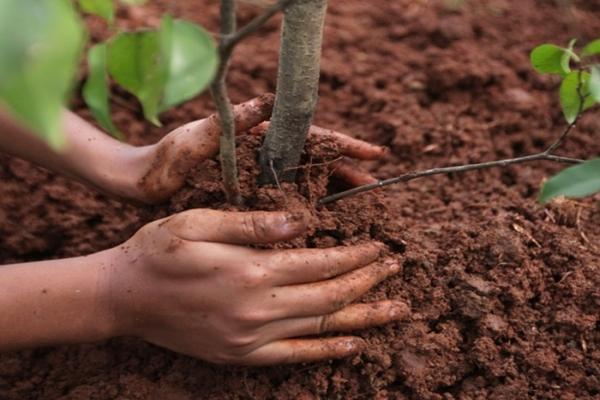
The Manchurian Beauty plum is planted outdoors in spring or fall. In harsh, cold climates, spring is the optimal time for planting. If planted in the fall, the seedling is likely to freeze and not have time to establish itself quickly. In other regions, the planting time depends on the gardener's preferences and weather conditions.
Organization of care
Caring for the Manchurian Beauty is simple. Ensure the fruit trees are properly watered and fertilized, and regularly prune the crown and cultivate the trunk area.
Watering
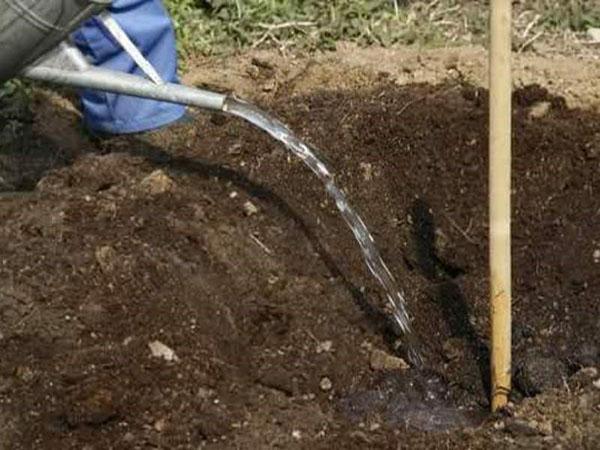
Plum trees need to be watered and irrigated at least once a month. The moisture should penetrate the soil to a depth of 40 centimeters.
Top dressing
The Manchurian Beauty should be fed for the first time 2-3 years after planting. A mixture of 2 kilograms of compost, 25 grams each of ammonium nitrate and urea is suitable.
In summer, it is recommended to sprinkle ash on the soil around the tree. The optimal dosage is 200 g per 1 m.2.
Crown pruning
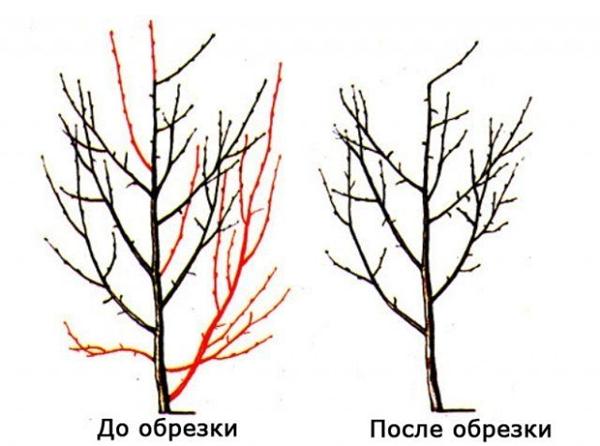
The Manchurian Beauty is characterized by rapid crown growth. Therefore, it requires formative pruning.
The first time the tree's crown should be shaped is in its second year—in spring or fall. After removing damaged shoots and branches, the cuts should be coated with garden pitch.
Loosening and mulching the tree trunk circle
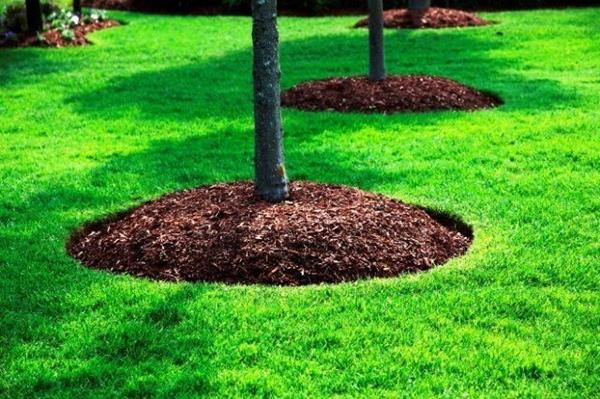
This procedure protects the tree's roots from oxygen deprivation. The soil around the tree trunk should be loosened after each watering.
Experienced gardeners recommend using freshly cut grass or peat for mulching.
Seasonal preventive treatments
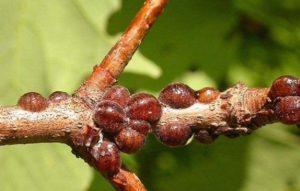
To prevent damage from diseases and pests, periodic thinning of the tree crown and clearing of fallen fruits and leaves from the trunk circle is carried out.
It is recommended to treat trees with Bordeaux mixture three times during the season. This will protect them from dangerous microorganisms.
Before winter, young seedlings can be protected with burlap or a piece of non-woven material. For mature trees, pine needles or sawdust are preferable.
Reproduction methods
Vegetative propagation is the most effective method for plum propagation. Root suckers, cuttings, and grafting are used. Seedlings can also be grown on rootstock from seeds.
Gardeners' reviews of the crop
Tatyana: "At my dacha, I planted Manchurian Beauty along with pollinators—Red Ural and Ussuri plums. I'm absolutely delighted with the results. Fruiting is stable. Diseases and pests are not a problem. I make delicious prunes from these fruits."
Ivan: "The variety tolerates cold well; the trees only need a little cover from pine needles. The harvest ripens from August to mid-September. There are plenty of fruits, so our family has enough for all their preserves."
Related posts:
 Description and characteristics of the Yakhontovaya plum variety, pollinators
 Description of the Volga Beauty plum variety, planting and care
 Description of the Renklod plum varieties and cultivation technology
 Description and subtleties of growing the Russian Beauty pear variety
 Description of the Forest Beauty pear variety, planting and care specifics
 Description and varieties of plum variety Ternovka, planting and care technology
 Description and characteristics of the 30 best yellow plum varieties, planting and care
 Description and distinctive features of the best varieties of Ussuri plum