
- History of selection
- Cultivation area
- Advantages and disadvantages of the Rogneda pear
- Description and botanical information
- Size and annual growth of the tree
- Life expectancy
- Fruiting
- Flowering and pollinators
- Ripening time and harvest
- Tasting evaluation and scope of application of pears
- Transportation and storage of fruits
- Immunity to diseases and insects
- Resistance to low temperatures and drought
- How to plant a tree on a plot
- Selecting and preparing a landing site
- Dimensions and depth of the planting hole
- Preparing the seedling
- Timing and technology of planting operations
- Further care
- Watering mode
- Seasonal fertilization scheme for Rogneda pears
- Whitewash
- Crown formation
- Seasonal treatments
- Winter protection
- Transfer
- Methods of reproduction
- Gardeners' reviews of the Rogneda variety
The early Rogneda pear variety appeared in gardens 20 years ago. It has become widespread in central Russia: the Moscow, Kaluga, Tula, and Ryazan regions. Gardeners appreciate the trees' low maintenance and compact growth habit, as well as the fruit's southern aroma and flavor. They also value its resistance to adverse climatic conditions and diseases.
History of selection
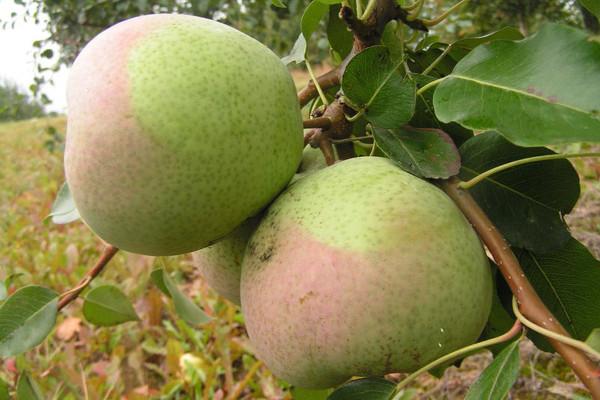
In the late 1990s, scientists at the Timiryazev Agricultural Academy developed and submitted a new variety of winter-hardy, early-ripening pear for state testing. The Far Eastern variety Tema and the Belgian variety were used in the breeding process. Forest Beauty pearThe resulting variety was named Rogneda. In 2001, it was added to the State Register of Fruit Plants and recommended for cultivation in the central region of Russia.
Cultivation area
The Rogneda pear inherited the winter hardiness of the Tema variety. This allows it to be grown in northern latitudes. There are also no restrictions on its cultivation in southern regions. It is most often grown in central Russia.
Advantages and disadvantages of the Rogneda pear
Advantages of the variety:
- cold resistance;
- early onset of fruiting;
- resistance to scab and fruit rot;
- taste qualities of fruits.
Disadvantages of the variety:
- fruiting is periodic;
- shedding of ripe fruits.
Description and botanical information
Rogneda is a popular, well-studied variety.
Size and annual growth of the tree
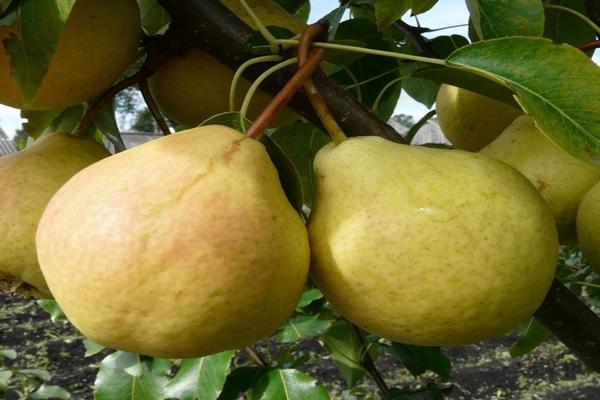
The Rogneda variety is medium-sized. A mature tree reaches a height of 4 m. The branches are slightly curved and sparse. Annual growth is 10-15 cm.
Life expectancy
For the Rogneda variety, the lifespan is limited by the fruiting period.
With proper care and pruning, this period is 35-40 years.
Fruiting
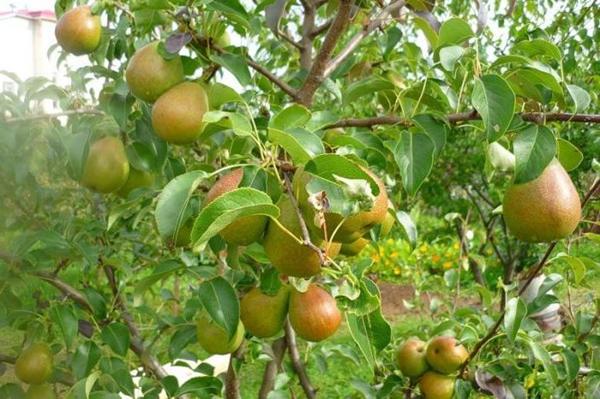
The first fruits appear three years after planting. Peak fruiting occurs at 8-10 years of age. The majority of the ovaries form on short rings. Mature fruits weigh 110-130 g. The yield of a mature pear tree ranges from 50 kg to 100 kg.
Flowering and pollinators
Flowers appear before leaves.
Rogneda is a self-fertile variety. However, to increase yield, additional pollinators are planted nearby. These are locally bred pear trees.
Ripening time and harvest
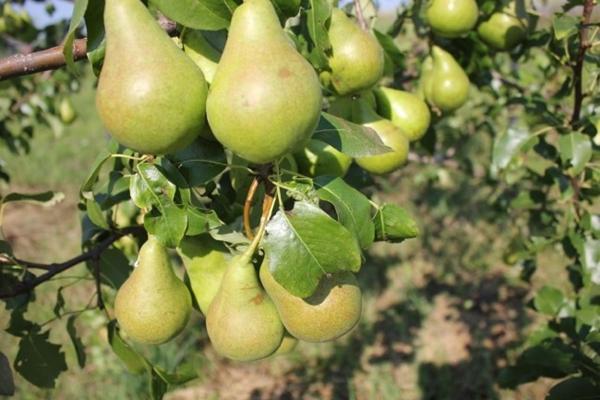
In the temperate zone, the harvest ripens in mid- to late August. A characteristic of the Rogneda variety is the shedding of ripe fruits. Therefore, the pears are picked unripe and stored.
Tasting evaluation and scope of application of pears
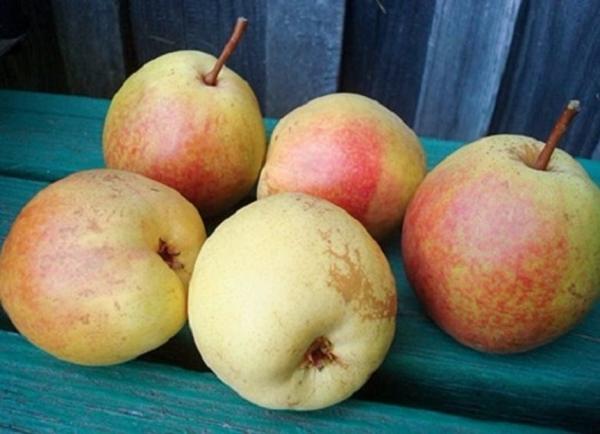
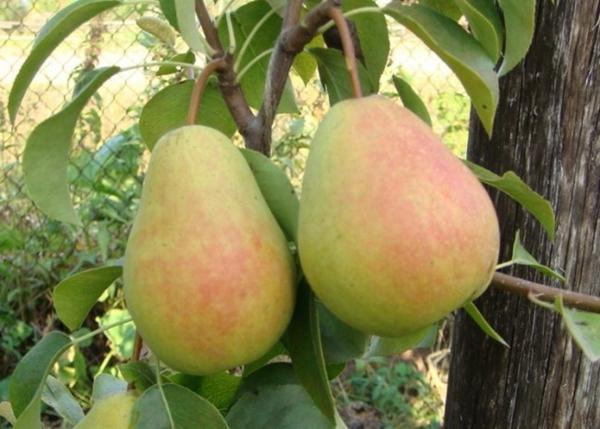
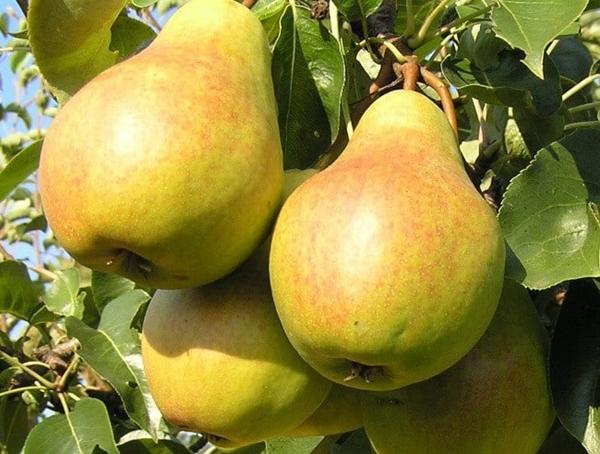
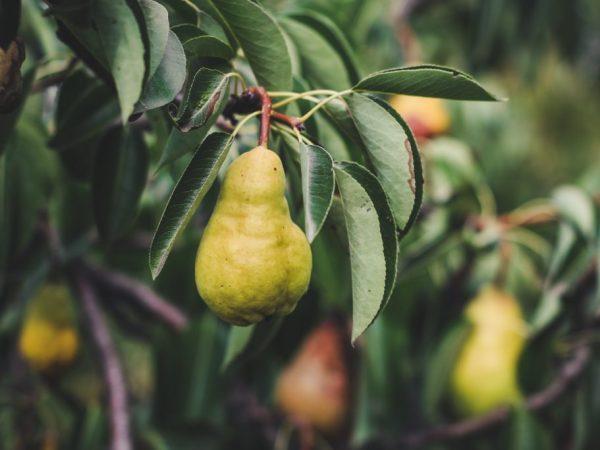
The pears are round in shape and covered with a light yellow, smooth skin. The flesh is grainy, slightly beige, and juicy. The flavor is sweet and tart. The aroma is muscat.
The fruits are eaten fresh and processed into compote, preserves and jam.
Transportation and storage of fruits
Pears are transported and stored in wooden or plastic containers, always layered with wood chips or straw. Crates containing the fruit are stored at a temperature of 0 to +1 degrees Celsius. Humidity is maintained at 80-90%.
If you don't have a dedicated fruit storage facility, a cold cellar or refrigerator will do. The shelf life is 2-3 months.

Immunity to diseases and insects
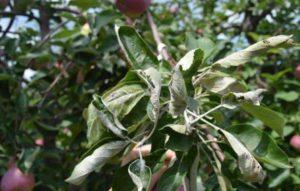
The Rogneda pear is resistant to common tree diseases, such as fruit rot and scab. It can be affected by powdery mildew, rust, and insect pests.
Resistance to low temperatures and drought
The Rogneda pear variety is genetically resistant to low temperatures. It easily tolerates short-term drought. However, with prolonged drought, it loses leaves, the fruit does not gain weight, and becomes less juicy. Premature shedding is possible.
How to plant a tree on a plot
The lifespan and productivity of a tree depend on the choice of location and adherence to planting rules.
Selecting and preparing a landing site
Rogneda pear seedlings should be planted in a sunny, wind-protected location in the garden. Groundwater levels should not rise above 2.5-3 meters. Adult pollinators should be nearby.
The planting area is cleared of plant debris and other debris. The turf is dug up. Hard soils are tilled before planting, adding a soil conditioner such as river sand or deciduous wood shavings.
The planting area for 1 tree is not less than 5 sq. m.

Dimensions and depth of the planting hole
For bare-root seedlings, dig a hole 60-65 cm deep and 80-100 cm wide. A wooden stake is placed in the hole, extending 50 cm above ground level. A 15 cm layer of drainage is placed at the bottom of the hole. Crushed stone, slag, or expanded clay are used.
For seedlings with a closed root system, the hole depth is left the same, but the width is increased to 120 cm.
Preparing the seedling
Two-year-old plants take root better.
The seedling selected for planting must have:
- developed root system, consisting of 3 or more roots;
- trunk 100-120 cm high and 1.5-2 cm thick, without rot, with a woody top;
- 3-5 branches with buds.
Bare-root seedlings are soaked in water for 24 hours before planting. Covered-root seedlings are watered generously.
Timing and technology of planting operations
The Rogneda pear takes root well when planted in spring and fall. Spring planting is best in the second half of April, and fall planting is best in late September or early October. Spring planting is preferred.
In autumn, it is better to plant a seedling with a closed root system.
Planting is carried out using the following technology:
- The condition of the planting hole is checked, which is prepared 3-4 weeks before the autumn planting, and 3-4 months before the spring planting.
- Mix the fertile soil from the hole with rotted manure in a 3:1 ratio. Add 100 g of ammonium nitrate. Pour the resulting mixture into the hole.
- The pear seedling is lowered to the bottom, having first treated the roots with a liquid clay solution.
- Spread the roots and cover them evenly with soil. Trim any long roots. Firm the soil. The root collar protrudes 7-8 cm from the soil surface.
- 90% of the leaves on the seedling are removed, the top and branches are trimmed, leaving a height of 60-80 cm.
- The trunk is tied to the inserted stake. Saplings with roots covered in soil do not require tying.
- Create a watering trench 80 cm in diameter around the planting site. Pour 3-4 buckets of water into it. Mulch the trench.
Further care
With proper care, the Rogneda pear produces a stable harvest every year.
Watering mode
In temperate climates, watering mature Rogneda pear trees is done as needed, depending on weather conditions. During dry summers, watering is limited to 4-5 times per season.
Young trees are watered once a week.
Seasonal fertilization scheme for Rogneda pears
In the fall after fruiting and in the spring before flowering, mineral or organic fertilizers are applied to the soil. Pear trees require adequate nitrogen and potassium levels. Mineral fertilizers used include superphosphate, urea, ammonium nitrate, and potassium sulfate. Rates are calculated for each region based on the soil's chemical composition.
Instead of mineral fertilizers, you can use organic ones - humus, manure, bird droppings.

Whitewash
They whiten with bleach in the spring to prevent sunburn and damage by insect pests.
In the fall, trees are whitewashed to prevent disease. The whitewash covers the trunk up to the first branches.
Crown formation
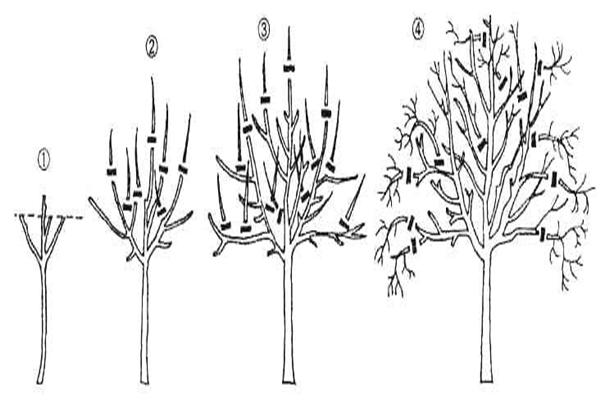
Young trees up to 5 years old develop an oval or pyramidal crown. Pruning mature Rogneda pears is not recommended, as this will reduce yield.
Seasonal treatments
They are carried out for preventive purposes:
- During the leaf-opening period, Rogneda pears are treated with solutions of potassium chloride and urea to prevent damage by powdery mildew.
- Before flowering and after fruiting, trees are sprayed with solutions of copper oxychloride and Bordeaux mixture to prevent the formation of rust on the leaves.
- To destroy insect pests before flowering and after harvesting, branches and trunks are treated with malathion or chlorophos.
Winter protection
In autumn, the soil around the pear tree is dug up and watered, and dry and diseased branches are pruned.
Before wintering, the trunk is covered with insulating material to protect it from rodents.

Transfer
Rogneda pear can be replanted in extreme cases.
It's essential that the tree be dug up with its roots completely covered by soil. Replanting with exposed roots will result in its death.
Methods of reproduction
Vegetative propagation methods are suitable for the Rogneda pear:
- cuttings;
- air layering;
- kidneys.
Gardeners' reviews of the Rogneda variety
Petr Mikhailovich, Samara:
"We planted the Rogneda pear tree eight years ago. We're very happy with it. It's absolutely disease-free. It requires minimal care. It ripens in late August. We pick the fruit slightly unripe. They ripen on the porch. The aroma fills the whole house. The taste is amazing. The kids love it."
Yuri, Kozelsk, Kaluga region:
"There are three pear trees in the plot. Two are old, we don't know the variety. But they're very tasty. Only the fruit is a bit small. The third is Rogneda. It's six years old. But there's already plenty of fruit. The pears are large, sweet, and fragrant. If you pick them in time, you can store them. But for now, they're all eaten right away."
Related posts:
 Description and characteristics of the Rogneda potato variety, planting and care
 Description and full characteristics of the Yakovlev Memory pear variety, planting and care
 Description of the 23 best pear varieties for the middle zone, planting and care rules
 Description and full characteristics of the August Dew pear variety, planting and care
 Description and characteristics of the 45 best pear varieties, how to choose
 Description and full characteristics of the Lada pear variety, care and cultivation
 Description of the Cathedral pear variety, planting and care features
 Description and characteristics of the Marble pear variety, pollinators and cultivation subtleties