
- The history of the breeding of the Just Maria pear
- Benefits of Growing
- Suitable region and climate
- Drought resistance
- Winter hardiness
- Characteristics of the variety
- Tree
- Pollinators
- Fruits and yield
- Transportability and storage
- Susceptibility to diseases
- Features of tree cultivation
- Planting dates
- Selecting a site
- Preparing seedlings and planting holes
- Technological process of landing
- Caring for the Simply Maria variety
- Fertilizer
- Watering
- Mulching and care of the tree trunk circle
- Shelter for the winter
- Diseases and pests: control and prevention
- Gardeners' reviews
The Prosto Maria pear is a late-ripening variety. Developed in Belarus, it is a young variety. This variety embodies the best qualities of a fruit tree. It has recently become very popular among gardeners, and is widely grown in private plots.
The history of the breeding of the Just Maria pear
A Belarusian variety that took 35 years to develop. The results exceeded all expectations. The pear has acquired all the best qualities: frost resistance, large fruits, strong immunity, and shelf-life.
Prosto Maria was only added to the state register in 2010. Variety testing began in 2005. The author is Maria Myalik.
Benefits of Growing
The Just Maria pear has a number of positive qualities that have made gardeners so fond of it and actively cultivate it in their gardens:
- strong immunity;
- maintaining the quality of fruits under unfavorable weather conditions;
- frost resistance;
- drought resistance;
- transportability and shelf life of fruits;
- high taste qualities;
- early onset of fruiting, in the 3rd year of life.
Important! Average yields are noted as a drawback.
Suitable region and climate
This winter-hardy variety is suitable for cultivation in all regions of Russia. With proper cultivation practices, the pear thrives in any climate zone.
Drought resistance
The plant has a robust root system. When water is scarce, it draws moisture from groundwater. Fruit quality remains unaffected by water shortages. It can tolerate temperatures up to 35°C.
However, there is no need to test the pear for stability; it is important to ensure regular watering and follow all care rules.
Winter hardiness
Maria was bred as a highly frost-resistant pear variety, capable of withstanding even the harshest frosts. It quickly recovers in the spring, despite severe frosts.
The maximum temperature that a tree can easily tolerate is -40°
Characteristics of the variety
By studying the variety's characteristics, one can evaluate the pear's characteristics and appearance. Afterward, the gardener can draw conclusions and make a decision about growing it.
Tree
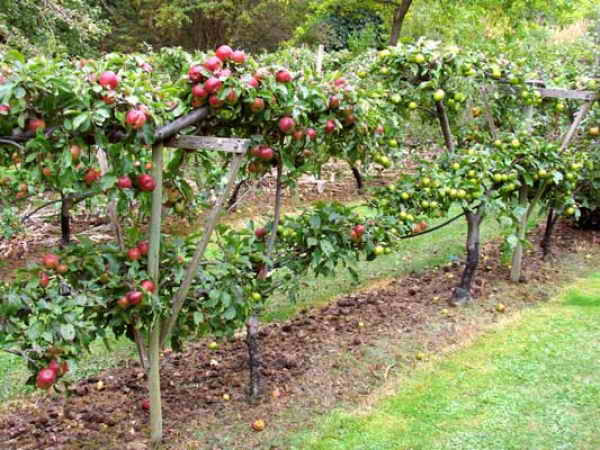
A medium-sized tree, reaching 2.5 m in height, which it maintains throughout the growing season. The crown is pyramidal and requires regular pruning. The leaves are green, opposite, and elongated and lanceolate. The trunk is covered with gray-brown bark. The trunk is straight and even. The crown is spreading, reaching 2.5 m in diameter.
Flowering begins in the first half of June. The plant produces white-pink flowers with numerous yellow stamens. The inflorescences consist of 5-7 petals. After flowering, ovaries form, which actively gain weight until the end of October.

Pollinators
To increase the number of ovaries, the presence of pollinators is necessary. Without them the pear tree will not be able to bear fruitThe most suitable varieties for this are:
- Belarusian late;
- Rossoshanskaya dessert;
- Fun;
- Lagodnaya.
Fruit crops whose flowering period coincides with the flowering of Just Maria are also suitable for this purpose.
Fruits and yield
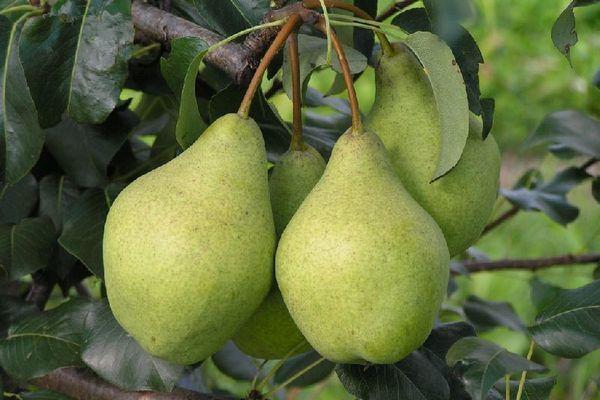
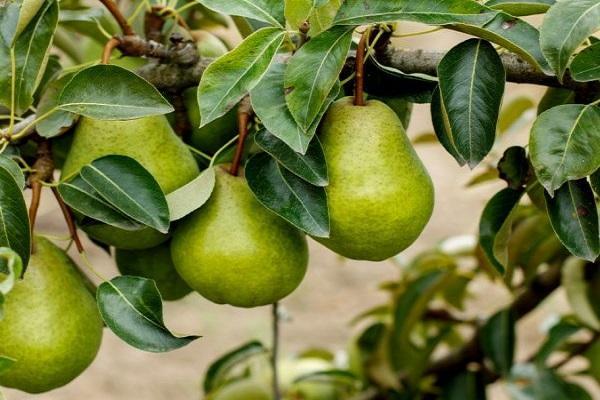
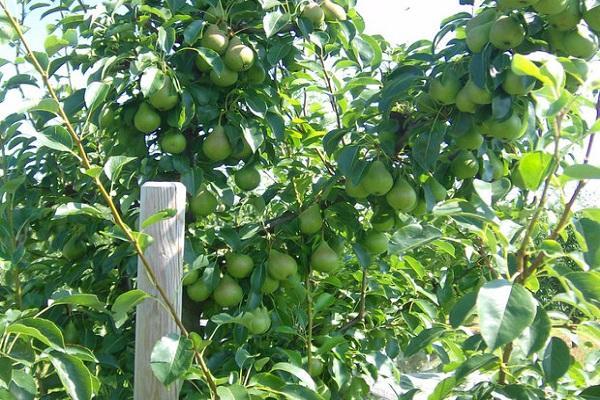
The tree produces large fruits, weighing up to 230 g. Their color is yellow-green, with one side tinged pink. The fruits are elongated, cone-shaped. The stem at the top is brown. Pears are picked unripe, which extends their shelf life, as they ripen off the tree.
The Just Maria variety has an average yield. A single tree can produce up to 30 kg of fruit. This yield is only achieved under favorable growing conditions. Under poor conditions, the yield decreases.
Important! The better the tree's contact with pollinators, the higher the yield.
Transportability and storage
Prosto Maria pears have a shelf life of over 90 days. They are highly transportable. This variety is grown on a large scale due to its excellent quality. Store the fruit in a cool place. Suitable storage locations include:
- cellar;
- insulated balcony;
- fridge;
- basement;
- garage.
The pears are placed in breathable boxes. The fruits are inspected periodically to remove any damaged or rotten ones.
Susceptibility to diseases
The tree has a strong immune system. Diseases are rare, occurring only if cultivation practices are not followed and frequent flooding occurs. Preventive treatments are recommended against septoria leaf spot, scab, and bacterial canker.
Features of tree cultivation
Like other crops, Prosto Maria has its own planting and care requirements. Proper planting will ensure the gardener achieves the desired results.
Planting dates
Planting a young tree is done in spring or fall. Both options are suitable for the south. In the north and central regions, spring planting is recommended. If necessary, planting can be done in the fall. However, after planting, the pear tree should be insulated, as frost resistance develops in the third year.
Important! If you purchase a seedling in the fall, you can cover it with soil and store it in a greenhouse. Planting procedures should be carried out in the spring.
Selecting a site
The "Prosto Maria" pear prefers well-lit locations. It's ideal to have a garden with pollinator honeycombs on your property. It's important to avoid frequent gusts of wind. Since the pear has a well-developed root system, it's best to choose a location with at least 1.5 meters of groundwater.
Preparing seedlings and planting holes
Saplings are purchased from reputable nurseries. Select trees free of scratches, cracks, damage, and signs of disease. Before planting, soak the roots in a potassium permanganate solution for 24 hours.
The planting hole is prepared in the fall or two weeks before planting. The procedure follows a specific algorithm:
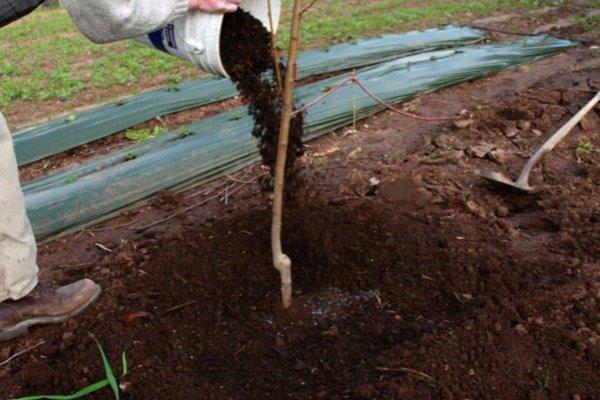
- They dig a hole 70 cm in diameter and 1 m deep.
- The excavated soil is mixed with 10 kg of humus, a mixture of phosphorus, potassium and nitrogen.
- Half of the soil is poured back into the hole.
- Leave until planting begins.
Technological process of landing
Planting seedlings in open ground follows a specific procedure. It's important to do everything correctly to ensure the tree takes root and bears fruit in the future. Planting is done as follows:
- Soak the seedlings in a solution of potassium permanganate for 24 hours.
- Place the roots in the hole.
- Straighten the roots.
- Sprinkle with soil layer by layer.
- Each layer is compacted with hands.
- Form a tree trunk circle 8–10 cm deep.
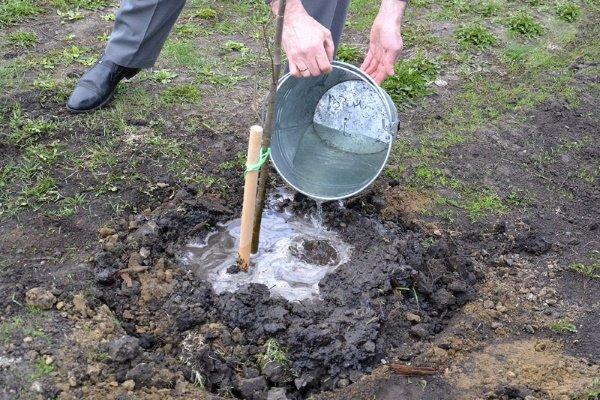
- Water with 4-6 buckets of water.
- The tree trunk circle is mulched with organic material.
Important! Before planting, drive a wooden stake into the hole and tie it to the tree to prevent breakage in bad weather.
Caring for the Simply Maria variety
To produce a good and healthy harvest, the "Prosto Maria" pear requires special care. The tree is not particularly fussy and can easily withstand heat and frost, although this will reduce yield.
Fertilizer
After planting, the tree doesn't need to be fertilized for the first three years. The fertilizer placed in the planting hole will provide sufficient nutrition for the seedling for a long time. From the fourth year onward, the pear tree is fertilized with organic and inorganic fertilizers. Suitable fertilizers for pears include:
- overripe manure;
- compost;
- wood ash;
- urea;
- copper sulfate;
- complex compositions for fruit trees;
- Bordeaux mixture;
- wood ash.
Each fertilizer is applied separately. When selecting components, pay attention to the leaves and shoots. Their condition can help determine element deficiencies.
It is important to carry out the procedure at different stages of the growing season:
- Before bud formation begins;
- During the flowering period;
- During the formation of ovaries;
- During the fruiting period;
- After harvesting.
Important! Over-fertilizing will result in plant death.
Watering
The "Prosto Maria" pear is drought-tolerant, but that doesn't mean it can't go without watering. The tree is moisture-loving and requires regular watering throughout the season. For a fruiting tree, use 6-8 buckets of water. For a young tree, use 4-6 buckets of water at a time. The liquid is poured into the area around the trunk. Favorable periods for watering are:
- Before the juice starts to move;
- During the formation of kidneys;
- During the flowering period;
- After the beginning of ovary formation;
- During fruiting;
- Winter watering.
Mulching and care of the tree trunk circle
The trunk circle of a garden tree is its heart. It's where the pear tree receives nutrition and moisture. It's important to carefully monitor it. To do this, follow these steps:
- Loosen the soil twice a month to prevent the formation of an earth crust;
- Remove root shoots;
- All weeds are pulled out;
- Mulch the area around the trunk.
Mulching helps retain moisture at the tree's roots, prevents weed growth, limits infection through the root system, and makes tree maintenance easier. Various materials are used for this purpose:
- straw;
- wood sawdust;
- chopped grass;
- moss;
- pine needles;
- crushed stone.
Important! Using pine needles as mulch reduces the risk of mice breeding.
Shelter for the winter
The pear tree is frost-hardy but requires winter protection, especially in northern regions. Young seedlings must be covered, as their frost tolerance is not yet fully developed. Prepare the tree for winter as follows:
- do sanitary pruning;
- water and feed the tree;
- mulch the tree trunk circle;
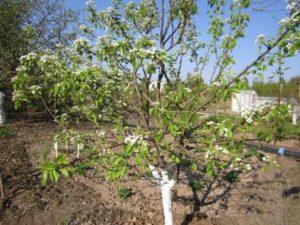
- paint the tree trunk with whitewash;
- Young pears are covered with agrofibre.
Diseases and pests: control and prevention
The Just Maria pear has strong immunity. In rare cases, it can be affected by:
- scab;
- septoria;
- bacterial cancer;
- aphids;
- fruit caterpillars.
If signs of infestation are detected, the tree foliage is sprayed with fungicides or insecticides. Treatments are performed 2-3 times per season, according to the instructions.
Gardeners' reviews
Arkady, 45 years old, Tula
We bought the "Prosto Maria" variety the very first year after the seedlings went on sale. The tree took root and proved to be undemanding of soil conditions. From its third year on, the pear tree began delighting us with juicy fruit. The fruits are juicy, large, and very sweet. The yield is average, but enough for our family.
Elena, 46 years old, Moscow
Maria grew the pear tree "Prosto" from a cutting given to her by a neighbor three years ago. This year, we got our first harvest. The tree isn't very large yet, but the fruit is very large and sweet. The plant itself is easy to care for. Even though I haven't been able to tend to it too closely, the harvest is still good.
Antonina 63 years old, Arkhangelsk
I bought a 'Prosto Maria' seedling for my dacha. It's a late-ripening variety, so I'm not sure I'll get a harvest. After planting it in open ground, the tree took root and continues to grow. I hope I'll be able to achieve the desired harvest.
Related posts:
 Description and characteristics of the 45 best pear varieties, how to choose
 Description of the 23 best pear varieties for the middle zone, planting and care rules
 Description of the Abbot Vettel pear variety and the subtleties of growing it
 Description of the 10 best columnar pear varieties, planting and care
 Description of the Moskvichka pear variety, agricultural technology, and the best pollinators
 Description and subtleties of growing the Efimova Elegant pear variety
 Descriptions of the 20 best cherry varieties for the Moscow region, their planting and care
 Description and characteristics of the Marble pear variety, pollinators and cultivation subtleties