
- Why pear seedlings don't grow well: reasons and solutions
- Mistakes when planting fruit trees
- Small planting hole
- Planting a tree too deep
- The location of plant roots at a shallow depth
- Over-fertilization
- Incorrect installation of the peg near the trunk
- Overwatering
- Poor feeding
- Pests are eating the roots
- Diseases of fruit crops
- Root collar damping off
- How to Avoid Seedling Stunting: Tips and Advice from Gardeners
Pear is a garden fruit that grows in almost every garden. Growing it is not difficult if you know the characteristics of the variety and the proper planting guidelines. However, some gardeners encounter poor pear growth and don't know what to do. First, it's important to understand the underlying causes of the pear's slow development.
Why pear seedlings don't grow well: reasons and solutions
Several factors have been identified that influence the growth, flowering, and fruiting of pear trees. Let's take a closer look at the most common ones so you can take timely measures to ensure a bountiful harvest.
Mistakes when planting fruit trees
One of the main reasons for poor seedling growth is improperly prepared soil. Pear is a capricious tree, and by improperly planting it, a gardener condemns it to slow growth and development.
Small planting hole
Properly preparing the planting hole is essential for the tree's continued growth. It serves not only as a reservoir for the root system but also as a reservoir of fertile soil. In the first few years after planting, the seedling will draw all its nutrients from here. If the hole isn't deep or wide enough, root growth will be improper, leading to stunted or even halted growth. The standard planting hole size is 1m x 0.8m.
Planting a tree too deep
Unstable spring weather and the risk of recurrent frosts force gardeners to plant pear trees deeper than recommended, which ultimately affects the pear tree's growth. The seedling grows poorly, slowly, and seems to be stunted.
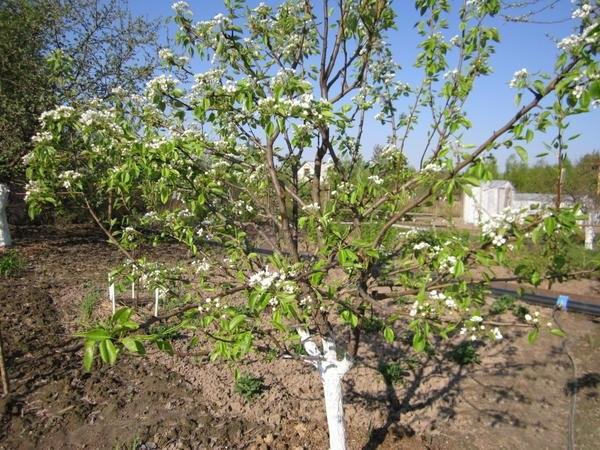
Sometimes gardeners confuse the grafting site with the root collar, placing the tree below the designated level. To avoid this problem, it's important to monitor the transition from the trunk bark to the roots.
If you notice that the trunk is very deep, then lift the pear tree or dig a hole around it.
The location of plant roots at a shallow depth
Pear trees don't tolerate shallow planting, where the root collar is positioned too high. Preventing this situation is quite easy:
- pre-water the soil;
- When planting, carefully monitor how the root system is covered with soil;
- compact the soil thoroughly and carefully.
If the problem is discovered after the seedling has been planted, the soil should be moved toward the root collar. Furthermore, the area around the tree's trunk should be covered with soil or humus.
Over-fertilization
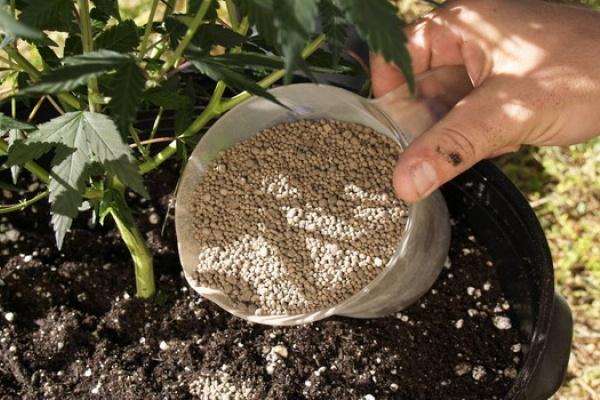
An excess of micronutrients can significantly impact tree growth. It's important to use mineral supplements wisely, not guesswork, and adhere to application intervals. Often, seeing that a pear tree isn't developing and growing well, a gardener decides to apply another fertilizer. This results in oversaturation of the soil, which can simply poison the seedling.
A single, generous watering will help remedy the situation. This is necessary to flush out active elements from the topsoil. On average, about 12-15 liters per square meter is required. Subsequently, adjust the proportions based on the soil condition and the ratio of organic and mineral fertilizers.
Incorrect installation of the peg near the trunk
A seedling's survival depends, among other things, on the correct placement of the stake. It is essential for firmly anchoring the trunk in the soil and ensuring stability in adverse weather conditions. To prevent the tree from sagging on the stake after settling, tie it to the support in a figure-eight pattern, preferably in two places.
It's best to choose a soft but sturdy material, such as bast, twine, or hemp. Some gardeners use regular rags, but they have one significant drawback: frequent wetting can cause the tree's bark to crack.
Overwatering
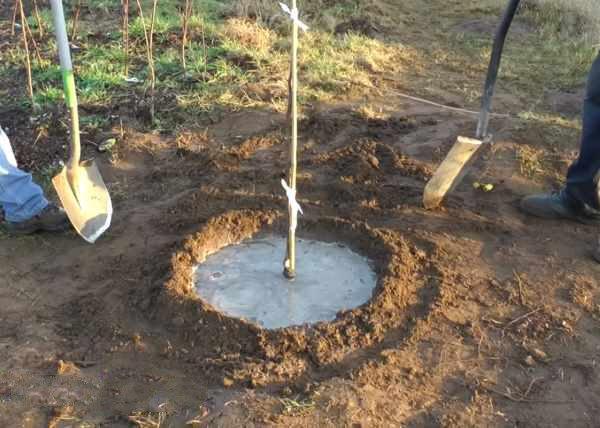
One common reason a pear tree fails to thrive is overwatering with plain cold water after planting. On dry and hot days, this can lead to crust formation around the trunk, blocking the root system and preventing oxygenation. This can also lead to fungal infections.
To avoid problems in the future, you should form a furrow around the trunk and water strictly into it.
Poor feeding
A lack of nutrients leads to a slowdown in shoot formation and their drying out. The following factors should be considered:
- With a lack of potassium, a brown border appears on the leaves and the color of the tree changes from bottom to top.
- Lack of nitrogen causes leaves to turn pale, become smaller, and fall off.
- Magnesium deficiency causes brown or yellow spots to appear on the leaves.
- A lack of phosphorus is manifested by wilting leaves that acquire a rich dark color.
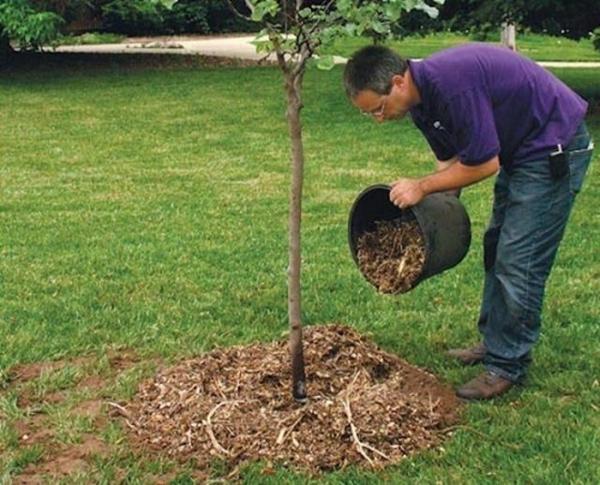
Fertilizing is best done using complex fertilizers in small doses. It's best to apply organic matter into small furrows around the trunk rather than scattering it over the soil surface.
Pests are eating the roots
Pear trees are often attacked by pests. If growths and galls appear on the rhizome and root collar, the pear has been infected with bacterial root canker. It is caused by a rod-shaped bacterium. This disease can be controlled by pruning the affected roots and disinfecting with copper sulfate. To do this, dilute the solution at a rate of 100 g per 10 liters of water. Applying phosphorus and potassium fertilizers is an effective preventative measure.
Diseases of fruit crops
The bark, leaves, and fruit of the pear tree are susceptible to fungal diseases. The most common are:
- scab;
- fruit rot;
- cytosporosis;
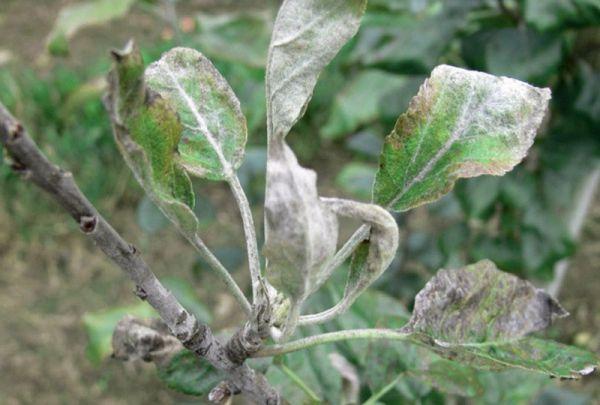
- powdery mildew;
- white spot;
- black and European crayfish;
- witch's broom;
- stoneiness of the fruit.
Each disease requires its own control method: spraying, using antiviral drugs, removing individual damaged parts, or uprooting the tree.
Root collar damping off
This disease manifests itself during frequent thaws and in regions with long snow periods. Root collar damping-off manifests itself in the following order:
- the color of the tree trunk above the root collar changes;
- part of the outer layer of the bark is separated;
- the leaves dry up, then the branches.
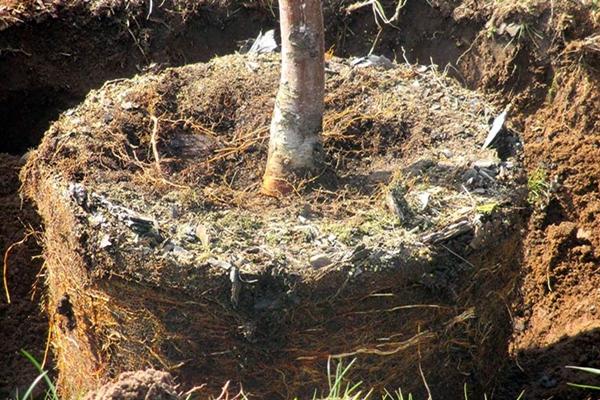
Sprinkling sand or sawdust around the tree's root collar will help prevent damping off. Whitewashing the underside of the pear tree can also help prevent trunk overheating. If there's a lot of snow, trample and compact it around the cherry tree's trunk. This will lower the soil temperature and prevent premature bark warming.
How to Avoid Seedling Stunting: Tips and Advice from Gardeners
Preventive measures for protecting pear seedlings include:
- timely watering and fertilizing;
- tree processing;
- cleaning up fallen fruit and leaves;
- keeping the area clean.
Olga Denisova, Nizhny Novgorod.
"If the pear tree isn't taking root, I recommend having the soil tested. The main cause may be an excess or deficiency of salts. Soil moisture also plays a significant role. On dry days, I thoroughly loosen the soil around the trunk to improve moisture flow to the root system."
Galina Khrobostova.
"For a pear tree seedling to thrive, it needs to be planted in well-warmed soil. These favorable conditions will allow the root system to establish and will not hinder the tree's further development."
Vasily Knyazev.
"The pear tree is quite a capricious tree. When choosing a seedling, I recommend considering local climate conditions. Not all pear seedlings thrive in long winters, so it's important to consider the variety's frost resistance."
Related posts:
 Description and full characteristics of the Yakovlev Memory pear variety, planting and care
 Description and characteristics of the 45 best pear varieties, how to choose
 Description of the 23 best pear varieties for the middle zone, planting and care rules
 Description of the Abbot Vettel pear variety and the subtleties of growing it
 Description and characteristics of the Marble pear variety, pollinators and cultivation subtleties
 Description and full characteristics of the August Dew pear variety, planting and care
 Description and subtleties of growing the Russian Beauty pear variety
 Rules for planting and caring for pears in open ground, how to grow them correctly