
- Selection of the Vidnaya pear variety and cultivation regions
- The main advantages and disadvantages of the variety
- Description and characteristics
- Tree size and annual growth
- Branching of the root system
- Life expectancy
- Fruiting
- Flowering and pollinators
- Fruit ripening time
- Productivity and taste
- Application of pears
- Drought and cold resistance
- Immunity to diseases and pests
- How to plant the Vidnaya pear variety
- Deadlines
- Selecting a site and preparing a planting hole
- Tree planting patterns and rules
- Care instructions
- Watering and fertilizing
- Pruning and crown shaping
- Whitewash
- Diseases and pests: preventive treatments
- Loosening and weeding the tree trunk circle
- Preparing for the winter cold
- Methods of reproduction
- Gardeners' reviews
The Vidnaya pear is considered a favorite among quality-conscious gardeners, as its positive characteristics and varietal traits meet all the demands of modern gardening. The plant boasts high yields, is easy to care for, and tolerates frosts well, making it a popular choice for both commercial farms and private gardens.
Selection of the Vidnaya pear variety and cultivation regions
As a result of breeding work conducted in 1958 in Moscow, the Vidnaya or Bugristaya pear was created by crossing the hybrid form 53-67 with a mixture of pollen from southern varieties. The authors of this variety are Yu. A. Petrov and N. V. Efimov. This cultivar is intended for cultivation in the Central Russian region and is popular in the Moscow region, the central part of the country, and in many countries in Asia and Europe.
The main advantages and disadvantages of the variety
The popularity of the Vidnaya pear variety is due to its numerous advantages:
- regularity of fruiting;
- excellent taste of fruits and their attractive appearance;
- self-fertility;
- resistance to fungal diseases;
- early fruit bearing;
- undemanding to soil quality;
- high environmental sustainability.
In addition to the advantages of the Vidnaya pear variety, it is also important to identify its disadvantages:
- short shelf life of fruits, maximum 5-7 days;
- The great height of the pear tree makes it difficult to care for the crown and harvest the fruit.
Description and characteristics
Beginning gardeners sometimes face the challenge of choosing plants for their garden plot. Before planting the Vidnaya pear, it's important to carefully study all the characteristics of this variety to ensure proper care and the highest possible yield.
Tree size and annual growth
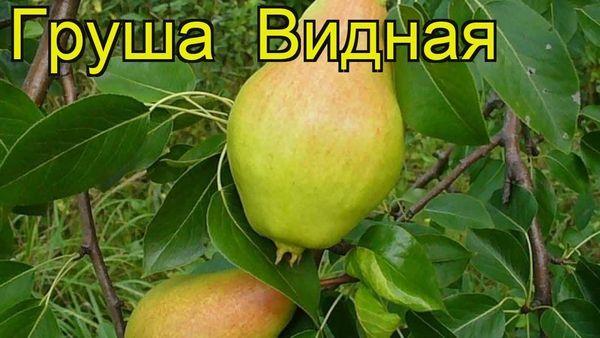
The Vidnaya pear tree, a vigorous tree reaching over 5 meters in height, develops a spreading, moderately dense crown that eventually takes on a pyramidal shape. The main branches are robust, while the long shoots are medium-thick and light brown in color. The plant is adorned with dark green leaves. The leaf surface is smooth, with serrated edges.
The tree produces excellent growth of thick shoots every year, so it is important to monitor growth, thin out, and also carry out regular pruning.
Branching of the root system
A tree with a well-developed root system. This characteristic allows the plant to develop fully from the first days of planting, forming a dense, thick crown, strong lateral branches, and a strong trunk.
Life expectancy
The Vidnaya pear variety is not considered a long-lived variety, but with proper care it can delight the gardener for 20-30 years.
Fruit production in older trees decreases, but this situation can be corrected with proper pruning.
Fruiting
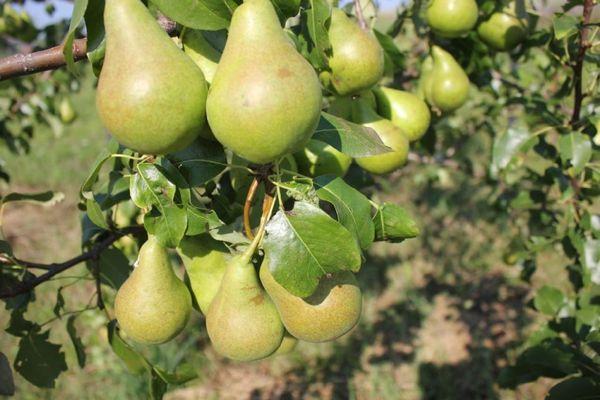
The crop is not subject to cyclical fruiting and consistently delivers a rewarding harvest. The yield of pears may vary slightly from year to year, depending on weather conditions.
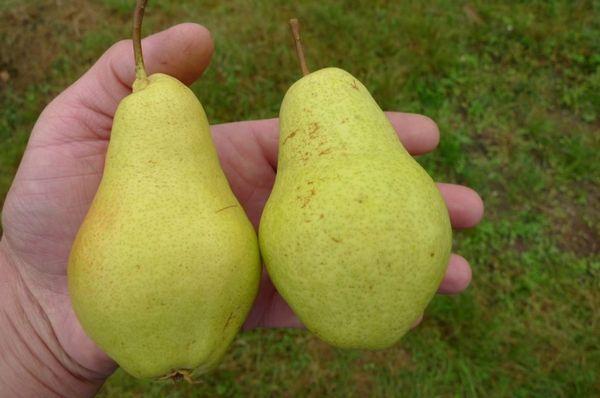
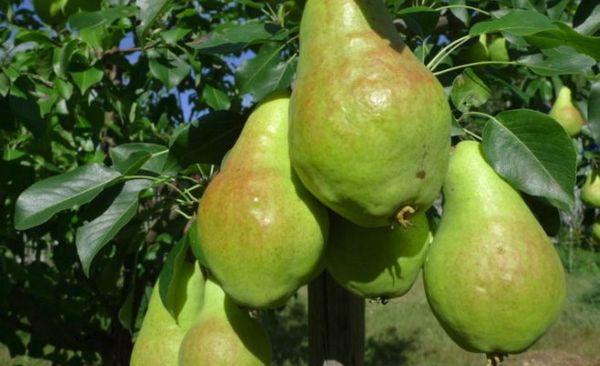
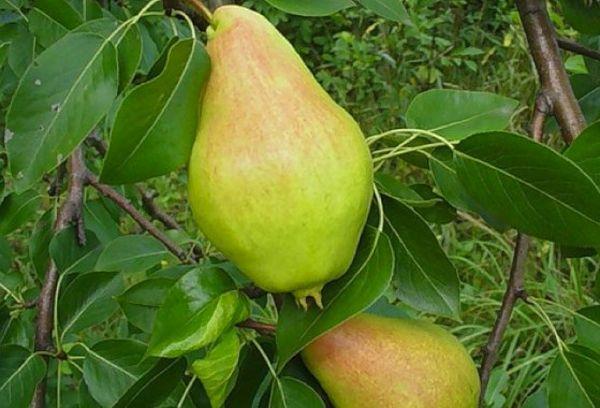
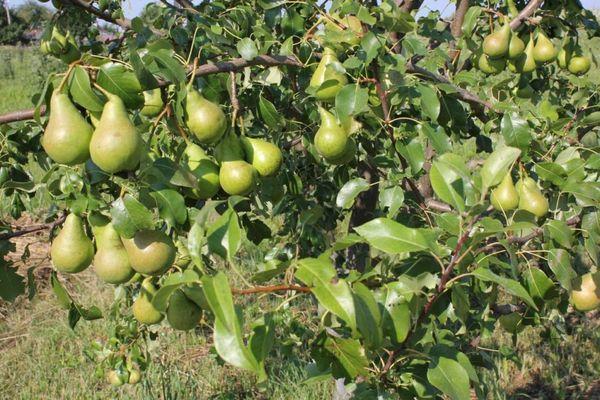
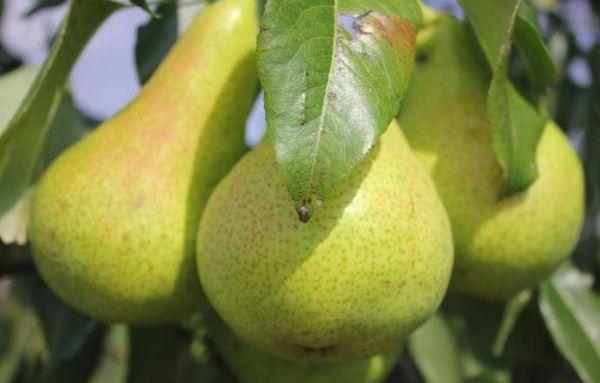
The pears are large, weighing up to 200g, but averaging 160g. The fruit is elongated, with an uneven surface, giving rise to the variety's nickname, "Bumpy." The skin is thick, yellow-green, with an amber hue. The creamy flesh is dense, oily, and juicy.
Flowering and pollinators
The Vidnaya pear tree blooms profusely. The buds open in late May. Thanks to its late blooming, the plant is not susceptible to spring frosts. It does not require pollinators to increase its yield.
Fruit ripening time
The first harvest can be collected 4-5 years after planting a young tree. Pears reach consumer maturity unevenly – the first fruits can be picked as early as late August, the next ones in early September.
A distinctive feature of the Vidnaya variety is that ripe fruits remain firmly attached to the branches without falling off, allowing gardeners to take their time harvesting. The flavor of the overripe fruit is not affected.
Productivity and taste
High yields and regular fruiting make the Vidnaya pear one of the most promising varieties. Each tree produces up to 40-60 kg of fruit. This variety is prized for its balanced flavor, which harmoniously combines sweetness and acidity. Connoisseurs note its buttery texture and pleasant muscat flavor. Tasters gave this dessert-flavored variety a 4.7 rating.
Application of pears
The Vidnaya variety's fruits are versatile—they're used in cooking, both fresh and processed. They're used to make preserves such as jam, marmalade, juice, and sweet puree for babies. The harvest is also suitable for making homemade wine. The fruits are widely used in folk medicine and in pharmaceuticals.
Drought and cold resistance
The Vidnaya pear is very hardy, resistant to drought and frost. The tree can withstand temperatures as low as -25 degrees Celsius.
Immunity to diseases and pests
The Vidnaya pear demonstrates resistance to the main diseases and pests common to this crop. This significantly simplifies tree care.
How to plant the Vidnaya pear variety
To ensure a pear tree develops fully and produces a harvest of both quality and quantity, the seedlings must be planted correctly.
Deadlines
Planting can be planned for either fall or spring. Experienced gardeners prefer spring planting, before the buds open. Young Vidnaya pear seedlings will gain sufficient strength during the summer season and successfully survive their first winter.
Autumn planting is recommended in southern regions, where a long, warm autumn will allow the tree to take root, and a mild winter will protect it from possible frost.
Selecting a site and preparing a planting hole
Like all pears, Vidnaya prefers sun and warmth, so a comfortable location for the plant will be one that receives a good balance of sunlight and a gentle breeze. Planting it in the shade will significantly reduce yield.
Unlike other varieties, the Vidnaya pear thrives and produces fruit in poor clay soil. Better yields can be achieved in sandy loam, loamy clay, and black soil. The pH should be no higher than 6.
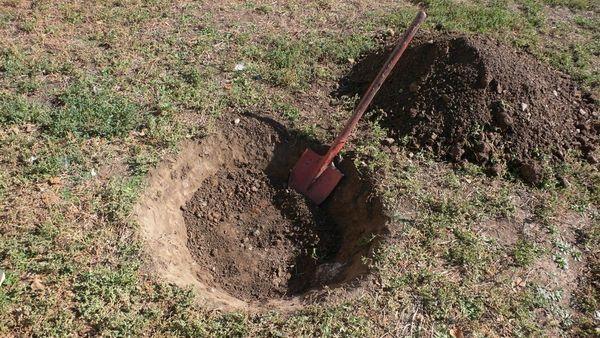
Prepare the hole in advance by clearing the area of plant debris. If the soil is acidic, apply lime and fertilize it. Then, follow these steps:
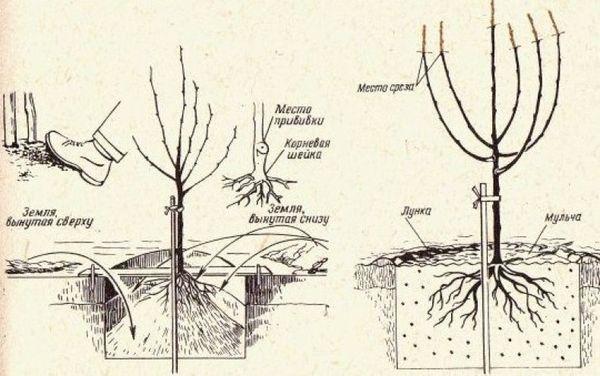
- Dig a spacious hole 80 cm deep and about 1 m in diameter. Place a stake in the center to securely support the seedling.
- Mix the top layer of soil with 30 kg of organic matter, 1 kg of superphosphate, 200 g of phosphorus-based fertilizer, 100 g of potassium chloride and 800 g of ash.
- Mix the resulting soil mixture thoroughly and place it into the hole.
- To allow the soil to settle and acquire the required density, pour in a bucket of water.
Tree planting patterns and rules
When planting, adhere to the following scheme: maintain a distance of 3-4 m between trees and 5-6 m between rows. Failure to maintain proper spacing will result in dense plantings, which will lead to reduced yields and increased plant disease.
Step-by-step instructions for planting a pear tree:
- Treat the root system of a young tree with a clay slurry.
- Place the seedling into the prepared hole on the formed mound, carefully spreading the roots along the sides of the mound.
- Fill the tree with fertile soil, shaking the trunk to distribute it evenly among the roots. Firm the soil and water with two buckets of water.
- Fix the seedling to a peg and mulch the area around the trunk.
When planting, the root collar should be 5 cm above ground level.
Care instructions
Maintenance is a set of measures aimed at ensuring the survival of trees after planting, as well as accelerating their adaptation to environmental influences and creating comfortable conditions for their growth and development.
Watering and fertilizing
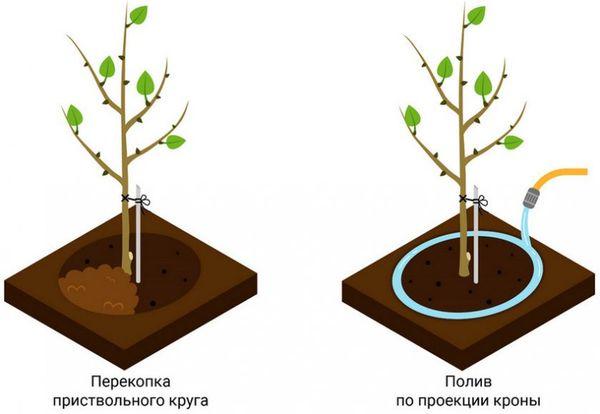
During the first year after planting, pear seedlings should be watered daily, using 15-20 liters of water per tree. This will significantly increase the chances of survival of these plants. From the second year onward, water them once every 2-3 weeks, as the tree's root system develops and begins to independently extract water from deep soil layers. In rainy weather, once a month is sufficient.
A mature tree requires watering when buds are forming, when fruit is setting, and two weeks before the estimated ripening period. Watering is also recommended in the fall, three weeks after harvest.
It's important to provide the Vidnaya pear with nutrients by applying a combination of mineral and organic fertilizers throughout the entire root zone. It's recommended to feed the plant in the spring, before flower buds form, using nitrogen fertilizers. A month later, fertilize with a universal fertilizer for fruit trees and wood ash. After harvesting, enrich the soil with superphosphate and potassium sulfate.
Pruning and crown shaping
The Vidnaya pear variety requires annual pruning. Early spring is the best time to do this. Remove old, diseased, and damaged branches. It's also necessary to rejuvenate the tree every 5-7 years by removing dead shoots. This procedure will help form a healthy crown with a strong skeleton.
Whitewash
Care for the Vidnaya pear variety should include whitewashing, which will protect the plants from sunburn. Since the white color of the tree's trunk reflects the sun's rays, overheating becomes impossible. Whitewashing is also considered an effective way to protect the plant from pests, as lime is lethal to insects.
Diseases and pests: preventive treatments
When growing, the possibility of disease and pest infestation cannot be ruled out. Preventive measures should be taken to protect the pear tree in a timely manner:
- spray the plant once every 2 weeks with an infusion of wood ash or a solution of laundry soap;
- remove dried branches from the tree in a timely manner and carry out sanitary pruning;
- When planting, maintain a distance between seedlings;
- clear the soil under the pear tree of leaves and fallen fruit.
Loosening and weeding the tree trunk circle
An important maintenance procedure is loosening the soil, which prevents weeds and improves moisture and air flow to the roots. Weeding, which should be done regularly, will help remove weeds.
Preparing for the winter cold
The Vidnaya pear was bred specifically for harsh winters, but it's best to provide additional protection and insulation for the tree. To ensure a comfortable winter, clear the area around the tree of leaves and branches before the first snowfall and mulch it with peat or compost.
To insulate the trunk, use a breathable material such as burlap, and lay spruce branches around it.
Young pear seedlings should be covered with cardboard boxes filled with sawdust. This structure will maximize heat retention and prevent frost damage.
Methods of reproduction
The Vidnaya pear can be propagated by seeds or by vegetative propagation, which involves propagating the crop using cuttings and layering.
Gardeners' reviews
Mikhail Volkov, 52, Moscow Region: "The sweet taste and aroma of pears caught my attention. I've been growing the Vidnaya variety in my garden for a long time. I'm very happy with it, as it's easy-to-grow, rarely gets sick, and produces a good harvest. I sell most of the fruit, and store the rest for the winter. The only drawback is that the harvested fruit must be used immediately, as it spoils quickly."
Inna Medvedeva, 58, Belgorod: "I've been growing the Vidnaya pear variety for 10 years now. I consider it one of the best because it requires little attention, bears fruit annually, and has never been affected by diseases or pests. It's important to plant the tree in an open, sunny spot. In a shaded area, the fruit develops into small fruits with a tart, tart flavor."
Related posts:
 Description and full characteristics of the Yakovlev Memory pear variety, planting and care
 Description of the 23 best pear varieties for the middle zone, planting and care rules
 Description and characteristics of the 45 best pear varieties, how to choose
 Description and full characteristics of the August Dew pear variety, planting and care
 Description of the Cathedral pear variety, planting and care features
 Description of the Forest Beauty pear variety, planting and care specifics
 Description of the Rogneda pear variety, planting and care instructions
 Description and full characteristics of the Lada pear variety, care and cultivation