
- Causes of leaf deformation
- Lack of macro and microelements
- Mistakes in care
- Fungal infection
- Viral infections
- Bacterial diseases
- The presence of parasitic insects on the tree
- Leaf roller
- Mite
- Pear copperhead
- Aphid
- How to save a fruit tree?
- Medicinal chemistry
- The best and proven drugs
- Terms and conditions of processing
- Folk recipes
- Onion broth
- Tobacco infusion
- Potato infusion
- Dandelion decoction
- Potassium permanganate solution
- Horsetail decoction
- Tomato tops infusion
- Wormwood infusion
- Preventive measures
- Useful tips and recommendations from experienced gardeners
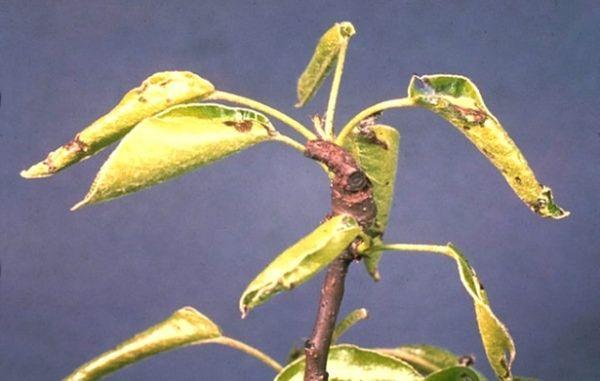
Pear leaf curl is a common occurrence. It is accompanied by drying, darkening, or paleness of the leaf blades, and the formation of spots of varying colors. Pear leaf curl can be caused by infectious diseases, insect pests, or improper care. Treatment involves chemical and folk remedies.
Causes of leaf deformation
When pear leaves curl, it's important to promptly determine the cause. The treatment method chosen depends on this.
Lack of macro and microelements
Both a deficiency and an excess of mineral elements are harmful to pear trees. However, leaf curling is more often observed when the soil contains insufficient amounts of the following nutrients:
- calcium - blackening and curling of the edges of the leaf blades is observed;
- boron - the general condition of young seedlings worsens;
- phosphorus - leaves become smaller, turn black, and fall off;
- nitrogen - leaves turn pale and fall off;
- potassium - leaf blades turn pale and curl downwards.
Mistakes in care
Pear leaf curling is observed when agricultural practices are not carried out correctly:
- insufficient or excessive watering;
- lack or excess of fertilizer;
- freezing of roots due to improper pre-winter preparation;
- mechanical injury to the tree, which increases the likelihood of fungal infection;
- weakening of the pear tree that had produced an abundant harvest.

Fungal infection
Young plants can be affected by:
- scab;
- cytosporosis;
- powdery mildew;
- Aspergillus fungus;
- rust;
- moniliosis;
- cancer pathology of any kind.
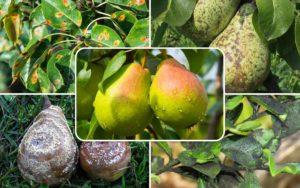
Infected seedlings, leaves curl and fail to grow to their normal size. Reddish or dark, oily spots or plaques are visible on the fruit and shoots; these grow and begin to rot. The fungal infection thrives in hot, humid weather in dense canopies.
Viral infections
The most common viral disease of pear is trunk striation. The bark becomes covered with cracks, allowing the infection to penetrate the wood and disrupt its metabolism. The disease is insidious, asymptomatic in its early stages. Later, the leaves curl and become spotted. Inflorescences and fruits become deformed. The wood loses its structure, and branches break off, unable to support the weight of the fruit.

Bacterial diseases
The bacterial infection spreads with precipitation. Affected trees appear scorched, and young seedlings quickly die. In mature trees, buds wilt, leaves curl, fruits become covered with dark spots, and open ulcers form on shoots. In advanced stages, the bark rots, and the pathogen penetrates the internal tissues of the trunk and roots.
The main preventative measure against bacterial cancer is compliance with agricultural practices in the garden.
The presence of parasitic insects on the tree
Insect pests are a common cause of pear leaf curling.
Leaf roller
Butterfly caterpillars devour foliage. To pupate, they roll the leaf blade into a tube, preventing the leaf tissue from receiving sufficient nutrition.
Mite
It lives in buds and, in warm weather, crawls onto leaves, sucking their sap. Diseased leaves curl and become covered with dark spots.

Pear copperhead
It sucks out the juices, secreting a sticky liquid. This causes the leaves to curl and stick together.
Aphid
The pest actively sucks the sap from the plant, causing buds to fall off, ovaries to fail to form, leaves to curl, and shoots to become covered with a dark coating.
How to save a fruit tree?
The primary task is to determine why the pear tree's leaves are curling. Once the cause is known, the gardener can decide what to do next.
Medicinal chemistry
Commercially available products are used to control insect pests and fungal infections. Agrochemicals should be used with caution, with dosage and frequency of application determined according to the instructions on the packaging.
The use of chemicals during harvest is unacceptable. Excessive amounts of medicinal chemicals can harm the plant.

The best and proven drugs
Fruit crops can be treated with the following popular and effective medications:
- insecticide Aktara – 8 g per 10 l of water (not to be used during the flowering period);
- acaricide Actellic – 2 ml per 2 l (cannot be used during the flowering period);
- insecticide Fufanon - 75 g per 10-liter bucket;
- fungicide Horus – 2 g per 10 l (effective at low temperatures);
- Ofloxacin for bacterial infection – 2 tablets per bucket of water;
- Strobi fungicide – one capsule per bucket of water.
Terms and conditions of processing
Treatment should begin immediately as soon as leaf curling is detected. If left untreated, the affected trees will have to be destroyed.
Pears can be treated without negative consequences during the following periods:
- when the leaves unfurl;
- during the bud formation phase;
- immediately after flowering;
- a month after flowering;
- at the beginning of fruit ripening;
- after harvesting.
Pear trees are treated in the evening, in dry and cool weather. Two liters of the working solution is sufficient for a young seedling, while up to 10 liters is needed for a mature tree.

Spraying begins at the crown. Work around the tree in circles, working down to the base. The trunk and soil around the pear tree are also treated, as insects can hide in bark crevices and in the upper soil layer.
The gardener must work in rubber gloves, a respirator, and work glasses.
Folk recipes
Many gardeners who want to minimize damage to pear trees prefer to use folk remedies rather than store-bought chemicals.
Onion broth
Aphid spray. Chop 200g of onion pulp and peel and pour into a 2-liter container of water. Simmer for 5 minutes over low heat. Strain after cooling.
Tobacco infusion
A folk insecticide similar in action to ash. Dissolve 400 g in 10 liters of water, let sit for 2 days, and strain. Add 100 g of laundry soap.

Potato infusion
The green mass of the potato plant is poured into 10 liters of water, left for 24 hours, and strained. Add 30 g of laundry soap. Treatment with infusion against aphids is carried out only after sunset.
Dandelion decoction
An effective aphid repellent. Add 0.5 kg of dandelion stems to a liter of water and let steep for 24 hours. Boil the infusion for 20 minutes, adding two cloves of garlic toward the end. Strain and dissolve in 10 liters of lukewarm water. Spray once a week.
Potassium permanganate solution
Use 5 g of the solution per 10-liter bucket of water. Spray against fungal infections three times a day from flowering to fruiting.
Horsetail decoction
It's used against powdery mildew, rust, and spider mites. Fill a bucket with 1 kg of horsetail greens, add 10 liters of water, and let steep for 24 hours. Simmer over low heat with the lid on for 30 minutes. Strain after cooling.
Tomato tops infusion
To make a pest control solution, take 4 kg of fresh herbs, add 10 liters of hot water, and let steep for 4 hours. Apply the solution twice a week.

Wormwood infusion
Effective against all types of insect pests on pear trees. Take 5 cups of chopped wormwood, add 10 liters of hot water, and let steep for 3 hours.
Preventive measures
Treating fruit trees with leaf curl is difficult. It's better to prevent the disease by regularly implementing preventative measures:
- At the beginning of spring, spray with Bordeaux mixture: 100 g of copper sulfate per 10-liter bucket of water.
- Whitewash the trunks in spring to prevent pests from getting to the crown.
- Remove fallen leaves promptly, as they can become a breeding ground for fungal infections.
- Perform sanitary pruning of the pear tree annually.
- Attach trapping belts, use other types of insect traps.
- Monitor soil moisture levels.
Useful tips and recommendations from experienced gardeners
Many gardeners struggle to choose between folk remedies or chemical treatments. If the tree is not severely affected, folk remedies are sufficient. However, if the disease is advanced, agrochemicals are essential.
Experienced farmers recommend regular pruning for bacterial canker. The shoot is cut back 15 cm beyond the edge of the infection. The cut shoots are burned.
Fertilizing pear trees with mullein is beneficial. This prevents root freezing and leaf curling.
Related posts:
 Description and full characteristics of the Yakovlev Memory pear variety, planting and care
 Description and full characteristics of the August Dew pear variety, planting and care
 What to do if your pepper's leaves are curling, proper care and treatment
 What to do and what is the best treatment if the leaves on a pear tree turn black?
 Description of the Rogneda pear variety, planting and care instructions
 Description of the 23 best pear varieties for the middle zone, planting and care rules
 Rules for planting and caring for pears in open ground, how to grow them correctly
 Description and full characteristics of the Lada pear variety, care and cultivation