
- Causes and triggers of leaf blackening
- Natural causes and measures to combat them
- Nutritional deficiencies
- Care mistakes
- Pathological causes (diseases): symptoms and treatment
- Scab
- Fire blight
- Fruit rot
- Black pear cancer
- Sooty mold
- Pests and methods of their destruction
- Leaf roller
- Pear gall mite
- Aphid
- How to save a pear tree and effectively deal with the problem
- Agrotechnical measures
- Use of biological agents
- Chemicals
- Folk methods
- The dangers of ignoring
- Prevention of blackening
Gardeners often encounter blackening leaves and fruit on their pear trees. This can be caused by a variety of factors, including fungal and bacterial infections, pest infestations, and improper care. To address the problem, it's important to first determine its underlying causes. Based on these factors, agronomic measures, chemicals, and folk remedies are selected.
Causes and triggers of leaf blackening
Changes in the color of pear tree leaves can be caused by various factors. Before treating the tree, it's important to determine the cause of the problem.
Natural causes and measures to combat them
There are many natural factors that can trigger problems, each with its own unique characteristics.
Nutritional deficiencies
In case of micronutrient deficiency yellow and dark spots appear on the pear leavesThis most often indicates a calcium deficiency. After some time, the dark spots turn black and dry out. The tree appears weak and depressed.
To deal with the problem, it is recommended to use calcium nitrate or another fertilizer containing this substance.
You can also use complex products that include the micronutrients needed by pear trees. If leaf darkening is accompanied by curling and the appearance of rosettes at the tips of branches, this indicates boron deficiency. In this situation, a complex mineral supplement will be essential, providing the pear tree with calcium, boron, and other essential nutrients.

Care mistakes
Leaf discoloration and deformation can be caused by improper care. If the tree lacks nutrients, branches become deformed. As a result, the pear tree begins to lag in development and appears unhealthy.
A change in leaf color along the edges of the leaf blade may indicate a calcium deficiency. A boron deficiency can cause slow deformation of young plants. Leaf curling and blackening are often caused by excessively dry air. Hot weather and insufficient humidity weaken the tree. To avoid such problems, drip irrigation is recommended.
Pathological causes (diseases): symptoms and treatment
Quite often, various diseases are the cause of leaf darkening. To address the problem, it's important to determine its cause.

Scab
This is a common fungal disease that affects foliage, branches, flowers, and fruit. Factors that contribute to scab include:
- Climate conditions. High humidity increases the risk of developing the disease.
- Disease susceptibility. Some varieties are more susceptible to scab, including Phelps and Lesnaya Krasavitsa.
- Tree age. Both old and young trees are at risk.
Scab spores accumulate in fallen leaves. They easily survive even severe frosts. Therefore, experienced gardeners recommend collecting leaves from under the tree after the end of the season.
The disease attacks the tree through cracks in the bark. The infection develops rapidly and is quite difficult to control. Preventive treatment is considered a more effective method. For this purpose, spraying trees with Bordeaux mixture in the spring is recommended.

Fire blight
This is one of the most dangerous pear tree diseases. Without timely and proper treatment, the disease will lead to the death of the plant. Bacterial microorganisms multiply within the tree's structure and can infect the entire plant. The main symptoms of the disease include the following:
- blackening of leaves and branches - the spots resemble burns in appearance;
- death of tree tissue;
- falling of leaves, fruits, flowers.

Dangerous bacteria enter the tree's structure through cracks in the bark and spread through the blood vessels. Gardeners can also infect seedlings by using contaminated tools on healthy plants.
If a bacterial infection develops, the plant is highly likely to die. Rapid spread of the disease can cause significant damage to the garden and negatively impact crop yields.
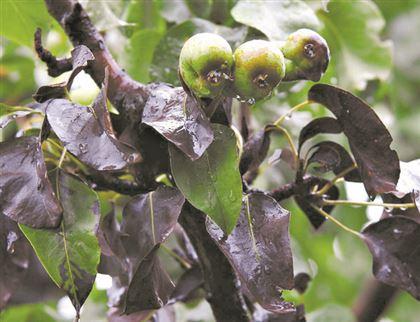
This disease is characterized by blackening of leaves and fruit. The first symptoms appear in June, when leaves take on a brown tint. Excessive fertilization is one of the triggers. Late-ripening pear trees with excess fruit are also at risk. Visible signs of the disease can be seen in hot weather, with curling of leaves and blackening of shoots. This can lead to the complete death of the plant.
Fruit rot
This disease is also known as moniliosis. When it develops, the fruit first turns black. The first symptoms can be seen when the pears ripen. They become covered with dark spots and a coating.
The disease gradually progresses. As a result, the pears become loose and lose their flavor. In advanced cases, not only the fruit but also the branches are affected, gradually drying out. In this situation, it's worth spraying the tree with chemicals. It's recommended to do this immediately.
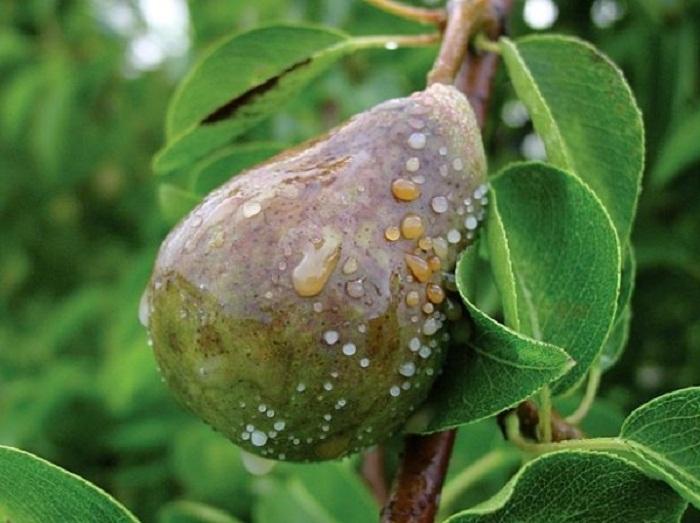
Black pear cancer
This is a fungal infection called cytosporosis. As the disease progresses, you'll notice the pear tree's bark turning black. The plant's branches are also affected. In severe cases, the leaves and fruit are also affected. Red spots may appear on them.
Small black spots initially form on the trunk, oozing gum. Later, these areas become covered with large brown wounds. Eventually, the entire trunk of the pear tree turns black. Treating this disease is quite difficult. In severe cases, the tree must be destroyed.
Sooty mold
A common cause of the disease is infestation of the tree by small sucking insects such as thrips, aphids, or leafhoppers. These pests produce a sugary liquid that fosters sooty mold. Other causes may include an overly dense canopy, insufficient light, or the plant being planted in a low location.
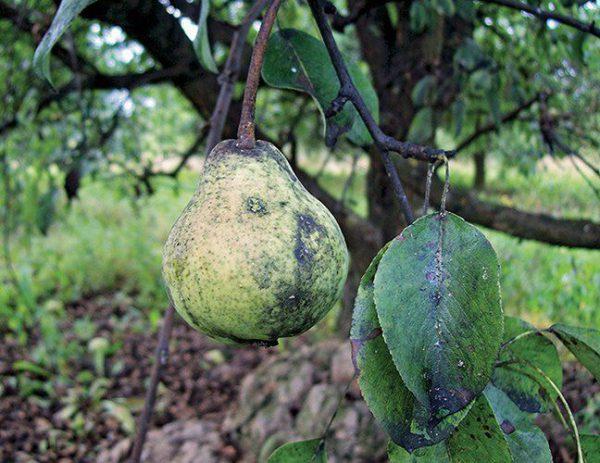
The disease develops after flowering or during fruit ripening. The tips of the leaves and the fruit become covered with a dark coating. The taste of the fruit is significantly impaired. Sooty mold is fairly easy to identify. The spots on the leaves and fruit are easily erased. Pest control is essential to eliminate the disease.
Treating trees with fungicides is also recommended. These must contain copper.
Pests and methods of their destruction
There are many pests that can cause pear tree leaves to turn black. To avoid serious problems, it's recommended to address them promptly.
Leaf roller
When these insects infest a tree, the leaves curl. They then turn black and fall off. The pests feed on the leaf edges, causing them to wilt and curl. To combat this problem, insecticides such as Fufanon or Fitoverm should be used.

To control pests, affected tree fragments must be removed and burned. Insecticide treatments are recommended every 2-3 weeks.If the leaves continue to curl after spraying, it's time to switch to a different product and perform 2-3 more treatments. Fitoverm can also be used preventatively. Spring sprays with this product will help control most pear pests.
Pear gall mite
These insects attack young buds. They are practically invisible until the leaves emerge. Then black spots appear, causing the foliage to darken and dry out.
To avoid such problems, preventative treatments should be carried out before buds appear. Herbicides are permitted during this period.
If the leaves have already sprouted, using chemicals is not recommended. In this situation, you can spray the trees with folk remedies. A decoction of onion peels is suitable for this purpose. A garlic infusion is equally effective.
Aphid
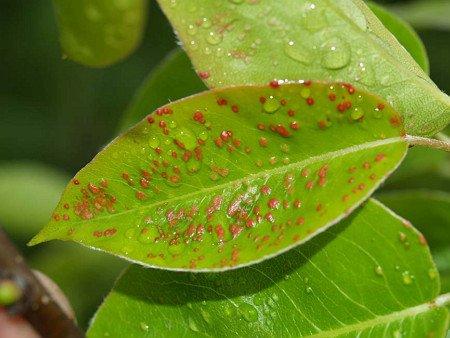
This is the most common pest that actively attacks fruit trees. The insects appear in gardens in early spring and cause serious damage to young leaves. The first symptoms of pest attacks are visible to the naked eye. The leaves curl up and become darker in color. As the attack progresses, they turn black and die.
Aphids settle on the tips of shoots and cause damage to young foliage. For small infestations, folk remedies can be used. For this purpose, plants are treated with a garlic infusion. Products based on tobacco, tomato tops, and wood ash can also be used. In severe cases, chemical treatments are unavoidable.
To make effective folk remedies, you can use the following recipes:
- Ash infusion. To make it, take 300 grams of ash and dissolve it in 10 liters of water. Boil for half an hour, cool, filter, and add 40 grams of laundry soap.
- Tomato top infusion. First, grind 1 kilogram of dried or fresh tomato tops, then add 10 liters of warm water and let steep for 3 hours. Add laundry soap to the strained mixture.
- Ammonia solution. Use 2 tablespoons of this solution per 10 liters of water. It is also recommended to add 40 grams of laundry soap to the mixture.

It is recommended to treat affected trees in the evening. This should be done at intervals of 7-10 days. Spraying should be repeated after precipitation.
How to save a pear tree and effectively deal with the problem
A change in leaf color can indicate serious problems. To address the issue and save the crop, it's important to use specialized treatments.
Agrotechnical measures
If a pear tree is sick, comprehensive agricultural practices can help strengthen the tree and improve its condition. The following is recommended:
- In early spring, immediately after the snow melts, the ground under the tree should be cleared of plant debris.
- Dig the soil in a circle around the tree's crown. Add organic or mineral fertilizers.
- Before bud break, treat the plant with hot water. The temperature should be 60 degrees Celsius.
- During the appearance of buds, it is recommended to treat the plant with the biofungicide Agat.
- After flowering, the pear tree should be fed with fertilizer containing potassium and phosphorus.
- After 18-20 days, repeat treatment with biofungicide is carried out.
- A final fertilizing is recommended in midsummer. For this, use ash and humus.
- In the fall, it's time to start preparing for winter. This involves sanitizing the tree and removing plant debris. It's essential to burn any remaining debris.
- It is recommended to treat the buds with a 5% urea solution. To disinfect the soil around the tree, use a 7% solution.
- Treat the trunk and skeletal branches with a solution of lime and copper sulfate.

Use of biological agents
Today, there are many effective biological treatments that contain beneficial bacteria. They help successfully combat various pathologies.
Biopreparations can be effective in treating fire blight in the early stages of the disease.
Gamair and Fitolavin can be used for this purpose. The former should be used during the ripening period of the fruit, as it is completely safe for the human body. To prepare the solution, take two tablets of the mixture and mix them with 1 liter of water. Apply to the plant.
Fitolavin has a more potent effect. Therefore, it is only approved for use during the initial growing season—before fruit appears. To do this, mix 20 milliliters of the product with 10 liters of water. Use the prepared solution for watering and spraying the seedlings.
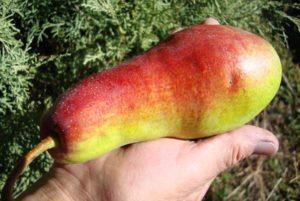
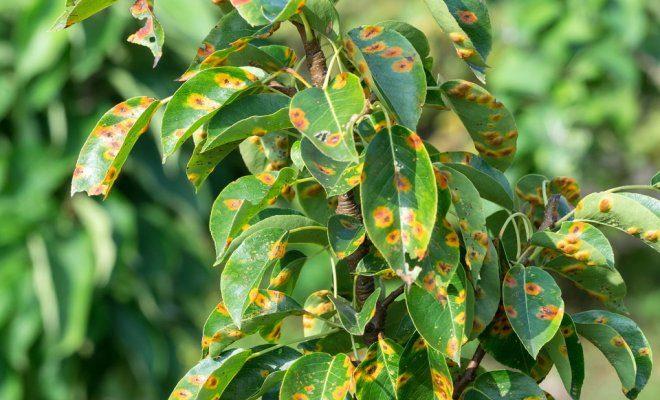
In addition, biological products are effective against sooty mold. The microorganisms contained in these products absorb sugar from insect excrements, leaving the mold without food. Products such as Baikal and Siyanie are suitable for this problem.
Chemicals
Copper-containing products help combat fungal diseases that cause blackening of pear leaves and branches. Copper sulfate and Bordeaux mixture can be used for this purpose. These products are especially effective in spring and fall. After buds appear, it's best to use fungicides. The most effective include Topsin and Folicur.
You can also use the following recipes:
- Mix 300 grams of copper sulfate and 350 grams of lime. Dilute in 10 liters of water. Treat the tree with the prepared solution before bud break.
- Mix 100 grams of copper sulfate and lime per 10 liters of water. Apply the mixture after bud break.
- Mix 30 grams of Azofos, 2 milliliters of Skor, 6 grams of Bayleton, and 40 grams of copper chlorine oxide. Dissolve in 10 liters of water.

To combat harmful insects, it is recommended to use insecticides. The most effective ones include Fufanon and Fitoverm. It is also essential to remove any affected leaves and fruit from the tree.
Folk methods
To control pests, they can be washed off the tree with a strong stream of water. A solution of dishwashing liquid and water is suitable for spraying. This treatment should be repeated every other day for two weeks.
A mixture of 400 milliliters of alcohol, 1 liter of water, and 1 tablespoon of liquid soap is also effective. It is recommended to treat trees with this mixture in the morning, before sunrise.
Infusions of garlic, onion peel, and tansy help eliminate insects. Tobacco and yarrow are also excellent. For an effective remedy, take 400 grams of any herb, add 3 liters of water, and let sit for 3-4 days. Add a little wood ash to the solution. Then strain, add water to make 10 liters, and spray the trees.

The dangers of ignoring
Failure to treat a tree for diseases and pests promptly can lead to dangerous consequences. As a result, you may see the top of the tree dry up or the fruit fall off. Leaves often dry out with fungal infections. You may also notice the trunk has dried out. These are dangerous conditions that not only reduce yield but also lead to the death of the plant.
Prevention of blackening
To avoid problems, it is worthwhile to take preventative measures against leaf blackening:
- systematically prune trees;
- disinfect instruments after work;
- add nutrients on time;
- water plants properly, especially in summer;
- avoid excessive moisture of the root collar;
- provide protection from frost in winter.
Blackening of pear tree leaves is a common problem that can have negative consequences for the plant. To address the problem, it's necessary to identify the underlying cause and find effective solutions.
Related posts:
 Description and full characteristics of the Yakovlev Memory pear variety, planting and care
 Rules for planting and caring for pears in open ground, how to grow them correctly
 Peach tree care and agricultural secrets, pest control
 Methods for planting and propagating cherries at home
 Description of the Talgar Beauty pear variety, planting and care instructions
 Description and full characteristics of the August Dew pear variety, planting and care
 How to plant walnuts, care for them, and grow them at home
 Description and signs of pear diseases and pests, treatment methods