
- Selection and cultivation regions of the Bryansk Beauty pear
- Advantages and disadvantages of pears
- Description and characteristics
- Size and annual growth of the tree
- Life expectancy
- Fruiting
- Flowering and pollinators
- Ripening time and harvest
- Tasting evaluation and scope of application of pears
- Susceptibility to diseases and insect pests
- Resistance to low temperatures and drought
- How to plant a crop on a plot
- Selecting and preparing a landing site
- Dimensions and depth of the planting hole
- How to prepare a seedling
- Timing and technology of planting operations
- Further care of the Bryansk Beauty variety
- Watering mode
- Top dressing
- Whitewash
- Crown formation
- Seasonal treatments
- Preparing for winter
- Methods of reproduction
- Gardeners' reviews
The elite Bryanskaya Krasavitsa pear variety is rapidly gaining popularity among gardeners. It is grown in virtually all climate zones of Russia. The trees are distinguished by their high yield, frost resistance, and long lifespan. The fruits are attractive in appearance, large in size, have a pleasant flavor, and are highly marketable.
Selection and cultivation regions of the Bryansk Beauty pear
This early variety was developed in the Bryansk region by crossing the Novogodnyaya and Williams Krasny pears. In 2010, it was added to the State Register and zoned for the Central Region.
Advantages and disadvantages of pears
Bryansk Beauty has both positive and negative properties.
Advantages of the variety:
- frost resistance;
- low susceptibility to diseases and pests;
- early fruit bearing;
- high life expectancy;
- good taste and commercial qualities of the harvest;
- self-fertility.
The disadvantages include:
- high shedding and low fruit set;
- deterioration of crop quality during drought;
- instability to sharp temperature fluctuations in winter;
- susceptibility to scab when exposed to excess moisture.
Description and characteristics
The Bryanskaya Krasavitsa pear has a set of characteristic features that distinguish it from other varieties.
Size and annual growth of the tree
The trees are medium-sized, reaching a height of 4.5-5 m. The crown begins at a height of 0.6-1 m from the ground. The shoot growth rate is average.
Life expectancy
The Bryanskaya Krasavitsa pear tree reaches its peak yield at six years of age. The tree's lifespan is approximately 30 years.
Fruiting
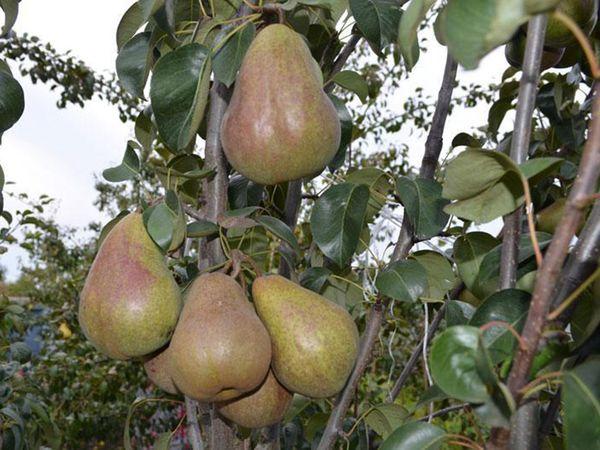
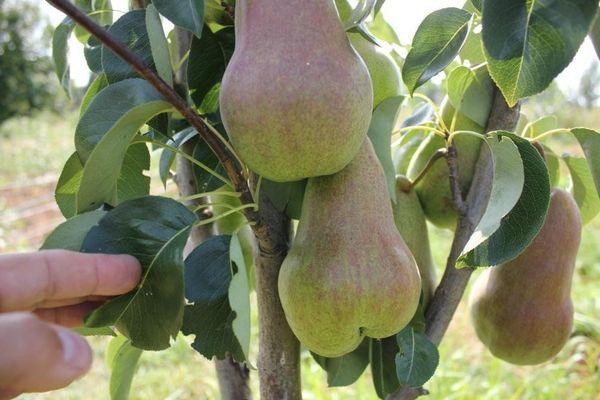
The fruits of the Bryansk Beauty are large, the average weight of 1 fruit is 150-250 g, in rare cases - up to 450-600 g. The skin color of the ripe fruit is yellow-green, one side is dark burgundy.
Flowering and pollinators
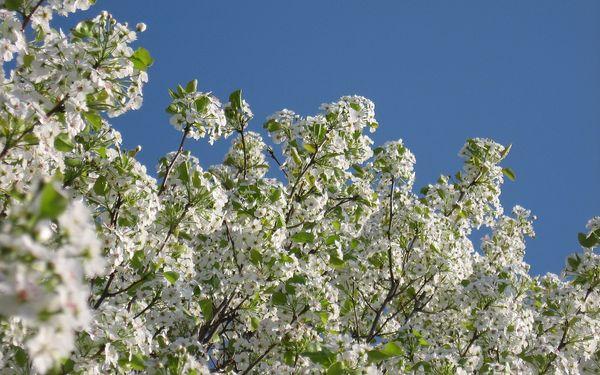
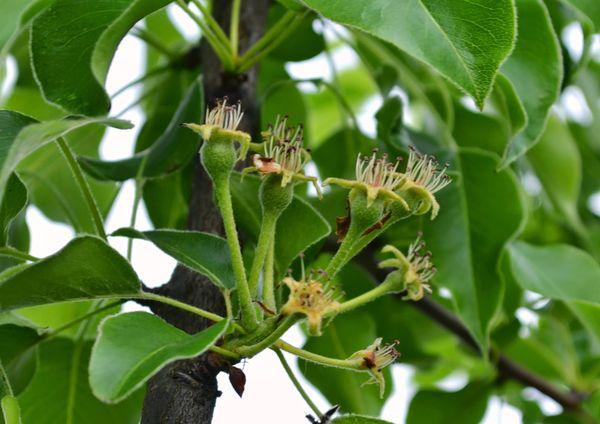
The variety is self-fertile. It produces numerous flowers, gathered in inflorescences. The pear tree blooms in the second half of May.
Only 40% of all flowers set. It is recommended to plant next to Bryansk Beauty. Marble pears, Lada Amurskaya, and Moskvichka. Pollination with these varieties increases fruit set.
Pear flowers are pollinated both by themselves and by insects. However, pear blossoms have an unpleasant odor that repels pollinating insects. To make the plant more attractive to them, spray it with a honey solution (30 g mixed with 10 liters of water). Using Bud (10 ml dissolved in 10 liters of water) also increases pollination and fruit set.
Ripening time and harvest
The variety is early-bearing. The tree can begin to bear fruit within three years of grafting.
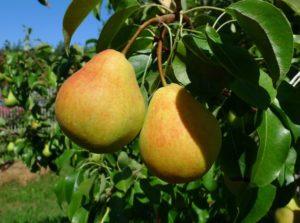
The harvest is ready from early September to mid-September. Fruit drop is high, making this variety low-yielding. A single tree can yield up to 20 kg of fruit.
Tasting evaluation and scope of application of pears
The pear flesh is creamy, juicy, and soft. It has a faint, floral aroma, if any. The flavor is sweet with a slightly tart undertone, earning a 4.8 out of 5 on a tasting scale.
This is a dessert variety. The fruits are eaten fresh and used in desserts, homemade wine, winter preserves, and baby food.
Susceptibility to diseases and insect pests
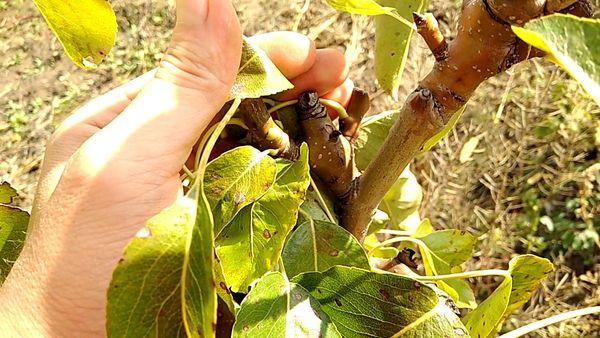
The Bryanskaya Krasavitsa pear is resistant to the main diseases and insect pests that most commonly attack pear trees. Excessive moisture can easily cause leaf scab.
Resistance to low temperatures and drought
The Bryanskaya Krasavitsa pear is highly frost-hardy. Trees can easily withstand temperatures as low as -38°C. However, sudden temperature fluctuations negatively impact the plant. If a thaw is followed by a sudden frost, this often leads to bud damage.
Drought tolerance is average. If watered insufficiently, the fruits become bitter and lose their juiciness.
How to plant a crop on a plot
In order for a pear tree to grow well and bear fruit, it is necessary to choose the right planting location and follow the rules.
Selecting and preparing a landing site
The pear tree should be planted on a sunny, warm slope, protected from cold winds. The groundwater table is more than 2.5 meters deep. Excess moisture leads to root rot and the death of the tree. To prevent flooding, drainage or an artificial embankment can be installed.
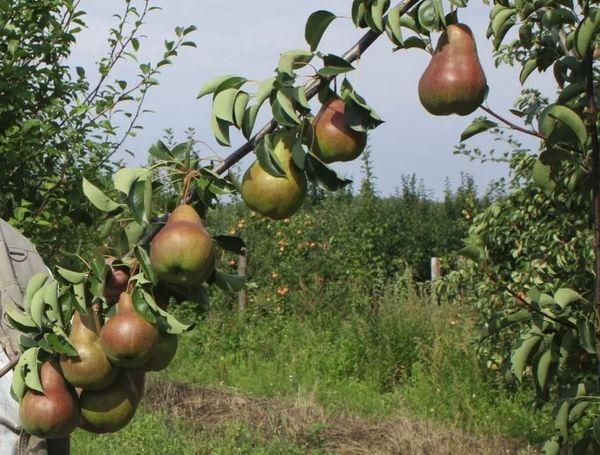
The Bryanskaya Krasavitsa pear quickly thrives in loamy and sandy loam soils with a slightly acidic or neutral pH. If the soil is excessively acidic, add lime at a rate of 500 g/m.2In heavy soils, add a mixture of sand and humus in the amount of 2 buckets per 1 m2.
Dimensions and depth of the planting hole
The planting hole should be prepared in advance, in the fall for spring plantings, or in the summer before fall plantings. Mix the excavated soil with two buckets of compost, then add 100 g of superphosphate and 100 g of potassium sulfate.
The length and width of the planting hole should be at least 1 x 1 m, and the depth should be up to 0.8 m. If the soil is fertile, the hole size can be slightly reduced.
How to prepare a seedling
For seedlings, it's best to purchase 1-2-year-old trees with a well-developed, healthy root system. Seedlings are typically purchased in the fall and stored in the garden until spring in a specially prepared hole.
In the spring, the seedling is inspected and dried and damaged roots are trimmed. To promote better rooting, the root system is sprinkled with a root growth stimulator.
Timing and technology of planting operations
Seedlings from a container can be transplanted at any time from spring to autumn using the transshipment method.
In the Central region, bare-root seedlings are planted in early spring, before the buds open. Temperatures should rise above 0°C. In southern regions, trees can be planted in the fall, but no later than two weeks before the onset of frost.
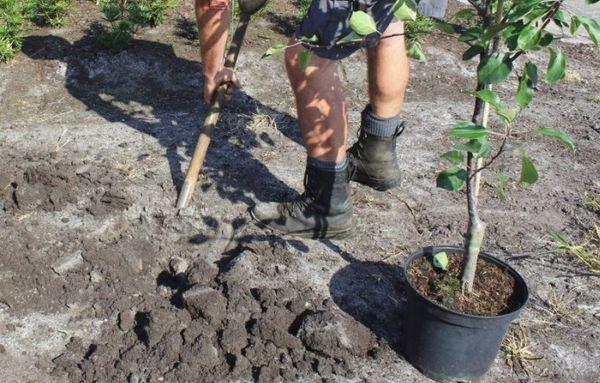
A depression is dug in the planting hole, and soil is poured into the center to form a pyramid. A stake is driven in nearby for support. The seedling is placed on top of the pyramid, with the roots spread out along the sides. The depression is filled with soil, compacting it layer by layer.
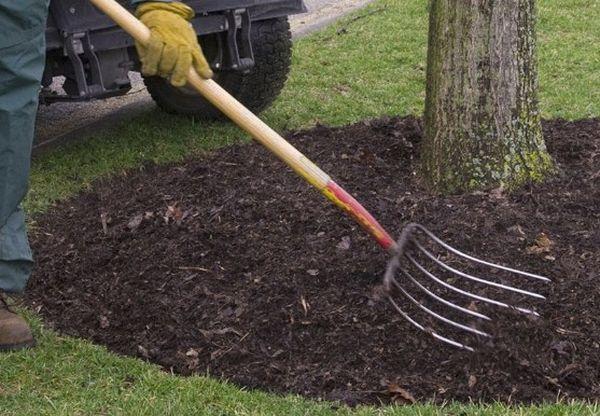
The tree is tied to a support. A circle around the tree trunk is formed around the planting hole. The soil is watered with 30 liters of water and covered with a layer of mulch made from compost, rotted manure, sawdust, straw, or hay. The seedlings are covered with agrofibre to protect them from spring frosts in the first few days after planting.
Further care of the Bryansk Beauty variety
Proper tree care will allow you to get the maximum yield from your pear.
Watering mode
Water seedlings once a week during the initial period after planting. Add 20-30 liters of water to the soil at a time. Mature trees should be watered every three days during and after flowering.
Watering is done through specially dug trenches, sprinkler irrigation, or drip irrigation using special systems. The trenches are created around the tree trunk by digging the soil to a depth of 15 cm. Water is applied in increments, allowing the water to soak in. After watering, the trenches are sealed.
Top dressing
Fertilizing begins in the third year after planting. During bud swelling, the pear tree is fed with nitrogen-containing fertilizers, evenly distributed around the trunk at a rate of 25-30 g/m.2Organic matter is also used in the amount of 300 g/m2 – cow manure diluted in water at a ratio of 1:10 or bird droppings at a ratio of 1:20. In the fall, the pear tree is fed with phosphorus-potassium fertilizers. Dissolve 20 g of fertilizer in 10 liters of water and water the tree.
After flowering, apply Kafom K fertilizer at a rate of 0.5 l/ha, which increases yield and resistance to fungal diseases. After the ovaries have fallen, apply ash to the soil around the trunk at a rate of 150 g/m.2After harvesting, the pear is fed with 100 g of potassium sulfate and superphosphate, 100 g diluted in 10 liters of water for irrigation.
In acidic soils, lime is added in the amount of 500 g/m once every 5 years.2.
Foliar feeding of pear trees is done with a magnesium sulfate solution. Dissolve 200 g of the fertilizer in 10 liters of water and spray the tree's crown.
Whitewash
Whitewashing is done in early spring. Moss and old bark are removed from the tree, and the trunk is coated with lime or water-based paint. This protects the pear tree from fungus and insect pests. Whitewashing also protects the bark from sunburn.
Crown formation
By pruning the tree branches, the crown is given a sparse, tiered shape.
The central conductor is cut at a height of 0.7 m immediately after planting the seedling. Green shoots 15-20 cm long are bent horizontally and secured with rope.
In the spring of the following year, a lower tier is formed from 2-3 skeletal branches, which are pruned back by 1/4. The central conductor is cut at a height of 60 cm from the top skeletal branch. The other branches are shortened in the summer to form lateral shoots.
In the third year, two branches are selected to create a new tier. The remaining branches are pruned at the end of June.
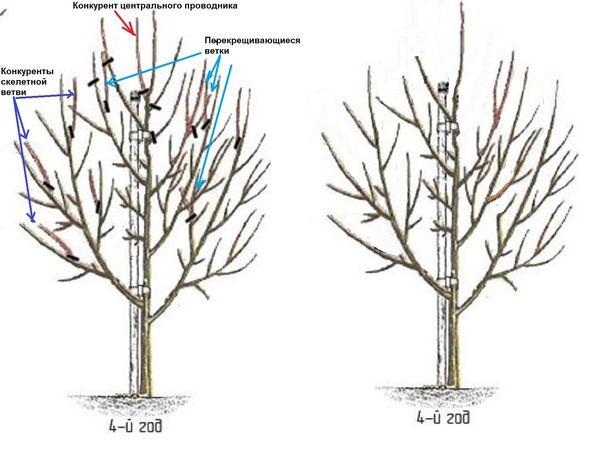
After a year, a 3rd tier is formed from 3 branches, which are shortened by 1/4.
On trees older than 5 years, crooked and damaged branches and root suckers are pruned annually. No more than 1/4 of the branches are removed to avoid weakening the tree.
Seasonal treatments
In the fall, after the leaves have fallen, it is necessary to carry out sanitary pruning of the tree - remove dry, diseased and damaged branches.
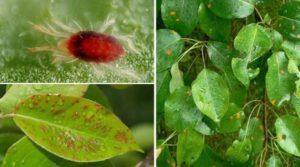
In spring and fall, it is recommended to treat pear trees with Novosil, diluting 2 ml in 6 liters of water, to boost their immunity. To protect against fungal diseases, spray the plant with copper sulfate, Bordeaux mixture, or a 4% Homa solution during bud swelling and before and after flowering. To combat insect pests, treat pear trees with insecticide solutions before flowering.
Preparing for winter
Before the onset of frost, a moisture-recharging irrigation of 80 liters of water is necessary. Saturating the soil with water helps the pear tree survive the cold.
Fertika Autumn complex fertilizer is spread over the area of the tree trunk circle at a rate of 60 g/m2 or 2 buckets of manure, after which the soil is dug up.
To protect the root system from frost, mulch the soil with humus, peat, straw, pine needles, or hay. The layer should be 14-16 cm thick.
For the winter, the trunks of young trees are wrapped in agrofibre, spruce branches, roofing felt, or burlap. A 20-cm layer of soil is added to the area around the trunk. Fallen snow is raked up to the area around the trunk.
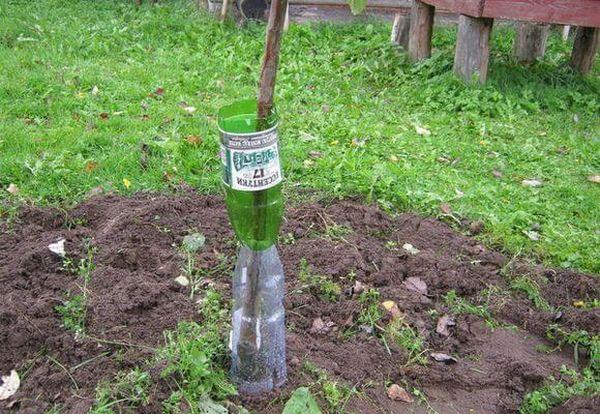
Methods of reproduction
Bryanskaya Krasavitsa pear seedlings can be grown from seeds or grafted. Individual cuttings can also be grafted onto other pear varieties or quince.
A pear grafted onto a quince tree is characterized by its dwarf growth, early fruiting, and sweeter fruit. However, frost resistance is lost.
For propagating pears, seeds are collected only from ripe fruits. They are washed, placed in damp cheesecloth, and then planted in a prepared container with soil.
Cuttings are obtained from healthy, young, actively growing, fruit-bearing trees. They are taken between October and March, when sap flow is at its lowest. Cuttings are grafted onto rootstock using various methods: butt grafting, cleft grafting, underbark grafting, copulation, improved copulation, and budding.
Gardeners' reviews
Irina, 34 years old, Pavlovsky Posad:
"Bryansk Beauty grows well in the Moscow region, where there's no groundwater. Young trees need to be covered for the winter. The fruits are very large and tasty."
Inna, 50 years old, Kolomna:
"I make juice and jam from the Bryanskaya Krasavitsa pear, and I also eat the pears fresh. They keep in the refrigerator until December without losing their flavor. The tree tolerates frost well and is disease-free. To prevent disease, I treat it with copper sulfate in the spring."
Related posts:
 Description and subtleties of growing the Russian Beauty pear variety
 Description of the Forest Beauty pear variety, planting and care specifics
 Description and full characteristics of the Yakovlev Memory pear variety, planting and care
 Description and full characteristics of the August Dew pear variety, planting and care
 Description of the Talgar Beauty pear variety, planting and care instructions
 Description and characteristics of the Marble pear variety, pollinators and cultivation subtleties
 Description and full characteristics of the Lada pear variety, care and cultivation
 Description of the Manchurian Beauty plum variety, pollinators, and cultivation details