
- How to recognize a pest insect?
- General description
- Why does gall mite appear on pear trees?
- Signs of parasitism
- What danger does it pose to a fruit tree?
- Methods of combating parasites
- Agrotechnical methods
- Chemicals
- Fufanon
- Karate
- Apollo
- Biological pesticides
- Fitoverm
- Vertimek
- Folk remedies for tick control
- Prevention
The appearance of gall mites on a pear tree is considered a rather alarming symptom. These pests cause leaf damage and disrupt the tree's development. This can lead to a high risk of reduced yield. A variety of methods can be used to control these pests. Chemicals, biological agents, and folk remedies are used to eradicate the pests.
How to recognize a pest insect?
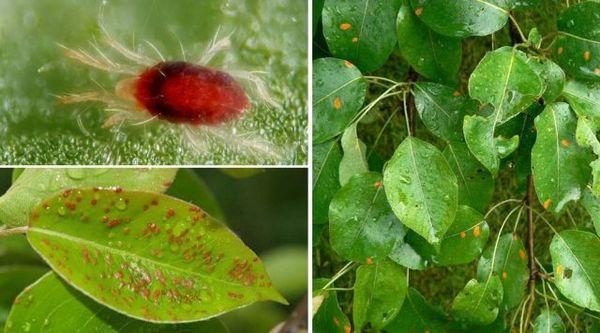
Detecting the parasites is quite difficult. The mites are small, no larger than 0.2 millimeters. Infestation can be identified by the appearance of underdeveloped shoots on the tree.
The leaves become covered with yellow-brown and dark spots called galls. These fragments form large tumor-like growths. After some time, they dry out and crack, after which the parasites infect nearby leaves.
General description
Gall mites don't just attack pears. They often infest apple trees, cotoneaster, and rowan trees. Rowan and hawthorn trees are also at risk. These parasites are small, measuring no more than 0.2 millimeters in length. Gall mites have an elongated body, two pairs of legs, and piercing-sucking mouthparts.
Most insects are female. They become active at temperatures above 10 degrees Celsius. Three generations of parasites emerge during the growing season. The first two breed on fruit trees, while the last one penetrates the buds for the winter.
Why does gall mite appear on pear trees?
The appearance of mites on pear trees is associated with human factors. Other insects and birds also contribute to the spread of the parasite. The risk of infection increases with dense canopies, prolonged lack of sanitary pruning, and excessive amounts of phosphorus fertilizers in the soil.
Some products that stimulate growth can lead to an increase in gall mite populations. Furthermore, insecticides, often used in gardening, destroy the mites' natural enemies. Diseases also weaken the pear tree, making it vulnerable to the proliferation of harmful insects.
Signs of parasitism
When a pear plant is infected, its leaves initially become covered with small, wavy blisters called galls. These galls range in size from 0.18 to 3 millimeters. Adult worms or eggs previously laid by females are found beneath these growths.
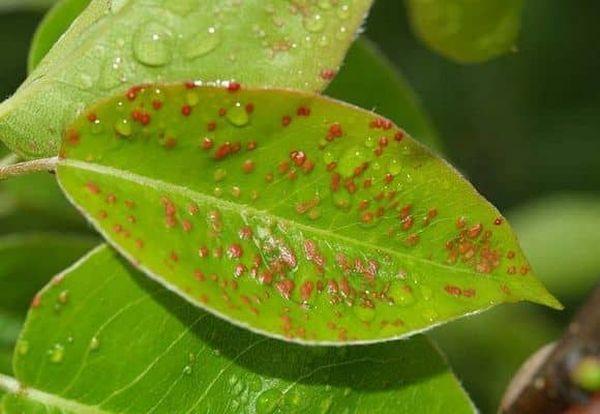
At first, the blisters match the leaves in color, but then they take on a darker hue. As a result, the leaves dry out significantly and fall off.
Beetles often hide under the bark. This is especially true during the winter. This is where they breed. As a result, the parasites absorb the cellular sap from the buds. This causes the buds to become too small or not bloom at all.
What danger does it pose to a fruit tree?
Gall mites cause significant damage to healthy trees. These parasites cause the following processes:
- the development of young shoots slows down;
- the kidneys die;
- buds and ovaries are damaged;
- crop yield parameters are greatly reduced.
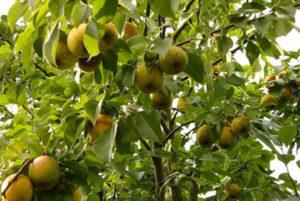
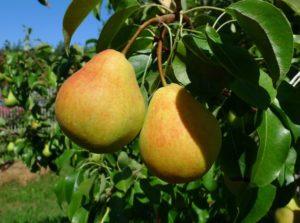
Affected flower buds usually fail to produce fruit. If fruit does set, it is small and deformed. These pears often fall off before reaching ripeness. Gall mites can destroy up to 95% of the crop.
When pear trees are affected by gall mites, they suffer from a deficiency of nutrients. As a result, the tree may not survive the winter and will freeze if the temperature drops significantly.
Methods of combating parasites
To control pests and prevent the development of dangerous diseases, it's essential to take timely action. When a tree first becomes infected in the spring or early June, simply pluck the damaged leaves and perform preventative treatment.
Agrotechnical methods
These measures are highly effective. Timely soil treatment helps reduce the number of ticks and their larvae.
To protect the plant from pests, it's worth applying mineral fertilizers to the tree trunk area. These increase the osmotic pressure in the cell sap, which disrupts the parasites' feeding.
The implementation of the following agrotechnical measures is of no small importance:
- cleaning the trunk and skeletal branches from old bark;
- collection and removal of fallen leaves and pears from the site;
- systematic crown pruning;
- weed removal.

Chemicals
To control gall mites, it is recommended to use specialized chemicals called acaricides. Phosphorus and chlorine-containing products are used to treat the crop. These products help quickly eliminate the pests. These products negatively affect the mites' digestive organs, causing their death.
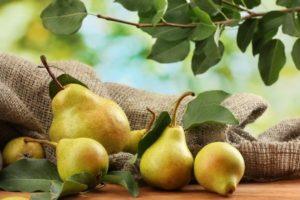
To eliminate parasites, it is recommended to treat the plant twice a week for two months.
It is important to remember that when purchasing new seedlings, you need to carefully examine the condition of the leaves and shoots.
An infected tree leads to the spread of mites, which poses a risk of infesting other crops on the property.
Injections can be used to control pests. This method allows for rapid introduction of the product into any part of the plant, effectively eliminating the majority of pests.
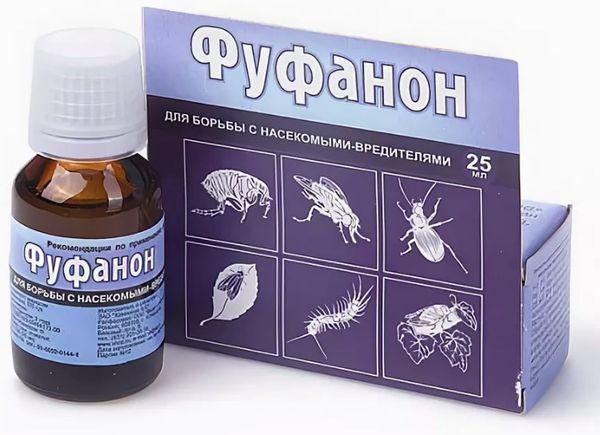
Fufanon
The active ingredient of this product is malathion. It is an effective insecticide and acaricide that helps protect pear trees from gall mites. To control these pests, spray during the growing season.
Karate
This product not only kills female mites but also helps destroy their eggs. It should not be used if there is an apiary nearby. The active ingredient in this product helps control other garden pests and destroy their larvae.
Apollo
This product is a contact pesticide that completely kills parasites without harming beneficial insects.
A distinctive feature of this product is that it kills not only adult ticks but also larvae and eggs. For proper application, follow the instructions.
Biological pesticides
During the growing season, biological control agents are acceptable. Avermectin-based products are recommended for controlling gall mites. For maximum results, it is recommended to alternate between biological and chemical control.
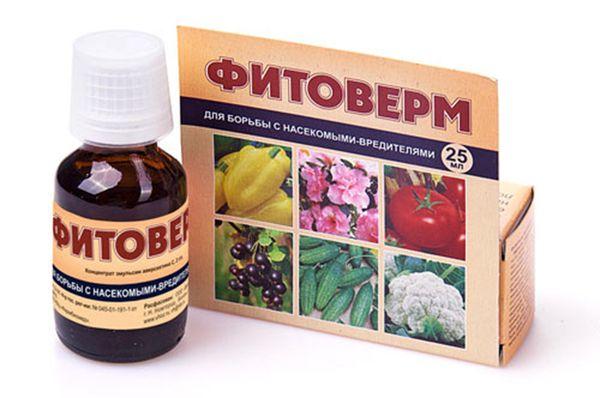
Fitoverm
The first spraying destroys female pests that overwinter in tree buds. Using Fitoverm helps prevent a mass proliferation of pests in the spring.
Vertimek
This substance is indicated for gall mites resistant to other acaricides. The active ingredient does not penetrate cell membranes, therefore, it does not accumulate in fruits. The effectiveness of the product increases with increasing ambient temperatures.
Folk remedies for tick control
Many gardeners prefer to combat pests with folk remedies. These don't negatively impact the quality of the harvest. However, home remedies are less effective.
To combat gall mites, use infusions made from potato, calendula, and ash. Garlic and dandelion extracts are also used.
The most popular and effective recipes include the following:
- Potato tops infusion. For this remedy, use 1 kilogram of fresh potato tops or 500 grams of dried potato tops. Finely chop the tops and pour a bucket of warm water over them. Let it steep for 4 hours, then strain and add 1 tablespoon of soap. Use the prepared solution within 24 hours.
- Calendula infusion. Take 100 grams of calendula flowers, add 1 liter of water, and bring to a boil. Let the infusion steep for 5 days, then add the same amount of liquid.
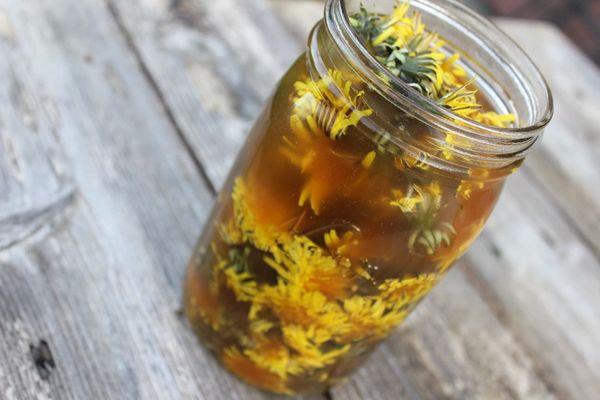
- Dandelion infusion. Take 1 kilogram of leaves and mix with 3 liters of water. Let it steep for 3 days. Strain the finished mixture and add a little soap to the infusion.
Prevention
To prevent gall mites from appearing on fruit trees, preventative treatments are recommended. For this purpose, use the Iskra M preparation. It's also important to strictly adhere to agricultural practices:
- clean the trunk and main branches from old bark;
- in autumn, remove plant remains from the area;
- whitewash the trunk;
- dig up the tree trunk circle;
- perform sanitary pruning of the tree.
Gall mites are dangerous pests that often cause damage to fruit trees, and pears are no exception. To control these pests, it's recommended to strictly adhere to proper agricultural practices.
The use of chemical and biological agents is of no small importance. In addition to the primary treatment, folk remedies can be used.
Related posts:
 How to properly combat spider mites on currants, prevention
 Description of acaricides, their mode of action on plants and the best remedies
 Why plum tree leaves turn yellow and fall off, and the best control measures
 What to do and what is the best treatment if the leaves on a pear tree turn black?
 How to combat spider mites on cucumbers with medications and folk remedies
 Pear leafhopper control measures, treatment with medications and folk remedies
 The health benefits and harms of cherries, rules of consumption, and their effects on the body
 The health benefits and contraindications of black currants