
- Pear psyllid: characteristics and description of the pest
- Development cycle
- Lifestyle
- Why does it appear on the tree?
- Signs of parasitism
- What harm does it cause to pear plantings?
- How to fight a parasite
- Funds
- Chemicals
- Biological drugs
- Folk recipes
- Wood processing patterns and frequency
- How to protect yourself and prevent re-infection
Many gardeners are interested in how to combat pear leafhoppers. This insect causes serious damage to the plant and can significantly reduce yields. To achieve good results and control the pests, a comprehensive approach is recommended. This should include the use of insecticides, biological products, and folk remedies.
Pear psyllid: characteristics and description of the pest
The pear leafhopper, also known as the pear leafhopper, is a small insect that can fly and jump quickly. The pest appears immediately after the snow melts. It is characterized by well-developed wings. In winter, the parasite hides under bark and fallen leaves.
The pear psyllid is characterized by the following features:
- In summer, the adult parasite's body is greenish-brown or reddish-orange. Small longitudinal stripes can be seen on the abdomen.
- Along the body are transparent wings with dark orange veins. By winter, the insect's body turns black.
- The head is triangular in shape, with two large and three small eyes. The leafhopper also has a proboscis, which it uses to absorb juices from the plant's leaves.
- The length of an adult insect reaches 2.8 millimetres.
- The pest jumps and flies quickly, which facilitates the rapid spread of parasites throughout the garden.
- A single female lays 450-1115 eggs. They are oval in shape and reach 0.4 millimeters in length. Initially, the eggs are white, but later turn orange.
Larvae go through several stages of development. The greatest danger to garden crops comes from the final stage of development, called nymphs. These parasites absorb plant juices and increase the risk of fungal infections. Therefore, it is crucial to take prompt action.
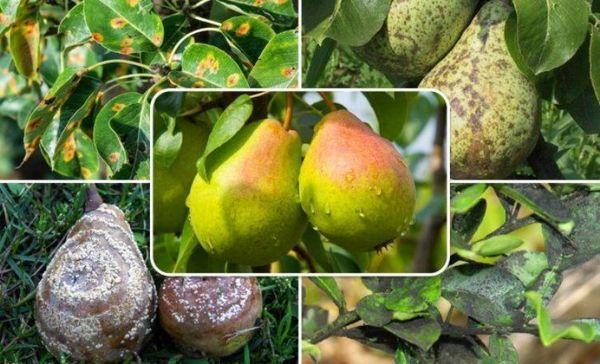
Development cycle
Adults overwinter in bark crevices and under fallen leaves. In spring, the pests emerge at temperatures of -2 degrees Celsius. In the Caucasus and Crimea, psyllid activity begins in late February. In more northern regions, this occurs in early March.
When the average temperature reaches +5°C, the insects begin mating. Egg laying occurs at +10°C.
Female leafhoppers that survive the winter live for 30-45 days. During this period, each one is capable of laying 450-1,100 eggs. Initially, they lay eggs in chains within the bark and buds of the tree. Once foliage and flowers emerge, the eggs can also be seen on them.
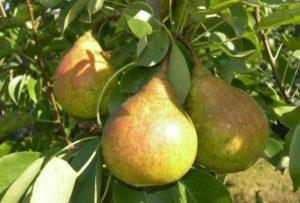
Each leaf contains a cluster of eggs, comprising 2-30 eggs. Eggs are laid in several stages, every 4-6 days.
The rate of egg development is affected by air temperature. At 10°C (50°F), it takes 23 days. If the temperature rises to 22°C (72°F), this period is reduced to 6 days.
After emergence, the nymphs penetrate the structure of the blossoming buds and absorb the sap of the young foliage. Gradually, they attack the petioles, branches, and peduncles.
To identify parasites, pay attention to sugary excrements.
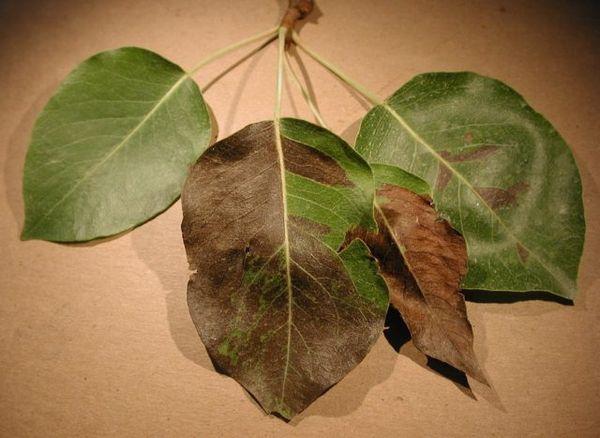
During their development, the nymphs of these insects go through five stages before transforming into adults. Temperature affects the parasite's development time from egg to adult:
- at +10 degrees this process requires 60 days;
- at +16 degrees the process takes 32 days;
- at +20 degrees development lasts 23 days;
- At +27 degrees, insects grow in 18 days.
The rate of parasite development directly depends on the quality of nutrition. Pests that feed on the youngest shoots develop more rapidly. If tree growth is disrupted, the psyllids die.
First-generation adults typically emerge seven full days after the plant begins flowering. Mating occurs within 24 hours of emergence. They begin laying eggs after 5-6 days. Summer-generation females live for 18-30 days and lay 60-1,200 eggs, with a daily production rate of 20-50.
In total, the pear leafhopper is capable of producing 3-5 generations. Since the egg-laying period is spread out over time, these periods overlap.
Lifestyle
Larvae and adults settle on buds and young foliage. They can damage flower stalks and pear fruits. In doing so, the insects consume all the tree sap.
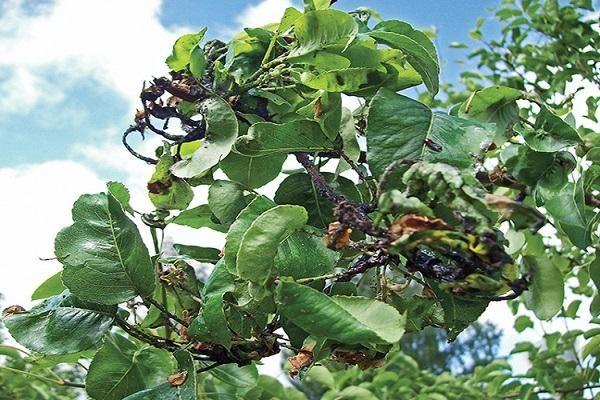
During their life cycle, the parasites produce large amounts of sugary excrement. This creates a favorable environment for the development of sooty mold. This causes the pears to drop prematurely and the leaves to dry out.
If conditions are favorable for the psyllid, trees lose all their leaves by midsummer. The remaining pears become deformed and hard. Such fruits are not suitable for consumption.
Why does it appear on the tree?
There are a number of unfavorable factors that create conditions for the appearance of leafhopper on a pear:
- warm and humid weather;
- late ripening of fruits;
- dense crown;
- thick and wrinkled bark on branches and trunk;
- a large number of weeds near the tree;
- neglect of trimmings;
- Violation of the rules for preparing pears for winter.
To minimize the likelihood of psyllids appearing on trees, it is important to follow plant care rules and carry out preventative treatment of crops with special compounds.
Take a look Also
Signs of parasitism
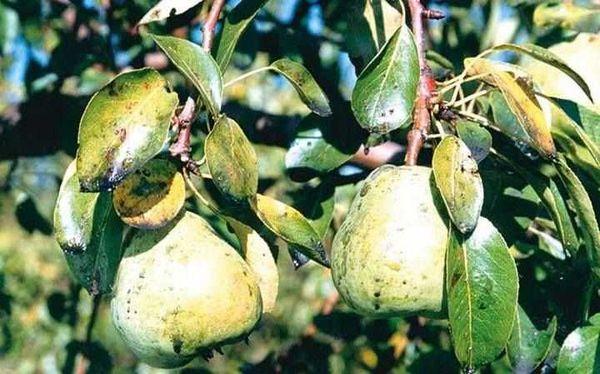
To identify pear psyllid, you should pay attention to the following signs:
- dying off of young leaves, buds and ovaries;
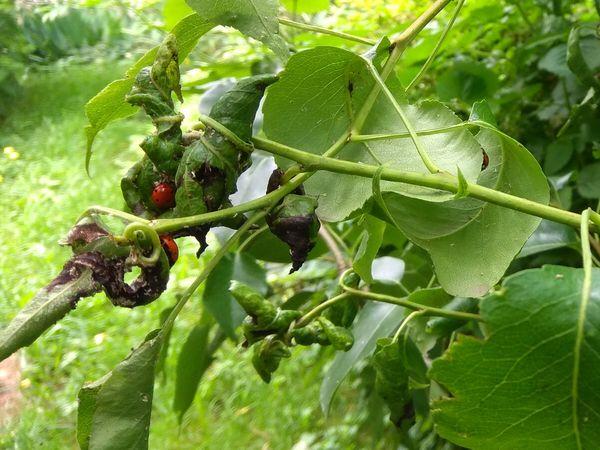
- the appearance of a sticky coating on green leaves - it has a dirty gray tint;
- darkening of the edges of the leaves - they begin to curl and dry out;
- premature shedding of flower buds, fruits and leaves;
- the appearance of plaque on fruits;
- small size and deformation of pears.
What harm does it cause to pear plantings?
The pear leafhopper primarily attacks young parts of the plant. Adult insects cause damage to foliage when feeding. However, the nymphs cause the most damage to trees.
They absorb the sap of young leaves. The excess is secreted as a sticky substance called honeydew. If there is an excessive number of psyllids, they attack the vegetative parts of the pear tree. Sometimes the liquid even drips onto the ground.
Such trees are more susceptible to various diseases. Damaged parts often become infected with sooty mold and dry out. As a result, the pear tree becomes more vulnerable to winter frosts.
Flower buds harboring the psyllids dry up and fall off. The fruit that does set is small and distorted. Inside these pears is an unpalatable, woody pulp.
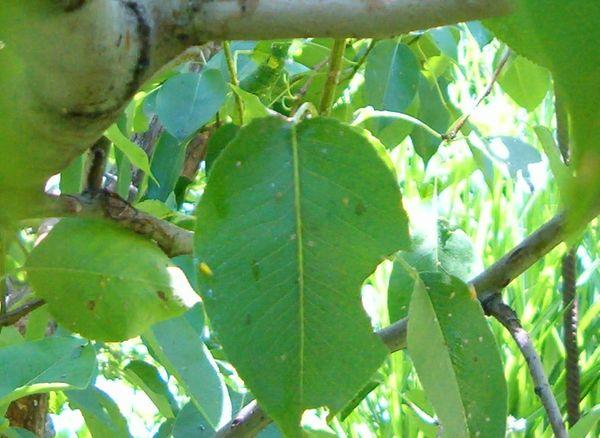
Honeydew often clogs leaf stomata. This causes pear tree stunting, disrupts photosynthesis, and leads to nutritional problems. Consequently, the risk of infectious diseases increases.
The sticky secretions attract various parasites. If the pear tree is severely infested, there's a risk of reduced yield next year.
Insects pose a particular danger to young trees.
How to fight a parasite
The main difficulties in fighting parasites lie in the early laying of eggs and the rapid spread throughout the garden.
Funds
Chemical treatments can help combat parasites. Sometimes, folk remedies are sufficient.
Chemicals
To combat pear psyllid, use pesticides containing organophosphates, oils, and other necessary components. For best results, it's recommended to alternate these treatments.
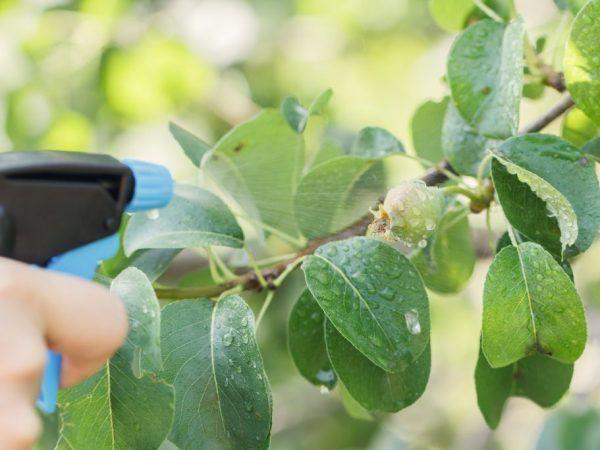
Before bud break, it's recommended to use products such as Profilaktin and 30 Plus. The first treatment is recommended when daytime temperatures reach 4°C (39°F). To check for pests, place a white cloth under the tree and tap it. The black pests will be easily visible.
The effectiveness of the treatment can be assessed using the same method. Dead parasites should fall onto the white material.
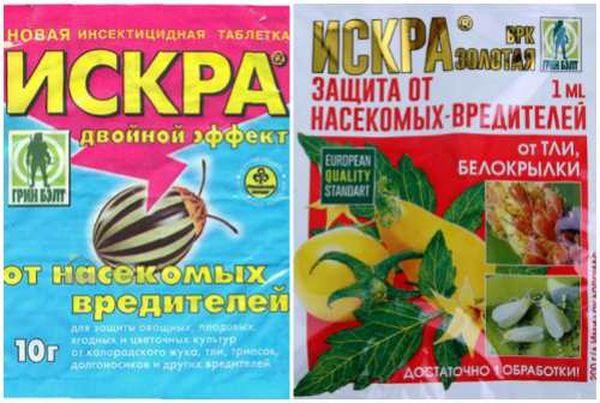
During the growing season, it is recommended to use products such as Fufanon, Iskra M, and Aktara. It is recommended to rotate the chemicals. This will make the treatment more effective.
Biological drugs
These products are toxic to insects but are harmless to humans and animals. The most popular products include Lepidocide and Fitoverm. Bitoxibacillin is also frequently used.
To combat parasites, beneficial insects such as lacewings or ladybugs are used. However, the most effective insects are the predatory bugs Anthacoris nemorallis. They are available in specialty stores.
Folk recipes
Such remedies only help combat parasites in their early stages. Infusions and decoctions of dandelion and yarrow can be used. Delphinium is also helpful in combating pear psyllids.
Sometimes it's recommended to treat plants with a silicate glue solution. However, experts strictly prohibit the use of such methods. Liquid glass helps control pests. However, it also clogs the stomata of the leaves, leading to their rapid death.
Wood processing patterns and frequency
To ensure effective tree treatment, it is important to follow the spraying schedule:
- Before buds appear, medications such as Inta-Vir and 30 Plus are recommended. Prophylactin and Komandor are equally effective at this stage.
- After the trees have finished flowering, it is permissible to use Agravertin and Iskra.
- During the growing season, it's recommended to treat the crop with Aktara and Fufanon. Iskra M is highly effective.
How to protect yourself and prevent re-infection
To prevent pear leafhopper infestation in trees, follow these steps:
- Conduct preventative treatments regularly. These are done in spring and fall.
- With the onset of autumn, it is essential to clear the garden of weeds, branches, and fallen leaves.
- Dig up the tree trunk circle every autumn.
- Apply mineral fertilizers in a timely manner. They help strengthen the tree's immune system.
- Whitewash the trunk.
- Get rid of old, diseased bark and branches.
- Attract beneficial insects to the pear tree. These include spiders, lacewings, and ladybugs.
- Provide trees with careful care.
The pear leafhopper is considered a harmful and dangerous insect that causes serious damage to trees. To cope with the parasite and preserve the harvest, it is necessary to provide the crop with high-quality and comprehensive care.
Related posts:
 Methods for planting and propagating cherries at home
 How to control carrot flies with medications and folk remedies
 Rules for planting and caring for pears in open ground, how to grow them correctly
 Causes of phylloxera in grapes, control measures with drugs and folk remedies
 The best grape varieties for growing in the Urals, planting and care rules in summer
 Conditions for growing mandarin at home and rules for caring for the tree
 Description and cultivation of the 15 best cherry plum varieties for the Moscow region, planting and care rules
 Growing and caring for hazelnuts in open ground, rules for planting hazelnuts