
- The history of the Feeria pear breeding
- Advantages and disadvantages of the variety
- Description and characteristics
- Size and annual growth of the tree
- Life expectancy
- Fruiting
- Flowering and pollinators
- Ripening time and harvest
- Productivity
- Tasting evaluation and scope of application of pears
- Transportability and shelf life
- Susceptibility to diseases and insect pests
- Frost resistance
- How to plant a crop on a plot
- Selecting and preparing a landing site
- Dimensions and depth of the planting hole
- How to prepare a seedling
- Timing and technology of planting operations
- Further care
- Watering mode
- Top dressing
- Whitewash
- Crown formation
- Seasonal treatments
- Preparing for winter
- Methods of reproduction
- Gardeners' reviews
The Feeria pear variety is a winter-hardy cultivar that stands out from its peers due to its long shelf life, even in low temperatures. Another distinctive feature is the length of time the fruit remains on the tree after it has fully ripened. This variety is used in private gardens and orchards, as well as in industrial production for various products.
The history of the Feeria pear breeding
The Feeriya pear was developed by Russian breeders from the Michurin Institute. The authors were S. P. Yakovlev, V. V. Chivilev, and N. I. Savelyev. The varieties "Daughter of Zari" and "Talgarskaya Krasavitsa" were used to develop this plant. The pear underwent testing for some time and was only added to the Unified State Register of the Russian Federation in 2006.
The variety produces the highest yield in the following areas:
- Orlovskaya;
- Belgorod;
- Lipetsk;
- Voronezh;
- Kursk.
Because this variety has a high frost tolerance, it can be grown successfully in most regions. However, without proper care, the tree begins to suffer from diseases, and the yield decreases significantly.
Advantages and disadvantages of the variety
The Feeria variety has the following characteristic advantages:
- stable fruiting;
- high yield;
- taste qualities of fruits;
- high tolerance to cold climate conditions;
- preservation of fruits after full ripening on the branches;
- immunity to some diseases and pests that affect other crops;
- versatility of fruit use;
- long-term storage and the possibility of transporting pears over long distances.
The culture also has its disadvantages:
- active growth of shoots, due to which systematic pruning and crown shaping should be carried out;
- If the crown is too dense, the fruits become smaller and develop unevenly.
Description and characteristics
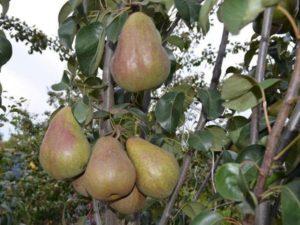
The Feeria variety is a low-growing tree, reaching 1.5-2 meters in height, although taller specimens are also available. The crown is pyramidal with medium branch density. The shoots are arched and strong. The tree has brown bark, with light green bark on young branches.
The tree has a high tolerance for cold climates and can withstand temperatures of around -40°C without prior preparation. Gardeners worldwide grow this variety for its long shelf life and the ability to transport the fruit over long distances.
Even when frozen, the fruits practically do not lose their taste and remain just as juicy.
Size and annual growth of the tree
Since the Feeria variety is a dwarf, the tree doesn't grow very tall. Its maximum height is 2.5 meters, but it often doesn't exceed 2 meters. The crown fully develops 5-6 years after planting. The tree grows 20-40 centimeters annually until it reaches its maximum height.
Life expectancy
The average lifespan of this plant is 40-50 years, but it can last longer with proper care. Some dwarf pear trees live for over 100 years and bear fruit annually.
Fruiting
The crop begins bearing fruit 5-6 years after planting. This variety is characterized by a large and consistent yield.
Flowering and pollinators
The Feeria variety begins flowering quite early—in the first half of spring. At this time, there's still a chance of cold spells returning. Additional varieties need to be planted for pollination, as Feeria is unable to do this on its own.

The following varieties can be used as pollinators:
- Daughter of Dawn;
- Talgarskaya.
It is important that the pollinators have the same flowering periods, otherwise the procedure will not be possible.
Ripening time and harvest
The fruits reach full ripeness by the end of July, but this can vary depending on weather conditions and plant care. Even ripe fruits can be picked slowly. They can remain on the branches for a couple of weeks without spoiling.
Productivity
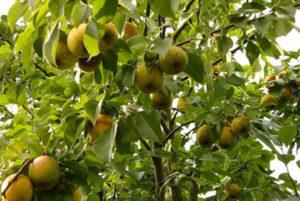
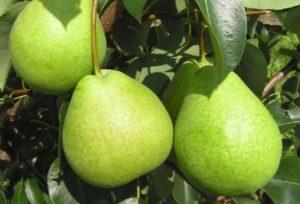
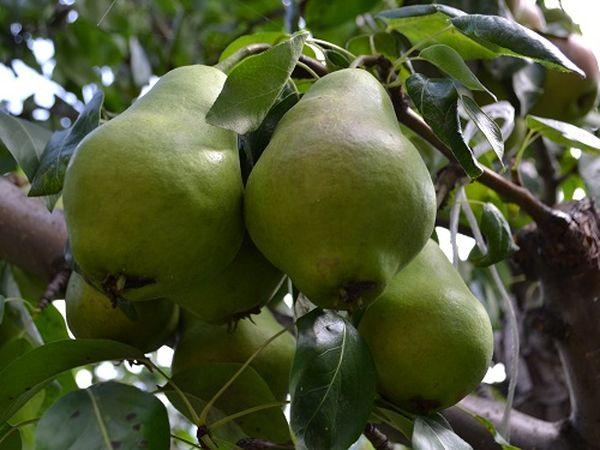
The yield of a dwarf tree is high; up to 50 kilograms of pears can be harvested from a single plant in a single season. The fruits are medium-sized, ranging from 100 to 250 grams.
Tasting evaluation and scope of application of pears
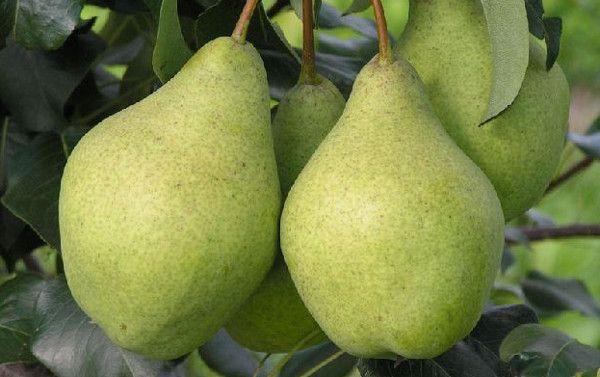
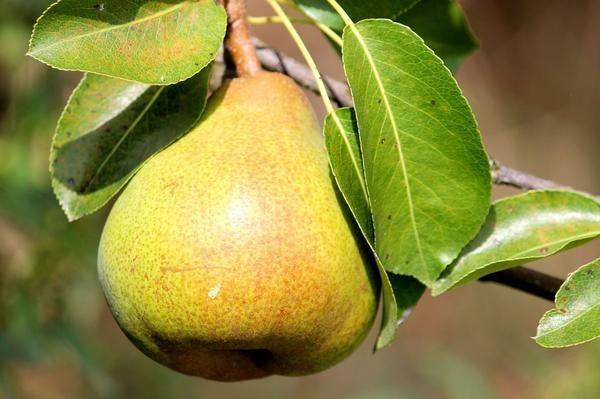
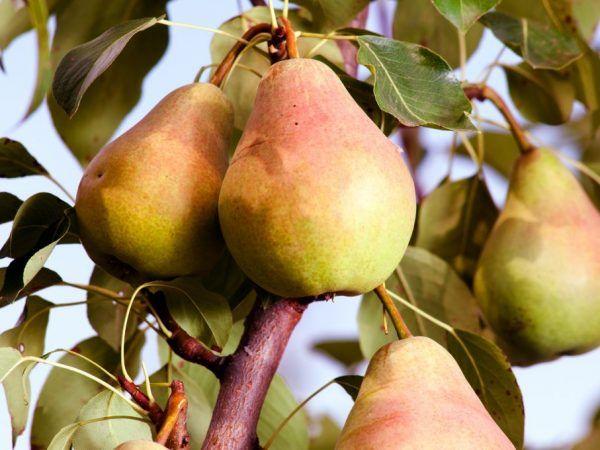
Tasters rate this pear variety 4.5 out of 5 possible points. Points were awarded for the moderate sweetness of the fruit and the juiciness of the flesh, albeit firm. The pears have an average presentation, with a green-yellow hue and an irregular shape. Fruits of this variety are used in confectionery, natural juices, retail, and for eating raw.
Transportability and shelf life
A distinctive feature of the Feeriya variety is its shelf life and the ability to be transported over long distances. The pear's flesh is very dense, which means the fruits are susceptible to damage from the weight of each other.
Susceptibility to diseases and insect pests
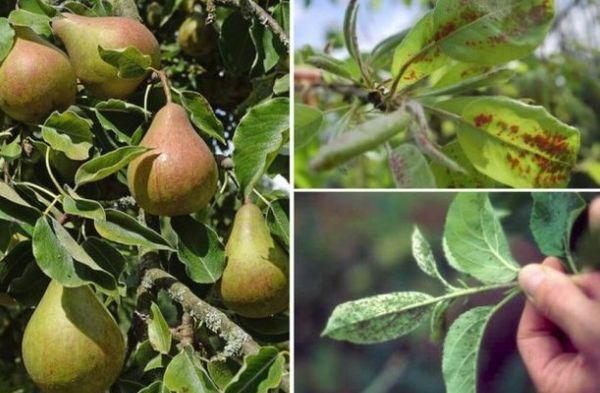
The Feeria variety is susceptible to the following main diseases:
- scab;
- powdery mildew;
- spotting;
- rust.
Among the pests that can affect the crop, the following are distinguished:
- aphids;
- peduncles;
- ticks;
- copperheads.
To protect against diseases and pests, the plant should be treated periodically.
Frost resistance
Feeria has increased frost resistance – without preliminary preparation, the crop can withstand temperatures down to -40 °C.
How to plant a crop on a plot
To properly plant the Feeria pear, you should select a suitable site, prepare it, and select a healthy cutting.
Selecting and preparing a landing site
For planting this crop, it's best to choose a location with ample sunlight but some partial shade to provide shade on excessively hot days. Before planting, clear the soil, remove all weeds and weed debris, and till the topsoil.
Dimensions and depth of the planting hole
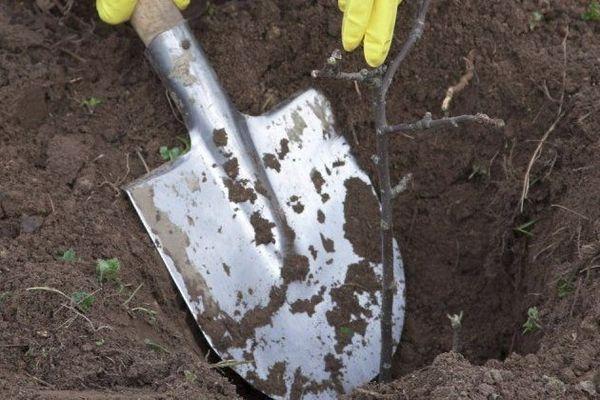
Dig a hole 100 centimeters deep and 80 centimeters wide. The top layer of fertile soil should be left behind; it will be useful later.
How to prepare a seedling
When choosing seedlings, you should choose healthy specimens that do not have:
- visible damage;
- spots of different colors;
- wrinkled areas at the base;
- root damage;
- swellings or growths on the roots.
1-3 hours before planting, the root system of the cutting should be soaked in a growth stimulating solution, which can be purchased at a garden store.
Timing and technology of planting operations
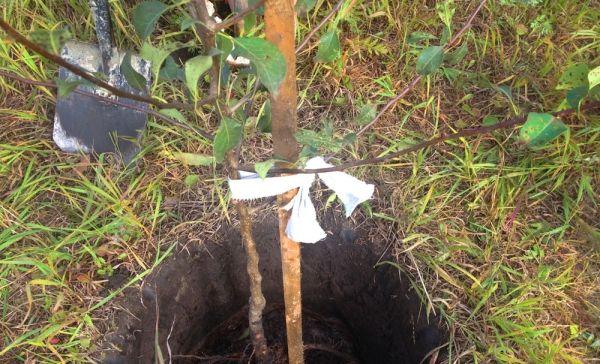
It's best to plant in the fall, but if necessary, you can do it in the spring. For planting, dig a hole 1-2 weeks in advance. Then, insert a stake into the hole, extending 40-60 centimeters above the ground. Place the cutting with its root system spread out next to it on the north side and cover it with fertile soil. Then, compact the area, water it generously with warm water, and tie the seedling to the stake.
Further care
Proper care of the plant will ensure its rapid growth and high-quality fruiting.
Watering mode
Watering should be done several times a week, using 10-20 liters of water. It's important to water the plant only when needed.
If the soil is too wet, the tree's root system may begin to rot.
Top dressing
Top dressing is carried out using cow or bird droppings 3-4 times a year:
- before flowering;
- before the beginning of fruit formation;
- after the fruits have ripened;
- before frosts (if they exceed -30 °C).
Young trees that are less than 1 year old should not be fertilized.
Whitewash
Whitewashing prevents diseases and pests and should be done every season. To increase its effectiveness, add fungicides to the whitewash.

Crown formation
To prevent the fruit from shrinking and ensure consistent fruiting, periodic crown pruning is necessary. During this process, dry, damaged, and overly long shoots should be removed.
Seasonal treatments
To prevent the occurrence and development of diseases and pests on crops, the following procedure should be followed:
- In spring, spray the base and soil with fungicides.
- Remove dried bark and clean cracks in the tree.
- Whitewash the trunk.
- Remove weeds around the tree.
- Before the onset of winter, spray the crop with fungicides.
Preparing for winter
The tree has increased frost resistance. To ensure comfortable conditions, the trunk can be covered using:
- sackcloth;
- spruce branches;
- other inorganic materials.
Methods of reproduction
The Feeria pear is best propagated by cuttings. To do this, first prune shoots with 4-5 leaves and several internodes. These cuttings are left undisturbed for 2-3 months until they begin to sprout, after which they are transplanted into prepared containers filled with soil. In autumn, the seedlings are planted and further cared for.
Gardeners' reviews
Alexey, 29 years old, Kursk.
"The Feeria variety is suitable for growing in all regions, tolerates cold, takes up little space and produces a large harvest."
Vladimir, 36 years old, Voronezh.
"A gardener friend recommended this variety to me, and he was right. It's an unpretentious plant that survives the winter even without preparation."
Related posts:
 80 Best Eggplant Varieties for Different Regions with Descriptions and Characteristics
 The best grape varieties for growing in the Urals, planting and care rules in summer
 Descriptions of the 20 best cherry varieties for the Moscow region, their planting and care
 Description of the best varieties of black tomatoes for open ground and greenhouses
 50 Best Pumpkin Varieties with Descriptions and Characteristics for Outdoor Planting
 Description of 30 varieties and types of Muscat grapes, planting, cultivation and care
 Description and characteristics of the 60 best sea buckthorn varieties, how to choose depending on the region
 Description of the Red Early apple tree variety, agricultural technology and specific care